The post UK growth stalls at 0.1% as services flatline and construction dips appeared on BitcoinEthereumNews.com. The UK economy managed to crawl forward by just 0.1% in August, according to data published by the Office for National Statistics. It’s not a recession, but it’s not anything to celebrate either. This weak uptick came after July’s figures were revised, what was previously reported as flat growth has now been downgraded to a 0.1% decline. That followed a 0.4% rise in June. So, to sum up the past three months: up, down, and then barely up again. The main driver of that microscopic August gain was a 0.4% increase in UK production. But services (the largest part of the economy) delivered absolutely nothing. Construction shrank by 0.3%, dragging down the overall result. The performance matched what economists had expected, but let’s be honest, the bar was already low. Economists see second-half slowdown building August’s numbers came as no shock to analysts who’ve been warning of a UK slowdown in the second half of the year. Third-quarter GDP, due out in mid-November, will likely show more of the same sluggishness. Sanjay Raja, chief UK economist at Deutsche Bank, summed it up: “Some course correction is likely after an excellent start for the UK economy.” Raja said that after a strong first half, momentum is fading. “We expect growth to shift to a lower gear in the second half,” he added. Deutsche Bank now sees UK quarterly GDP running around 0.2%, but flagged downside risks. For context, the UK economy grew by 0.7% in Q1 and by 0.3% in Q2, the latter boosted by businesses front-loading activity before U.S. trade tariffs kicked in back in April. As for the Bank of England, all eyes are now on its next meeting scheduled for November 6. The question is whether the Monetary Policy Committee will cut interest rates again. Inflation remains the… The post UK growth stalls at 0.1% as services flatline and construction dips appeared on BitcoinEthereumNews.com. The UK economy managed to crawl forward by just 0.1% in August, according to data published by the Office for National Statistics. It’s not a recession, but it’s not anything to celebrate either. This weak uptick came after July’s figures were revised, what was previously reported as flat growth has now been downgraded to a 0.1% decline. That followed a 0.4% rise in June. So, to sum up the past three months: up, down, and then barely up again. The main driver of that microscopic August gain was a 0.4% increase in UK production. But services (the largest part of the economy) delivered absolutely nothing. Construction shrank by 0.3%, dragging down the overall result. The performance matched what economists had expected, but let’s be honest, the bar was already low. Economists see second-half slowdown building August’s numbers came as no shock to analysts who’ve been warning of a UK slowdown in the second half of the year. Third-quarter GDP, due out in mid-November, will likely show more of the same sluggishness. Sanjay Raja, chief UK economist at Deutsche Bank, summed it up: “Some course correction is likely after an excellent start for the UK economy.” Raja said that after a strong first half, momentum is fading. “We expect growth to shift to a lower gear in the second half,” he added. Deutsche Bank now sees UK quarterly GDP running around 0.2%, but flagged downside risks. For context, the UK economy grew by 0.7% in Q1 and by 0.3% in Q2, the latter boosted by businesses front-loading activity before U.S. trade tariffs kicked in back in April. As for the Bank of England, all eyes are now on its next meeting scheduled for November 6. The question is whether the Monetary Policy Committee will cut interest rates again. Inflation remains the…

UK growth stalls at 0.1% as services flatline and construction dips

The UK economy managed to crawl forward by just 0.1% in August, according to data published by the Office for National Statistics. It’s not a recession, but it’s not anything to celebrate either.

This weak uptick came after July’s figures were revised, what was previously reported as flat growth has now been downgraded to a 0.1% decline. That followed a 0.4% rise in June. So, to sum up the past three months: up, down, and then barely up again.

The main driver of that microscopic August gain was a 0.4% increase in UK production. But services (the largest part of the economy) delivered absolutely nothing. Construction shrank by 0.3%, dragging down the overall result. The performance matched what economists had expected, but let’s be honest, the bar was already low.

Economists see second-half slowdown building

August’s numbers came as no shock to analysts who’ve been warning of a UK slowdown in the second half of the year. Third-quarter GDP, due out in mid-November, will likely show more of the same sluggishness. Sanjay Raja, chief UK economist at Deutsche Bank, summed it up: “Some course correction is likely after an excellent start for the UK economy.”

Raja said that after a strong first half, momentum is fading. “We expect growth to shift to a lower gear in the second half,” he added. Deutsche Bank now sees UK quarterly GDP running around 0.2%, but flagged downside risks.

For context, the UK economy grew by 0.7% in Q1 and by 0.3% in Q2, the latter boosted by businesses front-loading activity before U.S. trade tariffs kicked in back in April.

As for the Bank of England, all eyes are now on its next meeting scheduled for November 6. The question is whether the Monetary Policy Committee will cut interest rates again. Inflation remains the big roadblock.

Consumer prices rose 3.8% in August, still far from the BoE’s 2% target. And while inflation is cooling compared to 2022, progress has slowed.

That’s not the only pressure. The labor market is softening. Unemployment is up. Wage growth is easing. These factors could give the Bank some room to act, if they’re willing to risk inflation staying sticky.

But there’s a political twist too: the Autumn Budget drops on November 26. That means policymakers might hold off on more cuts until they see what Finance Minister Rachel Reeves is about to roll out.

Autumn Budget and inflation complicate rate path

Reeves is expected to announce new tax hikes and spending cuts, the kind of stuff that sucks the oxygen out of consumer demand. Businesses might pull back too. And with the economy already losing steam, timing becomes everything.

Scott Gardner, investment strategist at Nutmeg, said the latest GDP numbers could force the Chancellor to think twice. “This slowdown will concern policymakers and could make all the difference when it comes to tax and spending decisions,” he said Thursday.

Goldman Sachs echoed that caution in a note on Tuesday. Yes, there’s a case for more rate cuts, they said, but don’t expect them to happen fast. “The BOE is likely to want to see more progress on inflation before cutting rates again,” Goldman wrote. After all, the central bank only just lowered the benchmark rate to 4% back in August.

Goldman pointed to one specific red flag: services inflation. Stripping out the noise from volatile and regulated prices, underlying inflation in services has stalled. That’s a bad sign. And with food prices still adding upward pressure, headline inflation is expected to hover around 4% through the end of 2025.

The investment bank said it expects services inflation to drop meaningfully in the first half of 2026, but until then, they believe the BoE will sit tight. “The MPC is likely to wait with more cuts until they see tangible progress in services inflation,” the note said.

Don’t just read crypto news. Understand it. Subscribe to our newsletter. It’s free.

Source: https://www.cryptopolitan.com/uk-economy-ekes-out-0-1-growth-in-august/
Market Opportunity
Notcoin Logo
Notcoin Price(NOT)
$0.0003689
$0.0003689$0.0003689
-0.29%
USD
Notcoin (NOT) Live Price Chart
Disclaimer: The articles reposted on this site are sourced from public platforms and are provided for informational purposes only. They do not necessarily reflect the views of MEXC. All rights remain with the original authors. If you believe any content infringes on third-party rights, please contact service@support.mexc.com for removal. MEXC makes no guarantees regarding the accuracy, completeness, or timeliness of the content and is not responsible for any actions taken based on the information provided. The content does not constitute financial, legal, or other professional advice, nor should it be considered a recommendation or endorsement by MEXC.

You May Also Like

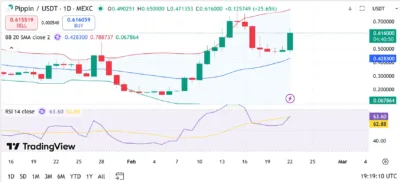
Pippin (PIPPIN) Price Prediction 2026–2030: Can PIPPIN Hit $0.70 Soon?

Pippin (PIPPIN) Price Prediction 2026–2030: Can PIPPIN Hit $0.70 Soon?

PIPPIN has surged sharply on the daily timeframe, printing a powerful bullish candle with over 25% gains. RSI is holding above 60, signaling strengthening momentum
Share
Coinstats2026/02/23 04:29
Will Cardano Reach $10 by 2030? Analysts Break Down ADA’s Growth Cycles

Will Cardano Reach $10 by 2030? Analysts Break Down ADA’s Growth Cycles

The post Will Cardano Reach $10 by 2030? Analysts Break Down ADA’s Growth Cycles appeared first on Coinpedia Fintech News Cardano (ADA) is trading at $0.9024 with a market cap of $32.91 billion. Experts say ADA has the potential to climb much higher, with some placing long-term targets as high as $10. The token continues to benefit from stronger visibility, rising liquidity, and increasing inflows from both institutional and retail markets. Can Cardano Hit $10 …
Share
CoinPedia2025/09/18 17:19
Crypto whale loses $6M to sneaky phishing scheme targeting staked Ethereum

Crypto whale loses $6M to sneaky phishing scheme targeting staked Ethereum

The post Crypto whale loses $6M to sneaky phishing scheme targeting staked Ethereum appeared on BitcoinEthereumNews.com. A crypto whale lost more than $6 million in staked Ethereum (stETH) and Aave-wrapped Bitcoin (aEthWBTC) after approving malicious signatures in a phishing scheme on Sept. 18, according to blockchain security firm Scam Sniffer. According to the firm, the attackers disguised their move as a routine wallet confirmation through “Permit” signatures, which tricked the victim into authorizing fund transfers without triggering obvious red flags. Yu Xian, founder of blockchain security company SlowMist, noted that the victim did not recognize the danger because the transaction required no gas fees. He wrote: “From the victim’s perspective, he just clicked a few times to confirm the wallet’s pop-up signature requests, didn’t spend a single penny of gas, and $6.28 million was gone.” How Permit exploits work Permit approvals were originally designed to simplify token transfers. Instead of submitting an on-chain approval and paying fees, a user can sign an off-chain message authorizing a spender. That efficiency, however, has created a new attack surface for malicious players. Once a user signs such a permit, attackers can combine two functions—Permit and TransferFrom—to drain assets directly. Because the authorization takes place off-chain, wallet dashboards show no unusual activity until the funds move. As a result, the assets are gone when the approval executes on-chain, and tokens are redirected to the attacker’s wallet. This loophole has made permit exploits increasingly attractive for malicious actors, who can siphon millions without needing complex hacks or high-cost gas wars. Phishing losses The latest theft highlights a wider trend of escalating phishing campaigns. Scam Sniffer reported that in August alone, attackers stole $12.17 million from more than 15,200 victims. That figure represented a 72% jump in losses compared with July. According to the firm, the most significant share of August’s damages came from three large accounts that accounted for nearly half…
Share
BitcoinEthereumNews2025/09/19 02:31