The week in crypto regulation was a rollercoaster, marked by courtroom drama, political shifts, and high-level debates about the future of Bitcoin in government policy. From the Samourai Wallet founders facing prison to Zohran Mamdani’s win, which could mean stricter rules in New York City, the global conversation around digital assets continues to evolve at the intersection of finance, politics, and technology. Samourai Wallet Founders Face Prison in U.S. Crackdown U.S. prosecutors are seeking the maximum five-year prison term for Samourai Wallet co-founders Keonne Rodriguez and William Lonergan Hill, accused of running an unlicensed money-transmitting business and facilitating large-scale money laundering. Authorities allege that the pair “repeatedly solicited and encouraged criminals” to use Samourai’s crypto-mixing features to conceal illicit proceeds. The case represents a defining moment in the government’s widening assault on privacy tools, drawing renewed concern from developers and advocates of open-source software who fear being targeted for simply building technology that enhances anonymity. The Department of Justice has increasingly equated privacy-enhancing services with financial crime, showing how regulators are expanding the scope of enforcement from centralized exchanges to code developers themselves. Zohran Mamdani’s NYC Mayoral Victory Could Tighten Crypto Oversight In New York City, Zohran Mamdani’s mayoral victory could reshape the city’s crypto policy sector. Known for supporting consumer protections following the collapses of FTX and Terra, Mamdani has also backed a moratorium on proof-of-work mining that uses on-site energy generation and floated the idea of a crypto transaction tax projected to generate over $158 million annually. His win—accurately predicted by Polymarket traders with 92% precision—indicates investor expectations for a more watchful regulatory tone. While crypto remains an increasingly visible part of New York’s economy, Mamdani’s stance suggests the city may prioritize environmental and consumer concerns over unfettered innovation. Meanwhile, the FMLS25 conference in London saw industry leaders debating how traditional finance (TradFi) and digital assets can coexist under stricter global frameworks—a fitting backdrop to New York’s shifting sentiment. Lummis Revives Debate on U.S. Bitcoin Reserve In Washington, Sen. Cynthia Lummis reignited debate by calling for a Strategic Bitcoin Reserve to help offset the ballooning U.S. national debt. Lummis described the idea as “the only solution” capable of counterbalancing the country’s fiscal burden, arguing that Bitcoin’s long-term appreciation could strengthen the national balance sheet. She applauded President Trump’s openness to the idea and confirmed that the Treasury and White House are studying structural options beyond traditional gold revaluation. While still theoretical, such a move would mark a historic shift—embedding Bitcoin into the U.S. sovereign financial framework for the first time. Coinbase Faces Regulatory Fire in Europe and the U.S. Coinbase made headlines on two regulatory fronts this week. In Europe, the exchange’s Irish arm, Coinbase Europe Limited, was fined €21.5 million ($24.7 million) by the Central Bank of Ireland after a series of “critical compliance lapses” in its anti–money laundering systems. Between 2021 and 2022, roughly 31% of customer transactions—worth more than $200 billion—went unscreened due to coding failures, according to the Irish Independent. Across the Atlantic, Coinbase urged the U.S. Treasury Department to prevent regulatory overreach in implementing the GENIUS Act, warning that excessive rulemaking could stifle innovation and drive talent offshore. The company called for developers, validators, and open-source protocols to be excluded from regulatory classification, and proposed recognizing payment stablecoins as cash equivalents to simplify taxation and accounting. Coinbase’s dual battle shows the exchange’s precarious position as a bridge between compliance and innovation—a stance that increasingly defines the crypto industry’s regulatory identity. Trump’s Solana Gambit and Post-Election Reaction Amid political turbulence, President Donald Trump’s crypto initiative, World Liberty Financial (WLFI), announced a major expansion onto the Solana blockchain through partnerships with Bonk and Raydium. The move integrates WLFI’s USD1 stablecoin into Solana’s DeFi ecosystem, indicating the administration’s ongoing pivot toward blockchain-backed finance. A post on X described the initiative as part of a broader mission to “rebuild Solana”, emphasizing USD1’s role as a native settlement layer for traders and creators. The partnerships shows a renewed U.S. push to assert technological leadership in decentralized finance despite growing regulatory scrutiny. Following the elections, Trump claimed Democrats’ victories stemmed from his absence on the ballot—a statement that contrasts sharply with the momentum his digital-asset initiatives continue to build in Washington and beyond. The Week Ahead The past week showcased how crypto regulation now sits squarely within mainstream political and economic debate—from New York City’s progressive stance to Washington’s Bitcoin ambitions and Europe’s compliance crackdowns. As policymakers, developers, and institutions continue to collide, the defining question for the coming months will be: Can crypto’s decentralized ideals survive the realities of state power and financial governanceThe week in crypto regulation was a rollercoaster, marked by courtroom drama, political shifts, and high-level debates about the future of Bitcoin in government policy. From the Samourai Wallet founders facing prison to Zohran Mamdani’s win, which could mean stricter rules in New York City, the global conversation around digital assets continues to evolve at the intersection of finance, politics, and technology. Samourai Wallet Founders Face Prison in U.S. Crackdown U.S. prosecutors are seeking the maximum five-year prison term for Samourai Wallet co-founders Keonne Rodriguez and William Lonergan Hill, accused of running an unlicensed money-transmitting business and facilitating large-scale money laundering. Authorities allege that the pair “repeatedly solicited and encouraged criminals” to use Samourai’s crypto-mixing features to conceal illicit proceeds. The case represents a defining moment in the government’s widening assault on privacy tools, drawing renewed concern from developers and advocates of open-source software who fear being targeted for simply building technology that enhances anonymity. The Department of Justice has increasingly equated privacy-enhancing services with financial crime, showing how regulators are expanding the scope of enforcement from centralized exchanges to code developers themselves. Zohran Mamdani’s NYC Mayoral Victory Could Tighten Crypto Oversight In New York City, Zohran Mamdani’s mayoral victory could reshape the city’s crypto policy sector. Known for supporting consumer protections following the collapses of FTX and Terra, Mamdani has also backed a moratorium on proof-of-work mining that uses on-site energy generation and floated the idea of a crypto transaction tax projected to generate over $158 million annually. His win—accurately predicted by Polymarket traders with 92% precision—indicates investor expectations for a more watchful regulatory tone. While crypto remains an increasingly visible part of New York’s economy, Mamdani’s stance suggests the city may prioritize environmental and consumer concerns over unfettered innovation. Meanwhile, the FMLS25 conference in London saw industry leaders debating how traditional finance (TradFi) and digital assets can coexist under stricter global frameworks—a fitting backdrop to New York’s shifting sentiment. Lummis Revives Debate on U.S. Bitcoin Reserve In Washington, Sen. Cynthia Lummis reignited debate by calling for a Strategic Bitcoin Reserve to help offset the ballooning U.S. national debt. Lummis described the idea as “the only solution” capable of counterbalancing the country’s fiscal burden, arguing that Bitcoin’s long-term appreciation could strengthen the national balance sheet. She applauded President Trump’s openness to the idea and confirmed that the Treasury and White House are studying structural options beyond traditional gold revaluation. While still theoretical, such a move would mark a historic shift—embedding Bitcoin into the U.S. sovereign financial framework for the first time. Coinbase Faces Regulatory Fire in Europe and the U.S. Coinbase made headlines on two regulatory fronts this week. In Europe, the exchange’s Irish arm, Coinbase Europe Limited, was fined €21.5 million ($24.7 million) by the Central Bank of Ireland after a series of “critical compliance lapses” in its anti–money laundering systems. Between 2021 and 2022, roughly 31% of customer transactions—worth more than $200 billion—went unscreened due to coding failures, according to the Irish Independent. Across the Atlantic, Coinbase urged the U.S. Treasury Department to prevent regulatory overreach in implementing the GENIUS Act, warning that excessive rulemaking could stifle innovation and drive talent offshore. The company called for developers, validators, and open-source protocols to be excluded from regulatory classification, and proposed recognizing payment stablecoins as cash equivalents to simplify taxation and accounting. Coinbase’s dual battle shows the exchange’s precarious position as a bridge between compliance and innovation—a stance that increasingly defines the crypto industry’s regulatory identity. Trump’s Solana Gambit and Post-Election Reaction Amid political turbulence, President Donald Trump’s crypto initiative, World Liberty Financial (WLFI), announced a major expansion onto the Solana blockchain through partnerships with Bonk and Raydium. The move integrates WLFI’s USD1 stablecoin into Solana’s DeFi ecosystem, indicating the administration’s ongoing pivot toward blockchain-backed finance. A post on X described the initiative as part of a broader mission to “rebuild Solana”, emphasizing USD1’s role as a native settlement layer for traders and creators. The partnerships shows a renewed U.S. push to assert technological leadership in decentralized finance despite growing regulatory scrutiny. Following the elections, Trump claimed Democrats’ victories stemmed from his absence on the ballot—a statement that contrasts sharply with the momentum his digital-asset initiatives continue to build in Washington and beyond. The Week Ahead The past week showcased how crypto regulation now sits squarely within mainstream political and economic debate—from New York City’s progressive stance to Washington’s Bitcoin ambitions and Europe’s compliance crackdowns. As policymakers, developers, and institutions continue to collide, the defining question for the coming months will be: Can crypto’s decentralized ideals survive the realities of state power and financial governance

Weekly Crypto Regulation Roundup: From Samourai’s Courtroom Reckoning to Mamdani’s Win and Lummis’ Bitcoin Push

The week in crypto regulation was a rollercoaster, marked by courtroom drama, political shifts, and high-level debates about the future of Bitcoin in government policy. From the Samourai Wallet founders facing prison to Zohran Mamdani’s win, which could mean stricter rules in New York City, the global conversation around digital assets continues to evolve at the intersection of finance, politics, and technology.

Samourai Wallet Founders Face Prison in U.S. Crackdown

U.S. prosecutors are seeking the maximum five-year prison term for Samourai Wallet co-founders Keonne Rodriguez and William Lonergan Hill, accused of running an unlicensed money-transmitting business and facilitating large-scale money laundering.

Authorities allege that the pair “repeatedly solicited and encouraged criminals” to use Samourai’s crypto-mixing features to conceal illicit proceeds. The case represents a defining moment in the government’s widening assault on privacy tools, drawing renewed concern from developers and advocates of open-source software who fear being targeted for simply building technology that enhances anonymity.

The Department of Justice has increasingly equated privacy-enhancing services with financial crime, showing how regulators are expanding the scope of enforcement from centralized exchanges to code developers themselves.

Zohran Mamdani’s NYC Mayoral Victory Could Tighten Crypto Oversight

In New York City, Zohran Mamdani’s mayoral victory could reshape the city’s crypto policy sector. Known for supporting consumer protections following the collapses of FTX and Terra, Mamdani has also backed a moratorium on proof-of-work mining that uses on-site energy generation and floated the idea of a crypto transaction tax projected to generate over $158 million annually.

His win—accurately predicted by Polymarket traders with 92% precision—indicates investor expectations for a more watchful regulatory tone. While crypto remains an increasingly visible part of New York’s economy, Mamdani’s stance suggests the city may prioritize environmental and consumer concerns over unfettered innovation.

Meanwhile, the FMLS25 conference in London saw industry leaders debating how traditional finance (TradFi) and digital assets can coexist under stricter global frameworks—a fitting backdrop to New York’s shifting sentiment.

Lummis Revives Debate on U.S. Bitcoin Reserve

In Washington, Sen. Cynthia Lummis reignited debate by calling for a Strategic Bitcoin Reserve to help offset the ballooning U.S. national debt.

Lummis described the idea as “the only solution” capable of counterbalancing the country’s fiscal burden, arguing that Bitcoin’s long-term appreciation could strengthen the national balance sheet. She applauded President Trump’s openness to the idea and confirmed that the Treasury and White House are studying structural options beyond traditional gold revaluation.

While still theoretical, such a move would mark a historic shift—embedding Bitcoin into the U.S. sovereign financial framework for the first time.

Coinbase Faces Regulatory Fire in Europe and the U.S.

Coinbase made headlines on two regulatory fronts this week. In Europe, the exchange’s Irish arm, Coinbase Europe Limited, was fined €21.5 million ($24.7 million) by the Central Bank of Ireland after a series of “critical compliance lapses” in its anti–money laundering systems.

Between 2021 and 2022, roughly 31% of customer transactions—worth more than $200 billion—went unscreened due to coding failures, according to the Irish Independent.

Across the Atlantic, Coinbase urged the U.S. Treasury Department to prevent regulatory overreach in implementing the GENIUS Act, warning that excessive rulemaking could stifle innovation and drive talent offshore.

The company called for developers, validators, and open-source protocols to be excluded from regulatory classification, and proposed recognizing payment stablecoins as cash equivalents to simplify taxation and accounting.

Coinbase’s dual battle shows the exchange’s precarious position as a bridge between compliance and innovation—a stance that increasingly defines the crypto industry’s regulatory identity.

Trump’s Solana Gambit and Post-Election Reaction

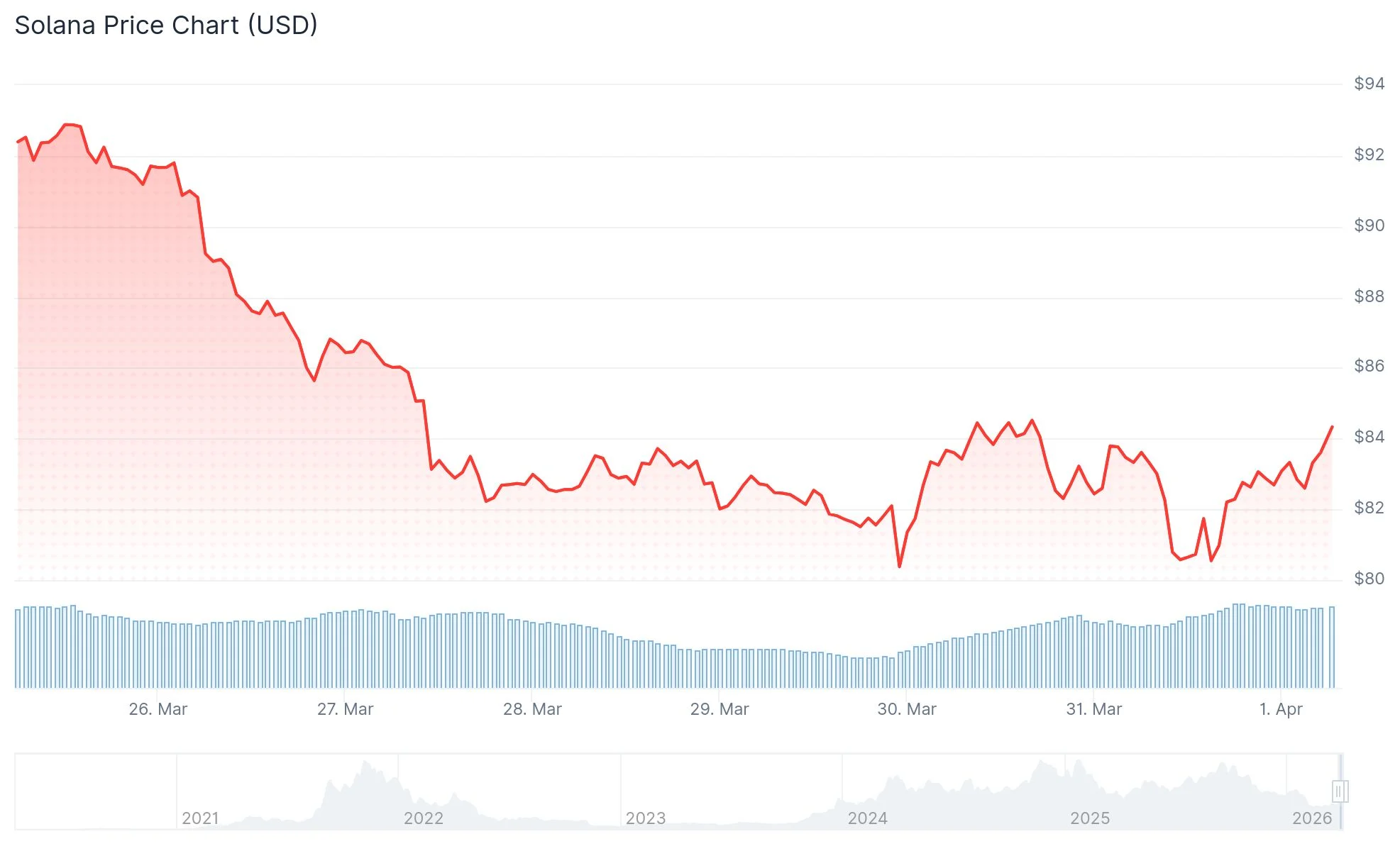
Amid political turbulence, President Donald Trump’s crypto initiative, World Liberty Financial (WLFI), announced a major expansion onto the Solana blockchain through partnerships with Bonk and Raydium. The move integrates WLFI’s USD1 stablecoin into Solana’s DeFi ecosystem, indicating the administration’s ongoing pivot toward blockchain-backed finance.

A post on X described the initiative as part of a broader mission to “rebuild Solana”, emphasizing USD1’s role as a native settlement layer for traders and creators. The partnerships shows a renewed U.S. push to assert technological leadership in decentralized finance despite growing regulatory scrutiny.

Following the elections, Trump claimed Democrats’ victories stemmed from his absence on the ballot—a statement that contrasts sharply with the momentum his digital-asset initiatives continue to build in Washington and beyond.

The Week Ahead

The past week showcased how crypto regulation now sits squarely within mainstream political and economic debate—from New York City’s progressive stance to Washington’s Bitcoin ambitions and Europe’s compliance crackdowns.

As policymakers, developers, and institutions continue to collide, the defining question for the coming months will be: Can crypto’s decentralized ideals survive the realities of state power and financial governance?


Market Opportunity
WINK Logo
WINK Price(WIN)
$0.00002608
$0.00002608$0.00002608
+0.15%
USD
WINK (WIN) Live Price Chart
Disclaimer: The articles reposted on this site are sourced from public platforms and are provided for informational purposes only. They do not necessarily reflect the views of MEXC. All rights remain with the original authors. If you believe any content infringes on third-party rights, please contact service@support.mexc.com for removal. MEXC makes no guarantees regarding the accuracy, completeness, or timeliness of the content and is not responsible for any actions taken based on the information provided. The content does not constitute financial, legal, or other professional advice, nor should it be considered a recommendation or endorsement by MEXC.

You May Also Like

CEO Sandeep Nailwal Shared Highlights About RWA on Polygon

CEO Sandeep Nailwal Shared Highlights About RWA on Polygon

The post CEO Sandeep Nailwal Shared Highlights About RWA on Polygon appeared on BitcoinEthereumNews.com. Polygon CEO Sandeep Nailwal highlighted Polygon’s lead in global bonds, Spiko US T-Bill, and Spiko Euro T-Bill. Polygon published an X post to share that its roadmap to GigaGas was still scaling. Sentiments around POL price were last seen to be bearish. Polygon CEO Sandeep Nailwal shared key pointers from the Dune and RWA.xyz report. These pertain to highlights about RWA on Polygon. Simultaneously, Polygon underlined its roadmap towards GigaGas. Sentiments around POL price were last seen fumbling under bearish emotions. Polygon CEO Sandeep Nailwal on Polygon RWA CEO Sandeep Nailwal highlighted three key points from the Dune and RWA.xyz report. The Chief Executive of Polygon maintained that Polygon PoS was hosting RWA TVL worth $1.13 billion across 269 assets plus 2,900 holders. Nailwal confirmed from the report that RWA was happening on Polygon. The Dune and https://t.co/W6WSFlHoQF report on RWA is out and it shows that RWA is happening on Polygon. Here are a few highlights: – Leading in Global Bonds: Polygon holds 62% share of tokenized global bonds (driven by Spiko’s euro MMF and Cashlink euro issues) – Spiko U.S.… — Sandeep | CEO, Polygon Foundation (※,※) (@sandeepnailwal) September 17, 2025 The X post published by Polygon CEO Sandeep Nailwal underlined that the ecosystem was leading in global bonds by holding a 62% share of tokenized global bonds. He further highlighted that Polygon was leading with Spiko US T-Bill at approximately 29% share of TVL along with Ethereum, adding that the ecosystem had more than 50% share in the number of holders. Finally, Sandeep highlighted from the report that there was a strong adoption for Spiko Euro T-Bill with 38% share of TVL. He added that 68% of returns were on Polygon across all the chains. Polygon Roadmap to GigaGas In a different update from Polygon, the community…
Share
BitcoinEthereumNews2025/09/18 01:10
Qatar wealth fund commits $25bn to Goldman investments

Qatar wealth fund commits $25bn to Goldman investments

The Qatar Investment Authority (QIA) has signed a preliminary agreement with Goldman Sachs, committing $25 billion in investments to US managed funds and co-investment
Share
Agbi2026/01/21 13:38
Positive view remains intact above 185.00, with bullish RSI momentum

Positive view remains intact above 185.00, with bullish RSI momentum

The post Positive view remains intact above 185.00, with bullish RSI momentum appeared on BitcoinEthereumNews.com. The EUR/JPY cross loses ground near 185.25 during
Share
BitcoinEthereumNews2026/01/21 13:24