The post Texas Governor Announces Reelection Bid, Proposes Property Tax Relief appeared on BitcoinEthereumNews.com. Texas Gov. Greg Abbott speaks at a press conference in Houston, Wednesday, Oct. 1, 2025. (Jason Fochtman/Houston Chronicle via Getty Images) Houston Chronicle via Getty Images Texas Governor Greg Abbott (R) announced the launch of his reelection campaign in Houston this past Sunday evening. Bringing school choice to Texas was the dominant policy proposal on which Abbott’s last reelection campaign in 2022 was based, a goal that he has since accomplished with the enactment of an education savings account program earlier this year. In conjunction with the kick off of his bid for a fourth term, Abbott announced that he will be campaigning on a property tax relief and limitation plan comprised of six pillars. “We are going to turn the tables on local taxing authorities, put the power with the people, and end out-of-control property taxes in Texas,” Abbott said about his property tax reform package, which entails a cap on the growth of local government spending. Governor Abbott is proposing that local government spending be limited by state law to an annual growth rate of 3.5% or the rate of inflation, whichever is lower. Abbott’s property tax relief package also calls for a two-thirds supermajority voter approval requirement for all property tax hikes and the creation of a process through which citizens can cut local tax rate. Abbott’s plan also lowers the state cap on growth in appraised value from 10% to 3%, changes the appraisal cycle from every two to every five years, and calls for a constitutional amendment to eliminate school district property taxes. “There’s a housing affordability crisis in the large urban and suburban areas of Texas and out of control property taxes are a chief cause,” says Matt Mackowiak, an Austin-based GOP strategist who helped defeat a property tax hike on the ballot in… The post Texas Governor Announces Reelection Bid, Proposes Property Tax Relief appeared on BitcoinEthereumNews.com. Texas Gov. Greg Abbott speaks at a press conference in Houston, Wednesday, Oct. 1, 2025. (Jason Fochtman/Houston Chronicle via Getty Images) Houston Chronicle via Getty Images Texas Governor Greg Abbott (R) announced the launch of his reelection campaign in Houston this past Sunday evening. Bringing school choice to Texas was the dominant policy proposal on which Abbott’s last reelection campaign in 2022 was based, a goal that he has since accomplished with the enactment of an education savings account program earlier this year. In conjunction with the kick off of his bid for a fourth term, Abbott announced that he will be campaigning on a property tax relief and limitation plan comprised of six pillars. “We are going to turn the tables on local taxing authorities, put the power with the people, and end out-of-control property taxes in Texas,” Abbott said about his property tax reform package, which entails a cap on the growth of local government spending. Governor Abbott is proposing that local government spending be limited by state law to an annual growth rate of 3.5% or the rate of inflation, whichever is lower. Abbott’s property tax relief package also calls for a two-thirds supermajority voter approval requirement for all property tax hikes and the creation of a process through which citizens can cut local tax rate. Abbott’s plan also lowers the state cap on growth in appraised value from 10% to 3%, changes the appraisal cycle from every two to every five years, and calls for a constitutional amendment to eliminate school district property taxes. “There’s a housing affordability crisis in the large urban and suburban areas of Texas and out of control property taxes are a chief cause,” says Matt Mackowiak, an Austin-based GOP strategist who helped defeat a property tax hike on the ballot in…

Texas Governor Announces Reelection Bid, Proposes Property Tax Relief

For feedback or concerns regarding this content, please contact us at crypto.news@mexc.com

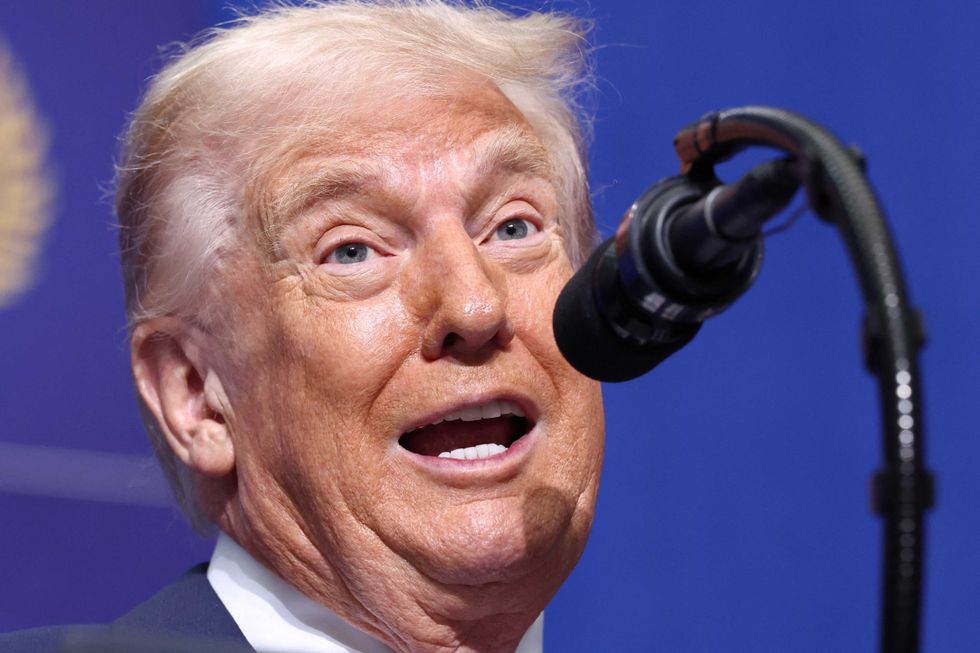
Texas Gov. Greg Abbott speaks at a press conference in Houston, Wednesday, Oct. 1, 2025. (Jason Fochtman/Houston Chronicle via Getty Images)

Houston Chronicle via Getty Images

Texas Governor Greg Abbott (R) announced the launch of his reelection campaign in Houston this past Sunday evening. Bringing school choice to Texas was the dominant policy proposal on which Abbott’s last reelection campaign in 2022 was based, a goal that he has since accomplished with the enactment of an education savings account program earlier this year. In conjunction with the kick off of his bid for a fourth term, Abbott announced that he will be campaigning on a property tax relief and limitation plan comprised of six pillars.

“We are going to turn the tables on local taxing authorities, put the power with the people, and end out-of-control property taxes in Texas,” Abbott said about his property tax reform package, which entails a cap on the growth of local government spending. Governor Abbott is proposing that local government spending be limited by state law to an annual growth rate of 3.5% or the rate of inflation, whichever is lower.

Abbott’s property tax relief package also calls for a two-thirds supermajority voter approval requirement for all property tax hikes and the creation of a process through which citizens can cut local tax rate. Abbott’s plan also lowers the state cap on growth in appraised value from 10% to 3%, changes the appraisal cycle from every two to every five years, and calls for a constitutional amendment to eliminate school district property taxes.

“There’s a housing affordability crisis in the large urban and suburban areas of Texas and out of control property taxes are a chief cause,” says Matt Mackowiak, an Austin-based GOP strategist who helped defeat a property tax hike on the ballot in Austin this month. “Gov. Abbott has proposed a serious, practical, thoughtful plan to address it. I expect it to gain political support quickly and be the central issue of the 2027 legislative session, or even a special session in 2026.”

Governor Abbott, Lt. Governor Dan Patrick (R), Speaker Dustin Burrows (R), and their caucuses have enacted multiple property tax relief and limitation measures in recent years. While those actions, such as the property tax limitation measure that lawmakers strengthened in 2019, have made property tax bills lower than would otherwise be the case by billions of dollars, high property tax burdens remain a top concern for a host of reasons.

Despite the relief measures enacted in recent years, The Texan’s Brad Johnson explains that “the sting of property tax bills — a combination of rising property values in the state, increased costs via post-COVID-19 pandemic inflation that drove spending increases, and spending increases at the local level in and of themselves — remains a continuous theme in Texas’ political scene.” Many legislators, Johnson adds, say that “one of the top, if not the top issue mentioned when knocking doors is property taxes.”

“Under current state law, localities may increase taxes by a certain percentage before voter approval is required — 3.5% for cities and counties and 2.5% for school districts,” Johnson explained of the existing state limit. “During the last special session of the year, Abbott and GOP leadership tried to lower the city and county line to 2.5% also, but it collapsed under its own weight due to opposition from Democrats and the right flank of the Republican caucus.”

Johnson predicts that Abbott’s proposal to enact a two-thirds majority voter approval requirement for any local property tax hikes will be difficult to win approval in the Texas Legislature, “given the fact that it went absolutely nowhere this year in either chamber.” However, should Abbott have success in electing more supporters of his local tax and spending limitation measures to the Texas Legislature next year, as he did with his proposal to enact an education savings account program, that would improve the prospects for passage.

Abbott is not the only governor of a no-income-tax state who has made property tax relief a top priority moving forward. Governor Ron DeSantis (R-Fla.) is currently urging legislators in his state to place a constitutional amendment to the 2026 ballot that would phase out property taxes in Florida over time.

However, it’s not just local officials who are either wary of or averse to property tax repeal efforts. “Replacing the largest source of local tax revenue is no easy task,” wrote Jared Walczak, vice president of state projects at the Tax Foundation, in an October 20 blog post. “It is rendered still more difficult by the necessity of replacing current revenues—or some substantial percentage of them—in each taxing jurisdiction, since alternative revenue streams have different geographic distributions. Even if a high-rate local sales tax were able to offset property taxes in a community dominated by retail establishments, for instance, it would be woefully inadequate to the task of replacing revenue in a bedroom community or in farm country.”

Property tax collections make up approximately 70% of all local government revenue in the U.S. If lawmakers pursuing property tax relief facilitate it by expanding the sales tax base or raising other taxes, they’ll open themselves up to the criticism that they’re enacting a tax shift, not tax relief. Governors and lawmakers who facilitate property tax relief not with offsetting tax increases, but with lower rates of growth in local government spending, as Governor Abbott is proposing in Texas, are more likely to garner support and likely to face less political resistance.

Based on how the regular and subsequent special legislative sessions played out earlier this year in Austin, a change in the makeup of the Texas statehouse in 2026 would improve the prospects of passage for Abbott’s property tax relief package. Governor Abbott won his last reelection campaign with a mandate to enact school choice, along with a majority of incoming legislators who backed that goal. By applying that same template to property tax relief, Abbott is setting the table for policy changes in 2027 that will sufficiently wrangle property tax bills such that they are no longer the most pressing concern for Texas taxpayers.

Source: https://www.forbes.com/sites/patrickgleason/2025/11/12/texas-governor-announces-reelection-bid-proposes-property-tax-relief/


Market Opportunity
CreatorBid Logo
CreatorBid Price(BID)
$0,008573
$0,008573$0,008573
-0,17%
USD
CreatorBid (BID) Live Price Chart
Disclaimer: The articles reposted on this site are sourced from public platforms and are provided for informational purposes only. They do not necessarily reflect the views of MEXC. All rights remain with the original authors. If you believe any content infringes on third-party rights, please contact crypto.news@mexc.com for removal. MEXC makes no guarantees regarding the accuracy, completeness, or timeliness of the content and is not responsible for any actions taken based on the information provided. The content does not constitute financial, legal, or other professional advice, nor should it be considered a recommendation or endorsement by MEXC.

You May Also Like

TransFi Secures Pivotal $19.2M Funding to Revolutionize Global Stablecoin Payments

TransFi Secures Pivotal $19.2M Funding to Revolutionize Global Stablecoin Payments

BitcoinWorld TransFi Secures Pivotal $19.2M Funding to Revolutionize Global Stablecoin Payments In a significant move for the digital payments sector, stablecoin
Share
bitcoinworld2026/03/18 11:50
Wormhole launches reserve tying protocol revenue to token

Wormhole launches reserve tying protocol revenue to token

The post Wormhole launches reserve tying protocol revenue to token appeared on BitcoinEthereumNews.com. Wormhole is changing how its W token works by creating a new reserve designed to hold value for the long term. Announced on Wednesday, the Wormhole Reserve will collect onchain and offchain revenues and other value generated across the protocol and its applications (including Portal) and accumulate them into W, locking the tokens within the reserve. The reserve is part of a broader update called W 2.0. Other changes include a 4% targeted base yield for tokenholders who stake and take part in governance. While staking rewards will vary, Wormhole said active users of ecosystem apps can earn boosted yields through features like Portal Earn. The team stressed that no new tokens are being minted; rewards come from existing supply and protocol revenues, keeping the cap fixed at 10 billion. Wormhole is also overhauling its token release schedule. Instead of releasing large amounts of W at once under the old “cliff” model, the network will shift to steady, bi-weekly unlocks starting October 3, 2025. The aim is to avoid sharp periods of selling pressure and create a more predictable environment for investors. Lockups for some groups, including validators and investors, will extend an additional six months, until October 2028. Core contributor tokens remain under longer contractual time locks. Wormhole launched in 2020 as a cross-chain bridge and now connects more than 40 blockchains. The W token powers governance and staking, with a capped supply of 10 billion. By redirecting fees and revenues into the new reserve, Wormhole is betting that its token can maintain value as demand for moving assets and data between chains grows. This is a developing story. This article was generated with the assistance of AI and reviewed by editor Jeffrey Albus before publication. Get the news in your inbox. Explore Blockworks newsletters: Source: https://blockworks.co/news/wormhole-launches-reserve
Share
BitcoinEthereumNews2025/09/18 01:55
U.S SEC issues first-ever definitions for what crypto assets are securities

U.S SEC issues first-ever definitions for what crypto assets are securities

The post U.S SEC issues first-ever definitions for what crypto assets are securities appeared on BitcoinEthereumNews.com. For the first time, the U.S Securities
Share
BitcoinEthereumNews2026/03/18 12:24