Injective Price Prediction: Will INJ’s Remarkable Protocol Development Propel It Past $50 by 2030?

BitcoinWorld
Injective Price Prediction: Will INJ’s Remarkable Protocol Development Propel It Past $50 by 2030?
As blockchain technology continues evolving in 2025, the Injective protocol emerges as a significant layer-1 blockchain specifically designed for decentralized finance applications. Market analysts globally now examine whether INJ, the network’s native token, can potentially reclaim the $50 price level between 2026 and 2030. This comprehensive analysis explores the technical fundamentals, market dynamics, and protocol developments that could influence Injective’s future valuation.
Injective Protocol Fundamentals and Current Market Position
The Injective blockchain distinguishes itself through several technical innovations. Firstly, it operates as a fully decentralized exchange protocol supporting spot trading, derivatives, and forex markets. Secondly, the network utilizes a Tendermint-based proof-of-stake consensus mechanism, enabling sub-second block finality. Thirdly, Injective maintains full Ethereum Virtual Machine compatibility while offering zero gas fees for users.
According to blockchain analytics firm Messari, Injective processed over $45 billion in cumulative trading volume during 2024. The protocol currently supports more than 50 decentralized applications across various sectors including prediction markets, lending protocols, and NFT marketplaces. These metrics provide essential context for evaluating the network’s growth potential through 2030.
Technical Analysis and Historical Price Performance
INJ’s price history reveals several significant patterns. The token reached its all-time high of $52.75 in April 2024 during a broader cryptocurrency market rally. Subsequently, it experienced a correction phase, consolidating between $18 and $32 throughout late 2024 and early 2025. Technical analysts note that INJ maintains strong support at the $22 level, which has been tested multiple times without breaking.
Market data from CoinGecko indicates several important metrics:
- Current circulating supply: 83.7 million INJ (83.7% of total supply)
- Maximum supply: 100 million INJ
- Market capitalization rank: Consistently within top 50 cryptocurrencies
- Trading volume ratio: Average daily volume represents 8-12% of market cap
Institutional Adoption and Partnership Developments
Several major developments could potentially impact INJ’s price trajectory. Notably, the Injective ecosystem announced integration with traditional finance institutions during Q1 2025. Additionally, the protocol secured partnerships with three major Asian cryptocurrency exchanges for institutional trading infrastructure. These developments typically correlate with increased network utility and potential price appreciation.
Market Factors Influencing 2026-2030 Price Trajectory
Multiple external factors will likely affect INJ’s price movement through 2030. The broader cryptocurrency market cycle remains a primary consideration. Historical data indicates that Bitcoin halving events, occurring approximately every four years, often precede extended bull markets across the cryptocurrency sector. The next Bitcoin halving is scheduled for 2028, potentially creating favorable conditions for altcoins like INJ.
Regulatory developments represent another crucial factor. The European Union’s Markets in Crypto-Assets regulation, fully implemented in 2025, provides clearer guidelines for decentralized finance protocols. This regulatory clarity could potentially increase institutional participation in networks like Injective. However, regulatory approaches vary significantly across different jurisdictions, creating both opportunities and challenges.
| Year | Planned Protocol Upgrades | Expected Impact |
|---|---|---|
| 2025 | Volan Mainnet Upgrade | Enhanced interoperability and institutional features |
| 2026 | Cross-chain expansion to 5 additional networks | Increased user base and liquidity |
| 2027 | Advanced derivatives marketplace launch | New revenue streams and trading volume |
| 2028-2030 | Enterprise adoption initiatives | Mainstream financial integration |
Comparative Analysis with Competing Layer-1 Protocols
Understanding INJ’s position requires examining competing layer-1 blockchain networks. Solana, Avalanche, and Polygon currently represent Injective’s primary competitors in the decentralized finance sector. Each protocol demonstrates distinct technical approaches and market positioning.
Solana emphasizes transaction speed, processing approximately 2,000-3,000 transactions per second. Avalanche focuses on subnet architecture allowing customized blockchain implementations. Polygon prioritizes Ethereum compatibility and scaling solutions. Injective differentiates itself through specialized financial infrastructure and zero gas fees. This competitive landscape will likely evolve significantly through 2030 as protocols implement new technological innovations.
Tokenomics and Supply Dynamics Through 2030
INJ’s token economics incorporate several mechanisms that could influence price. The protocol employs a deflationary model where transaction fees are used to buy back and burn INJ tokens. According to the Injective Foundation’s transparency report, approximately 6 million INJ tokens were burned during 2024, representing about 6% of the total supply scheduled for removal from circulation.
The token release schedule indicates that the remaining 16.3 million INJ tokens will enter circulation gradually through 2030. This controlled emission rate, combined with the burn mechanism, creates potential supply-side pressure that could support price appreciation if demand increases proportionally. However, market conditions ultimately determine how these tokenomics translate into actual price movement.
Expert Perspectives on Price Potential and Risk Factors
Financial analysts approach INJ price predictions with varying methodologies. Quantitative models typically incorporate network metrics including daily active addresses, transaction volume, and protocol revenue. Qualitative assessments consider team execution, competitive advantages, and market timing. Most analysts emphasize that cryptocurrency price predictions inherently involve significant uncertainty.
Bloomberg Intelligence reported in March 2025 that decentralized exchange volumes could potentially grow 300-400% by 2030. This projection, if accurate, would benefit specialized protocols like Injective. However, the report also noted potential challenges including regulatory uncertainty, technological hurdles, and competition from both traditional and decentralized alternatives.
Risk factors that could potentially limit INJ’s price appreciation include:
- Broader cryptocurrency market downturns
- Technological vulnerabilities or security incidents
- Regulatory restrictions in major markets
- Competition from emerging layer-1 protocols
- Macroeconomic factors affecting risk asset valuations
Conclusion
This Injective price prediction analysis examines multiple factors that could influence INJ’s trajectory through 2030. The protocol’s specialized focus on decentralized finance infrastructure, combined with its technical innovations and growing ecosystem, provides fundamental support for potential price appreciation. However, achieving the $50 price level depends on successful protocol execution, favorable market conditions, and continued adoption growth. Investors should consider both the opportunities and risks when evaluating INJ’s long-term potential within the evolving blockchain landscape.
FAQs
Q1: What is the Injective protocol’s main technological advantage?
The Injective protocol offers a fully decentralized exchange infrastructure with zero gas fees for users, sub-second transaction finality, and full Ethereum Virtual Machine compatibility, making it particularly suited for sophisticated financial applications.
Q2: How does INJ’s token burn mechanism work?
A portion of all transaction fees on the Injective network is used to automatically purchase INJ tokens from the market, which are then permanently removed from circulation through a burn process, creating deflationary pressure on the remaining supply.
Q3: What are the main risks for INJ’s price appreciation through 2030?
Primary risks include broader cryptocurrency market volatility, regulatory changes affecting decentralized finance, technological competition from other layer-1 protocols, potential security vulnerabilities, and macroeconomic factors influencing risk asset valuations.
Q4: How does Injective differentiate from general-purpose blockchains?
Unlike general-purpose blockchains, Injective specializes specifically in decentralized financial applications, offering built-in modules for trading derivatives, forex, and other financial instruments without requiring additional smart contract layers.
Q5: What metrics should investors monitor for INJ price analysis?
Key metrics include daily active addresses, total value locked in decentralized applications, trading volume across Injective-based exchanges, protocol revenue, token burn rate, developer activity, and partnership announcements indicating ecosystem growth.
This post Injective Price Prediction: Will INJ’s Remarkable Protocol Development Propel It Past $50 by 2030? first appeared on BitcoinWorld.


You May Also Like
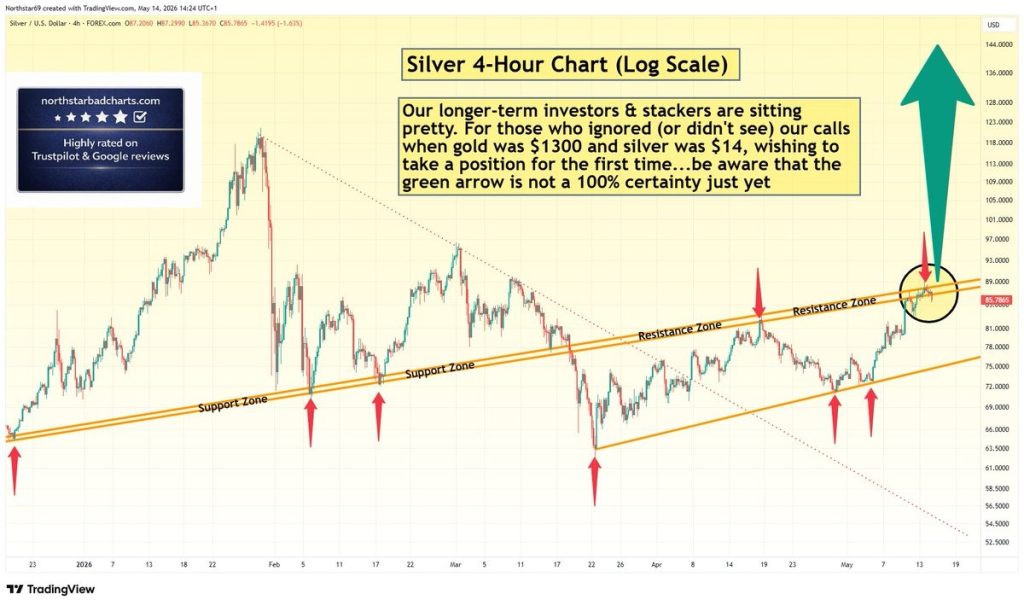
Silver Price Warning: Green Arrow Setup Is Not Confirmed – Wait for Clear Signal

Facebook spotlights African cinema in 6th ‘Made by Africa, loved by the world’ campaign