Grayscale Launches Avalanche Staking ETF on Nasdaq, Combining Spot AVAX Exposure With On-Chain Yield
Grayscale Investments has listed its Avalanche Staking ETF on the Nasdaq under the ticker GAVA, becoming one of the first products to offer traditional investors simultaneous spot exposure to a proof-of-stake asset and the yield that comes from staking it. The launch represents the latest expansion of the crypto ETF market beyond Bitcoin and Ethereum into the broader altcoin ecosystem.
The fund debuted holding approximately 572,000 AVAX with an initial net asset value of $23.33 per share. GAVA is structured to provide direct spot exposure to AVAX, the native token of the Avalanche network, while staking those holdings to earn network rewards. Staking rewards on Avalanche averaged between 7% and 7.36% in 2025, though Grayscale notes those returns are not guaranteed going forward. To mark the launch, the firm is offering the fund at 0% fees for an introductory period. The product originated as the Grayscale Avalanche Trust, a private placement first launched in August 2024, before being converted and listed publicly following Nasdaq’s filing of the required 19b-4 application in March 2025.
Why Staking Inside an ETF Wrapper Matters
The structural innovation in GAVA is not the spot AVAX exposure, which alone would be a straightforward extension of what Grayscale has done with Bitcoin and Ethereum products. The distinguishing feature is the staking component. Most spot crypto ETFs hold the underlying asset passively, meaning investors receive price exposure but none of the yield the asset generates when put to work securing the network. GAVA attempts to pass that yield through to shareholders, effectively turning a passive holding into a productive one within a regulated listed product.
For institutional allocators and retail investors who cannot or do not want to manage validator infrastructure, private keys, or staking mechanics directly, the fund offers a way to capture yield that would otherwise require hands-on participation in the Avalanche network. Whether the staking yield survives the fee structure and fund expenses over time in a way that meaningfully benefits shareholders is a question that will become clearer as the introductory zero-fee period ends and the fund’s real cost structure comes into effect.
Avalanche’s Institutional Footprint
The timing of the launch sits against a backdrop of growing institutional engagement with the Avalanche network specifically. FIFA, private equity firm KKR, and Sports Illustrated are among the entities that have built or deployed applications on Avalanche’s infrastructure, a roster that gives the network a different institutional profile than many of its layer-1 competitors. That existing relationship between Avalanche and traditional finance players makes GAVA a more natural fit for institutional portfolios than a staking ETF built around a network with a purely retail or DeFi-native user base.
The Nasdaq’s willingness to process the 19b-4 conversion filing and ultimately list the product reflects the regulatory momentum that followed the approval of spot Bitcoin and Ethereum ETFs. Each successive approval has incrementally expanded the map of what the SEC and exchange operators are prepared to accommodate, and Avalanche with its institutional partnerships and established staking infrastructure represented a credible next step in that progression.
Risk Factors Investors Should Understand
Grayscale has been explicit that GAVA is not a registered investment company under the Investment Company Act of 1940. That distinction matters. Products structured outside the 40 Act framework do not carry the same investor protections that apply to traditional mutual funds and ETFs, including requirements around diversification, leverage limits, and certain disclosure standards. The fund is an exchange-traded product, and investors are exposed to the full volatility of AVAX prices in addition to the operational and smart contract risks that come with on-chain staking.
The staking yield, while historically attractive at around 7%, is a network parameter that can change. Validator reward rates on proof-of-stake networks fluctuate based on total staked supply, network activity, and protocol governance decisions. A yield that averaged 7% in 2025 is not a contractual return, and investors treating it as a fixed income equivalent would be mispricing the risk profile considerably.
The post Grayscale Launches Avalanche Staking ETF on Nasdaq, Combining Spot AVAX Exposure With On-Chain Yield appeared first on ETHNews.


You May Also Like
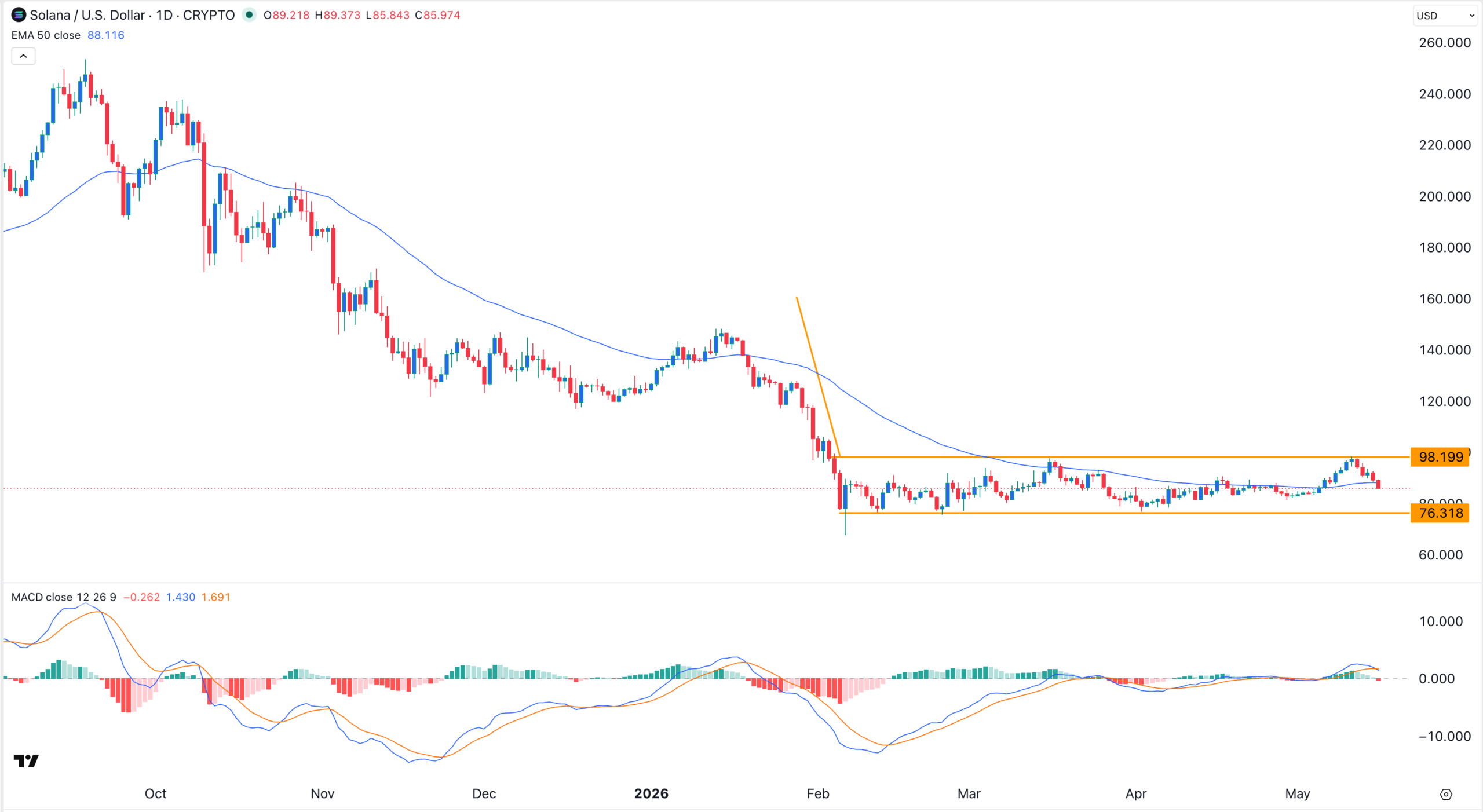
Solana Price is Hanging on a Thread as Crypto Fear and Greed Index Falls

House Agriculture Leaders Urge Trump to Nominate Full CFTC Commission as CLARITY Act Moves Forward