The post Swiss Franc remains on the defensive despite geopolitical tensions appeared on BitcoinEthereumNews.com. The Swiss Franc (CHF) is experiencing marked lossesThe post Swiss Franc remains on the defensive despite geopolitical tensions appeared on BitcoinEthereumNews.com. The Swiss Franc (CHF) is experiencing marked losses

Swiss Franc remains on the defensive despite geopolitical tensions

For feedback or concerns regarding this content, please contact us at crypto.news@mexc.com

The Swiss Franc (CHF) is experiencing marked losses against both the Euro (EUR) and the US Dollar (USD) as the American session draws to a close on Thursday.

Focus remains on the Middle East, energy prices, and the SNB

The ongoing depreciation of the Swiss currency has pushed USD/CHF to fresh multi-day highs around 0.7850, while EUR/CHF has managed to reverse two consecutive days of losses, advancing modestly to the 0.9040 zone.

In the current flight-to-safety context, the Franc appears to be struggling against the Greenback. However, it is widely anticipated that it will regain demand if the geopolitical landscape deteriorates further, which, regrettably, seems quite likely.

Another factor supporting the CHF is expected to arise from the energy sector, as both crude oil and gas prices continue their intense rally unabated, raising doubts about any prospects of alleviating inflationary pressures on both sides of the Atlantic.

In the meantime, the possibility of intervention by the Swiss National Bank (SNB) should caution investors against pursuing further appreciation of the Franc, particularly in the current climate of safe haven demand.

Tech levels to watch

The surpass of the March ceiling at 0.7878 (March 3) could motivate USD/CHF to face its interim 100-day SMA at 0.7899, seconded by the always relevant 200-day SMA at 0.7959. In contrast, once the March base at 0.7668 (March 2) is breached, the pair could shift its attention to the February trough at 0.7628 (February 10) and then the 2026 valley at 0.7601 (January 28).

Regarding EUR/CHF, next on the downside comes the all-time low at 0.8980 (March 9).

SNB FAQs

The Swiss National Bank (SNB) is the country’s central bank. As an independent central bank, its mandate is to ensure price stability in the medium and long term. To ensure price stability, the SNB aims to maintain appropriate monetary conditions, which are determined by the interest rate level and exchange rates. For the SNB, price stability means a rise in the Swiss Consumer Price Index (CPI) of less than 2% per year.

The Swiss National Bank (SNB) Governing Board decides the appropriate level of its policy rate according to its price stability objective. When inflation is above target or forecasted to be above target in the foreseeable future, the bank will attempt to tame excessive price growth by raising its policy rate. Higher interest rates are generally positive for the Swiss Franc (CHF) as they lead to higher yields, making the country a more attractive place for investors. On the contrary, lower interest rates tend to weaken CHF.

Yes. The Swiss National Bank (SNB) has regularly intervened in the foreign exchange market in order to avoid the Swiss Franc (CHF) appreciating too much against other currencies. A strong CHF hurts the competitiveness of the country’s powerful export sector. Between 2011 and 2015, the SNB implemented a peg to the Euro to limit the CHF advance against it. The bank intervenes in the market using its hefty foreign exchange reserves, usually by buying foreign currencies such as the US Dollar or the Euro. During episodes of high inflation, particularly due to energy, the SNB refrains from intervening markets as a strong CHF makes energy imports cheaper, cushioning the price shock for Swiss households and businesses.

The SNB meets once a quarter – in March, June, September and December – to conduct its monetary policy assessment. Each of these assessments results in a monetary policy decision and the publication of a medium-term inflation forecast.

Source: https://www.fxstreet.com/news/swiss-franc-remains-on-the-defensive-despite-geopolitical-tensions-202603121859


Market Opportunity
Lorenzo Protocol Logo
Lorenzo Protocol Price(BANK)
$0.03768
$0.03768$0.03768
+0.05%
USD
Lorenzo Protocol (BANK) Live Price Chart
Disclaimer: The articles reposted on this site are sourced from public platforms and are provided for informational purposes only. They do not necessarily reflect the views of MEXC. All rights remain with the original authors. If you believe any content infringes on third-party rights, please contact crypto.news@mexc.com for removal. MEXC makes no guarantees regarding the accuracy, completeness, or timeliness of the content and is not responsible for any actions taken based on the information provided. The content does not constitute financial, legal, or other professional advice, nor should it be considered a recommendation or endorsement by MEXC.

You May Also Like

Big U.S. banks cut prime rate to 7.25% after Fed’s interest rate cut

Big U.S. banks cut prime rate to 7.25% after Fed’s interest rate cut

The post Big U.S. banks cut prime rate to 7.25% after Fed’s interest rate cut appeared on BitcoinEthereumNews.com. Big U.S. banks have lowered their prime lending rate to 7.25%, down from 7.50%, after the Federal Reserve announced a 25 basis point rate cut on Wednesday, the first adjustment since December. The change directly affects consumer and business loans across the country. According to Reuters, JPMorgan Chase, Citigroup, Wells Fargo, and Bank of America all implemented the new rate immediately following the Fed’s announcement. The prime rate is what banks charge their most trusted borrowers, usually large companies. But it’s also the base for what everyone else pays; mortgages, small business loans, credit cards, and personal loans. With this cut, borrowing gets slightly cheaper across the board. Inflation still isn’t under control. It’s above the 2% goal, and the impact of President Donald Trump’s tariffs remains uncertain. Fed reacts to rising unemployment concerns Richard Flynn, managing director at Charles Schwab UK, said jobless claims are at their highest in almost four years, despite the Fed originally planning to keep rates unchanged through the summer. “Although the summer began with expectations of holding rates steady, the labor market has shown more signs of weakness than anticipated,” Flynn said. Hiring has slowed because of uncertainty around Trump’s trade policy. Companies are hesitating to add staff, which is why job growth has nearly stalled. As fewer people are hired, spending starts to shrink. And that’s when things start to unravel. That’s what the Fed is trying to get ahead of with this rate cut. The cut also helps banks directly. Lower rates mean more people may qualify for loans again. During the previous rate hikes, lending standards got tighter. Now, with cheaper credit, smaller businesses could get approved again. If well-funded businesses feel confident, they may hire again. That could eventually help the consumer side of the economy bounce back, but that’s…
Share
BitcoinEthereumNews2025/09/18 16:32
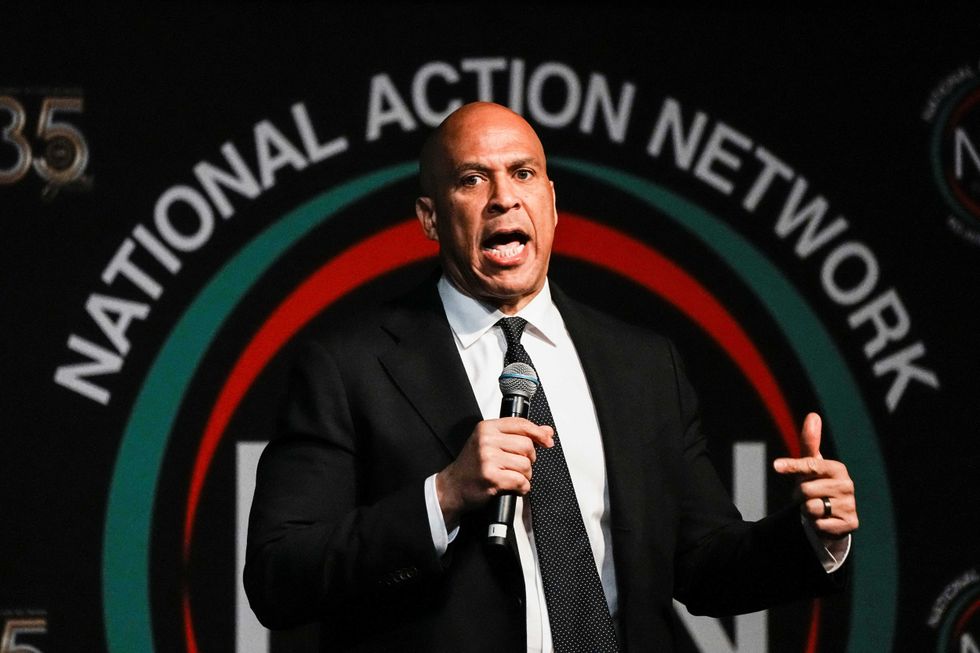
MAGA supporters enraged over Cory Booker's call to action in Michigan

MAGA supporters enraged over Cory Booker's call to action in Michigan

Sen. Cory Booker (D-NJ) delivered a passionate speech at the Michigan Democratic Women's Caucus, telling a crowd, "What we need is foot soldiers for our democracy
Share
Rawstory2026/04/22 08:45
Putin Set for State Visit to China This Week

Putin Set for State Visit to China This Week

Putin Set for State Visit to China Amid Rising Global Geopolitical Tensions Vladimir Putin is reportedly expected to make a state visit to China this week, a cl
Share
Hokanews2026/05/16 22:41

No Chart Skills? Still Profit

No Chart Skills? Still ProfitNo Chart Skills? Still Profit

Copy top traders in 3s with auto trading!