EUR/USD Analysis: Persistent Energy Shock Crushes the Currency Pair – MUFG
BitcoinWorld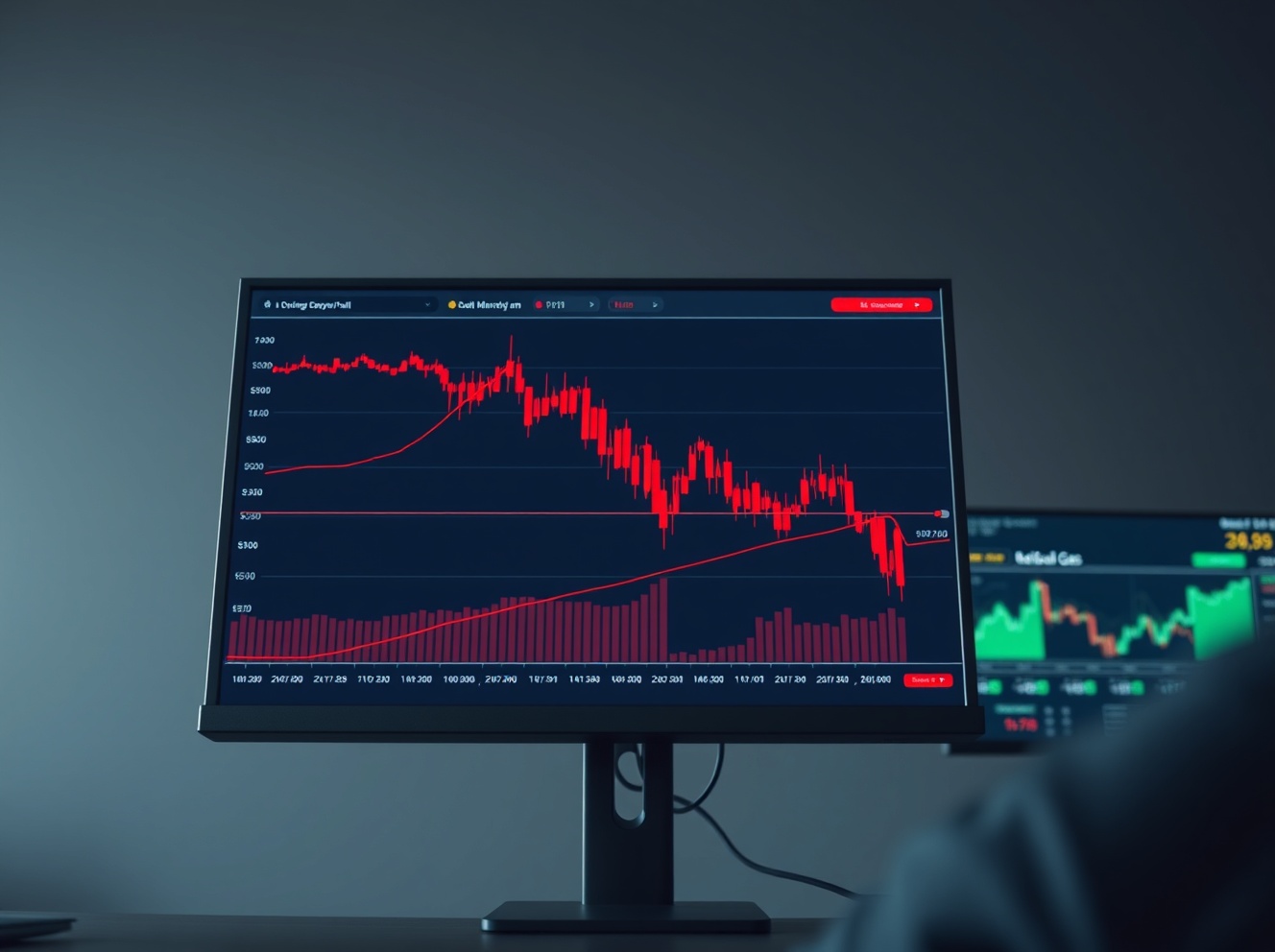
EUR/USD Analysis: Persistent Energy Shock Crushes the Currency Pair – MUFG
LONDON, March 2025 – The EUR/USD currency pair remains firmly under pressure, with analysts at Mitsubishi UFJ Financial Group (MUFG) highlighting a persistent energy shock as the primary catalyst. This ongoing dynamic continues to reshape the fundamental landscape for the euro against the US dollar, creating significant challenges for traders and policymakers across the Eurozone. Consequently, market participants are closely monitoring energy flows and central bank communications for any sign of relief.
EUR/USD Faces Sustained Pressure from Energy Market Volatility
The foreign exchange market consistently reacts to macroeconomic imbalances. Currently, the EUR/USD pair exemplifies this principle. A structural deficit in European energy supplies, particularly natural gas, creates a persistent headwind for the euro. Europe relies heavily on imports to meet its energy demands. Therefore, elevated global energy prices directly translate into a higher import bill for the region. This dynamic worsens the Eurozone’s trade balance, applying consistent downward pressure on its currency.
MUFG’s analysis connects this fundamental pressure directly to price action. The bank’s strategists point to charts showing the pair struggling to reclaim key psychological levels. For instance, the 1.0700 handle has acted as a formidable resistance zone throughout the first quarter of 2025. This technical weakness mirrors the underlying economic strain. Furthermore, comparative currency strength reveals a clear divergence. The US dollar often benefits from its status as a safe-haven asset during periods of global economic uncertainty and commodity price spikes.
Historical Context and the Anatomy of the Modern Energy Shock
Understanding the current pressure requires examining the energy shock’s evolution. The crisis, which began in earnest in 2022, has undergone several phases. Initially, it was a supply shock driven by geopolitical conflict. Subsequently, it transformed into a broader market repricing of long-term energy security. Today, in 2025, the shock manifests as structural volatility. While acute price spikes have moderated, the baseline cost of energy in Europe remains significantly higher than pre-crisis levels and, critically, above US benchmarks.
MUFG’s Expert Analysis on Transmission Channels
Economists at MUFG outline the precise transmission channels from energy markets to the euro’s exchange rate. Firstly, the terms-of-trade shock deteriorates the Eurozone’s current account. Secondly, it fuels inflationary pressures, forcing the European Central Bank (ECB) to maintain a restrictive monetary policy even amid weak growth—a stagflationary mix that undermines currency appeal. Thirdly, it impacts industrial competitiveness, potentially leading to capital outflows. “The energy price differential between Europe and the United States remains a key fundamental weight,” a MUFG report stated recently, emphasizing the persistent nature of the drag.
The data supports this analysis. The following table contrasts key factors influencing EUR/USD:
| Factor | Impact on Euro (EUR) | Impact on US Dollar (USD) |
|---|---|---|
| Energy Import Bill | Negative (Large importer) | Neutral/Positive (Net exporter) |
| Inflation Dynamics | Negative (Sticky core inflation) | Mixed (More normalized) |
| Growth Outlook | Negative (Vulnerable to demand destruction) | Relatively Positive (More resilient domestic energy) |
| Central Bank Policy | Constrained (Balancing inflation vs. growth) | More Flexible |
Market Impacts and Trader Positioning
The tangible market impacts are evident across multiple asset classes. Forex volatility gauges for EUR/USD have remained elevated. Additionally, speculative positioning data from the Commodity Futures Trading Commission (CFTC) has shown net short positions on the euro accumulating during periods of renewed energy price anxiety. Meanwhile, equity markets within the Eurozone, particularly energy-intensive sectors, demonstrate heightened sensitivity to weekly natural gas storage reports. This interconnectedness underscores the energy shock’s pervasive influence.
Risk management strategies have consequently adapted. Many institutional traders now incorporate a dedicated energy risk premium into their euro valuation models. This premium adjusts forecasts based on forward curves for key commodities like TTF natural gas. Moreover, technical analysts watch key support levels, such as the 2024 low near 1.0450, as potential targets if energy disruptions re-emerge. Therefore, chart patterns alone cannot explain the move without this fundamental backdrop.
Conclusion
In conclusion, the EUR/USD pair’s trajectory remains intricately tied to the unresolved European energy situation. MUFG’s assessment that the energy shock continues to apply pressure is supported by trade data, inflation reports, and market sentiment. While currency markets always weigh multiple factors, including relative interest rates and growth differentials, the energy imbalance represents a clear and persistent structural disadvantage for the euro. Until a durable solution to Europe’s energy security and cost dilemma emerges, the path of least resistance for the EUR/USD pair may continue to face downward pressure, defining one of the key forex narratives of 2025.
FAQs
Q1: What is meant by an ‘energy shock’ in the context of EUR/USD?
An energy shock refers to a sudden, sustained increase in the price of essential energy commodities like oil and natural gas. For EUR/USD, it specifically describes the scenario where Europe, a major energy importer, faces significantly higher costs than the United States, which is more energy-independent, thereby hurting the euro’s relative value.
Q2: How does high energy prices directly weaken the euro?
High energy prices weaken the euro through two main channels. First, they increase the Eurozone’s import bill, worsening its trade balance and creating selling demand for euros to pay for energy. Second, they can stunt economic growth and complicate central bank policy, making the region’s assets less attractive to international investors.
Q3: Who is MUFG and why is their analysis important?
MUFG (Mitsubishi UFJ Financial Group) is one of the world’s largest financial institutions and a major player in global currency markets. Their analysis is important because it reflects the views of a key market participant with deep expertise in forex fundamentals and direct insight into client flows and trading sentiment.
Q4: Has the EUR/USD pair ever been this low before?
Yes, the EUR/USD pair has traded at lower levels historically. For example, it fell near parity (1.0000) briefly in 2022 during the initial peak of the energy crisis. The current analysis focuses on the sustained *pressure* and the inability to recover meaningfully, rather than necessarily reaching all-time lows.
Q5: What could relieve the pressure on EUR/USD from the energy shock?
Pressure could be relieved by a sustained drop in global energy prices, a successful acceleration of Europe’s renewable energy transition reducing import dependence, a discovery of major domestic energy resources, or a severe economic downturn in the US that disproportionately hurts the dollar.
This post EUR/USD Analysis: Persistent Energy Shock Crushes the Currency Pair – MUFG first appeared on BitcoinWorld.


You May Also Like

Prediction markets get CFTC relief as legal battles widen

How and Where to Buy egoD (EGOD) Crypto: Complete Guide 2026