The race to throw dirt on former National Counterterrorism Center Director Joe Kent’s allegations about the Iran war has a “disturbingly familiar” feel, accordingThe race to throw dirt on former National Counterterrorism Center Director Joe Kent’s allegations about the Iran war has a “disturbingly familiar” feel, according

Furious scramble to discredit former Trump official is 'disturbingly familiar'

2026/03/19 05:03
3 min read
For feedback or concerns regarding this content, please contact us at crypto.news@mexc.com

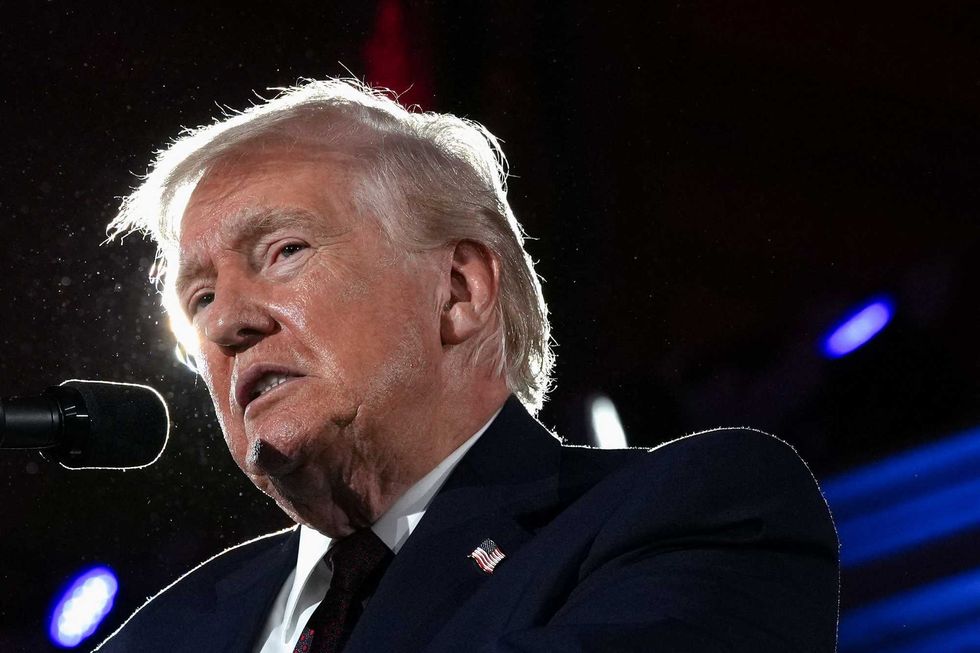
The race to throw dirt on former National Counterterrorism Center Director Joe Kent’s allegations about the Iran war has a “disturbingly familiar” feel, according to one former top official from the Department of Homeland Security.

Kent punctured President Donald Trump’s public reasons for the Iran war while resigning from his post. Kent’s resignation letter said that Iran “posed no imminent threat,” making Trump into a liar over his statements that the U.S. was acting in self-defense.

“A president must demonstrate that the danger was real, urgent and left no time for deliberation,” said an iPaper analysis from Miles Taylor, a former chief of staff at the U.S. Department of Homeland Security. “That’s why, hours after the (Iran) offensive began, Trump quickly released a statement saying his objective was “eliminating imminent threats from the Iranian regime.”

Trump predictably tried to downplay Kent’s contrary statements, saying that he found him to be “weak on security.”

But as Taylor writes, “you don’t diffuse a bomb by insulting it.”

At some point, investigators, prosecutors and congressional committees will dig into the Kent allegations. They will have reason to ask the question that eventually brought down Richard Nixon in the Watergate era: “What did the President know and when did he know it?”

The question may get its first airing during the congressional committee asking U.S. Director of National Intelligence Tulsi Gabbard questions. She will have to state under oath whether there was indeed an imminent threat.

Taylor posed other questions that will emerge at some point: “What did the President know about Iranian intentions and capabilities before the first strike? What did his intelligence community tell him about the timeline of any threat? Did he ignore or override assessments that contradicted a decision he’d already made? Did he knowingly mislead Congress?”

Meanwhile, Kent will not go away quietly. He is set to hit the podcasting circuit, which will keep his allegations in the news.

Taylor anticipates what the White House reaction will be. “I know something about how this President handles inconvenient truths. I served in the first Trump administration as his chief of staff at the Department of Homeland Security, and I resigned in protest because of what I saw. On matters of life and death, I encountered a president whose national security decision-making was ad hoc, impulsive and often recklessly indifferent to facts that complicated his preferred course of action.”

Trump “didn’t weigh options,” Taylor adds. “He made decisions and then demanded justifications after the fact, including when policies were foreseeably unlawful.”

That formula and the attacks on Kent look “disturbingly familiar,” Taylor writes. He predicts others will join in “what is beginning to look like a fracturing dam.”

“Aides to the President will continue to attack Kent and limit the fallout,” Miller writes. “In reality, they’re terrified of what comes next. In the first term, when people like me started resigning in protest, it wasn’t an aberration. It became a wave. And that wave swept Trump out of the White House.”

  • george conway
  • noam chomsky
  • civil war
  • Kayleigh mcenany
  • Melania trump
  • drudge report
  • paul krugman
  • Lindsey graham
  • Lincoln project
  • al franken bill maher
  • People of praise
  • Ivanka trump
  • eric trump
Disclaimer: The articles reposted on this site are sourced from public platforms and are provided for informational purposes only. They do not necessarily reflect the views of MEXC. All rights remain with the original authors. If you believe any content infringes on third-party rights, please contact crypto.news@mexc.com for removal. MEXC makes no guarantees regarding the accuracy, completeness, or timeliness of the content and is not responsible for any actions taken based on the information provided. The content does not constitute financial, legal, or other professional advice, nor should it be considered a recommendation or endorsement by MEXC.

You May Also Like

Leonardo AI Unveils Comprehensive Image Editing Suite with Six Model Options

Leonardo AI Unveils Comprehensive Image Editing Suite with Six Model Options

Leonardo AI releases detailed guide to AI image editing featuring Nano Banana, GPT Image 1.5, and Flux models as competition heats up with Adobe, Google, and Canva
Share
BlockChain News2026/03/19 12:39
RBA warns high and rising risk of severe shock to world economy amid Iran war

RBA warns high and rising risk of severe shock to world economy amid Iran war

The post RBA warns high and rising risk of severe shock to world economy amid Iran war appeared on BitcoinEthereumNews.com. The Reserve Bank of Australia (RBA)
Share
BitcoinEthereumNews2026/03/19 11:49
Headwind Helps Best Wallet Token

Headwind Helps Best Wallet Token

The post Headwind Helps Best Wallet Token appeared on BitcoinEthereumNews.com. Google has announced the launch of a new open-source protocol called Agent Payments Protocol (AP2) in partnership with Coinbase, the Ethereum Foundation, and 60 other organizations. This allows AI agents to make payments on behalf of users using various methods such as real-time bank transfers, credit and debit cards, and, most importantly, stablecoins. Let’s explore in detail what this could mean for the broader cryptocurrency markets, and also highlight a presale crypto (Best Wallet Token) that could explode as a result of this development. Google’s Push for Stablecoins Agent Payments Protocol (AP2) uses digital contracts known as ‘Intent Mandates’ and ‘Verifiable Credentials’ to ensure that AI agents undertake only those payments authorized by the user. Mandates, by the way, are cryptographically signed, tamper-proof digital contracts that act as verifiable proof of a user’s instruction. For example, let’s say you instruct an AI agent to never spend more than $200 in a single transaction. This instruction is written into an Intent Mandate, which serves as a digital contract. Now, whenever the AI agent tries to make a payment, it must present this mandate as proof of authorization, which will then be verified via the AP2 protocol. Alongside this, Google has also launched the A2A x402 extension to accelerate support for the Web3 ecosystem. This production-ready solution enables agent-based crypto payments and will help reshape the growth of cryptocurrency integration within the AP2 protocol. Google’s inclusion of stablecoins in AP2 is a massive vote of confidence in dollar-pegged cryptocurrencies and a huge step toward making them a mainstream payment option. This widens stablecoin usage beyond trading and speculation, positioning them at the center of the consumption economy. The recent enactment of the GENIUS Act in the U.S. gives stablecoins more structure and legal support. Imagine paying for things like data crawls, per-task…
Share
BitcoinEthereumNews2025/09/18 01:27