

Oil Hit $119 This Week — Here’s Why It Could Go to $180 If the Iran War Drags On
TLDR
- Brent crude oil peaked at $119/barrel this week after Israeli strikes on Iran’s South Pars gas field, then pulled back to around $108.
- Qatar says its gas export capacity is down 17% and could take five years to repair after Iranian strikes.
- Saudi Arabia warns oil could hit $180/barrel if disruptions last until late April.
- U.S. Treasury Secretary Bessent floated releasing ~140 million barrels of sanctioned Iranian oil to cool prices.
- Israel’s PM Netanyahu says the war will end “a lot faster than people think,” which helped ease crude slightly on Friday.
Oil prices surged to their highest levels in years this week as the conflict between Israel and Iran escalated, hitting energy infrastructure across the Middle East and rattling global markets.
Brent crude futures hit $119 per barrel earlier in the week after Israeli forces struck Iran’s South Pars gas field, one of the world’s largest natural gas sites. Prices pulled back to around $107.87 by Friday morning, with West Texas Intermediate falling to $94.46 a barrel, down 1.2%.
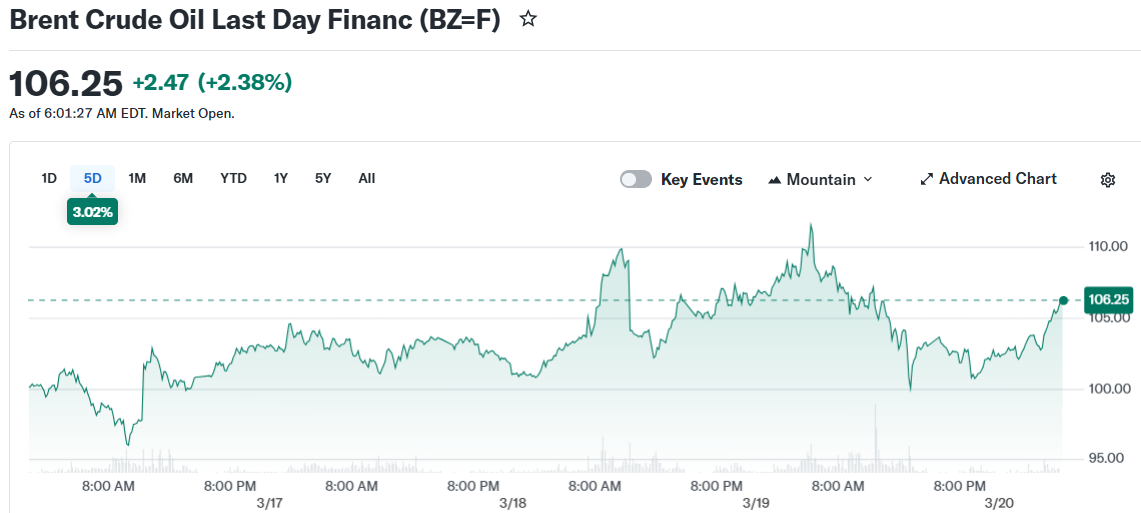 Brent Crude Oil Last Day Financ (BZ=F)
The gap between Brent and WTI prices reflects the different situations facing global and U.S. oil supplies. American oil infrastructure has not been directly hit, and there is talk of the Trump administration potentially banning U.S. crude exports to keep domestic prices lower.
Iran launched retaliatory strikes across the region in response to the Israeli attacks. Countries allied with the United States reported incoming drones and missiles. Israel then targeted Tehran after missile alarms went off in Jerusalem and northern Israel.
Qatar, one of the world’s biggest natural gas exporters, confirmed that its Ras Laffan facility was hit in the strikes. The country said its export capacity has been cut by 17% and warned repairs could take up to five years. Europe, which depends heavily on Qatari gas, has seen its regional natural gas benchmark surge as a result.
What Could Bring Prices Down
The White House is working to calm energy markets. Treasury Secretary Scott Bessent said the U.S. could “unsanction” Iranian oil already at sea, which would add roughly 140 million barrels to global supply. He also raised the possibility of releasing more emergency oil reserves.
U.S. and allied forces have been escalating efforts to reopen the Strait of Hormuz, the narrow waterway through which a large share of the world’s oil passes. American warships may escort vessels through the strait if Iranian attack risks are reduced. But analysts at Vital Knowledge noted that a full reopening still requires either a major military escalation or a diplomatic deal.
Trump told reporters he would do what was needed to end the crisis, but said he had no plans to send ground troops. He added that the Pentagon had requested $200 billion in war funding from the White House.
How High Could Oil Go?
Saudi Arabia’s oil officials told the Wall Street Journal that prices could top $180 a barrel if the conflict and supply disruptions continue into late April. That is the scenario markets are currently trying to price in.
WTI futures are down nearly 5% over the past five trading sessions, reflecting some optimism that a resolution is possible. But analysts warn that even if the Strait of Hormuz is reopened, the physical damage to production facilities could keep supply tight for years.
The post Oil Hit $119 This Week — Here’s Why It Could Go to $180 If the Iran War Drags On appeared first on CoinCentral.


You May Also Like

The Chemistry of UV Resistance: How Titanium Dioxide Protects Against the California Sun

EUR/GBP Exchange Rate Surges as Bank of England Rate Hike Expectations Intensify – Market Analysis




