क्रिप्टो खरीदें
मार्केट
स्पॉट
फ़्यूचर्सBTC
कमाएँ
इवेंट सेंटर
रिवॉर्ड हब
अधिक
MEXC Insurance Fund FAQ: Funding Sources, How It Works, and How to Check BalancesMEXC Insurance Fund FAQ: Funding Sources, How It Works, and How to Check Balances
कैटेगरी की लिस्ट
कैंसिल करें

MEXC Insurance Fund FAQ: Funding Sources, How It Works, and How to Check Balances

Key Takeaways:

  • An insurance fund is a reserve pool established by a Futures trading platform to cover losses that exceed a liquidated position's margin.
  • Liquidation and losses beyond margin are two key risk scenarios in Futures trading. The insurance fund covers losses beyond margin.
  • The insurance fund is funded by the surplus generated when liquidation orders are executed at prices better than the bankruptcy price.
  • A well-funded insurance fund can reduce the frequency of auto-deleveraging and help profitable traders receive their profits as expected.
  • Users can check current and historical insurance fund balances for each asset on the MEXC website at any time.

1. Insurance Fund Basics


1.1 What is an insurance fund?


The insurance fund is a reserve pool established by MEXC for Futures trading to help protect traders from losses beyond their margin in derivatives trading. When a user's position is liquidated and the actual loss exceeds the margin, the insurance fund covers the shortfall. This prevents a negative account balance, protects the interests of other traders, and helps maintain the stability of the Futures market.

1.2 What is liquidation?


Liquidation occurs when losses on a position cause it to no longer meet the maintenance margin requirement, causing the platform to forcibly close the position to prevent further risk. For example, if a user opens a highly leveraged long position and the market price drops sharply, the margin may become insufficient to cover the position's losses. The system then automatically closes the position to prevent the shortfall from growing.

1.3 What are losses beyond margin, and how do they differ from liquidation?


Losses beyond margin are related to liquidation but have more serious consequences. After the system takes over a position for liquidation, sharp market movements or insufficient liquidity may cause the final closing price to be worse than the bankruptcy price. As a result, the actual loss on the position exceeds the margin.

For example, an investor holds a short position in Bitcoin (BTC) with a liquidation price of 30,000. If the market suddenly rises above this level and there are too few orders at nearby prices in the order book, the position may not be closed at a price better than the bankruptcy price, resulting in a loss beyond the margin. The MEXC insurance fund account covers this excess loss.

2. How the Insurance Fund Works


2.1 Where does the insurance fund's funding come from?


The insurance fund grows through the surplus generated when liquidation orders are executed in the market at prices better than the bankruptcy price. When market liquidity is sufficient, liquidation orders can be filled at prices close to or better than the bankruptcy price. Any resulting surplus is added to the insurance fund account to cover potential future losses beyond margin.

2.2 How does the insurance fund work?


When market liquidity is sufficient, surpluses from liquidations flow into the fund. When extreme market conditions result in losses beyond margin, the fund pays out to cover the shortfall. Through this cycle, the MEXC insurance fund provides a layer of protection for Futures users.

2.3 Does the insurance fund always cover losses beyond margin?


Yes. If the actual loss exceeds the margin after a user's position is liquidated, the MEXC insurance fund covers the excess, and the user does not incur additional debt. This means that even in extreme market conditions, the user's maximum loss is limited to the margin, without owing additional funds to the platform.

3. The Role of the Insurance Fund


3.1 Why is the insurance fund important?


The insurance fund plays several important roles in the Futures market:

1) It covers users' losses beyond margin and fills funding shortfalls, preventing bad debt for the platform or the need to recover debt from users.

2) When a counterparty is liquidated, the insurance fund helps profitable traders receive the earnings they are entitled to without a reduction in their profits.

3) A well-funded insurance fund can reduce the frequency of auto-deleveraging, helping profitable traders retain control over their positions.

4) A robust insurance fund strengthens the platform's overall capacity to absorb risk, supporting user confidence and the platform's competitiveness.


When losses exceed margin, the insurance fund is the first source used to cover the shortfall. With sufficient insurance fund reserves, the platform does not need to trigger auto-deleveraging (ADL) as frequently to distribute these losses. This helps protect profitable traders' positions and provides a more stable trading experience.

3.3 Should beginners pay attention to the insurance fund when trading Futures?


Yes. The size of the insurance fund reflects the platform's capacity to absorb risk and is an important factor when assessing the safety of the trading environment. Choosing a platform with an established insurance fund mechanism and publicly available, transparent data is an important starting point for beginners seeking to manage risk and approach Futures trading responsibly.

4. How to Check the Insurance Fund


4.1 How can I check the MEXC insurance fund balance?


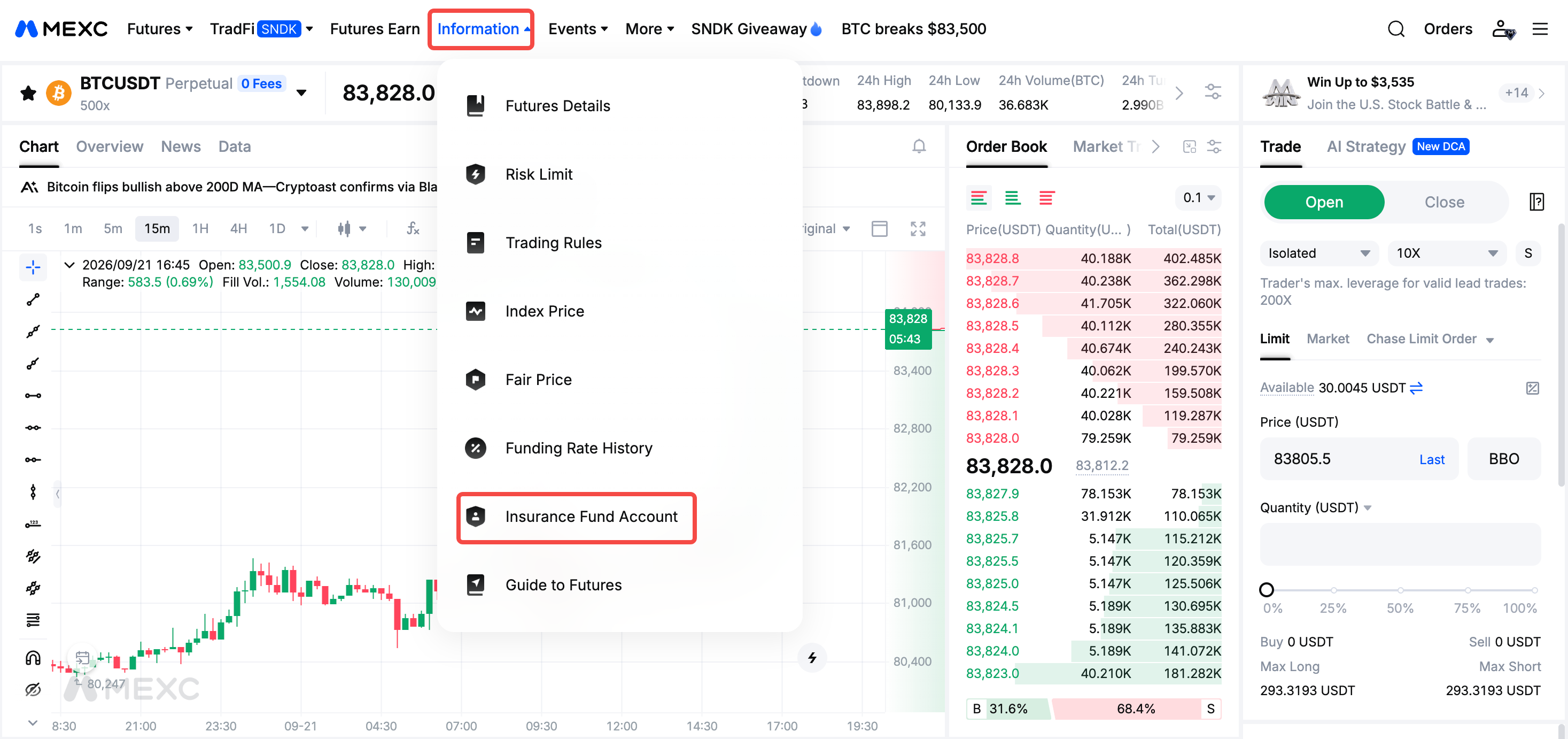
To support transparency and confidence in the insurance fund account, MEXC provides a public page where users can easily check current and historical insurance fund balances for each asset.

Navigation: MEXC website → Futures → Information → Insurance Fund Account.


4.2 Is insurance fund data publicly available and transparent?


Yes. MEXC insurance fund data is updated regularly and is fully public and transparent. Users can check current and historical insurance fund balances for each asset at any time and monitor changes in the fund's size, helping them approach Futures trading with greater confidence.


MEXC Insurance Fund FAQ: Funding Sources, How It Works, and How to Check Balances

Key Takeaways:

  • An insurance fund is a reserve pool established by a Futures trading platform to cover losses that exceed a liquidated position's margin.
  • Liquidation and losses beyond margin are two key risk scenarios in Futures trading. The insurance fund covers losses beyond margin.
  • The insurance fund is funded by the surplus generated when liquidation orders are executed at prices better than the bankruptcy price.
  • A well-funded insurance fund can reduce the frequency of auto-deleveraging and help profitable traders receive their profits as expected.
  • Users can check current and historical insurance fund balances for each asset on the MEXC website at any time.

1. Insurance Fund Basics


1.1 What is an insurance fund?


The insurance fund is a reserve pool established by MEXC for Futures trading to help protect traders from losses beyond their margin in derivatives trading. When a user's position is liquidated and the actual loss exceeds the margin, the insurance fund covers the shortfall. This prevents a negative account balance, protects the interests of other traders, and helps maintain the stability of the Futures market.

1.2 What is liquidation?


Liquidation occurs when losses on a position cause it to no longer meet the maintenance margin requirement, causing the platform to forcibly close the position to prevent further risk. For example, if a user opens a highly leveraged long position and the market price drops sharply, the margin may become insufficient to cover the position's losses. The system then automatically closes the position to prevent the shortfall from growing.

1.3 What are losses beyond margin, and how do they differ from liquidation?


Losses beyond margin are related to liquidation but have more serious consequences. After the system takes over a position for liquidation, sharp market movements or insufficient liquidity may cause the final closing price to be worse than the bankruptcy price. As a result, the actual loss on the position exceeds the margin.

For example, an investor holds a short position in Bitcoin (BTC) with a liquidation price of 30,000. If the market suddenly rises above this level and there are too few orders at nearby prices in the order book, the position may not be closed at a price better than the bankruptcy price, resulting in a loss beyond the margin. The MEXC insurance fund account covers this excess loss.

2. How the Insurance Fund Works


2.1 Where does the insurance fund's funding come from?


The insurance fund grows through the surplus generated when liquidation orders are executed in the market at prices better than the bankruptcy price. When market liquidity is sufficient, liquidation orders can be filled at prices close to or better than the bankruptcy price. Any resulting surplus is added to the insurance fund account to cover potential future losses beyond margin.

2.2 How does the insurance fund work?


When market liquidity is sufficient, surpluses from liquidations flow into the fund. When extreme market conditions result in losses beyond margin, the fund pays out to cover the shortfall. Through this cycle, the MEXC insurance fund provides a layer of protection for Futures users.

2.3 Does the insurance fund always cover losses beyond margin?


Yes. If the actual loss exceeds the margin after a user's position is liquidated, the MEXC insurance fund covers the excess, and the user does not incur additional debt. This means that even in extreme market conditions, the user's maximum loss is limited to the margin, without owing additional funds to the platform.

3. The Role of the Insurance Fund


3.1 Why is the insurance fund important?


The insurance fund plays several important roles in the Futures market:

1) It covers users' losses beyond margin and fills funding shortfalls, preventing bad debt for the platform or the need to recover debt from users.

2) When a counterparty is liquidated, the insurance fund helps profitable traders receive the earnings they are entitled to without a reduction in their profits.

3) A well-funded insurance fund can reduce the frequency of auto-deleveraging, helping profitable traders retain control over their positions.

4) A robust insurance fund strengthens the platform's overall capacity to absorb risk, supporting user confidence and the platform's competitiveness.


When losses exceed margin, the insurance fund is the first source used to cover the shortfall. With sufficient insurance fund reserves, the platform does not need to trigger auto-deleveraging (ADL) as frequently to distribute these losses. This helps protect profitable traders' positions and provides a more stable trading experience.

3.3 Should beginners pay attention to the insurance fund when trading Futures?


Yes. The size of the insurance fund reflects the platform's capacity to absorb risk and is an important factor when assessing the safety of the trading environment. Choosing a platform with an established insurance fund mechanism and publicly available, transparent data is an important starting point for beginners seeking to manage risk and approach Futures trading responsibly.

4. How to Check the Insurance Fund


4.1 How can I check the MEXC insurance fund balance?


To support transparency and confidence in the insurance fund account, MEXC provides a public page where users can easily check current and historical insurance fund balances for each asset.

Navigation: MEXC website → Futures → Information → Insurance Fund Account.


4.2 Is insurance fund data publicly available and transparent?


Yes. MEXC insurance fund data is updated regularly and is fully public and transparent. Users can check current and historical insurance fund balances for each asset at any time and monitor changes in the fund's size, helping them approach Futures trading with greater confidence.