क्रिप्टो खरीदें
मार्केट
स्पॉट
फ़्यूचर्सBTC
कमाएँ
इवेंट सेंटर
रिवॉर्ड हब
अधिक
MEXC Token Information and Trading Data FAQMEXC Token Information and Trading Data FAQ
कैटेगरी की लिस्ट
कैंसिल करें

MEXC Token Information and Trading Data FAQ

1. Token Information Basics


1.1 What is token information?


Token information covers the core details of a token project, including its overview, name, issue price, issue date, total supply, circulating supply, and official project links. MEXC provides this information for all listed tokens, helping users quickly understand a project's background before trading.

1.2 Why should I review token information before buying?


Many users buy tokens from projects they are familiar with or that friends have recommended. In either case, understanding a token's basic information is an important first step toward making informed investment decisions. The token information available on MEXC helps users assess a project's fundamentals instead of buying solely because others are doing so.

1.3 What is the difference between total supply and circulating supply?


Total supply refers to the total number of tokens that have been issued or will be issued by the project. Circulating supply refers to the tokens currently available in the market that can be freely traded. The difference generally represents tokens that are not yet in circulation, such as locked or unvested tokens. Understanding these figures can help users assess a token's scarcity and potential market supply pressure. Both figures are available under Info on MEXC.

2. How to View Token Information


2.1 How do I view token information on the MEXC website?


Using BTC as an example, follow these steps:

1) Log in to the MEXC website and open the trading page.

2) Select either Info or Trading Data above the candlestick chart. You can then view the token's overview, name, issue price, issue date, supply, and related links.
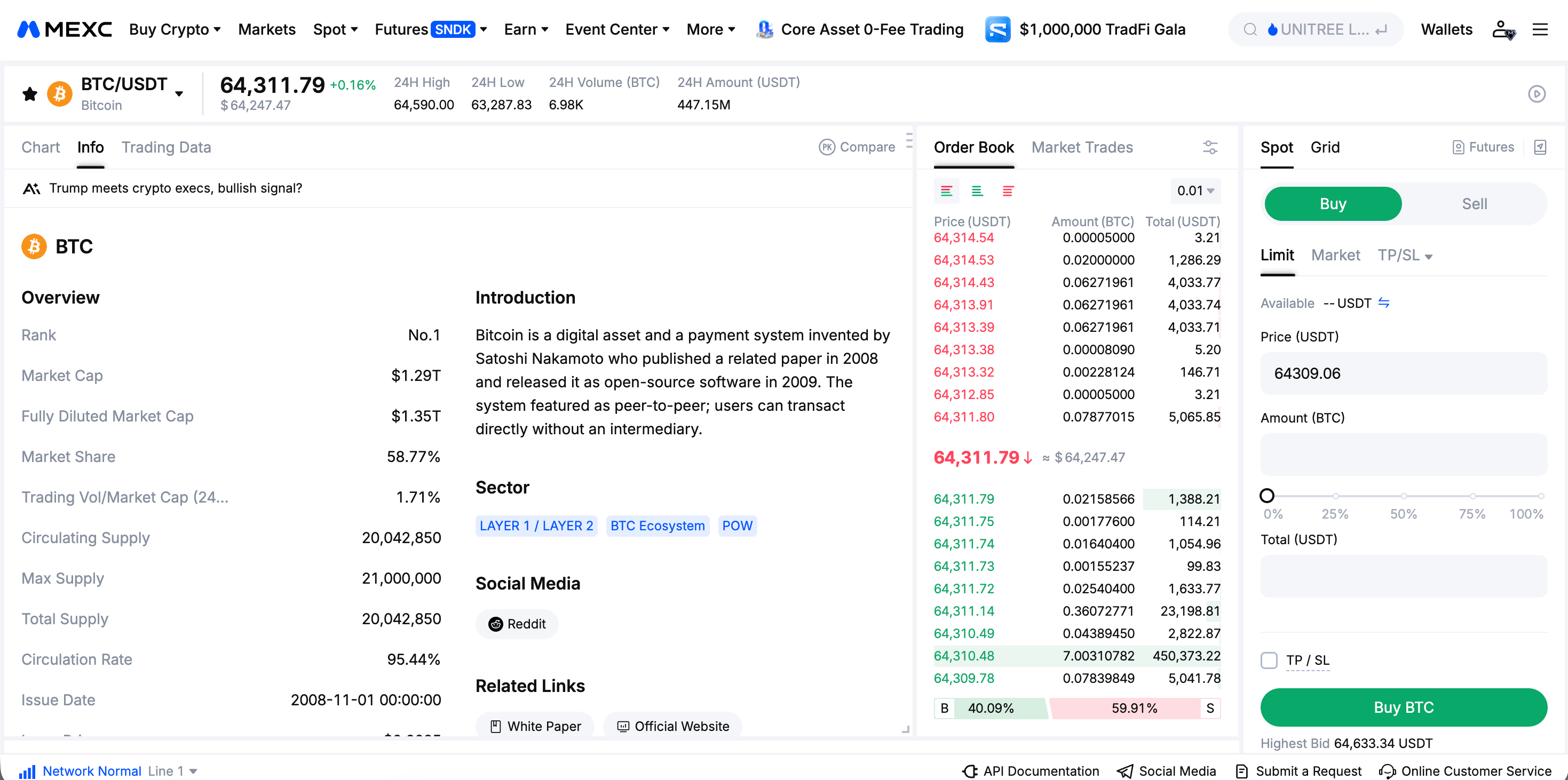


2.2 How do I view token information on the MEXC App?


Open the MEXC App and go to the token's trading page. Tap Info below the candlestick chart to view its issue date, total supply, circulating supply, issue price, introduction, and official links.

3. Understanding Trading Data


3.1 What does Trading Data on MEXC include?


Trading Data includes three main sections: Fund Flow Analysis, 5-Day Large Net Inflow, and 24H Net Fund Inflow. These charts show changes in fund flow over different periods, helping users form their own assessment of market trends.


3.2 What is fund flow analysis, and how do I interpret it?


Fund flow analysis shows changes in buying and selling activity for a token over a selected period. In the chart, completed trades are classified as buys when the taker is the buyer and as sells when the maker is the buyer. Users can switch between timeframes to observe net inflow or outflow trends, which can help them assess market sentiment and short-term price trends.


3.3 What can large-order net inflow data tell me?


The 5-Day Large Net Inflow chart shows recent fund flows from larger orders. Large orders are often associated with traders who have more capital, so changes in net inflows or outflows from these orders can serve as an indicator of market fund movements. The thresholds for large, medium, and small orders are based on the average executed order value for the trading pair over a period of time. They are not fixed amounts.

4. Researching Tokens in More Depth


4.1 Is the token information on MEXC enough on its own?


No. MEXC provides basic information and data for listed tokens to help users quickly understand the assets they want to trade. For a more comprehensive assessment, users are advised to consult the project's official website and specialized third-party data platforms. Reviewing details such as the project team, technical white paper, and development roadmap can support more informed purchasing decisions.

4.2 How should beginners use MEXC to research tokens?


Before trading, beginners are advised to review basic details such as the issue price, issue date, and supply under Info. Next, use the fund flow charts under Trading Data to observe market activity, then consult external sources such as the project's official website for a broader assessment. Avoid making trading decisions based solely on someone else's recommendation, and carefully assess the risks before making a decision.

MEXC Token Information and Trading Data FAQ

1. Token Information Basics


1.1 What is token information?


Token information covers the core details of a token project, including its overview, name, issue price, issue date, total supply, circulating supply, and official project links. MEXC provides this information for all listed tokens, helping users quickly understand a project's background before trading.

1.2 Why should I review token information before buying?


Many users buy tokens from projects they are familiar with or that friends have recommended. In either case, understanding a token's basic information is an important first step toward making informed investment decisions. The token information available on MEXC helps users assess a project's fundamentals instead of buying solely because others are doing so.

1.3 What is the difference between total supply and circulating supply?


Total supply refers to the total number of tokens that have been issued or will be issued by the project. Circulating supply refers to the tokens currently available in the market that can be freely traded. The difference generally represents tokens that are not yet in circulation, such as locked or unvested tokens. Understanding these figures can help users assess a token's scarcity and potential market supply pressure. Both figures are available under Info on MEXC.

2. How to View Token Information


2.1 How do I view token information on the MEXC website?


Using BTC as an example, follow these steps:

1) Log in to the MEXC website and open the trading page.

2) Select either Info or Trading Data above the candlestick chart. You can then view the token's overview, name, issue price, issue date, supply, and related links.


2.2 How do I view token information on the MEXC App?


Open the MEXC App and go to the token's trading page. Tap Info below the candlestick chart to view its issue date, total supply, circulating supply, issue price, introduction, and official links.

3. Understanding Trading Data


3.1 What does Trading Data on MEXC include?


Trading Data includes three main sections: Fund Flow Analysis, 5-Day Large Net Inflow, and 24H Net Fund Inflow. These charts show changes in fund flow over different periods, helping users form their own assessment of market trends.


3.2 What is fund flow analysis, and how do I interpret it?


Fund flow analysis shows changes in buying and selling activity for a token over a selected period. In the chart, completed trades are classified as buys when the taker is the buyer and as sells when the maker is the buyer. Users can switch between timeframes to observe net inflow or outflow trends, which can help them assess market sentiment and short-term price trends.


3.3 What can large-order net inflow data tell me?


The 5-Day Large Net Inflow chart shows recent fund flows from larger orders. Large orders are often associated with traders who have more capital, so changes in net inflows or outflows from these orders can serve as an indicator of market fund movements. The thresholds for large, medium, and small orders are based on the average executed order value for the trading pair over a period of time. They are not fixed amounts.

4. Researching Tokens in More Depth


4.1 Is the token information on MEXC enough on its own?


No. MEXC provides basic information and data for listed tokens to help users quickly understand the assets they want to trade. For a more comprehensive assessment, users are advised to consult the project's official website and specialized third-party data platforms. Reviewing details such as the project team, technical white paper, and development roadmap can support more informed purchasing decisions.

4.2 How should beginners use MEXC to research tokens?


Before trading, beginners are advised to review basic details such as the issue price, issue date, and supply under Info. Next, use the fund flow charts under Trading Data to observe market activity, then consult external sources such as the project's official website for a broader assessment. Avoid making trading decisions based solely on someone else's recommendation, and carefully assess the risks before making a decision.