क्रिप्टो खरीदें
मार्केट
स्पॉट
फ़्यूचर्सBTC
कमाएँ
इवेंट सेंटर
रिवॉर्ड हब
अधिक
Spot Trading and Futures Trading Explained: A Beginner's GuideSpot Trading and Futures Trading Explained: A Beginner's Guide
कैटेगरी की लिस्ट
कैंसिल करें

Spot Trading and Futures Trading Explained: A Beginner's Guide

Key Takeaways

  • Spot trading involves buying and selling digital assets at the current market price, giving users direct ownership of the assets they purchase.
  • Futures trading is a type of derivatives trading based on price movements. It supports both long and short positions and may involve leverage, but does not provide ownership of the underlying assets.
  • Spot and Futures trading differ significantly in terms of trading instruments, profit opportunities, leverage, settlement, and risk.
  • Spot trading is generally more suitable for beginners and long-term holders, while Futures trading is better suited to experienced traders with strong risk management skills.
  • MEXC offers both Spot and Futures trading, allowing users to choose based on their trading objectives and risk tolerance.

1. Spot and Futures Trading Basics


1.1 What is Spot trading?


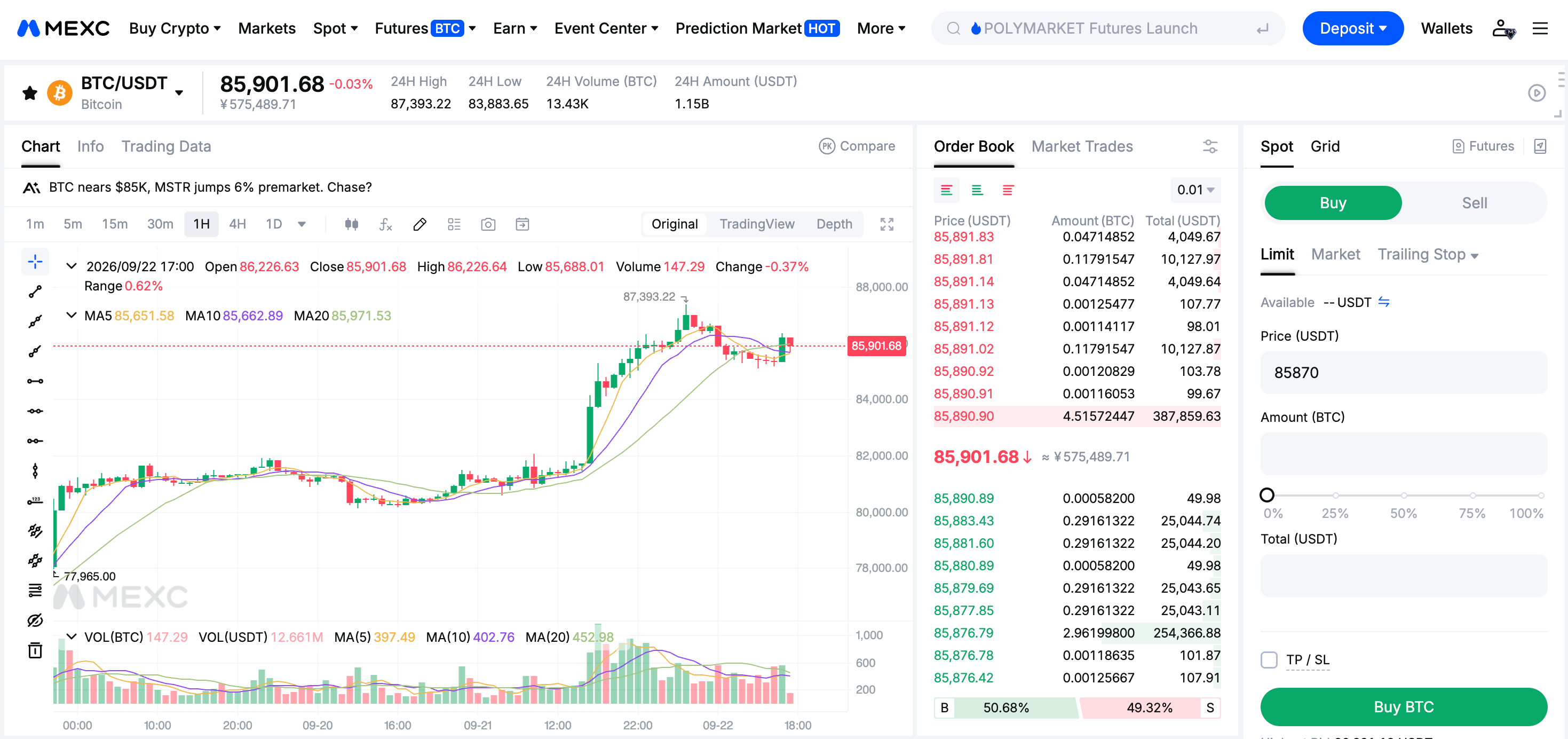
Spot trading involves buying or selling digital assets at the current market price, with settlement taking place immediately. Buyers gain full ownership of the assets they purchase.

For example, after purchasing BTC on MEXC, users own the corresponding amount of BTC and can transfer it, use it in on-chain applications, or hold it for potential long-term appreciation.

Spot trading has four main characteristics:
1)Immediate settlement: Assets are credited to the buyer's account once the order is filled.
2)No leverage risk: Users trade with their own funds, so losses are generally limited to the amount invested.
3)No expiration date: Assets can be held indefinitely without the risk of forced liquidation.
4)Straightforward mechanics: The process of buying and selling assets is relatively simple.

1.2 What is Futures trading?


Futures trading is a type of derivatives trading based on movements in the price of an underlying asset. Users do not directly own the crypto asset. Instead, they open positions based on whether they expect its price to rise or fall and seek to profit from the difference between the opening and closing prices.

The main characteristics of Futures trading include:
1)Two-way trading: Traders can open long positions when they expect prices to rise or short positions when they expect prices to fall.
2)Leverage: Traders can control a larger position with a smaller margin. Both potential profits and losses are amplified.
3)Fair Price mechanism: MEXC uses a fair price derived from multiple data sources to calculate unrealized PNL and trigger liquidations, reducing the impact of temporary price spikes.
4)Liquidation risk: If the market moves against a position and the available margin becomes insufficient, the position may be liquidated.

1.3 How do Spot, Futures, and Options differ?


These products generally increase in complexity and risk:
  • Spot involves buying and selling actual assets, with ownership transferred after the trade is completed.
  • Futures are leveraged derivatives that allow traders to take long or short positions without owning the underlying asset.
  • Options give holders the right, but not the obligation, to buy or sell an asset at an agreed price in the future.
Beginners may consider starting with Spot trading before gradually learning about derivatives.

2. Key Differences Between Spot and Futures Trading


2.1 What is the difference between Spot and Futures trading?


The key differences are summarized below:
Category
Spot Trading
Futures Trading
Trading instrument
Actual crypto assets with direct ownership
Contracts based on asset prices without ownership of the underlying assets
Trading direction
Primarily profits from buying low and selling high
Supports both long and short positions
Leverage
No leverage; losses are generally limited to the amount invested
Supports leverage, which amplifies both profits and losses
Settlement
Trades settle immediately, and assets are credited to the account
PNL and liquidation are calculated using the Fair Price mechanism
Order types
Limit, Market, TP/SL, OCO, and Trailing Stop orders
Limit, Market, Trigger, Trailing Stop, Post Only, and Chase Limit orders
Risk level
Relatively lower, with no liquidation risk
Higher, with the possibility of liquidation
Suitable for
Beginners, long-term investors, and asset holders
Short-term and experienced strategy-based traders
Both are based on crypto asset prices, allow assets or positions to be bought and sold within the same day, and are influenced by market supply and demand.

2.2 How does asset ownership differ between Spot and Futures trading?


Asset ownership is one of the most fundamental differences.

Crypto purchased through Spot trading can be withdrawn, transferred, staked, or used in on-chain applications. Users have full control over the assets they purchase.

Futures trading involves contracts based on price movements rather than ownership of the underlying crypto assets. Futures positions cannot be withdrawn as crypto. Any profit or loss comes from changes in price between the opening and closing of the position.

2.3 How does leverage work in Futures trading?


Leverage allows traders to control a larger position with a smaller amount of margin.

For example, with 10× leverage, a 1% movement in the asset price may result in an approximate 10% change in the position's PNL, excluding fees and other factors.

Leverage amplifies both potential profits and losses. If the market moves against the position and the margin becomes insufficient, the position may be liquidated, potentially resulting in the loss of the margin allocated to it.

Traders should manage their position size carefully and consider using take-profit and stop-loss orders when trading with leverage.


3. Choosing Between Spot and Futures Trading


3.1 Which is better, Spot or Futures trading?


Neither is inherently better.The more suitable choice depends on the trader's risk tolerance, trading horizon, market knowledge, and objectives.

Spot trading may be more suitable for users who:
  • Want direct ownership of digital assets
  • Prefer long-term investing
  • Focus on the long-term value of a project
  • Have a relatively low risk tolerance
Spot trading does not involve liquidation. Even if an asset's price declines in the short term, the user retains ownership unless the asset is sold.

Futures trading may be more suitable for users who:
  • Seek opportunities from short-term price movements
  • Have experience using leverage
  • Can follow strict take-profit and stop-loss rules
  • Understand liquidation and margin requirements
Futures trading provides opportunities in both rising and falling markets and may improve capital efficiency, but it requires disciplined risk management.


3.2 Should beginners start with Spot or Futures trading?


Beginners may consider starting with Spot trading. Its mechanics are relatively straightforward, and it does not involve leverage or liquidation risk. This can help new users become familiar with market movements, pricing, and order placement in a less complex trading environment.

After gaining experience and developing a clear understanding of risk management, users may gradually learn about and explore Futures trading.

MEXC offers both Spot and Futures trading, along with educational resources to help users build their trading knowledge progressively.

4. Profit Potential and Risk


4.1 Can Spot trading be profitable?


Yes, but profitability depends on market conditions and the timing of purchases and sales.

Spot trading generally follows a buy-low, sell-high approach. If the market rises and the selected asset performs well, holding it over the medium or long term may generate returns. If the asset's price falls, however, the holder may incur an unrealized or realized loss.

Some Spot traders use strategies such as gradually building a position to spread their entry costs over time.

4.2 What are the main risks of Futures trading?


The main risks include:
1)Leverage risk: Even a relatively small price movement can cause a significant loss when leverage is used.
2)Liquidation: If the market moves against a position and the available margin becomes insufficient, the position may be liquidated.
3)Market volatility: Extreme short-term price movements may rapidly increase losses or trigger liquidation.

Futures traders should control their position sizes, consider setting take-profit and stop-loss orders, and carefully assess market conditions before opening a position.

Spot Trading and Futures Trading Explained: A Beginner's Guide

Key Takeaways

  • Spot trading involves buying and selling digital assets at the current market price, giving users direct ownership of the assets they purchase.
  • Futures trading is a type of derivatives trading based on price movements. It supports both long and short positions and may involve leverage, but does not provide ownership of the underlying assets.
  • Spot and Futures trading differ significantly in terms of trading instruments, profit opportunities, leverage, settlement, and risk.
  • Spot trading is generally more suitable for beginners and long-term holders, while Futures trading is better suited to experienced traders with strong risk management skills.
  • MEXC offers both Spot and Futures trading, allowing users to choose based on their trading objectives and risk tolerance.

1. Spot and Futures Trading Basics


1.1 What is Spot trading?


Spot trading involves buying or selling digital assets at the current market price, with settlement taking place immediately. Buyers gain full ownership of the assets they purchase.

For example, after purchasing BTC on MEXC, users own the corresponding amount of BTC and can transfer it, use it in on-chain applications, or hold it for potential long-term appreciation.

Spot trading has four main characteristics:
1)Immediate settlement: Assets are credited to the buyer's account once the order is filled.
2)No leverage risk: Users trade with their own funds, so losses are generally limited to the amount invested.
3)No expiration date: Assets can be held indefinitely without the risk of forced liquidation.
4)Straightforward mechanics: The process of buying and selling assets is relatively simple.


1.2 What is Futures trading?


Futures trading is a type of derivatives trading based on movements in the price of an underlying asset. Users do not directly own the crypto asset. Instead, they open positions based on whether they expect its price to rise or fall and seek to profit from the difference between the opening and closing prices.

The main characteristics of Futures trading include:
1)Two-way trading: Traders can open long positions when they expect prices to rise or short positions when they expect prices to fall.
2)Leverage: Traders can control a larger position with a smaller margin. Both potential profits and losses are amplified.
3)Fair Price mechanism: MEXC uses a fair price derived from multiple data sources to calculate unrealized PNL and trigger liquidations, reducing the impact of temporary price spikes.
4)Liquidation risk: If the market moves against a position and the available margin becomes insufficient, the position may be liquidated.

1.3 How do Spot, Futures, and Options differ?


These products generally increase in complexity and risk:
  • Spot involves buying and selling actual assets, with ownership transferred after the trade is completed.
  • Futures are leveraged derivatives that allow traders to take long or short positions without owning the underlying asset.
  • Options give holders the right, but not the obligation, to buy or sell an asset at an agreed price in the future.
Beginners may consider starting with Spot trading before gradually learning about derivatives.

2. Key Differences Between Spot and Futures Trading


2.1 What is the difference between Spot and Futures trading?


The key differences are summarized below:
Category
Spot Trading
Futures Trading
Trading instrument
Actual crypto assets with direct ownership
Contracts based on asset prices without ownership of the underlying assets
Trading direction
Primarily profits from buying low and selling high
Supports both long and short positions
Leverage
No leverage; losses are generally limited to the amount invested
Supports leverage, which amplifies both profits and losses
Settlement
Trades settle immediately, and assets are credited to the account
PNL and liquidation are calculated using the Fair Price mechanism
Order types
Limit, Market, TP/SL, OCO, and Trailing Stop orders
Limit, Market, Trigger, Trailing Stop, Post Only, and Chase Limit orders
Risk level
Relatively lower, with no liquidation risk
Higher, with the possibility of liquidation
Suitable for
Beginners, long-term investors, and asset holders
Short-term and experienced strategy-based traders
Both are based on crypto asset prices, allow assets or positions to be bought and sold within the same day, and are influenced by market supply and demand.

2.2 How does asset ownership differ between Spot and Futures trading?


Asset ownership is one of the most fundamental differences.

Crypto purchased through Spot trading can be withdrawn, transferred, staked, or used in on-chain applications. Users have full control over the assets they purchase.

Futures trading involves contracts based on price movements rather than ownership of the underlying crypto assets. Futures positions cannot be withdrawn as crypto. Any profit or loss comes from changes in price between the opening and closing of the position.

2.3 How does leverage work in Futures trading?


Leverage allows traders to control a larger position with a smaller amount of margin.

For example, with 10× leverage, a 1% movement in the asset price may result in an approximate 10% change in the position's PNL, excluding fees and other factors.

Leverage amplifies both potential profits and losses. If the market moves against the position and the margin becomes insufficient, the position may be liquidated, potentially resulting in the loss of the margin allocated to it.

Traders should manage their position size carefully and consider using take-profit and stop-loss orders when trading with leverage.


3. Choosing Between Spot and Futures Trading


3.1 Which is better, Spot or Futures trading?


Neither is inherently better.The more suitable choice depends on the trader's risk tolerance, trading horizon, market knowledge, and objectives.

Spot trading may be more suitable for users who:
  • Want direct ownership of digital assets
  • Prefer long-term investing
  • Focus on the long-term value of a project
  • Have a relatively low risk tolerance
Spot trading does not involve liquidation. Even if an asset's price declines in the short term, the user retains ownership unless the asset is sold.

Futures trading may be more suitable for users who:
  • Seek opportunities from short-term price movements
  • Have experience using leverage
  • Can follow strict take-profit and stop-loss rules
  • Understand liquidation and margin requirements
Futures trading provides opportunities in both rising and falling markets and may improve capital efficiency, but it requires disciplined risk management.


3.2 Should beginners start with Spot or Futures trading?


Beginners may consider starting with Spot trading. Its mechanics are relatively straightforward, and it does not involve leverage or liquidation risk. This can help new users become familiar with market movements, pricing, and order placement in a less complex trading environment.

After gaining experience and developing a clear understanding of risk management, users may gradually learn about and explore Futures trading.

MEXC offers both Spot and Futures trading, along with educational resources to help users build their trading knowledge progressively.

4. Profit Potential and Risk


4.1 Can Spot trading be profitable?


Yes, but profitability depends on market conditions and the timing of purchases and sales.

Spot trading generally follows a buy-low, sell-high approach. If the market rises and the selected asset performs well, holding it over the medium or long term may generate returns. If the asset's price falls, however, the holder may incur an unrealized or realized loss.

Some Spot traders use strategies such as gradually building a position to spread their entry costs over time.

4.2 What are the main risks of Futures trading?


The main risks include:
1)Leverage risk: Even a relatively small price movement can cause a significant loss when leverage is used.
2)Liquidation: If the market moves against a position and the available margin becomes insufficient, the position may be liquidated.
3)Market volatility: Extreme short-term price movements may rapidly increase losses or trigger liquidation.

Futures traders should control their position sizes, consider setting take-profit and stop-loss orders, and carefully assess market conditions before opening a position.