

Ex-Alipay UK Chief Eva Zhang to Lead Blockscout Into AI-Driven Growth

Blockscout, the leading open-source block explorer for Ethereum Virtual Machine (EVM) based chains, has named Eva Zhang as its new chief executive officer. Zhang joins Blockscout from Alipay UK, where she most recently served as CEO and led the company’s expansion into new markets across Europe.
She brings more than 15 years of experience spanning fintech, cloud computing and artificial intelligence, including over five years at Ant Group, where she helped create new business lines, and a role as Director of Business Development at Alibaba Cloud. Earlier in her career, she held product management roles at HP and Equinix, giving her experience at the intersection of infrastructure and innovation.
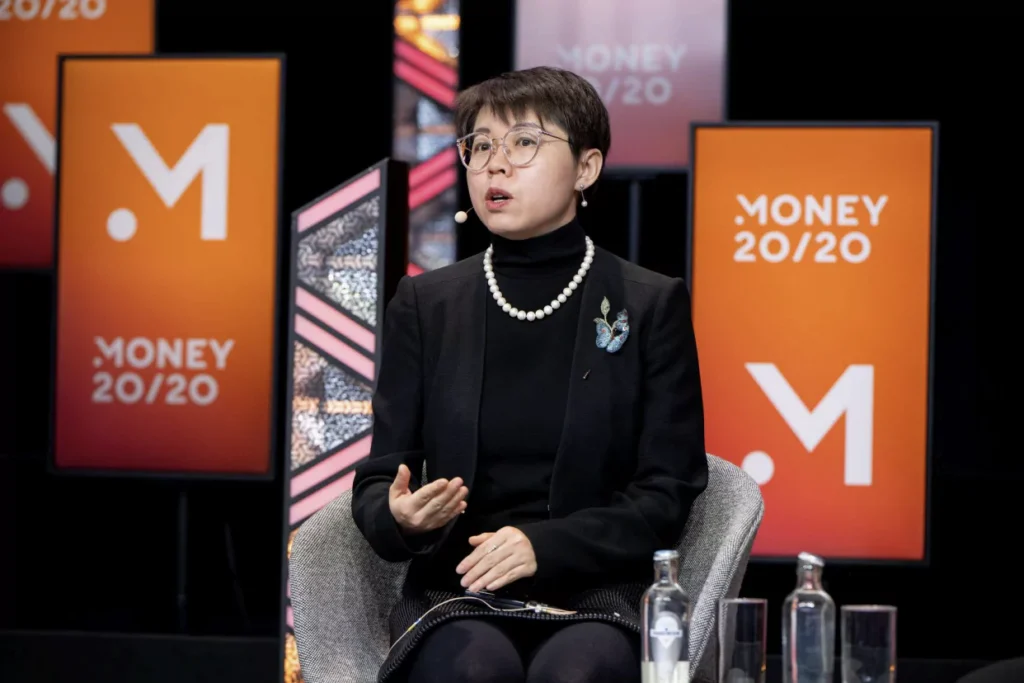
Academically, Zhang holds a Dual MBA from London Business School and Columbia Business School, along with a Master’s in Engineering. She is a recognized voice in the global fintech and payments community and is regularly invited to speak at industry events such as Money20/20, London Tech Week, and the European Women in Payments Network. She has also been included in the Women in FinTech Powerlist.
Her appointment follows Blockscout’s recent seed round led by 1kx, a move that company backers say shows confidence in Blockscout’s open-source mission. Christopher Heymann, Founding Partner at 1kx, welcomed the hire, “Eva brings the right mix of scaled fintech leadership and product rigor. Blockscout sits at the center of onchain activity, and turning that data into actionable intelligence is the next step. We backed Blockscout because open source and neutrality win in infrastructure, and Eva will accelerate that momentum.”
Blockscout’s founder Igor Barinov praised Zhang’s fit with the company culture and product ambitions, “Eva has scaled teams, opened markets, and brought structure to fast-moving products. More importantly, she understands the culture behind open-source. That matters to us. We’re thrilled to welcome her as CEO to drive our AI transformation both in the product and internal processes.”
Next Phase of Growth
Under Zhang’s leadership, Blockscout says it will evolve from trusted infrastructure into an intelligent, enterprise-grade tooling. Drawing on her track record of scaling fintech and cloud platforms, she will guide the company’s next phase of growth by expanding partnerships, opening new markets, and embedding AI into both products and operations.
As Zhang put it, “Blockscout is already a trusted part of the Web3 ecosystem. The next challenge is to build intelligence into the core. Not just displaying blockchain data, but helping users understand and act on it in real time. That’s where AI comes in. We want to build tools that help developers and enterprises to not only access data, but also use it meaningfully.”
Blockscout is live on more than 1,000 networks, including Ethereum and Arbitrum, and is available on major Superchain networks such as OP Mainnet, Base, Unichain, Ink Chain, and Sony’s Soneium. The company recently launched its Multichain Explorer, a unified search engine for the entire EVM ecosystem that enables users to discover tokens, wallets, contracts and dApps across dozens of chains from a single interface.
Blockscout positions itself as the #1 open-source block explorer for all EVM-based chains. Its platform offers a robust interface for searching blocks, transactions, accounts and tokens, developer tooling including smart contract verification and optimized APIs, and the Dappscout marketplace for secure decentralized app discovery, exploration and interaction.


You May Also Like

Taiwan starts AI-powered campaign to recruit Chinese informants and whistleblowers

Can hyperliquid onchain and Bitget Wallet bring Wall Street markets to DeFi?

Bukit Aman warns those caught with child sexual abuse material may escalate to more serious sexual offences



