The National Bank of Kazakhstan today announced the launch of its tenge-backed stablecoin called Evo (KZTE). The stablecoin is launched in partnership with Mastercard and the leading smart contract platform, Solana (SOL). Kazakhstan Unveils Solana-Powered Evo Stablecoin In an announcement made earlier today, the Central Asian country of Kazakhstan unveiled a pilot project for its […]The National Bank of Kazakhstan today announced the launch of its tenge-backed stablecoin called Evo (KZTE). The stablecoin is launched in partnership with Mastercard and the leading smart contract platform, Solana (SOL). Kazakhstan Unveils Solana-Powered Evo Stablecoin In an announcement made earlier today, the Central Asian country of Kazakhstan unveiled a pilot project for its […]

Kazakhstan Launches Solana-Powered Stablecoin In Partnership With Mastercard

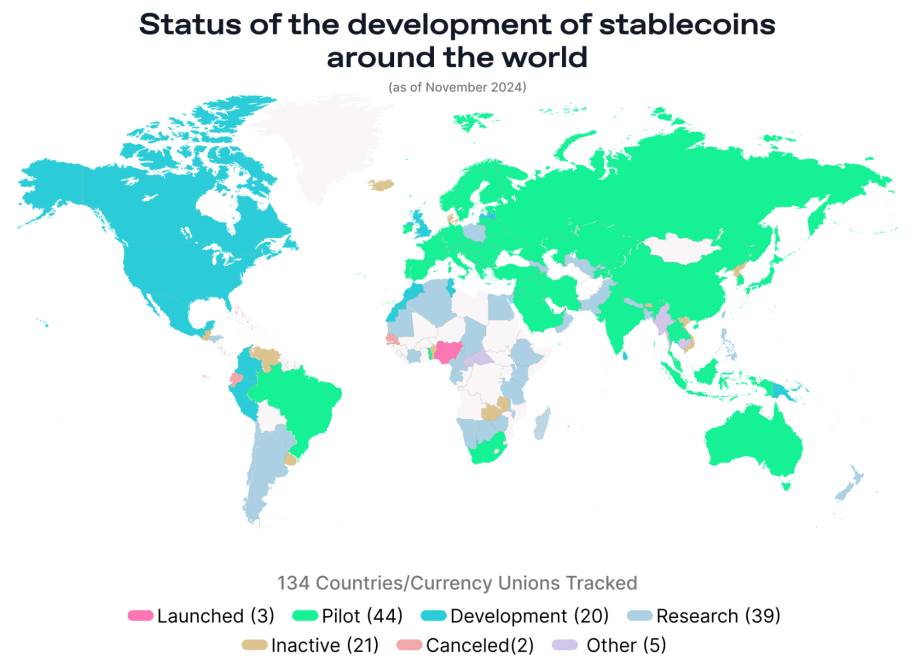
The National Bank of Kazakhstan today announced the launch of its tenge-backed stablecoin called Evo (KZTE). The stablecoin is launched in partnership with Mastercard and the leading smart contract platform, Solana (SOL).

Kazakhstan Unveils Solana-Powered Evo Stablecoin

In an announcement made earlier today, the Central Asian country of Kazakhstan unveiled a pilot project for its tenge-baked stablecoin, dubbed Evo. For the uninitiated, the tenge is the national currency of Kazakhstan.

According to the announcement, Evo’s issuance will be managed by other participants of the country’s digital assets regulatory sandbox. Notably, the two entities that will be overseeing the Evo stablecoin are likely to be crypto exchange Intebix and Eurasian Bank.

The developers have dubbed Evo the “national stablecoin” and aim to leverage the technology to bridge the gap between blockchain innovation and traditional finance. The stablecoin will be used for a variety of purposes, including expanding crypto-fiat gateways, swapping digital assets, and aiding crypto card-based transactions.

Low-latency and high-throughput smart contract platform, Solana, will be used to power the Evo stablecoin. Solana’s rapidly growing infrastructure will be critical in ensuring a smooth payment experience and large-scale stablecoin adoption in Kazakhstan.

Besides powering the stablecoin, Solana has also signed a Memorandum of Understanding (MoU) with Kazakhstan’s Ministry of Digital Development to create a special blockchain economic zone in the country.
solana

In the same vein, Mastercard will leverage its expertise in payments to integrate KTZE with stablecoin issuers around the world. Such integrations could open the doors for cross-border payments and international utility.

It is worth noting that the National Bank of Kazakhstan will not issue the stablecoin directly. Rather, the regulator will provide a legal framework for the issuers to issue the stablecoin. The framework will also be used to test Evo and to develop the virtual currency market.

The Head of the National Bank of Kazakhstan, Timur Suleimenov, pointed toward the importance of the pilot project, saying that cryptocurrencies and blockchain technology could play a significant role in increasing financial accessibility.

Stablecoin Growth Is Taking Over

While leading cryptocurrencies like Bitcoin (BTC) and Ethereum (ETH) continue to witness rising adoption, an unlikely class of digital assets like stablecoins is experiencing just as much adoption, if not more.

For example, South Korean banks are reportedly in talks with leading stablecoin issuers such as Circle and Tether to develop a market for Korean won-backed stablecoins. Similarly, Standard Chartered is expected to apply for a Hong Kong stablecoin license.

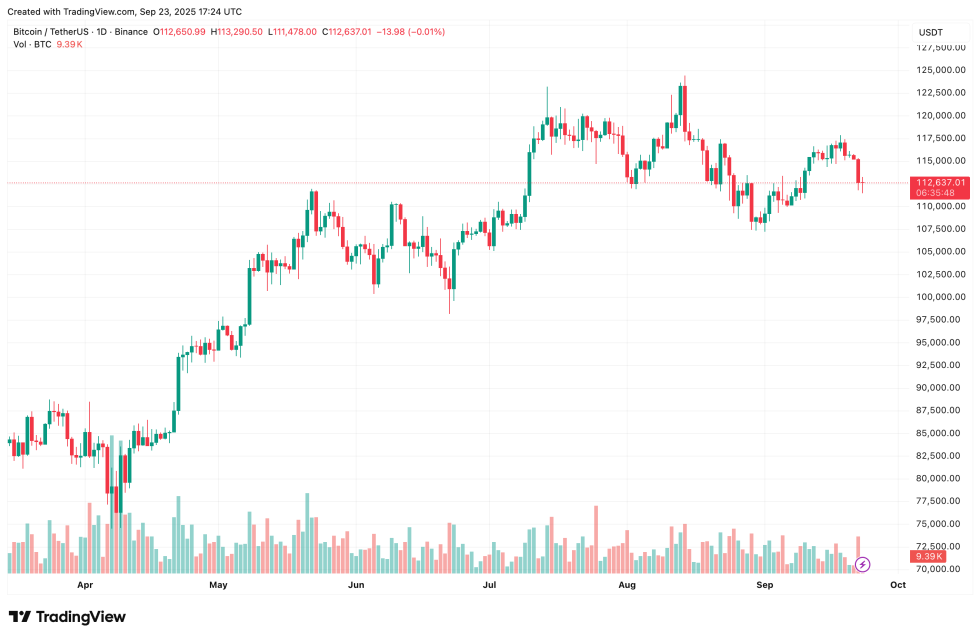
Earlier this year, Citigroup predicted that the stablecoin market is likely to grow by another $1.6 trillion by 2030. At press time, BTC trades at $112,637, up 0.1% in the past 24 hours.

bitcoin
Market Opportunity
Solana Logo
Solana Price(SOL)
$127.77
$127.77$127.77
+0.28%
USD
Solana (SOL) Live Price Chart
Disclaimer: The articles reposted on this site are sourced from public platforms and are provided for informational purposes only. They do not necessarily reflect the views of MEXC. All rights remain with the original authors. If you believe any content infringes on third-party rights, please contact service@support.mexc.com for removal. MEXC makes no guarantees regarding the accuracy, completeness, or timeliness of the content and is not responsible for any actions taken based on the information provided. The content does not constitute financial, legal, or other professional advice, nor should it be considered a recommendation or endorsement by MEXC.

You May Also Like

The Channel Factories We’ve Been Waiting For

The Channel Factories We’ve Been Waiting For

The post The Channel Factories We’ve Been Waiting For appeared on BitcoinEthereumNews.com. Visions of future technology are often prescient about the broad strokes while flubbing the details. The tablets in “2001: A Space Odyssey” do indeed look like iPads, but you never see the astronauts paying for subscriptions or wasting hours on Candy Crush.  Channel factories are one vision that arose early in the history of the Lightning Network to address some challenges that Lightning has faced from the beginning. Despite having grown to become Bitcoin’s most successful layer-2 scaling solution, with instant and low-fee payments, Lightning’s scale is limited by its reliance on payment channels. Although Lightning shifts most transactions off-chain, each payment channel still requires an on-chain transaction to open and (usually) another to close. As adoption grows, pressure on the blockchain grows with it. The need for a more scalable approach to managing channels is clear. Channel factories were supposed to meet this need, but where are they? In 2025, subnetworks are emerging that revive the impetus of channel factories with some new details that vastly increase their potential. They are natively interoperable with Lightning and achieve greater scale by allowing a group of participants to open a shared multisig UTXO and create multiple bilateral channels, which reduces the number of on-chain transactions and improves capital efficiency. Achieving greater scale by reducing complexity, Ark and Spark perform the same function as traditional channel factories with new designs and additional capabilities based on shared UTXOs.  Channel Factories 101 Channel factories have been around since the inception of Lightning. A factory is a multiparty contract where multiple users (not just two, as in a Dryja-Poon channel) cooperatively lock funds in a single multisig UTXO. They can open, close and update channels off-chain without updating the blockchain for each operation. Only when participants leave or the factory dissolves is an on-chain transaction…
Share
BitcoinEthereumNews2025/09/18 00:09
‘KPop Demon Hunters’ Gets ‘Golden’ Ticket With 2 Nominations

‘KPop Demon Hunters’ Gets ‘Golden’ Ticket With 2 Nominations

The post ‘KPop Demon Hunters’ Gets ‘Golden’ Ticket With 2 Nominations appeared on BitcoinEthereumNews.com. Mira (voice of May Hong), Rumi (Arden Cho) and Zoey (
Share
BitcoinEthereumNews2026/01/22 23:28
Tron Founder Justin Sun Invests $8M in River’s Stablecoin Abstraction Technology

Tron Founder Justin Sun Invests $8M in River’s Stablecoin Abstraction Technology

Justin Sun commits $8 million to River for stablecoin abstraction deployment across Tron ecosystem, including SUN pools and JustLend integration, as RIVER token
Share
Coinstats2026/01/22 22:59