

Delaware and New Jersey Advance Crypto ATM Ban Bills
Delaware and New Jersey are both advancing bills that would restrict or ban crypto ATMs, marking a coordinated state-level push to curb fraud tied to cryptocurrency kiosks.
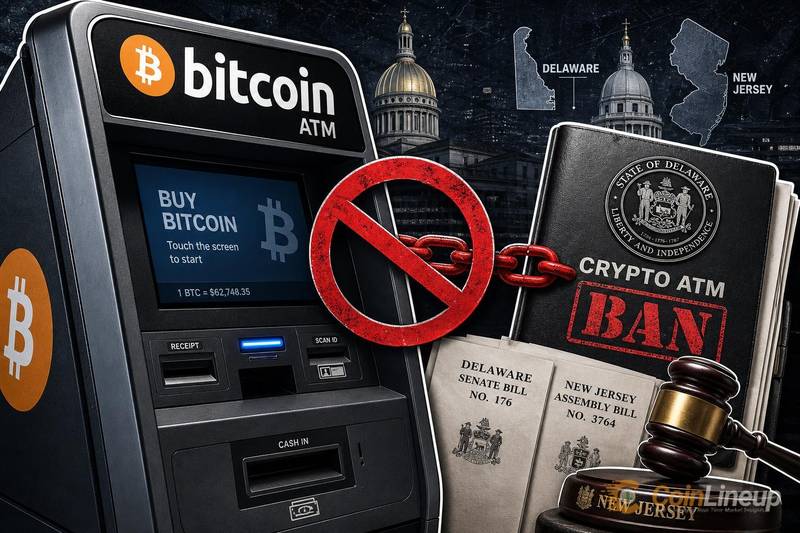
Delaware’s House Bill 441 and New Jersey’s Senate Bill 2141 represent parallel efforts by two neighboring states to impose tighter controls on crypto ATM operations. Both measures are at the bill stage, not yet enacted into law.
What Delaware and New Jersey Are Proposing
The two bills target cryptocurrency kiosks, the physical machines that allow users to buy or sell digital assets with cash or debit cards. Delaware’s HB 441 moved through the state legislature as lawmakers weighed new restrictions on how these machines operate within state borders.
New Jersey’s S 2141 appeared in the state’s legislative digest, signaling active consideration by Garden State lawmakers. The simultaneous movement in both states points to a regional push for stricter oversight of crypto kiosk operators.
Key Takeaways
- Delaware (HB 441) and New Jersey (S 2141) are both advancing crypto ATM restriction bills.
- Neither bill has been signed into law yet; both remain in the legislative process.
- The measures reflect growing state-level concern over fraud risks at crypto kiosks.
Why States Are Targeting Crypto ATMs
Consumer fraud is the primary driver behind these bills. The FTC has documented how scammers direct victims to bitcoin ATMs as a payment portal for fraud schemes, exploiting the speed and irreversibility of crypto transactions to steal funds before victims realize what happened.
Crypto ATMs typically charge fees far above standard exchange rates, and many operate with minimal identity verification. Lawmakers in both states appear to view current compliance and consumer safeguards as insufficient to protect residents from scam-driven losses.
The legislative push mirrors broader regulatory scrutiny across the crypto industry. Just as Nigeria’s Senate has advanced licensing requirements for crypto exchanges, U.S. state lawmakers are seeking to impose stricter standards on crypto-adjacent businesses. The trend also comes as the broader tech and crypto landscape faces intensifying regulatory and competitive pressures on multiple fronts.
What the Bills Could Mean for Operators and Users
If either bill passes, crypto ATM operators in Delaware or New Jersey would face direct business disruption. Companies running kiosks in those states could be forced to shut down machines, exit the market entirely, or significantly overhaul their compliance frameworks to meet new requirements.
For everyday users who rely on crypto ATMs for quick purchases or cash conversions, the bills would remove a local access point. This is particularly relevant for users without traditional banking relationships or those who prefer cash-based crypto transactions.
The outcome could also influence neighboring states. If Delaware and New Jersey successfully pass restrictions, other mid-Atlantic states may consider similar measures, much like how evolving regulatory frameworks in one jurisdiction often prompt action elsewhere.
Committee votes, amendments, and floor debates in both state legislatures in the coming weeks will determine whether these bills advance further or stall.
Disclaimer: This article is for informational purposes only and does not constitute financial or investment advice. Cryptocurrency and digital asset markets carry significant risk. Always do your own research before making decisions.


You May Also Like

The $55 Oil Trade Is Still on the Table, but Brent’s Chart Has Conditions

Uphold’s Massive 1.59 Billion XRP Holdings Shocks Community, CEO Reveals The Real Owners

Iran’s army chief warns of ‘total destruction’ for ground invasion



