Oracle

Oracles are essential infrastructure components that feed real-time, off-chain data (such as price feeds, weather, or sports results) into blockchain smart contracts. Without decentralized oracles like Chainlink and Pyth, DeFi could not function. In 2026, oracles have evolved to support verifiable randomness and cross-chain data synchronization. This tag covers the technical evolution of data availability, tamper-proof price feeds, and the critical role oracles play in ensuring the deterministic execution of complex decentralized applications.

5131 Articles
Created: 2026/02/02 18:52
Updated: 2026/02/02 18:52

Analysts Predict Ozak AI Could Flip Chainlink in Market Cap

Analysts Predict Ozak AI Could Flip Chainlink in Market Cap

The post Analysts Predict Ozak AI Could Flip Chainlink in Market Cap appeared on BitcoinEthereumNews.com. Crypto markets are no stranger to disruption, with new projects frequently challenging long-established leaders. One of the most compelling narratives gaining momentum today is Ozak AI, a predictive AI platform in its presale stage that analysts suggest could eventually surpass Chainlink (LINK) in market capitalization.  While LINK continues to dominate the decentralized oracle space and trades at around $23, Ozak AI is drawing investor attention with its rapid presale growth and the potential to deliver 100x returns, positioning itself as one of the most exciting up-and-coming projects in the industry. Chainlink’s Current Position Chainlink has long been regarded as the backbone of decentralized finance (DeFi), providing critical off-chain data to blockchain ecosystems. Its technology has enabled smart contracts to interact with real-world information, securing billions in value across multiple networks. However, with LINK’s price relatively stable and growth tied largely to the expansion of DeFi protocols, some analysts believe its upside is becoming limited compared to newer, high-utility projects. Ozak AI: The Next Evolution in Crypto Ozak AI is being placed as the next evolution in blockchain-based intelligence. Unlike Chainlink, which focuses ordinarily on statistics delivery, Ozak AI takes a similar step by reading and predicting market conduct in real time. Leveraging machine learning to know models consisting of neural networks and ARIMA, Ozak AI provides traders, institutions, and agencies with fairly correct economic forecasts, fashion evaluations, and risk tests. The platform is powered by the Ozak Stream Network (OSN), a real-time records pipeline included with Decentralized Physical Infrastructure Networks (DePIN) to ensure stable, tamper-proof information processing. Its customizable Prediction Agents (PAs) allow customers to tailor analytics for unique needs—ranging from crypto volatility forecasting to fairness marketplace insights—making it a flexible tool far beyond traditional statistics feeds. OZ Presale Strength and Market Buzz Currently in its 5th OZ presale stage…

Author: BitcoinEthereumNews
How Much Does It Cost to Develop a Blockchain App? [2025 Pricing Guide]

How Much Does It Cost to Develop a Blockchain App? [2025 Pricing Guide]

Blockchain is no longer an emerging technology — it has become the digital infrastructure powering the next generation of applications. From DeFi protocols and NFT marketplaces to supply chain solutions and enterprise-grade platforms, blockchain is reshaping industries at an unprecedented pace. But if you’re planning to build your own blockchain app, there’s one question that inevitably comes first: “How much does it cost to develop a blockchain app?” The short answer: it depends. Blockchain app development costs vary significantly based on your app type, tech stack, consensus mechanism, integrations, compliance requirements, and team structure. In this guide, we’ll break down everything you need to know to estimate costs accurately and make smarter budget decisions — whether you’re a startup, enterprise, or investor. Why Blockchain App Development Costs Vary Unlike traditional web or mobile apps, blockchain apps require specialized architectures, higher security layers, decentralized consensus mechanisms, and often regulatory compliance. That’s why pricing isn’t one-size-fits-all. Here are the average cost ranges based on project complexity: Key Factors That Influence Blockchain App Development Costs To understand where your budget goes, let’s break down the main cost drivers:

  1. Type of Blockchain Network
Public chains (Ethereum, Solana, Polygon): More expensive due to network fees & scaling solutions. Private chains (Hyperledger, Quorum): Higher upfront setup costs but lower transaction fees. Consortium blockchains: Ideal for enterprises — cost depends on governance complexity.
  1. Consensus Mechanism Your consensus model impacts both infrastructure costs and development timelines:
  2. Feature Set The more complex your features, the higher the cost. Common blockchain app features include:
User authentication & wallets Smart contracts & tokenomics Payment gateway integration Decentralized storage solutions (IPFS, Arweave) KYC/AML compliance modules
  1. UI/UX Design Complexity Blockchain apps require intuitive interfaces to onboard non-technical users.
Minimalistic design: $5K — $10K High-end enterprise UX: $20K+
  1. Integrations & Third-Party Services From crypto payment processors to oracle networks, third-party integrations add both complexity and cost. For example:
Payment gateways (Stripe, Coinbase Commerce) → $5K–$10K Oracles (Chainlink) → $8K+ KYC/AML APIs → $3K–$7K
  1. Compliance & Security Blockchain apps handling sensitive data or assets must comply with regulations like GDPR and financial KYC norms. Costs include:
Smart contract audits → $5K — $25K Penetration testing → $8K — $15K Compliance certifications → $10K — $50K Hidden Costs Nobody Talks About Even after deployment, costs don’t stop. Here are overlooked expenses: Infrastructure scaling → $1K — $5K/month Ongoing maintenance & version upgrades → ~20% of initial cost annually Security audits after updates User acquisition & marketing costs (critical for dApps) Ignoring these leads to budget overruns later. Real-World Blockchain App Cost Scenarios Let’s simulate three realistic scenarios to give you a clearer picture: How to Optimize Blockchain App Development Costs If you want enterprise-grade results without breaking your budget, here’s how to optimize costs: Build an MVP first — validate before scaling. Use white-label blockchain frameworks where possible. Choose the right consensus mechanism for your goals. Partner with a specialized blockchain development company to avoid costly mistakes. Timeline vs. Cost: What to Expect Your development timeline directly influences cost: FAQs About Blockchain App Development Costs
  1. What’s the average cost to develop a blockchain app in 2025? Anywhere from $20K to $300K+, depending on complexity, features, and architecture.
  2. How long does it take to build a blockchain app? From 3 months for a basic DApp to 18+ months for enterprise solutions.
  3. Can I reduce costs using open-source blockchain frameworks? Yes — using frameworks like Hyperledger or Polygon SDK can save 30–40% in initial development.
  4. Do I need a smart contract audit? Absolutely. Skipping audits can lead to vulnerabilities costing millions.
How Much Does It Cost to Develop a Blockchain App? [2025 Pricing Guide] was originally published in Coinmonks on Medium, where people are continuing the conversation by highlighting and responding to this story

Author: Medium
Bitwise lists 5 crypto ETPs on Swiss SIX stock exchange

Bitwise lists 5 crypto ETPs on Swiss SIX stock exchange

The post Bitwise lists 5 crypto ETPs on Swiss SIX stock exchange  appeared on BitcoinEthereumNews.com. Bitwise is expanding its footprint in Europe by listing five flagship crypto exchange-traded products on Switzerland’s SIX Swiss Exchange. Summary Bitwise lists five crypto ETPs on Switzerland’s SIX exchange, including Bitcoin, Ethereum staking, Solana, XRP, and an MSCI index. The firm manages $15B in assets, with crypto ETPs fully backed by underlying tokens in cold storage. The listings align with a shift in Europe as the UK and France ease retail access to crypto products. Announced on Sept. 4, the move signals the growing appetite for regulated digital asset investments in Europe. The new products give investors access to a range of crypto strategies, from core tokens to staking and diversified indexes.  Bitwise’s wider suite of crypto exposure The listings include a cost-efficient Bitcoin (BTC) ETP, an Ethereum (ETH) staking ETP, a Solana (SOL) staking ETP, a diversified index tracking the MSCI Global Digital Assets Top 20, and a physically backed XRP (XRP) product. Each vehicle is made to blend in perfectly with traditional investment portfolios, is fully collateralized, and has assets held in institutional-grade cold storage. The expansion is part of Bitwise’s strategy to bridge the gap between traditional finance and cryptocurrency. Bitwise currently manages over $15 billion in assets across 40 products. For more than five years, the company has operated in Europe, providing BaFin-supervised products with a German domicile. Meanwhile, Switzerland continues to be a major hub for digital assets because of its strong investor demand and clear regulatory framework. Regulatory momentum across Europe The timing of the listings coincides with Europe’s shifting regulatory climate. The UK is expected to allow retail investors access to crypto ETPs starting Oct. 8, 2025, after years of restrictions, while France is reviewing rules that could broaden distribution. These changes are fueling optimism that regulated digital assets will gain a larger…

Author: BitcoinEthereumNews
Bitwise lists 5 crypto ETPs on the Switzerland’s SIX stock exchange

Bitwise lists 5 crypto ETPs on the Switzerland’s SIX stock exchange

Bitwise has listed five flagship crypto ETPs on the SIX Swiss Exchange, offering exposure to Bitcoin, Ethereum staking, Solana, XRP, and a digital assets index.

Author: Crypto.news
Bitcoin vs. Berkshire Hathaway: A Tale of Two Titans

Bitcoin vs. Berkshire Hathaway: A Tale of Two Titans

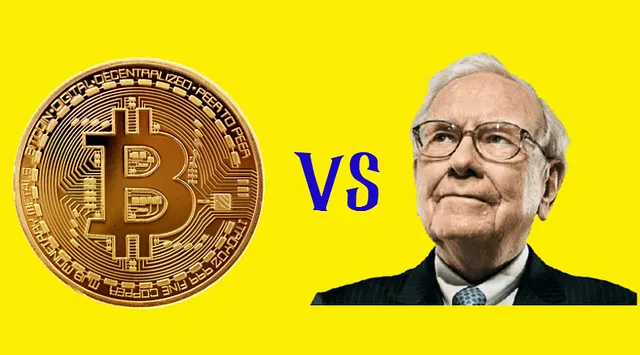
Bitcoin vs Berkshire Hathaway One could argue that Berkshire Hathaway (BRK.A) is the Bitcoin of traditional investing. With the stock price closing at $755,280 as of the writing of this article, credit is certainly due to Mr. Buffett and the late Charlie Munger for their Einsteinian understanding of business and finance. Buffett acquires straightforward and simple businesses like Jordan’s Furniture, which was founded in 1918. He recently purchased Bell Laboratories, a private rodent control company. Many of these companies are not well known. Berkshire Hathaway acquires companies based on fundamentals, not popularity. Although Buffett owns shares of recognizable brands like Apple (AAPL), the list of companies owned by Berkshire Hathaway is vanilla. Bitcoin is not vanilla. Bitcoin does not sell furniture or candy, nor does it make rat poison. It is an exotic financial digital asset that does not depend on a board of directors to decide if the Bitcoin halving will occur. The halving simply happens, driven by code. How fitting — Buffett once described Bitcoin as rat poison, yet he ended up buying a company that makes rat poison. Crypto is too exotic for Buffett.Buffet on Bitcoin How is Bitcoin and Berkshire Hathaway Alike? The most obvious similarity between them is their price. Both assets are high-priced. There is anticipation and excitement about when Bitcoin’s (BTC) price will reach one million, but Berkshire Hathaway’s Class A shares (BRK.A) are about $300,000 away from that milestone. Although both assets are currently high-priced, they were inexpensive in their early days. Fool.com: Bitcoin did not exist in 1964, but in 2009, it was priced at less than a penny. Bitcoinmagazine.com: Let’s have a little fun based on this transaction. The following prices are based on the previous day’s close as of September 1, 2025. Let’s compare 5,050 (BTC) against 5,050 (BRK.A). Asset Performance Comparison: BRK-A vs BTC Both assets performed beautifully, and the results are impressive. Bitcoin wins in terms of percentage gains, but Berkshire Hathaway takes the lead in dollar gains. Either way, investors would be pleased with both returns. For perspective, at a price of $11.375, just $22.75 (two shares) invested in Berkshire Hathaway would now be worth $1.5 million based on the current price shown in the table above. For the past five years, both titans have convincingly outperformed the S&P 500. Let’s look at Berkshire Hathaway first.StockCharts.com: BRK.A vs S&P500 Let’s take a look at Bitcoin vs. the S&P 500.StockCharts.com: BTC vs. S&P500 Now, let’s see how BTC has performed against BRK.A over the past five years.StockCharts.com: BRK.A vs. BTC In terms of percentage gains, Bitcoin has outperformed Berkshire Hathaway and the S&P 500. The unicorn feat of those dollar-value and percentage price gains is driven by another commonality between the assets: scarcity. Both assets have a limited supply; most of Bitcoin’s supply has already been mined. Cointelegraph.com: As of the most recent data, Berkshire Hathaway has approximately 1.44 million Class A shares outstanding, with earnings per share of $43,760.15 over the past 12 months. Absolutely mind-blowing! With a forward P/E ratio of 23, that implies a stock price estimate of over a million dollars. With such scarce supply and strong demand from investors, the prices of Berkshire Hathaway and Bitcoin behave according to the basic economics of supply and demand. When there is strong demand for a rare asset, its price will likely appreciate. Although Bitcoin has its share of doubters, both assets are highly regarded by investors. Bitcoin currently has a market cap of $2.19 trillion, while Berkshire Hathaway’s market cap stands at $1.09 trillion. A significant amount of money has been invested in both. Berkshire Hathaway's institutional ownership is 54.15%. As of August 2025, institutional investors collectively hold approximately 30.9% of Bitcoin’s circulating supply, equating to about 6.1 million BTC. This includes holdings by public companies, exchange-traded funds (ETFs), and government entities. Notably, MicroStrategy (now known as Strategy) remains the largest corporate holder, owning around 597,000 BTC. And finally, let’s have some more fun and see who is richer: Satoshi Nakamoto or Warren Buffett?As of 9/4/2025 The Oracle of Omaha wins for now, but as Bitcoin's supply continues to diminish through the halving, and with sustained demand, the value of Nakamoto’s holdings will likely appreciate. Learn more about Sunlight Jade: Social Media, White Paper. Bitcoin vs. Berkshire Hathaway: A Tale of Two Titans was originally published in Coinmonks on Medium, where people are continuing the conversation by highlighting and responding to this story

Author: Medium
Best Crypto to Buy and Hold Long-Term – Ethereum, AVAX and LINK on Smart Money Radar

Best Crypto to Buy and Hold Long-Term – Ethereum, AVAX and LINK on Smart Money Radar

By 2026, smart money investors will be less interested in short-term tactical trading, and more interested in strategic accumulation. As Bitcoin settles above six figures, the trend is towards assets that can compound growth across multiple cycles. Analysts have pointed to Ethereum, Avalanche, and Chainlink as key tokens on the watchlists of high net-worth individuals, […]

Author: Cryptopolitan
Tech leaders rally behind Melania Trump’s new AI initiative

Tech leaders rally behind Melania Trump’s new AI initiative

First Lady Melania Trump launched the Presidential AI Challenge to boost AI skills in U.S. schools.

Author: Cryptopolitan
BlockDAG, Shiba Inu, Cardano & Chainlink Dominate 2025 Buzz

BlockDAG, Shiba Inu, Cardano & Chainlink Dominate 2025 Buzz

The post BlockDAG, Shiba Inu, Cardano & Chainlink Dominate 2025 Buzz appeared on BitcoinEthereumNews.com. Crypto News Discover the best cryptos to watch now as BlockDAG raises $396M and outpaces Shiba Inu, Cardano, and Chainlink with adoption and momentum. The crypto market in 2025 is firing on all cylinders, with some networks racing ahead on adoption while others lean on their communities or institutional backing. Traders aren’t just hunting hype anymore; they’re chasing projects with staying power, smart strategies, and clear signs of growth. If you’re scanning for the best cryptos to watch now, four names are standing tall: BlockDAG, Shiba Inu, Cardano, and Chainlink. Each has its own playbook, from viral presale momentum to whale-driven accumulation. Together, they’re shaping the year’s biggest conversations and pointing to where real gains could come from next. 1. BlockDAG: Viral Mining Meets $396M Presale Success BlockDAG is rewriting the script for presales in 2025. Its unique blend of Directed Acyclic Graph (DAG) scalability and Proof-of-Work (PoW) security makes it both fast and reliable, while full EVM compatibility ensures developers can deploy smart contracts with zero friction. Add in a successful CertiK audit and a transparent leadership team, and BlockDAG is already ticking boxes most projects can’t match before launch. The numbers prove it. BlockDAG has raised $396 million, sold 25.9 billion BDAG coins, and booked $7.86 million in miner sales, with 19,516 units already gone. BDAG has seen a jaw-dropping 2,900% climb since batch 1. However, for a limited time, a special presale price of $0.0013 per BDAG has been rolled out in celebration of BlockDAG’s upcoming Singapore Deployment Event. What’s powering its viral momentum is adoption. The X1 Miner App has over 3 million people mining BDAG on their smartphones daily. Dashboard V4 makes the presale feel like a live trading hub, showing charts, balances, and order books, while gamified Buyer Battles award bonus coins to top…

Author: BitcoinEthereumNews
Best Cryptos to Watch Now: BlockDAG, Shiba Inu, Cardano & Chainlink

Best Cryptos to Watch Now: BlockDAG, Shiba Inu, Cardano & Chainlink

The crypto market in 2025 is firing on all cylinders, with some networks racing ahead on adoption while others lean […] The post Best Cryptos to Watch Now: BlockDAG, Shiba Inu, Cardano & Chainlink appeared first on Coindoo.

Author: Coindoo
Crypto Oracle Firm RedStone Acquires DeFi Credit Specialist Credora

Crypto Oracle Firm RedStone Acquires DeFi Credit Specialist Credora

The post Crypto Oracle Firm RedStone Acquires DeFi Credit Specialist Credora appeared on BitcoinEthereumNews.com. RedStone, a provider of oracle data feeds for blockchains, is buying Credora, an on-chain credit rating platform backed by Coinbase Ventures, S&P, and Hashkey, among others. The financial terms of the deal were not revealed. The oracle-powered risk rating framework for assets and yield strategies focused on decentralized finance (DeFi) will operate under the new brand Credora by RedStone, the companies said in a press release on Thursday. Data shows that the growth of rated DeFi strategies (i.e., Morpho Vaults) outpaces unrated strategies by as much as 25%, validating user utility, RedStone pointed out. The acquisition aims to do for decentralized markets what the likes of S&P and Moody’s do in traditional markets, RedStone said. “Ratings are a natural extension of our services: we gather and deliver data on-chain, and transparent ratings transform it into actionable intelligence,” said Marcin Kazmierczak, co-founder of RedStone. “As DeFi yield strategies grow more complex, users need a simple way to navigate beyond headline APYs. Ratings provide that clarity. This is a foundational step towards making DeFi safer and ready for institutional scale,” he said. Credora’s co-founders, Darshan Vaidya and Matt Ficke, join RedStone as strategic advisors, assisting with integration and adoption. “Another crucial point is that RedStone has been growing in the RWA and tokenization space where a lot of risks are not obvious to quantify, i.e. with tokenized private credit or tokenized stocks,” Kazmierczak added. “We will be working to help investors and DeFi actors to navigate that space with our ratings that will be a great supportive tool for institutions like banks going into crypto,” he noted. Source: https://www.coindesk.com/business/2025/09/04/crypto-oracle-firm-redstone-acquires-defi-credit-specialist-credora

Author: BitcoinEthereumNews