Oracle

Oracles are essential infrastructure components that feed real-time, off-chain data (such as price feeds, weather, or sports results) into blockchain smart contracts. Without decentralized oracles like Chainlink and Pyth, DeFi could not function. In 2026, oracles have evolved to support verifiable randomness and cross-chain data synchronization. This tag covers the technical evolution of data availability, tamper-proof price feeds, and the critical role oracles play in ensuring the deterministic execution of complex decentralized applications.

5131 Articles
Created: 2026/02/02 18:52
Updated: 2026/02/02 18:52
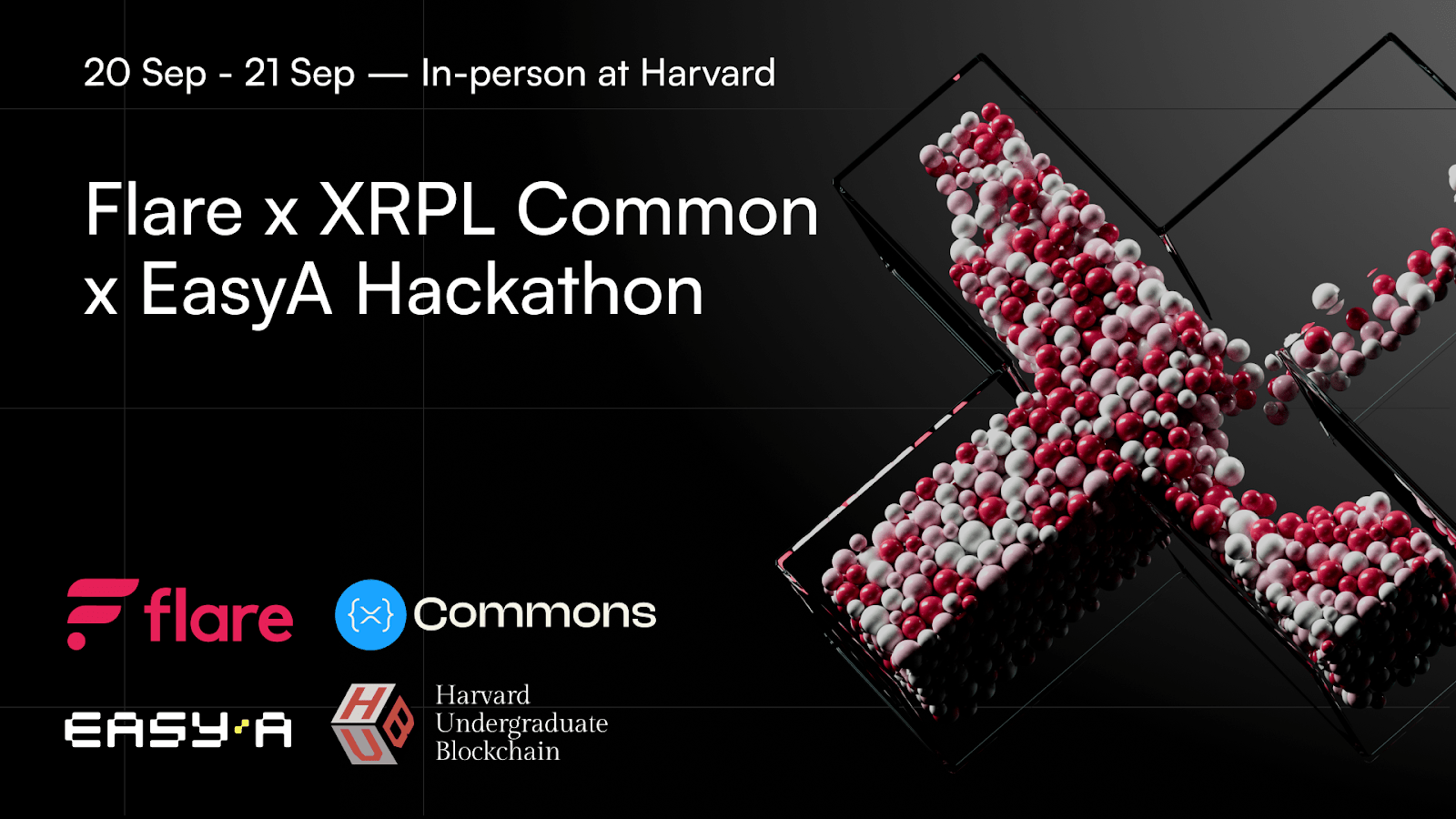
Flare, EasyA, and XRPL Commons to Host $35K Hackathon at Harvard

Flare, EasyA, and XRPL Commons to Host $35K Hackathon at Harvard

The post Flare, EasyA, and XRPL Commons to Host $35K Hackathon at Harvard appeared on BitcoinEthereumNews.com. Participants will not only have the opportunity to win a prize pool of $35,000, but they will also have the opportunity to receive hands-on experience. The event will demonstrate how Flare’s interoperability protocols and XRP Ledger (XRPL) technologies can be used to power the next generation of decentralized finance, payments, and consumer applications. The cooperation between Flare and EasyA, the biggest Web3 education app in the world, is the foundation around which this hackathon is built. In collaboration with EasyA and XRPL Commons, Flare will be hosting a hackathon at Harvard University on September 20 and 21, 2025, which will last for a total of 36 hours. An event that will bring together 200 developers is a critical milestone in the process of expanding the XRPFi ecosystem. The event will demonstrate how Flare’s interoperability protocols and XRP Ledger (XRPL) technologies can be used to power the next generation of decentralized finance, payments, and consumer applications. Participants will not only have the opportunity to win a prize pool of $35,000, but they will also have the opportunity to receive hands-on experience in cross-chain programming, meet with mentors from the Flare and XRPL communities, and participate in specialized in-person workshops that are given by developers from both ecosystems. Event details To register for the event, please visit the following website: https://www.easya.io/events/easya-x-flare-harvard-hackathon. 🥇 PrizesTotal prize pool: $35,000$10,000 dedicated track from XRPL Commons 🗓️ DatesSeptember 20 – 21, 2025 ⌚️ TmeSat, 20 Sep 2025 09:30 – Sun, 21 Sep 2025 17:30 GMT-4 📍 LocationHarvard University Hackathon tracks Participants in the competition will compete over three different tracks: 1) Cross-Chain Finance & Real-World Assets (XRPFi) By integrating the asset issuance and liquidity of XRPL with Flare’s decentralized data and proofs, you can build the future of finance. Develop event-driven financial applications that are grounded in real-world…

Author: BitcoinEthereumNews
Novogratz Backs AI Agents, DeepSnitch AI Rockets

Novogratz Backs AI Agents, DeepSnitch AI Rockets

The post Novogratz Backs AI Agents, DeepSnitch AI Rockets appeared on BitcoinEthereumNews.com. Galaxy Digital CEO Mike Novogratz, in a recent interview with Bloomberg, predicted that AI agents will soon become the biggest users of stablecoins. Many consider this an interesting perspective, but most importantly, it creates a shift in how many expect the crypto economy to change, with stablecoins not just serving humans but entire AI systems. That backdrop makes the current market conversation around the best AI crypto to buy now even more urgent. Newer projects are emerging with better narratives for the coming wave of AI adoption. Among them, DeepSnitch AI is becoming one of the best AI presale tokens of 2025. Its focus on real-world trading utility and retail protection stands out in a market where many AI tokens still pitch abstract future promises. Novogratz on AI and stablecoins  In his interview, Mike Novogratz outlined a vision where AI agents move beyond simple chat interfaces into autonomous financial actors. He suggested that in just a few years, the most active stablecoin users won’t be people but AI agents.  In essence, these agents will handle transactions on behalf of their human counterparts. Imagine an AI that knows your grocery preferences, monitors your diet, and automatically executes purchases. They would do all this without requiring you to log into an app or swipe a card. Instead of sending traditional wire instructions or using consumer apps like Venmo, these agents would default to stablecoins. This forecast is especially relevant as both the US and Europe are tightening regulatory frameworks for stablecoins. In Washington, lawmakers recently advanced the GENIUS Act to establish oversight for dollar-backed tokens. Meanwhile, in Europe, European Central Bank president Christine Lagarde has urged caution around non-EU stablecoins operating within the bloc.  But the bottom line is simple: if Novogratz is right, the increase in stablecoin transactions will be led…

Author: BitcoinEthereumNews
Ripple (XRP) Price Prediction: Why Smart Investors Are Choosing Mutuum Finance (MUTM) Over XRP for 2025 Gains

Ripple (XRP) Price Prediction: Why Smart Investors Are Choosing Mutuum Finance (MUTM) Over XRP for 2025 Gains

As the crypto market slowly gathers momentum for an end of year rally, XRP is under scrutiny by analysts. Elsewhere, a newcomer, Mutuum Finance (MUTM), tipped to change the lending game is growing like wildfire. MUTM is in its sixth presale stage and will grow by 14.29% to $0.04 in the next stage. The project […]

Author: Cryptopolitan
Best AI Crypto as Novogratz Backs AI Agents: DeepSnitch AI Rockets to $182k

Best AI Crypto as Novogratz Backs AI Agents: DeepSnitch AI Rockets to $182k

Enjoy the videos and music you love, upload original content, and share it all with friends, family, and the world on YouTube.

Author: Blockchainreporter
Chainlink expands strategic reserve with 43,937 LINK tokens

Chainlink expands strategic reserve with 43,937 LINK tokens

Chainlink has announced that its onchain strategic reserve has grown by an additional 43,937.57 tokens, with holdings now at 237,014. The Chainlink (LINK) Reserve, a strategic onchain reserve of LINK tokens that Chainlink introduced in early August, has grown to…

Author: Crypto.news
Onchain AI agents move from demo to deployment

Onchain AI agents move from demo to deployment

The post Onchain AI agents move from demo to deployment appeared on BitcoinEthereumNews.com. Onchain AI agents are edging out of the lab.  Lit Protocol’s agent stack, Vincent, now gives developers a way to ship non-custodial automation that actually touches money, but under explicit, enforceable limits set by users and app authors. An “early access” launch just went live, Blockworks has learned exclusively. Lit frames the core model simply: policies (guardrails) and abilities (discrete actions like swap/borrow/bridge) that are bound together at deploy time and enforced at runtime, according to co-founder David Sneider. “Vincent Policies (the guardrails and controls) are created and exposed by Vincent application developers based on any given use case,” Sneider told Blockworks. “For example, a trading app might expose a ‘spend policy’ or ‘token allowlist policy,’ which users would be able to fine-tune based on their own needs and preferences.” Under the hood, Vincent rides on Lit’s existing “defense-in-depth” key model: Threshold-split keys run inside secure enclaves (TEEs), and the enclaves execute only when an onchain policy check passes. In practice, that means permissions like spend caps, allowlists, time windows and rate limits are evaluated before any signing or contract call occurs. A key recent improvement is how easily developers can now package and enforce those rules through Vincent at the point of execution. According to examples from a “starter kit,” developers can define and expose app-specific policies as needed; the platform now supports both narrowly scoped and broader smart-contract permissions, with one-line SDK calls to invoke them. In Sneider’s view, the job is to let agents act, but only inside well-defined lanes. That’s effective, according to David Johnson, the lead code maintainer at Morpheus, which has built in Lit Protocol as part of its reference open-source agent work. “MPC enables good spending caps, whitelists of agents, and limited time approvals for agents to access user funds,” Johnson told Blockworks.…

Author: BitcoinEthereumNews
CFTC Veteran Warns of Underregulated Prediction Markets

CFTC Veteran Warns of Underregulated Prediction Markets

The post CFTC Veteran Warns of Underregulated Prediction Markets appeared on BitcoinEthereumNews.com. Outgoing CFTC Commissioner Kristin Johnson ended her tenure with a warning on prediction markets. Her remarks come amid the sector’s boom in crypto and traditional finance (TradFi). However, Johnson’s comments suggested that prediction markets could become the next financial Wild West if left unchecked. Prediction Markets Boom, but Johnson Warns of ‘Too Few Guardrails’ Sponsored Sponsored Speaking Wednesday at the Brookings Institution, Johnson cautioned that there are too few guardrails and too little visibility into the prediction market space. While issuing this warning, the outgoing CFTC commissioner expressed concern that these platforms are beginning to capture unprecedented volumes of retail cash. Her remarks landed the same day the CFTC issued a no-action letter clearing Polymarket to reenter the US. As BeInCrypto reported, a $112 million acquisition of regulated exchange QCEX facilitates Polymarket’s return to the US, enabling a significant reversal from the platform’s previous ban. Meanwhile, Johnson’s exit mirrors the dilemma regulators face, with prediction markets no longer fringe experiments but fast-rising financial platforms. Companies like Kalshi and Polymarket are transforming odds into an asset class. They offer markets on elections, economic data, and even cultural events. Investors increasingly see them as tools for both speculation and collective forecasting. Sponsored Sponsored However, Johnson warned that innovation without safeguards risks repeating past crises. She invoked the 2022 collapses of Terra/Luna, Celsius, and the FTX exchange. Further, Johnson pointed to the dangers of crypto-celebrities building exchanges without governance. “We’ve seen this movie (or bankruptcy) before,” she said. According to the outgoing CFTC commissioner, underregulated firms could again funnel retail customers into devastating losses. More closely, Johnson flagged the trend of firms renting or buying licenses to fast-track event contracts, only to pivot into new products with minimal oversight. Sponsored Sponsored She framed consumer protection and market stability as the twin pillars of…

Author: BitcoinEthereumNews
Flare, EasyA, and XRPL to host a crypto hackathon

Flare, EasyA, and XRPL to host a crypto hackathon

The post Flare, EasyA, and XRPL to host a crypto hackathon appeared on BitcoinEthereumNews.com. Flare, a full-stack Layer 1 (L1) solution, is joining forces with EasyA and XRPL Commons to host a 36-hour hackathon at Harvard University on September 20–21, 2025, as per the most recent info shared with Finbold on Thursday, September 3. The event will gather 200 developers and focus on Flare’s interoperability protocols and the ways XRP Ledger (XRPL) can power the next wave of decentralized finance (DeFi). With a $35,000 prize pool at stake, participants will gain hands-on cross-chain development experience across cross-chain finance and real-world assets, composable decentralized applications (dApps) and interoperable infrastructure, as well as consumer-focused apps.  In addition, Flare engineers will help participants familiarize themselves with technologies such as Flare’s FAassets, programmable liquidity, smart accounts, decentralized oracles, and XRPL-controlled accounts. XRPL has long been recognized for its speed, liquidity, and robust support for tokenization, while Flare brings secure interoperability and decentralized data capabilities.  Together, the two platforms aim to introduce new advancements in areas such as event-driven yield products and tokenized real-world assets (RWAs). “The XRPL stands out for speed, liquidity, and its enterprise-grade infrastructure. Integrating Flare brings true composability, expanding our foundation into a full-fledged DeFi ecosystem,” said Odelia Torteman, Director of Corporate Adoption, XRPL Commons The initiative builds on Flare’s ongoing partnership with EasyA, the Web3 education platform that has been onboarding developers through its #60DaysOfFlare campaign, which has already brought numerous programmers to Flare’s technology stack. Max Luck, Head of Growth at Flare, thus described the hackathon as creating “a direct loop between the XRPL and Flare infrastructure.” Source: https://finbold.com/flare-easya-and-xrpl-to-host-a-crypto-hackathon/

Author: BitcoinEthereumNews
Chainlink Marks 8 Years, Plans to Bring the World Onchain

Chainlink Marks 8 Years, Plans to Bring the World Onchain

The post Chainlink Marks 8 Years, Plans to Bring the World Onchain appeared on BitcoinEthereumNews.com. Key Notes Chainlink took to X to acknowledge the eighth anniversary of its whitepaper release. It noted that its next big project is “bringing the whole world onchain”. Chainlink already has a partnership with Mastercard that pushes this narrative. September 4, 2025, marks eight years since the Chainlink LINK $22.65 24h volatility: 4.4% Market cap: $15.38 B Vol. 24h: $758.17 M Whitepaper was first released to the public, laying the foundation for the protocol that would become the industry-standard oracle platform. Looking ahead, the protocol is aiming even higher, unveiling plans to “bring the whole world onchain” and expand its role in bridging traditional finance and decentralized ecosystems. The Chainlink Journey in 8 Years Over the past eight years, Chainlink has grown from a simple concept into the leading oracle platform in the crypto space. It now supports tens of trillions in transaction value and has secured nearly $100 billion for most DeFi markets. Chainlink’s next big goal is to bring the whole world onchain. Over the past months, the protocol has been taking strategic steps toward this vision. In June, it partnered with Mastercard to improve onchain crypto trading, allowing Mastercard’s 3 billion cardholders to buy cryptocurrencies directly on-chain. On this date 8 years ago, the Chainlink whitepaper was released to the world. Since 2017, Chainlink has evolved from just an idea to becoming the industry-standard oracle platform enabling tens of trillions in transaction value and securing nearly $100B for the vast majority of… pic.twitter.com/PIEZ7gpnqF — Chainlink (@chainlink) September 4, 2025 It uses Mastercard’s global payments network with blockchain infrastructure and Chainlink’s interoperability protocol to achieve the goal. Chainlink co-founder Sergey Nazarov broke the silence on the partnership, hinting that it “is the type of traditional finance and decentralized finance convergence that Chainlink was built to make possible.” With the…

Author: BitcoinEthereumNews
The Hidden Tax Traps Lurking in the DeFi Ecosystem

The Hidden Tax Traps Lurking in the DeFi Ecosystem

DeFi isn’t just about yield and smart contracts — it also creates complex taxable events. Deposits into CDPs, liquidations, liquidity pool tokens, airdrops, interest fees, and governance rewards can all trigger direct taxes like income or capital gains, while DEX fees, keeper incentives, and oracle charges may fall under indirect taxes such as VAT/GST. Because jurisdictions treat these events differently — sometimes as repos, sometimes as disposals — compliance can be confusing and inconsistent. Understanding how DeFi activities map to traditional tax principles is critical for both users and protocols navigating this evolving regulatory landscape.

Author: Hackernoon