

They lost everything in the WazirX heist. Now they pin their hopes on the country's courts for justice.
Ravi Narayan should have been settled in Aligarh by now, working his family's farm and trading crypto on the side. Instead, he's stuck in Delhi after a massive theft on WazirX wiped out his savings, leaving him separated from his family and the quiet life he'd planned.
Thirty-three-year-old Ravi had charted out his life plans. After resigning from his software job, he scraped together his savings and borrowed money from his father and relatives, planning to spend his days preparing for a career switch, while his crypto investments—all his savings—on WazirX compounded quietly in the background.
It was a calculated risk, or so he thought.
He had watched Gary Gensler's MIT blockchain lectures—famous in the crypto community and considered foundational—trying to understand the technology before committing his money. He chose WazirX after seeing a former host of the popular reality show Roadies promote the exchange.
In 2021, he started by loading up on tokens like Shiba Inu, the dog-themed meme coin. "If I invest Rs 10 lakh today, and it grows 10x by 2025, I will be a crorepati," Ravi said, recalling his thesis that once felt bulletproof, during a call with YourStory.
However, everything changed in July 2024, when WazirX froze withdrawals following a crypto heist in June 2024, where thousands of investors, including Ravi, saw nearly $235 million in assets vanish overnight.
The heist aftermath
Ravi did not panic immediately. Before the hack, he had gradually moved beyond meme coins after a few setbacks, and his portfolio now rested largely on XRP—a token used for cross-border money transfers and seen by many retail traders as relatively stable, along with a handful of other assets.
Even while frozen, the notional value of his XRP tokens kept rising. It was worth about Rs 7 lakh on the day of the hack, and had the market run continued uninterrupted, he estimates it could have reached around Rs 12 lakh today.
Ravi clung to the fact that XRP was not among the tokens directly compromised in the hack. As long as WazirX remained operational and his balances showed up on screen, he believed the exchange was responsible for making him whole.
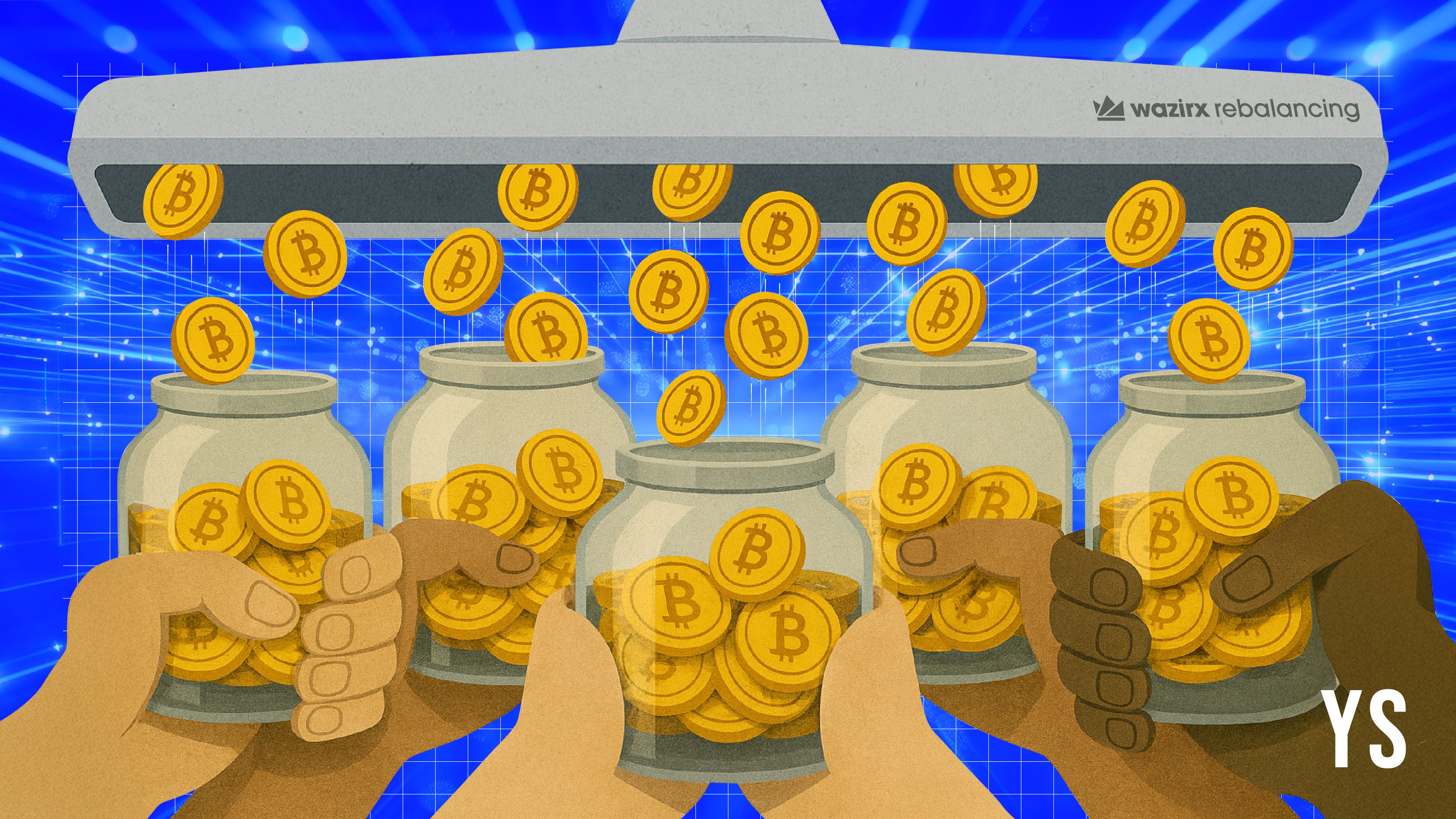
However, the crypto exchange’s “rebalancing scheme” shattered that assumption. WazirX proposed seizing 85% of almost every user’s account—regardless of whether hackers touched the specific tokens they held—and redistributing assets from unaffected traders to cover the losses of those whose coins had been stolen.
Defending the approach, WazirX Founder Nischal Shetty told YourStory, "The Singapore Court route was the fastest and fairest option, creditor-approved and legally binding, and a better path than liquidation, which can take years."
He added, "We followed the legal process, and that's the right approach."
Once implemented, Ravi discovered what it meant in practice. For every Rs 100 he held in XRP, he was credited back only Rs 15. From a pre-hack portfolio worth around Rs 7 lakh, he now had the right to withdraw only about Rs 1.05 lakh.
As relatives began asking for money—which he had promised them to return last year—Ravi moved back to Delhi looking for a job, hoping a steady salary would help him chip away at the debt. His current paycheque barely covers his own costs, let alone meaningfully reducing what he owes.
For Ravi, recovering his full crypto holdings is no more about chasing speculative upside. It is the only way he sees to clear his obligations, return home, and start over with dignity.
With money stuck for months, bills piling up, and no sign of relief, many users reached a breaking point and voted for the “rebalancing scheme,” as WazirX resumed its operations. By September 2025, nearly 95% of affected users, including Srinivas Nagamothu, said yes to the plan.
Srinivas Nagamothu, a software engineer who had been using WazirX for eight years, had parked his family’s savings on the exchange. “95% of the people have voted in favour… Kindly accept and allow WazirX to reopen so that we will get money, so our lives will be at least okay going forward,” he told the Singapore International Arbitration Centre, which signed off on the restructuring plans.
“We are almost near poverty,” he pleaded.
Many users felt they had been hit twice: first by the hack, then by the haircut. Meanwhile, investors like Ravi—who had voted against the redistribution scheme—were left to bear the loss, with no option but to continue fighting.
Looking for solutions
Prashant Parmar, an entrepreneur based in Chennai, was one of the first investors to take WazirX to court. His wife, Rhuti Kumari, had invested in XRP through the exchange, drawn to what Parmar calls "one of the few tokens that have proper real-world use cases."
"I have only one son, and we were hoping that if our investments grow, we will invest the money towards his future," Parmar told YourStory.
After the hack struck when WazirX announced its rebalancing scheme, the couple filed a case in the Madras High Court, challenging the redistribution plan approved by the Singapore court. Their immediate concern wasn't just winning the case—it was ensuring that while the legal battle dragged on, the disputed funds they believed they were owed wouldn't disappear.
In October, the Madras HC granted them that protection, directing WazirX to furnish a bank guarantee for Kumari's 3,532 XRP tokens, insulating them from any further deductions while the wider dispute played out.
The ruling went further. The Court held that crypto assets qualify as "property" under Indian law—something that could be owned and held in trust. More importantly, it questioned the logic behind WazirX's restructuring plan: you can't take someone's Bitcoin to cover someone else's Ethereum losses. The judgment was, prima facie, a rejection of the exchange's approach.
This single ruling turned out to be a landmark moment, strengthening crypto holders' rights in India and offering battered investors their first real legal foothold.
Word spread quickly, and over the past few months, roughly 420 investors—from Mumbai, Delhi, Bengaluru, and smaller towns—have gathered across more than 15 WhatsApp and Telegram groups.
Chirayu Bagree, a young crypto enthusiast, Romy "Toofaan" Johnson (he had adopted the nickname meaning "storm"), and other volunteers set up the coordination channels, sharing screenshots, polls, and Google Forms to compare losses and chart a strategy forward.
"WazirX almost ripped me off 85% of my portfolio… No idea how," one user wrote in a group chat, his confusion turning to anger. "I had over 9,600 XRP, and the rebalanced portfolio shows just 1,370."
One WhatsApp group for Bengaluru members revealed that more than a dozen users had lost between Rs 1-15 lakh during the rebalancing. Another survey meticulously collected each person's exact pre-hack token counts and current balances to quantify the damage. Investors believed this crowdsourced evidence would prove crucial later.
Parmar joined the group efforts, helping others understand his case and connecting them with Dinesh, the lawyer who had represented Kumari in the Madras HC.
Two months after WazirX froze withdrawals, Romy filed his own case in the Kerala High Court, and then the Supreme Court, which deemed itself "not the right domain" to pass any verdict.
With no resolution in sight, he filed cases in Singapore and even sued Binance when he felt the company was dodging responsibility. "I've knocked on probably every single door," he said.
Today, Romy fields roughly 50 calls a day from people who have nowhere else to turn. The conversations aren't structured legal consultations; they're panic, confusion, and lengthy explanations of cryptocurrencies.
"Even the strongest ones end up crying on the phones," he said, describing everyone from first-time student investors to retirees.
The Madras High Court's judgment had given users a silver lining in their quest to protect their assets from redistribution.
The coordinators began scheduling Zoom calls with volunteer lawyers, trying to turn scattered outrage into organised action—a possible class-action suit that could drag the fight out of social media and into India's courts.
Possible pathways
Banking on Madras HC's ruling, investors have narrowed down two possible resolution paths. "We are working now to determine if this same legal mechanism can be used to secure assets in India," one coordinator explained.
The first path is to knock on the doors of the National Consumer Disputes Redressal Commission—India’s top consumer court. According to the lawyers advising the investors, this could give them a clear appeal path to the Supreme Court if the consumer court turns them down.
Two senior lawyers have offered to take the case for a total fee of Rs 11 lakh for the first 100 users. That works out to Rs 11,000 per person. This option lets them act as one big group of customers and challenge WazirX.
Their main argument is: if users’ crypto was genuinely held “in trust,” as the Madras HC suggested, then those coins were never WazirX’s property. They belonged to users from day one. And, if that is true, the restructuring plan was effectively an attempt to divide and reassign assets that did not belong to the company at all.
The Madras HC’s order also showed how one investor could ring-fence their assets.
Here comes the second legal pathway: file cases individually in a state High Court and try to replicate the same interim protection granted in the Madras case—a template dozens of investors are now eyeing.
Kumari's case now moves to arbitration, and the fine print in the WazirX terms and conditions pushes that final stage to Singapore. While the Madras HC order doesn’t cancel the arbitration clause, it simply stops WazirX from touching a user’s assets.
Coordinators repeatedly point out that anyone using this HC route eventually lands before the Singapore tribunal, and they still haven’t found a way to keep the fight entirely within Indian jurisdiction.
Dinesh, Kumari's lawyer, also offered to take on similar cases for others for a fee of Rs 1 lakh per person upfront. On top of that, the Singapore International Arbitration Centre can charge tens of thousands of dollars in fees even for a single investor.
For many WazirX users, that would mean spending almost as much as they were trying to recover. If one had Rs 10-15 lakh stuck, they could easily burn a similar amount in foreign lawyers and tribunal costs, with no guarantee of getting their money back.
As the legal battles drag on, the WazirX crisis has exposed the fragility of India's crypto ecosystem—an industry caught between rapid growth and regulatory neglect.
"The biggest problem is that we're operating in a legal grey zone," said Romy, adding, "Investors have no real protection because there are no clear laws for cryptocurrency or blockchain. We desperately need a proper framework—something that shields people from fraud, but doesn't kill innovation. Right now, it's the Wild West, and regular people are paying the price."
Meanwhile, WazirX has reopened its crypto exchange, resumed trading and withdrawals, and positioned itself as the party cooperating with users by helping them withdraw whatever scraps are left in their crypto wallets. The very funds these investors are rushing to protect may already be long gone from the exchange’s books.
In fact, from the 85% of user assets it held back, WazirX has also carved out a three-year runway to keep the business alive. It is betting that future profits will let it make its affected users whole.
A class-action suit is a novelty in India, tested for the first time last year. Meanwhile, the individual High Court route dumps them straight into the deep end of a Singapore arbitration that only those with serious financial muscle can afford.
Ravi and thousands of affected investors, however, don’t have that luxury.
Edited by Suman Singh
Ayrıca Şunları da Beğenebilirsiniz

USD/INR opens flat on hopes of RBI’s follow-through intervention

U.S. Spot ETFs for DOGE & XRP Unlock New Access
