

Trump’s Dire Warning: Iranian Civilization Faces Overnight Annihilation Risk
BitcoinWorld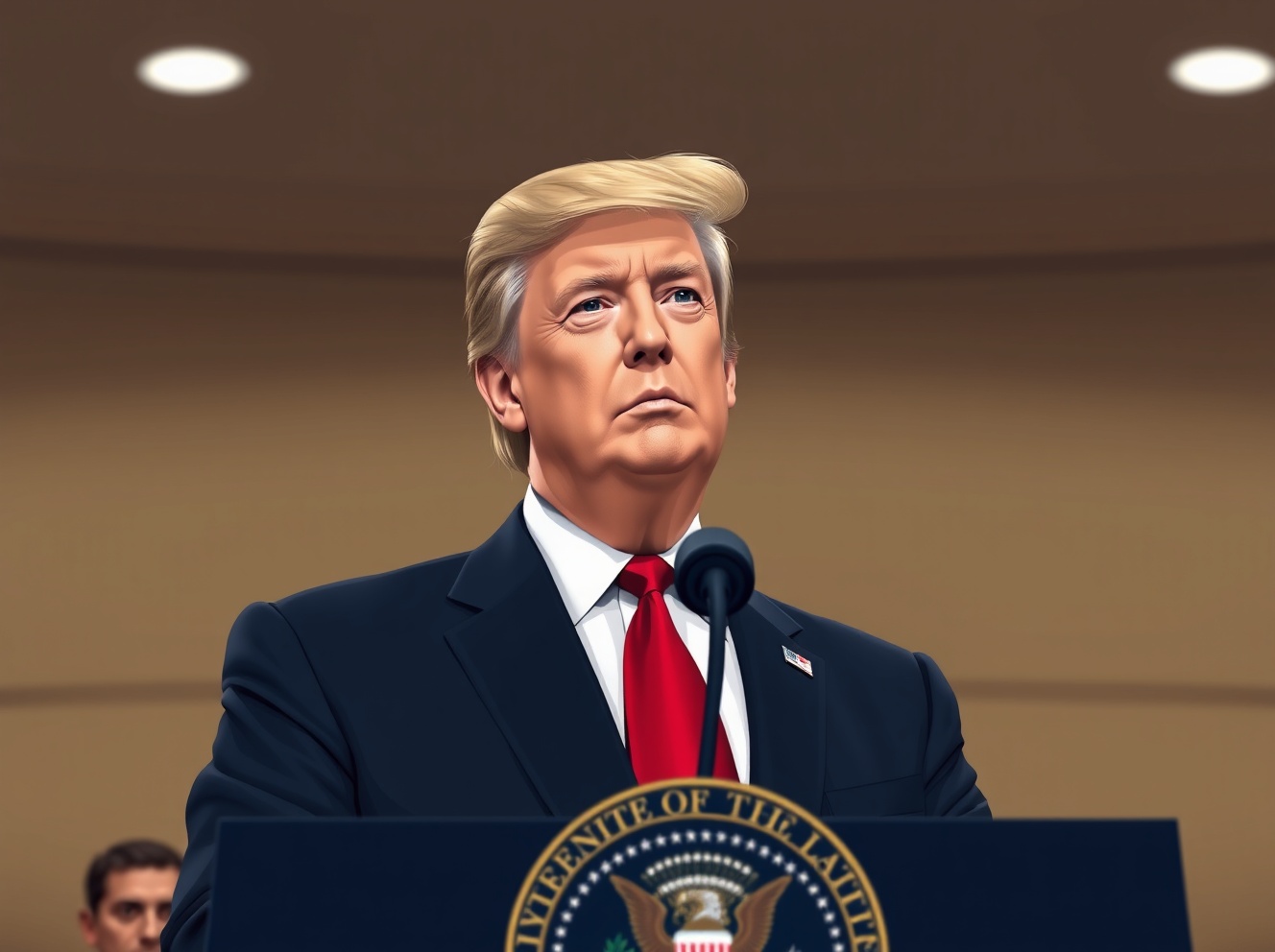
Trump’s Dire Warning: Iranian Civilization Faces Overnight Annihilation Risk
WASHINGTON, D.C. – March 2025: Former President Donald Trump issued a stark warning this week about the potential for Iranian civilization to face overnight annihilation. Consequently, his comments have reignited global discussions about Middle Eastern stability and nuclear diplomacy. Furthermore, geopolitical analysts now scrutinize the implications of such statements during heightened regional tensions.
Trump’s Dire Warning on Iranian Civilization
Former President Donald Trump made his remarks during a policy address in Florida. Specifically, he stated that an entire civilization could be annihilated overnight and never recover. Moreover, he emphasized that while he does not desire such an outcome, the probability remains high. Additionally, his comments reference longstanding tensions between Washington and Tehran.
Trump’s warning follows recent escalations in the Persian Gulf region. For instance, Iranian naval exercises have increased near strategic waterways. Meanwhile, the United States maintains a significant military presence in the area. Consequently, experts monitor these developments closely. The following table outlines recent key events:
| Date | Event | Significance |
|---|---|---|
| February 2025 | Iran announces uranium enrichment increase | Nuclear program advancement |
| January 2025 | U.S. naval deployment to Persian Gulf | Military presence reinforcement |
| December 2024 | IAEA report on Iranian facilities | International monitoring update |
Historical Context of U.S.-Iran Relations
The relationship between the United States and Iran spans decades of complexity. Initially, the 1953 coup created lasting distrust. Subsequently, the 1979 hostage crisis solidified hostilities. Furthermore, nuclear negotiations have experienced multiple breakthroughs and collapses.
Several key agreements have shaped this diplomatic landscape:
- 2015 JCPOA: Multinational nuclear agreement involving world powers
- 2018 U.S. withdrawal: Trump administration exits the agreement
- 2021 Vienna talks: Attempted revival of nuclear negotiations
- 2023 protests: Internal Iranian unrest affecting foreign policy
- 2024 regional conflicts: Proxy wars influencing diplomatic calculations
Expert Analysis of Civilizational Risk
Geopolitical scholars provide crucial context for understanding civilizational threats. Dr. Anahita Moghaddam, Middle East historian at Georgetown University, explains the concept. “Civilizational collapse refers to irreversible cultural and institutional destruction,” she states. “Modern examples include ancient Mesopotamia and pre-Columbian societies.”
Military strategists also weigh in on the practical implications. Retired General David Patterson notes technological changes. “Contemporary warfare capabilities differ significantly from historical conflicts,” he observes. “Precision weapons and cyber capabilities create new risk dimensions.”
Regional Implications and Global Response
Trump’s warning carries significant implications for Middle Eastern stability. Neighboring countries monitor developments with particular concern. Saudi Arabia and Israel maintain vigilant positions regarding Iranian activities. Meanwhile, European powers advocate for diplomatic solutions.
The international community has responded with measured statements. United Nations Secretary-General António Guterres emphasized conflict prevention. “Dialogue remains essential for regional security,” his spokesperson stated. Additionally, Chinese and Russian officials called for restraint from all parties.
Economic factors also influence the situation. Global oil markets react to Persian Gulf tensions. Furthermore, international shipping routes require protection. The Strait of Hormuz carries approximately 20% of global oil shipments daily.
Diplomatic Pathways and Conflict Prevention
Multiple diplomatic channels remain available despite current tensions. Backchannel communications continue between various parties. Additionally, regional mediation efforts persist through neutral nations. Oman and Qatar frequently facilitate such discussions.
Nuclear negotiations represent the most prominent diplomatic avenue. The Joint Comprehensive Plan of Action framework provides existing structure. However, implementation challenges persist. Verification mechanisms require international consensus.
Confidence-building measures offer incremental progress opportunities. These include:
- Military communication channels to prevent accidental escalation
- Humanitarian exchanges to build people-to-people connections
- Cultural preservation initiatives protecting shared heritage
- Academic collaborations fostering mutual understanding
Technological and Strategic Considerations
Modern military capabilities transform conflict dynamics. Cyber warfare presents particular challenges for traditional diplomacy. Additionally, drone technology changes regional security calculations. These developments require updated international frameworks.
Strategic analysts emphasize escalation control mechanisms. “Red lines require clear communication,” notes security expert Dr. James Chen. “Misunderstandings in crisis situations create particular dangers.” Consequently, military-to-military contacts gain importance.
Conclusion
Former President Trump’s warning about Iranian civilization highlights persistent geopolitical tensions. The risk of overnight annihilation, while extreme, focuses attention on conflict prevention. Diplomatic engagement remains essential for regional stability. Furthermore, international cooperation must address both immediate crises and long-term solutions. The global community continues monitoring developments with appropriate concern and measured response.
FAQs
Q1: What exactly did President Trump say about Iran?
Former President Trump warned that Iranian civilization could face overnight annihilation that would prevent recovery. He stated he does not want this outcome but considers the probability significant.
Q2: How have other world leaders responded to these comments?
International responses emphasize diplomatic solutions and conflict prevention. United Nations officials advocate for dialogue while regional powers monitor developments closely.
Q3: What historical context explains current U.S.-Iran tensions?
Relations involve decades of complexity including the 1953 coup, 1979 hostage crisis, nuclear negotiations, and regional proxy conflicts. These events create persistent diplomatic challenges.
Q4: What diplomatic options exist for reducing tensions?
Options include nuclear agreement revivals, regional mediation, confidence-building measures, military communication channels, and multilateral negotiations through international organizations.
Q5: How do experts assess the actual risk of civilizational collapse?
Scholars note that while modern capabilities create new risks, international systems contain multiple conflict prevention mechanisms. Most analysts emphasize diplomatic engagement over military confrontation.
This post Trump’s Dire Warning: Iranian Civilization Faces Overnight Annihilation Risk first appeared on BitcoinWorld.


You May Also Like

Perpetuals.com Secures CySEC Approval to Expand MiFID II License for Direct Crypto Derivatives Trading

Here’s Why The Dogecoin Price Could See Big Gains Soon




