Iran Criticizes US for Blockade of Vessels: A Dangerous Escalation in the Strait of Hormuz
BitcoinWorld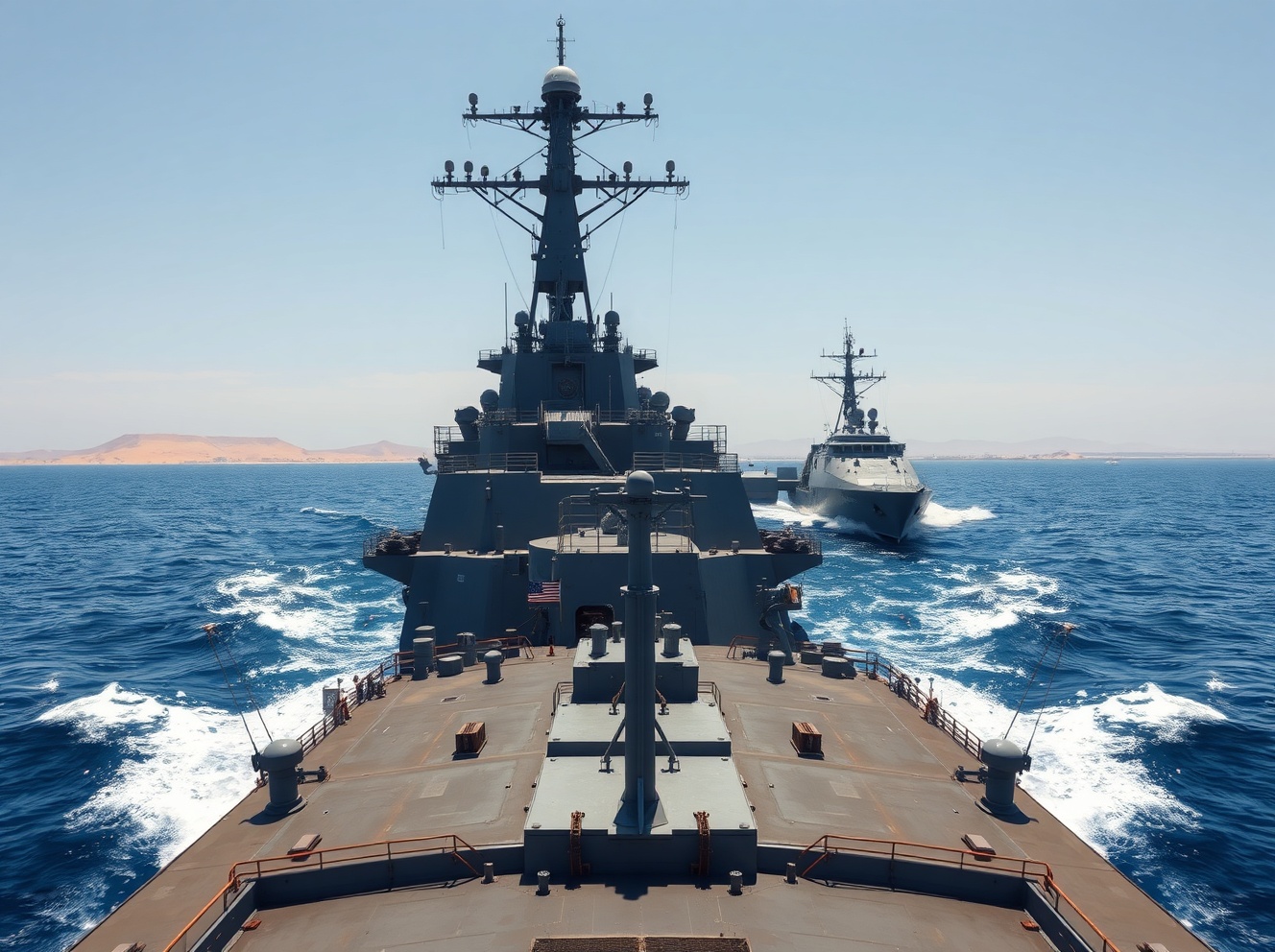
Iran Criticizes US for Blockade of Vessels: A Dangerous Escalation in the Strait of Hormuz
TEHRAN, Iran – March 2025 – The Iranian government has launched a sharp diplomatic critique against the United States, condemning what it describes as an unlawful blockade of commercial vessels in the Strait of Hormuz. This accusation marks a significant escalation in long-standing maritime tensions within the Persian Gulf, a critical global chokepoint for oil transportation. The verbal confrontation follows recent US naval maneuvers aimed at enforcing international sanctions, directly challenging Iran’s regional maritime authority and raising immediate concerns over potential disruptions to global energy supplies.
Iran Criticizes US for Blockade of Vessels: The Core Allegation
Iranian Foreign Ministry spokesman Nasser Kanaani formally articulated the criticism during a weekly press briefing in Tehran. He stated that US naval forces had ‘illegally impeded the free passage of several Iranian-affiliated oil tankers’ over the preceding 72 hours. Consequently, Kanaani labeled these actions a ‘dangerous provocation’ that violates the principles of freedom of navigation under international maritime law. The United States Fifth Fleet, headquartered in Bahrain, has not directly confirmed a blockade but acknowledges increased ‘interdiction operations’ targeting vessels suspected of violating oil sanctions against Iran. This operational shift represents a clear intensification of US policy enforcement in the region.
Furthermore, the Strait of Hormuz serves as a transit route for approximately 21 million barrels of oil daily, representing nearly one-fifth of global consumption. Any sustained disruption in this narrow waterway triggers immediate volatility in global oil markets. Historical precedent shows that similar tensions in 2019 and 2022 led to brief but sharp spikes in Brent crude prices, exceeding 15% in some instances. The current geopolitical climate, therefore, places extraordinary pressure on both diplomatic and military channels to prevent an accidental escalation.
Historical Context and Legal Frameworks
To understand the current dispute, one must examine the complex legal and historical backdrop. The United Nations Convention on the Law of the Sea (UNCLOS) guarantees ‘innocent passage’ through territorial straits used for international navigation. However, the United States maintains a different interpretation, emphasizing the right of its naval forces to operate in these waters to ensure regional stability and enforce UN Security Council resolutions. Iran, which is not a signatory to UNCLOS, asserts sovereignty over its territorial waters and views US naval patrols as hostile acts. This fundamental legal disagreement creates a persistent flashpoint.
Timeline of Recent Escalations
- 2021-2023: A series of alleged Iranian seizures of commercial tankers prompts increased US and allied naval patrols.
- Early 2024: The US reimposes stringent oil sanctions, aiming to curb Iran’s nuclear program and regional activities.
- Late 2024: Iran accelerates its oil exports, reportedly using ‘shadow fleets’ of tankers with obscured ownership to circumvent sanctions.
- February 2025: US intelligence indicates a surge in sanctioned oil shipments, leading to a policy review and more assertive naval rules of engagement.
- March 2025: The current confrontation unfolds, with Iran publicly denouncing specific US interdiction attempts.
Maritime security analysts note that the US Navy’s actions likely fall under the concept of a ‘visit and search’ blockade, a recognized measure during times of international tension to enforce sanctions. However, Iran’s characterization of these actions as a full ‘blockade’ is a deliberate political framing designed to garner international sympathy and portray the US as an aggressor disrupting global trade.
Regional and Global Impacts of the Naval Standoff
The immediate impact extends far beyond bilateral relations. Regional allies, including Saudi Arabia and the United Arab Emirates, closely monitor the situation. These Gulf Cooperation Council (GCC) states depend on the same waterways for their own exports and generally support a strong US naval presence as a counterbalance to Iranian influence. However, they also fear being drawn into a direct conflict that could devastate regional infrastructure. Simultaneously, global energy markets exhibit heightened sensitivity. Insurance premiums for vessels transiting the Persian Gulf, known as war risk premiums, have already begun to climb, increasing the cost of shipped oil.
Key Strategic Chokepoints for Global Oil Transit| Chokepoint | Estimated Daily Oil Flow (Million Barrels) | Primary Controlling State(s) |
|---|---|---|
| Strait of Hormuz | ~21 | Iran, Oman |
| Strait of Malacca | ~16 | Indonesia, Malaysia, Singapore |
| Suez Canal/Sumed Pipeline | ~9 | Egypt |
| Danish Straits | ~3 | Denmark |
Economists warn that a prolonged crisis could shave points off global GDP growth, particularly in energy-import-dependent nations in Asia and Europe. The strategic implications are equally significant. A sustained US naval blockade, even if partial, challenges Iran’s core strategy of using the threat of Hormuz closure as its primary geopolitical lever. This dynamic creates a high-stakes game of chicken where miscalculation by either naval force could lead to a direct military clash.
Expert Analysis on Military and Diplomatic Pathways
Retired Admiral James Stavridis, former Supreme Allied Commander of NATO, provides critical context. ‘The US Navy is walking a fine line between lawful sanction enforcement and an act of war,’ Stavridis notes. ‘The legal authority stems from UN resolutions, but the operational execution in such congested and tense waters carries immense risk. De-escalation requires clear, private diplomatic channels alongside very public rules of engagement to avoid tragic mistakes.’ This perspective underscores the delicate balance between demonstrating resolve and preventing conflict.
Conversely, Iranian military strategists often reference their asymmetric naval capabilities. The Islamic Revolutionary Guard Corps Navy (IRGCN) operates hundreds of fast-attack craft, swarming drones, and extensive coastal missile batteries. Their doctrine does not seek to defeat the US Navy in a conventional battle but to raise the cost of US operations to an unacceptable level through harassment and the threat of disproportionate response. This asymmetric strategy makes the environment inherently unstable for larger, more conventional US warships.
Diplomatic off-ramps remain theoretically possible but are currently obstructed by deep mutual distrust. Potential pathways include third-party mediation by Oman or Qatar, a temporary pause in interdictions for dialogue, or a mutual agreement to de-conflict naval operations within a defined geographic zone. However, with core issues like Iran’s nuclear program and regional proxy activities unresolved, any maritime agreement would likely be temporary and fragile.
Conclusion
Iran’s criticism of the US for a blockade of vessels represents more than a diplomatic protest; it is a symptom of a deeper, unresolved conflict over sovereignty, security, and sanctions enforcement in the world’s most important oil transit lane. The situation remains fluid and dangerous, with the potential for miscalculation high. The international community watches closely, understanding that stability in the Strait of Hormuz is not just a regional concern but a fundamental pillar of the global economic order. The coming weeks will test whether diplomacy can lower the temperature or if the cycle of action and reaction will lead to a more severe confrontation.
FAQs
Q1: What exactly is Iran accusing the US of doing?
Iran accuses the United States Navy of illegally blocking the passage of Iranian-affiliated commercial oil tankers in the Strait of Hormuz, calling it a blockade that violates international maritime law.
Q2: Why is the Strait of Hormuz so important?
The Strait of Hormuz is a narrow maritime passage connecting the Persian Gulf to the open ocean. It is the world’s most critical oil transit chokepoint, with about 21 million barrels of oil passing through daily, supplying markets across Asia, Europe, and beyond.
Q3: What legal authority does the US have to stop ships?
The US cites United Nations Security Council resolutions related to Iranian nuclear sanctions as the legal basis for ‘interdiction operations’ or ‘visit and search’ actions against vessels suspected of violating those sanctions, particularly by transporting illicit oil.
Q4: How could this situation affect global oil prices?
Any perceived threat to free navigation through the Strait of Hormuz causes immediate market anxiety, typically leading to higher oil prices and increased shipping insurance costs. A direct military incident could trigger a sharp, sustained price spike.
Q5: What are the risks of military escalation?
The primary risk is an accidental clash between US and Iranian naval vessels. Given the crowded waterways and the presence of fast Iranian attack craft operating near large US warships, a miscommunication or aggressive maneuver could quickly escalate into an exchange of fire, potentially drawing in regional actors.
This post Iran Criticizes US for Blockade of Vessels: A Dangerous Escalation in the Strait of Hormuz first appeared on BitcoinWorld.


You May Also Like

Metaplanet Stock Passes MARA to Become Third-Largest BTC Holder — Stock Slips Anyway
Justice Department has 'gone off the rails' for Trump's 'pretzel logic': analysis