US Military Blockade of Iranian Ports Takes Effect, Escalating Persian Gulf Tensions
BitcoinWorld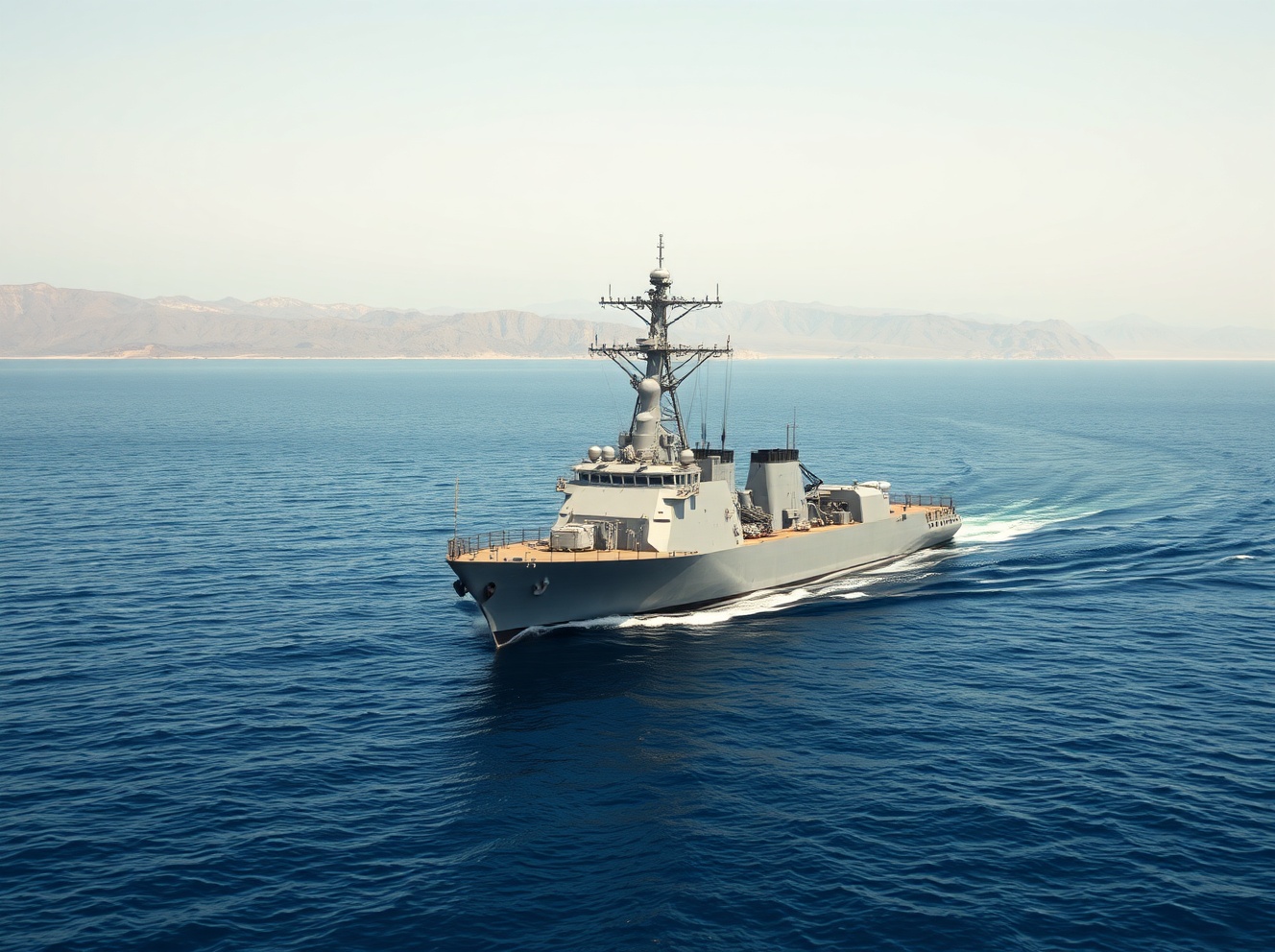
US Military Blockade of Iranian Ports Takes Effect, Escalating Persian Gulf Tensions
The United States Navy initiated a significant maritime enforcement operation in the Persian Gulf on April 13, as the previously announced US military blockade of Iranian ports officially took effect at 10:00 a.m. local time. This decisive action, confirmed by international reports including Xinhua News Agency, marks a severe escalation in the long-standing geopolitical confrontation between Washington and Tehran. Consequently, global energy markets and regional security frameworks now face immediate and profound uncertainty.
US Military Blockade Implements Strategic Pressure
The operational commencement of the US military blockade represents a transition from diplomatic rhetoric to tangible military enforcement. Specifically, US naval assets, including guided-missile destroyers and coastal patrol ships, have established a monitored perimeter around key Iranian commercial and energy terminals. These terminals include Bandar Abbas on the Strait of Hormuz and Bandar Mahshahr on the Persian Gulf. The stated objective, according to prior administration statements, is to compel compliance with international sanctions regimes. Furthermore, the blockade aims to restrict the flow of sanctioned commodities, primarily petroleum products.
Historically, naval blockades are acts of war under international law. However, US officials have framed this action as a lawful interdiction effort under United Nations Security Council resolutions. The legal justification remains a central point of international debate. Meanwhile, the immediate physical impact has halted all commercial maritime traffic destined for the blockaded ports. Dozens of tankers and cargo ships now sit at anchor outside the exclusion zone, awaiting further instructions from their owners and insurers.
Historical Context and Precedent
This is not the first instance of naval tension in these waters. The US Navy re-flagged Kuwaiti tankers during the 1980s Tanker War. Similarly, Iran has repeatedly threatened to close the Strait of Hormuz. The current blockade, however, is unprecedented in its scope against a nation’s primary commercial ports in peacetime. Analysts from the International Institute for Strategic Studies (IISS) note that the move significantly raises the risk of miscalculation. Even a minor naval incident could trigger a broader military conflict.
Economic and Global Energy Market Impacts
The blockade’s activation has sent immediate shockwaves through global energy markets. Iran is a major oil producer, and the Strait of Hormuz is a chokepoint for roughly 20-30% of the world’s seaborne oil. Consequently, Brent crude futures surged by over 8% in early trading following the announcement. Shipping insurance premiums for vessels operating in the Persian Gulf have also skyrocketed. Major shipping firms like Maersk and MSC have already issued advisories rerouting traffic, which will increase costs and transit times globally.
The primary economic impacts include:
- Oil Price Volatility: Markets are pricing in a sustained risk premium, affecting global inflation forecasts.
- Supply Chain Disruption: Non-oil trade through the Gulf is also severely hampered, affecting goods from the region.
- Regional Economy: Iran’s economy, already under pressure, faces a critical blow to its export revenue.
| Port Name | Primary Function | Strategic Importance |
|---|---|---|
| Bandar Abbas | Multipurpose Commercial & Naval | Main Iranian port on Strait of Hormuz |
| Bandar Mahshahr | Petrochemical & Oil Export | Major hub for refined product exports |
| Khashahr (Bandar Imam) | Container & General Cargo | Critical for non-oil imports and exports |
| Asaluyeh | Natural Gas (LNG) | Center for South Pars gas field operations |
Geopolitical Reactions and Regional Security
International reaction to the US military blockade has been sharply divided. European allies, including France and Germany, have expressed deep concern and called for immediate de-escalation. Conversely, regional partners such as Saudi Arabia and Israel have offered tacit support for the pressure campaign. China and Russia, however, have issued strong condemnations. Both nations labeled the action a violation of international law and Iranian sovereignty. The United Nations Secretary-General has called for an emergency session of the Security Council.
Iran’s response has been predictably vehement. Senior military commanders of the Islamic Revolutionary Guard Corps (IRGC) have vowed a “crushing and decisive” response. Moreover, Iranian state media has broadcast military exercises featuring fast-attack boats and anti-ship missile batteries. The risk of an asymmetric retaliation—such as mining shipping lanes or harassing commercial traffic—is considered high by security analysts. The US Fifth Fleet, headquartered in Bahrain, has consequently elevated its force protection condition to its highest level in a decade.
Expert Analysis on Escalation Pathways
Dr. Anahita Sharma, a senior fellow at the Center for Naval Analyses, provides critical context. “The blockade is a classic tool of coercive diplomacy,” she explains. “However, its success hinges on a clear off-ramp for the targeted state. Currently, the public demands on Iran are maximalist, leaving little room for negotiation. This increases the likelihood Iran will choose to test the blockade’s resolve, potentially through a calibrated military provocation.” This expert perspective underscores the delicate and dangerous nature of the current standoff.
Legal and Humanitarian Considerations
The legality of the blockade under the United Nations Charter is a subject of intense scrutiny. Blockades are generally considered acts of war unless authorized by the UN Security Council—which has not occurred in this case. The US cites self-defense and the enforcement of sanctions as its legal basis. International legal scholars are deeply skeptical of this argument. Furthermore, humanitarian organizations are warning of potential collateral impacts. A prolonged blockade could restrict the flow of food, medicine, and other essential goods to the Iranian civilian population, despite exemptions for humanitarian cargo.
The International Committee of the Red Cross (ICRC) has reminded all parties of their obligations under international humanitarian law. Specifically, they emphasize that the civilian population must not be deprived of objects indispensable to its survival. Monitoring compliance with these principles will be a significant challenge for neutral observers in the coming weeks.
Conclusion
The activation of the US military blockade of Iranian ports marks a pivotal and dangerous moment in international affairs. This enforcement action has immediate and severe consequences for global trade, energy security, and regional stability. While aimed at exerting maximum economic pressure, the strategy carries a high risk of military escalation in the world’s most strategically vital waterways. The international community now watches closely. The next moves by Iranian authorities and the operational decisions of US naval commanders will determine whether this crisis can be contained or if it spirals into a broader conflict. The situation remains fluid and highly volatile.
FAQs
Q1: What exactly is a naval blockade?
A naval blockade is a belligerent act to prevent vessels from entering or leaving a nation’s ports or coastline. It is a tool of war and economic coercion, historically used to strangle an adversary’s trade.
Q2: Which Iranian ports are specifically affected?
The primary ports under blockade are Bandar Abbas, Bandar Mahshahr, and Khashahr on the Persian Gulf. These handle the vast majority of Iran’s seaborne oil exports and commercial imports.
Q3: How is this different from existing sanctions?
Sanctions are financial and legal restrictions on trade. A blockade is a physical, military enforcement action that physically stops ships, significantly escalating the confrontation from the economic to the military domain.
Q4: Can other countries bypass the blockade?
Any vessel attempting to enter a blockaded port risks being intercepted, boarded, or turned away by US naval forces. Attempting to run a blockade is a hostile act and could lead to the seizure of the vessel.
Q5: What is the most likely outcome of this crisis?
Analysts see several paths: a negotiated de-escalation, a prolonged stalemate increasing global oil prices, or a military incident that triggers a limited conflict. The high stakes make the situation exceptionally unpredictable.
This post US Military Blockade of Iranian Ports Takes Effect, Escalating Persian Gulf Tensions first appeared on BitcoinWorld.


You May Also Like

Stock Market Appears To Be Bottoming, Says Morgan Stanley’s Dan Skelly – Here’s Why

SHIB Price Prediction Heats Up as Shibarium Jumps 1,583% and Pepeto Targets Bigger Upside