BitcoinWorld Massive USDT Transfer: $220 Million Moves to Aave from Unknown Wallet The cryptocurrency world is abuzz with the news of a monumental USDT transfer. A staggering 219,999,998 USDT, valued at approximately $220 million, recently moved from an undisclosed wallet to the decentralized finance (DeFi) lending protocol, Aave. This significant whale movement, flagged by Whale Alert, has ignited widespread speculation across the market. What Does This Massive USDT Transfer Mean for DeFi? Such a substantial transaction immediately draws attention due to its sheer size. When nearly a quarter of a billion dollars in Tether (USDT) shifts hands, especially from an ‘unknown’ source to a major DeFi platform like Aave, it often signals significant strategic activity. This isn’t just everyday trading; it’s a whale making a calculated move that could influence market dynamics. Whale Alert, a well-known blockchain tracking service, brought this particular USDT transfer to light. Their reports are crucial for transparency in a market often characterized by anonymity. For many, these alerts serve as an early indicator of potential market shifts or large-scale financial strategies by big players, providing valuable insights. Why Aave? Understanding the Destination of This USDT Transfer Aave is one of the leading decentralized lending and borrowing protocols in the DeFi space. It allows users to deposit cryptocurrencies to earn interest or borrow against their crypto assets. The arrival of such a large sum of USDT could have several implications for the platform and its users, potentially boosting liquidity. One primary reason for moving such a large sum to Aave could be to utilize its lending pools. Depositing USDT into Aave allows the wallet owner to earn interest, providing a passive income stream. Alternatively, the funds could be used as collateral to borrow other cryptocurrencies, enabling leveraged positions or complex DeFi strategies without directly selling the stablecoin. Potential Scenarios Behind the $220 Million USDT Transfer While the exact motive behind this specific USDT transfer remains unknown, several plausible scenarios could explain this colossal movement: Yield Farming: The wallet owner might be looking to participate in lucrative yield farming strategies on Aave or other integrated protocols, seeking higher returns on their substantial assets. Liquidity Provision: Injecting such a large amount of USDT could be aimed at boosting liquidity on Aave, potentially in anticipation of increased borrowing demand or to facilitate larger trades within the ecosystem. Institutional Movement: This could represent an institutional player or a high-net-worth individual rebalancing their portfolio or strategically deploying significant capital into the burgeoning DeFi ecosystem. Strategic Borrowing: The USDT might serve as collateral for a significant loan, perhaps to acquire other volatile assets or fund other ventures without liquidating their stablecoin holdings. What are the Market Implications of a Major USDT Transfer? Large USDT transfers, especially to prominent DeFi protocols, often spark discussions about overall market stability and liquidity. While USDT is a stablecoin pegged to the US dollar, massive movements can still subtly impact market sentiment and perceived risk. Increased liquidity on Aave could potentially lead to lower borrowing rates for certain assets or higher lending rates for USDT, depending on prevailing supply and demand dynamics. For the broader market, such a transaction signifies continued confidence, or at least strategic interest, in the DeFi sector from large capital holders, indicating a robust and active ecosystem. The recent USDT transfer of nearly $220 million to Aave is a clear reminder of the dynamic and often opaque nature of the cryptocurrency market. While the ‘unknown wallet’ aspect adds an element of mystery, the transaction underscores the growing utility and importance of DeFi platforms like Aave for managing substantial digital assets. Keeping an eye on these whale movements provides valuable insights into potential market trends and the evolving strategies of major crypto players. Frequently Asked Questions (FAQs) Q1: What is USDT and why is it important in crypto? USDT, or Tether, is the largest stablecoin by market capitalization. It is designed to maintain a value pegged to the US dollar, making it a crucial asset for traders and investors seeking stability within the volatile cryptocurrency market. It facilitates quick and low-cost transfers, acting as a bridge between fiat currencies and the crypto ecosystem. Q2: How does Aave work, and what are its main functions? Aave is a decentralized lending and borrowing protocol built on various blockchains. Users can deposit cryptocurrencies into liquidity pools to earn interest or use their deposited assets as collateral to borrow other cryptocurrencies. It’s a key component of the DeFi landscape, enabling financial services without traditional intermediaries. Q3: Who are ‘whales’ in the cryptocurrency market? In the crypto world, ‘whales’ refer to individuals or entities holding exceptionally large amounts of a particular cryptocurrency. Their large transactions can significantly influence market prices and sentiment, making their movements closely watched by other investors. Q4: Can a large USDT transfer impact the price of USDT? Generally, a large USDT transfer itself does not directly impact the price of USDT, as it is a stablecoin designed to remain pegged to $1. However, if such a transfer signals a broader shift in market sentiment or a major liquidation event, it could indirectly influence the demand for USDT or other crypto assets. Q5: How can I track large crypto transactions like this? Services like Whale Alert specialize in tracking significant cryptocurrency transactions across various blockchains. Many blockchain explorers also allow users to monitor large transfers. Following reputable crypto news outlets and analytics platforms can also provide insights into these whale movements. Found this insight into the massive USDT transfer intriguing? Share this article with your network and join the conversation about significant whale movements in DeFi! To learn more about the latest crypto market trends, explore our article on key developments shaping DeFi institutional adoption. This post Massive USDT Transfer: $220 Million Moves to Aave from Unknown Wallet first appeared on BitcoinWorld.BitcoinWorld Massive USDT Transfer: $220 Million Moves to Aave from Unknown Wallet The cryptocurrency world is abuzz with the news of a monumental USDT transfer. A staggering 219,999,998 USDT, valued at approximately $220 million, recently moved from an undisclosed wallet to the decentralized finance (DeFi) lending protocol, Aave. This significant whale movement, flagged by Whale Alert, has ignited widespread speculation across the market. What Does This Massive USDT Transfer Mean for DeFi? Such a substantial transaction immediately draws attention due to its sheer size. When nearly a quarter of a billion dollars in Tether (USDT) shifts hands, especially from an ‘unknown’ source to a major DeFi platform like Aave, it often signals significant strategic activity. This isn’t just everyday trading; it’s a whale making a calculated move that could influence market dynamics. Whale Alert, a well-known blockchain tracking service, brought this particular USDT transfer to light. Their reports are crucial for transparency in a market often characterized by anonymity. For many, these alerts serve as an early indicator of potential market shifts or large-scale financial strategies by big players, providing valuable insights. Why Aave? Understanding the Destination of This USDT Transfer Aave is one of the leading decentralized lending and borrowing protocols in the DeFi space. It allows users to deposit cryptocurrencies to earn interest or borrow against their crypto assets. The arrival of such a large sum of USDT could have several implications for the platform and its users, potentially boosting liquidity. One primary reason for moving such a large sum to Aave could be to utilize its lending pools. Depositing USDT into Aave allows the wallet owner to earn interest, providing a passive income stream. Alternatively, the funds could be used as collateral to borrow other cryptocurrencies, enabling leveraged positions or complex DeFi strategies without directly selling the stablecoin. Potential Scenarios Behind the $220 Million USDT Transfer While the exact motive behind this specific USDT transfer remains unknown, several plausible scenarios could explain this colossal movement: Yield Farming: The wallet owner might be looking to participate in lucrative yield farming strategies on Aave or other integrated protocols, seeking higher returns on their substantial assets. Liquidity Provision: Injecting such a large amount of USDT could be aimed at boosting liquidity on Aave, potentially in anticipation of increased borrowing demand or to facilitate larger trades within the ecosystem. Institutional Movement: This could represent an institutional player or a high-net-worth individual rebalancing their portfolio or strategically deploying significant capital into the burgeoning DeFi ecosystem. Strategic Borrowing: The USDT might serve as collateral for a significant loan, perhaps to acquire other volatile assets or fund other ventures without liquidating their stablecoin holdings. What are the Market Implications of a Major USDT Transfer? Large USDT transfers, especially to prominent DeFi protocols, often spark discussions about overall market stability and liquidity. While USDT is a stablecoin pegged to the US dollar, massive movements can still subtly impact market sentiment and perceived risk. Increased liquidity on Aave could potentially lead to lower borrowing rates for certain assets or higher lending rates for USDT, depending on prevailing supply and demand dynamics. For the broader market, such a transaction signifies continued confidence, or at least strategic interest, in the DeFi sector from large capital holders, indicating a robust and active ecosystem. The recent USDT transfer of nearly $220 million to Aave is a clear reminder of the dynamic and often opaque nature of the cryptocurrency market. While the ‘unknown wallet’ aspect adds an element of mystery, the transaction underscores the growing utility and importance of DeFi platforms like Aave for managing substantial digital assets. Keeping an eye on these whale movements provides valuable insights into potential market trends and the evolving strategies of major crypto players. Frequently Asked Questions (FAQs) Q1: What is USDT and why is it important in crypto? USDT, or Tether, is the largest stablecoin by market capitalization. It is designed to maintain a value pegged to the US dollar, making it a crucial asset for traders and investors seeking stability within the volatile cryptocurrency market. It facilitates quick and low-cost transfers, acting as a bridge between fiat currencies and the crypto ecosystem. Q2: How does Aave work, and what are its main functions? Aave is a decentralized lending and borrowing protocol built on various blockchains. Users can deposit cryptocurrencies into liquidity pools to earn interest or use their deposited assets as collateral to borrow other cryptocurrencies. It’s a key component of the DeFi landscape, enabling financial services without traditional intermediaries. Q3: Who are ‘whales’ in the cryptocurrency market? In the crypto world, ‘whales’ refer to individuals or entities holding exceptionally large amounts of a particular cryptocurrency. Their large transactions can significantly influence market prices and sentiment, making their movements closely watched by other investors. Q4: Can a large USDT transfer impact the price of USDT? Generally, a large USDT transfer itself does not directly impact the price of USDT, as it is a stablecoin designed to remain pegged to $1. However, if such a transfer signals a broader shift in market sentiment or a major liquidation event, it could indirectly influence the demand for USDT or other crypto assets. Q5: How can I track large crypto transactions like this? Services like Whale Alert specialize in tracking significant cryptocurrency transactions across various blockchains. Many blockchain explorers also allow users to monitor large transfers. Following reputable crypto news outlets and analytics platforms can also provide insights into these whale movements. Found this insight into the massive USDT transfer intriguing? Share this article with your network and join the conversation about significant whale movements in DeFi! To learn more about the latest crypto market trends, explore our article on key developments shaping DeFi institutional adoption. This post Massive USDT Transfer: $220 Million Moves to Aave from Unknown Wallet first appeared on BitcoinWorld.

Massive USDT Transfer: $220 Million Moves to Aave from Unknown Wallet

BitcoinWorld
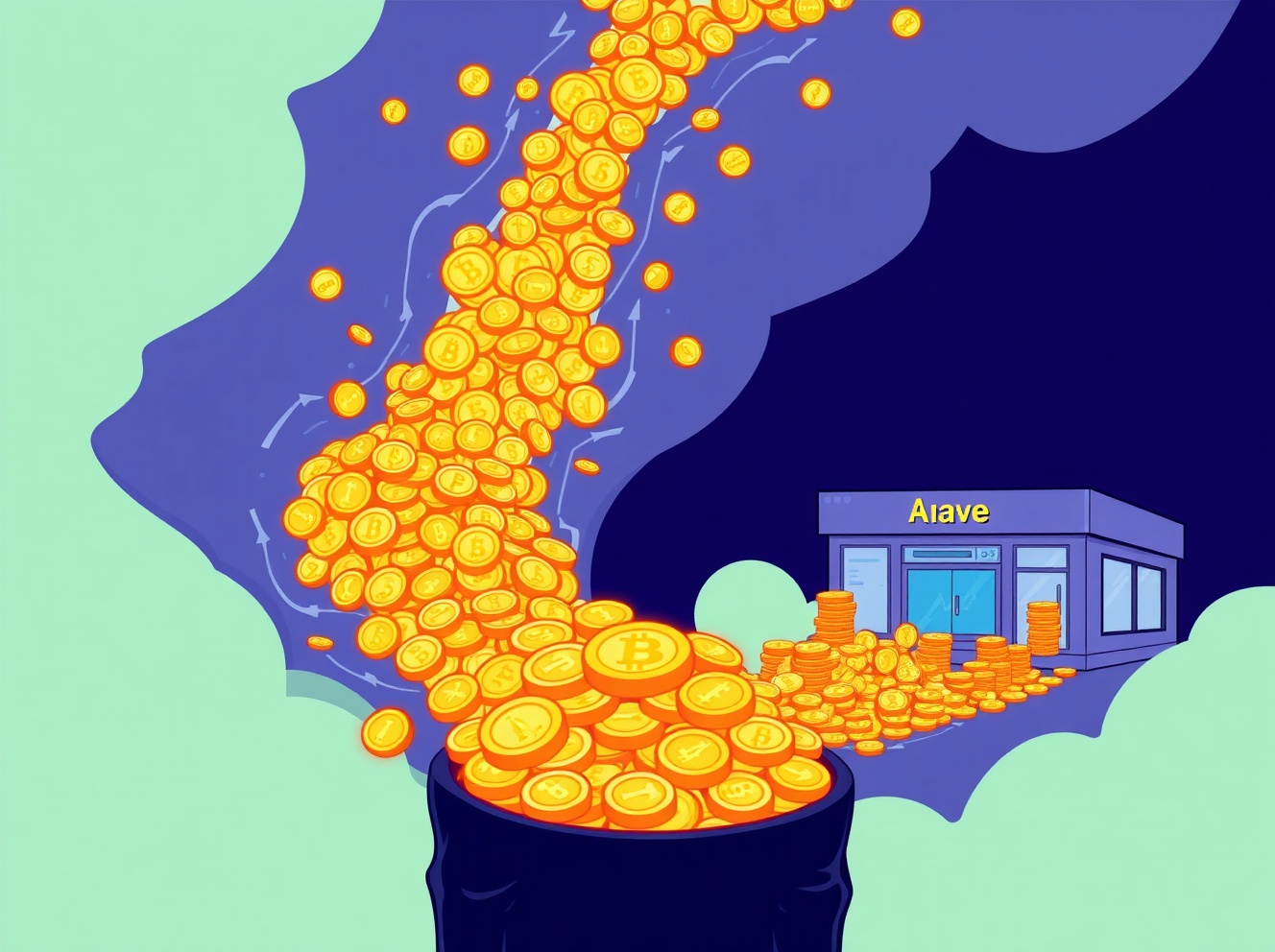
Massive USDT Transfer: $220 Million Moves to Aave from Unknown Wallet

The cryptocurrency world is abuzz with the news of a monumental USDT transfer. A staggering 219,999,998 USDT, valued at approximately $220 million, recently moved from an undisclosed wallet to the decentralized finance (DeFi) lending protocol, Aave. This significant whale movement, flagged by Whale Alert, has ignited widespread speculation across the market.

What Does This Massive USDT Transfer Mean for DeFi?

Such a substantial transaction immediately draws attention due to its sheer size. When nearly a quarter of a billion dollars in Tether (USDT) shifts hands, especially from an ‘unknown’ source to a major DeFi platform like Aave, it often signals significant strategic activity. This isn’t just everyday trading; it’s a whale making a calculated move that could influence market dynamics.

Whale Alert, a well-known blockchain tracking service, brought this particular USDT transfer to light. Their reports are crucial for transparency in a market often characterized by anonymity. For many, these alerts serve as an early indicator of potential market shifts or large-scale financial strategies by big players, providing valuable insights.

Why Aave? Understanding the Destination of This USDT Transfer

Aave is one of the leading decentralized lending and borrowing protocols in the DeFi space. It allows users to deposit cryptocurrencies to earn interest or borrow against their crypto assets. The arrival of such a large sum of USDT could have several implications for the platform and its users, potentially boosting liquidity.

One primary reason for moving such a large sum to Aave could be to utilize its lending pools. Depositing USDT into Aave allows the wallet owner to earn interest, providing a passive income stream. Alternatively, the funds could be used as collateral to borrow other cryptocurrencies, enabling leveraged positions or complex DeFi strategies without directly selling the stablecoin.

Potential Scenarios Behind the $220 Million USDT Transfer

While the exact motive behind this specific USDT transfer remains unknown, several plausible scenarios could explain this colossal movement:

  • Yield Farming: The wallet owner might be looking to participate in lucrative yield farming strategies on Aave or other integrated protocols, seeking higher returns on their substantial assets.
  • Liquidity Provision: Injecting such a large amount of USDT could be aimed at boosting liquidity on Aave, potentially in anticipation of increased borrowing demand or to facilitate larger trades within the ecosystem.
  • Institutional Movement: This could represent an institutional player or a high-net-worth individual rebalancing their portfolio or strategically deploying significant capital into the burgeoning DeFi ecosystem.
  • Strategic Borrowing: The USDT might serve as collateral for a significant loan, perhaps to acquire other volatile assets or fund other ventures without liquidating their stablecoin holdings.

What are the Market Implications of a Major USDT Transfer?

Large USDT transfers, especially to prominent DeFi protocols, often spark discussions about overall market stability and liquidity. While USDT is a stablecoin pegged to the US dollar, massive movements can still subtly impact market sentiment and perceived risk.

Increased liquidity on Aave could potentially lead to lower borrowing rates for certain assets or higher lending rates for USDT, depending on prevailing supply and demand dynamics. For the broader market, such a transaction signifies continued confidence, or at least strategic interest, in the DeFi sector from large capital holders, indicating a robust and active ecosystem.

The recent USDT transfer of nearly $220 million to Aave is a clear reminder of the dynamic and often opaque nature of the cryptocurrency market. While the ‘unknown wallet’ aspect adds an element of mystery, the transaction underscores the growing utility and importance of DeFi platforms like Aave for managing substantial digital assets. Keeping an eye on these whale movements provides valuable insights into potential market trends and the evolving strategies of major crypto players.

Frequently Asked Questions (FAQs)

Q1: What is USDT and why is it important in crypto?

USDT, or Tether, is the largest stablecoin by market capitalization. It is designed to maintain a value pegged to the US dollar, making it a crucial asset for traders and investors seeking stability within the volatile cryptocurrency market. It facilitates quick and low-cost transfers, acting as a bridge between fiat currencies and the crypto ecosystem.

Q2: How does Aave work, and what are its main functions?

Aave is a decentralized lending and borrowing protocol built on various blockchains. Users can deposit cryptocurrencies into liquidity pools to earn interest or use their deposited assets as collateral to borrow other cryptocurrencies. It’s a key component of the DeFi landscape, enabling financial services without traditional intermediaries.

Q3: Who are ‘whales’ in the cryptocurrency market?

In the crypto world, ‘whales’ refer to individuals or entities holding exceptionally large amounts of a particular cryptocurrency. Their large transactions can significantly influence market prices and sentiment, making their movements closely watched by other investors.

Q4: Can a large USDT transfer impact the price of USDT?

Generally, a large USDT transfer itself does not directly impact the price of USDT, as it is a stablecoin designed to remain pegged to $1. However, if such a transfer signals a broader shift in market sentiment or a major liquidation event, it could indirectly influence the demand for USDT or other crypto assets.

Q5: How can I track large crypto transactions like this?

Services like Whale Alert specialize in tracking significant cryptocurrency transactions across various blockchains. Many blockchain explorers also allow users to monitor large transfers. Following reputable crypto news outlets and analytics platforms can also provide insights into these whale movements.

Found this insight into the massive USDT transfer intriguing? Share this article with your network and join the conversation about significant whale movements in DeFi!

To learn more about the latest crypto market trends, explore our article on key developments shaping DeFi institutional adoption.

This post Massive USDT Transfer: $220 Million Moves to Aave from Unknown Wallet first appeared on BitcoinWorld.


Market Opportunity
1 Logo
1 Price(1)
$0.005434
$0.005434$0.005434
-1.96%
USD
1 (1) Live Price Chart
Disclaimer: The articles reposted on this site are sourced from public platforms and are provided for informational purposes only. They do not necessarily reflect the views of MEXC. All rights remain with the original authors. If you believe any content infringes on third-party rights, please contact service@support.mexc.com for removal. MEXC makes no guarantees regarding the accuracy, completeness, or timeliness of the content and is not responsible for any actions taken based on the information provided. The content does not constitute financial, legal, or other professional advice, nor should it be considered a recommendation or endorsement by MEXC.

You May Also Like

Bitcoin Has Taken Gold’s Role In Today’s World, Eric Trump Says

Bitcoin Has Taken Gold’s Role In Today’s World, Eric Trump Says

Eric Trump on Tuesday described Bitcoin as a “modern-day gold,” calling it a liquid store of value that can act as a hedge to real estate and other assets. Related Reading: XRP’s Biggest Rally Yet? Analyst Projects $20+ In October 2025 According to reports, the remark came during a TV appearance on CNBC’s Squawk Box, tied to the launch of American Bitcoin, the mining and treasury firm he helped start. Company Holdings And Strategy Based on public filings and company summaries, American Bitcoin has accumulated 2,443 BTC on its balance sheet. That stash has been valued in the low hundreds of millions of dollars at recent spot prices. The firm mixes large-scale mining with the goal of holding Bitcoin as a strategic reserve, which it says will help it grow both production and asset holdings over time. Eric Trump’s comments were direct. He told viewers that institutions are treating Bitcoin more like a store of value than a fringe idea, and he warned firms that resist blockchain adoption. The tone was strong at times, and the line about Bitcoin being a modern equivalent of gold was used to frame American Bitcoin’s role as both miner and holder.   Eric Trump has said: bitcoin is modern-day gold — unusual_whales (@unusual_whales) September 16, 2025 How The Company Went Public American Bitcoin moved toward a public listing via an all-stock merger with Gryphon Digital Mining earlier this year, a deal that kept most of the original shareholders in control and positioned the new entity for a Nasdaq debut. Reports show that mining partner Hut 8 holds a large ownership stake, leaving the Trump family and other backers with a minority share. The listing brought fresh attention and capital to the firm as it began trading under the ticker ABTC. Market watchers say the firm’s public debut highlights two trends: mining companies are trying to grow by both producing and holding Bitcoin, and political ties are bringing more headlines to crypto firms. Some analysts point out that holding large amounts of Bitcoin on the balance sheet exposes a company to price swings, while supporters argue it aligns incentives between miners and investors. Related Reading: Ethereum Bulls Target $8,500 With Big Money Backing The Move – Details Reaction And Possible Risks Based on coverage of the launch, investors have reacted with both enthusiasm and caution. Supporters praise the prospect of a US-based miner that aims to be transparent and aggressive about building a reserve. Critics point to governance questions, possible conflicts tied to high-profile backers, and the usual risks of a volatile asset being held on corporate balance sheets. Eric Trump’s remark that Bitcoin has taken gold’s role in today’s world reflects both his belief in its value and American Bitcoin’s strategy of mining and holding. Whether that view sticks will depend on how investors and institutions respond in the months ahead. Featured image from Meta, chart from TradingView
Share
NewsBTC2025/09/18 06:00
UK Looks to US to Adopt More Crypto-Friendly Approach

UK Looks to US to Adopt More Crypto-Friendly Approach

The post UK Looks to US to Adopt More Crypto-Friendly Approach appeared on BitcoinEthereumNews.com. The UK and US are reportedly preparing to deepen cooperation on digital assets, with Britain looking to copy the Trump administration’s crypto-friendly stance in a bid to boost innovation.  UK Chancellor Rachel Reeves and US Treasury Secretary Scott Bessent discussed on Tuesday how the two nations could strengthen their coordination on crypto, the Financial Times reported on Tuesday, citing people familiar with the matter.  The discussions also involved representatives from crypto companies, including Coinbase, Circle Internet Group and Ripple, with executives from the Bank of America, Barclays and Citi also attending, according to the report. The agreement was made “last-minute” after crypto advocacy groups urged the UK government on Thursday to adopt a more open stance toward the industry, claiming its cautious approach to the sector has left the country lagging in innovation and policy.  Source: Rachel Reeves Deal to include stablecoins, look to unlock adoption Any deal between the countries is likely to include stablecoins, the Financial Times reported, an area of crypto that US President Donald Trump made a policy priority and in which his family has significant business interests. The Financial Times reported on Monday that UK crypto advocacy groups also slammed the Bank of England’s proposal to limit individual stablecoin holdings to between 10,000 British pounds ($13,650) and 20,000 pounds ($27,300), claiming it would be difficult and expensive to implement. UK banks appear to have slowed adoption too, with around 40% of 2,000 recently surveyed crypto investors saying that their banks had either blocked or delayed a payment to a crypto provider.  Many of these actions have been linked to concerns over volatility, fraud and scams. The UK has made some progress on crypto regulation recently, proposing a framework in May that would see crypto exchanges, dealers, and agents treated similarly to traditional finance firms, with…
Share
BitcoinEthereumNews2025/09/18 02:21
Tokyo Fashion Brand Expands Into Bitcoin and AI

Tokyo Fashion Brand Expands Into Bitcoin and AI

The post Tokyo Fashion Brand Expands Into Bitcoin and AI appeared on BitcoinEthereumNews.com. On Wednesday, Japanese casual apparel retailer Mac House announced that shareholders approved a name change to Gyet Co., Ltd., signaling a strategic shift into crypto and digital assets. The move highlights a broader corporate plan centered on cryptocurrency, blockchain, and artificial intelligence. It reflects the company’s ambition to launch a global Bitcoin treasury program, drawing attention from both domestic and international observers. “Yet” and Its Global Significance Gyet’s amended corporate charter introduces wide-ranging digital initiatives, adding cryptocurrency acquisition, trading, management, and payment services. The new objectives also cover crypto mining, staking, lending, and yield farming, as well as blockchain system development, NFT-related projects, and research in generative AI and data center operations. These changes indicate a clear intent to diversify beyond apparel and position the company within global technology and finance sectors. Sponsored Sponsored The rebranding reflects Gyet’s aim to operate with a broader international outlook. Its new name conveys three concepts: “Growth Yet,” “Global Yet,” and “Generation Yet,” signaling a desire to create technology-driven value for future generations while expanding beyond Japan’s domestic market. Bitcoin Purchasing and Mining Gyet declared its digital asset ambitions in June 2025 and in July signed a basic cooperation agreement with mining firm Zerofield. The company has since begun a $11.6 million Bitcoin acquisition program and is testing mining operations in US states such as Texas and Georgia, where electricity costs are relatively low. Its goal of holding more than 1,000 BTC is modest globally, but the model—funding purchases and mining with retail cash flow—remains unusual for an apparel business. Within Japan, Gyet follows companies such as Hotta Marusho and Kitabo, which have also diversified into cryptocurrency activities distinct from their original operations. This move may accelerate corporate Bitcoin holdings as a financial strategy, attract interest in overseas mining ventures by Japanese firms, and…
Share
BitcoinEthereumNews2025/09/18 11:13




