

Iran’s Largest Crypto Exchange Linked to Supreme Leader’s Family
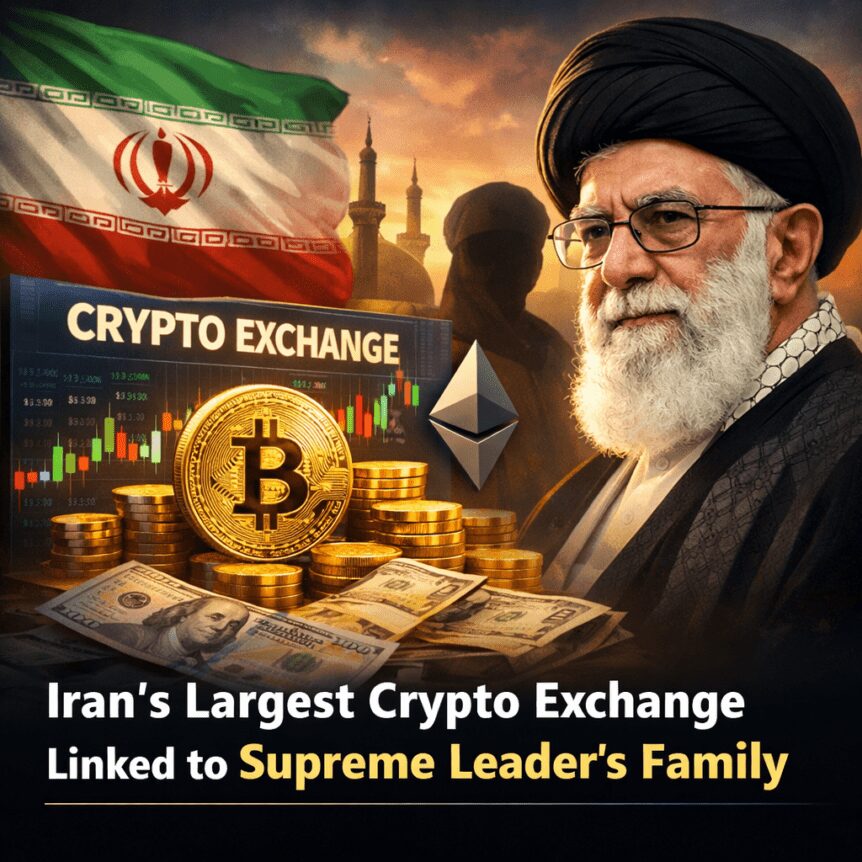
Reuters’ in-depth examination casts a revealing light on Nobitex, Iran’s largest crypto exchange, and the powerful family behind its emergence. The investigation traces Nobitex to Ali and Mohammad Kharrazi, two brothers who operated under the alias “Aghamir” to obscure links to the Kharrazi dynasty, a lineage with longstanding proximity to Iran’s political leadership. The findings place Nobitex at the heart of Iran’s crypto activity while raising questions about governance, influence, and the broader sanction landscape surrounding Iran’s financial footprint in digital assets.
The Kharrazi family’s proximity to the country’s leadership stretches across generations. Reuters reports ties that reach Ali Khamenei and Mojtaba Khamenei, with the brothers’ grandfather said to have served on the Assembly of Experts, and their father, Ayatollah Bagher Kharrazi, linked to early staffing of the Islamic Revolutionary Guard Corps. The brothers’ use of an alternate surname in corporate records illustrates how entrenched networks can intersect with Iran’s burgeoning crypto economy, even as Nobitex positions itself as a gateway for millions of users navigating a sanctions-ridden financial landscape.
Key takeaways
- Nobitex’s founders reportedly used the alias “Aghamir” to mask ties to the Kharrazi dynasty, a lineage with deep political connections in Iran, according to a Reuters investigation.
- The exchange remains operational amid ongoing conflict, serving more than 11 million customers and handling substantial trade activity, including during internet blackouts, with analysts noting significant on-chain outflows.
- On-chain analytics identify substantial flows linked to sanctioned entities and centralized bank activity, with Elliptic estimating about $366 million in suspect transfers, Chainalysis about $68 million, and Crystal Intelligence about $22 million in direct transfers from sanctioned wallets.
- Investigators have noted that wallets tied to Iran’s central bank sent hundreds of millions of dollars to Nobitex in 2025, as part of a broader strategy to bypass financial restrictions, alongside a separate dispute that surfaced $20 million in routed state funds via Babak Zanjani’s wallets.
- The United States has intensified its Iran-focused crypto crackdown, with seizures approaching half a billion dollars in Iranian digital assets, a development Cointelegraph characterizes as a major escalation in Operation Economic Fury, and with Tether reportedly assisting in freezing some of the assets.
Nobitex’s role in Iran’s evolving crypto economy
Nobitex is described by Reuters as Iran’s biggest crypto exchange and a dominant conduit for crypto activity in the country. The platform reportedly serves a user base exceeding 11 million, illustrating how a single marketplace can anchor a large portion of Iran’s on-chain financial activity even as the country navigates sanctions and international scrutiny. Analysts cited by Reuters noted that Nobitex continued to operate through wartime disruptions, including nationwide internet outages, underscoring the exchange’s centrality to everyday crypto use in Iran during periods of heightened conflict.
Beyond sheer volume, the article highlights a paradox at the heart of Iran’s crypto environment: while Nobitex supports ordinary users, its activity has drawn scrutiny over possible links to sanctioned entities. Investigators cited by Reuters describe a spectrum of on-chain movements that appear to intersect with Iranian state interests and sanctioned actors, raising questions about how the exchange is governed and how it manages compliance with international sanctions regimes.
Where the data points to on-chain flows
The analysis of on-chain activity presents a bifurcated picture. On one side are the volumes associated with regular citizens and legitimate commerce; on the other are flows that analysts label as suspect or high-risk. Elliptic’s assessment flagged roughly $366 million in flows deemed suspect, while Chainalysis placed the figure at about $68 million. Crystal Intelligence identified around $22 million in direct transfers from sanctioned wallets. While these figures reflect different methodologies and timeframes, they collectively sketch a landscape in which Nobitex sits at a nexus of sanction risk and international enforcement attention.
In addition to sanction-related movements, Reuters cites findings about Iranian central-bank wallets engaging with Nobitex, with reports suggesting hundreds of millions of dollars moved to the exchange in 2025. A separate dispute involving businessman Babak Zanjani exposed wallet addresses that analysts say revealed at least $20 million in routed state funds. Taken together, these points underscore the degree to which Nobitex sits at the intersection of political economy, financial sanctions, and the security considerations that come with a high-volume crypto exchange operating within a tense geopolitical environment.
Nobitex has publicly denied formal ties to the Iranian government, arguing that illicit transactions constitute a small share of its overall activity. The exchange’s stance reflects a common tension in sanctioned markets: while platforms may operate commercially and serve ordinary users, the boundaries of acceptable activity are contested and subject to ongoing enforcement scrutiny.
Crackdowns beyond borders: the U.S. sanctions regime and seizures
Cointelegraph has reported that U.S. authorities have seized nearly $500 million in cryptocurrency linked to Iran, marking a pronounced escalation of enforcement under a campaign known as Operation Economic Fury. This sum sits alongside previously disclosed totals, including about $344 million in frozen assets, with the stablecoin issuer Tether said to have assisted in freezing portions of the funds. The mounting seizures illuminate a broader policy shift in which digital assets become a focal point of financial pressure aimed at constraining Iran’s access to the global financial system.
The seizures reflect a wider arc of U.S. policy that seeks to disrupt illicit finance channels tied to Iran. For market watchers, this intensifies the imperative for exchanges operating in or serving Iran to maintain robust sanctions screening and on-chain analytics capabilities, as well as transparent governance practices to reassure counterparties and regulators abroad.
What this means for investors, users, and the broader market
The Reuters profile of Nobitex, paired with the mounting enforcement actions described by Cointelegraph, highlights a dual reality for the crypto ecosystem in sanctioned environments. On one hand, crypto exchanges in Iran provide essential access to digital assets for millions of users, enabling remittances, trading, and cross-border transaction flows in a market beset by external financial pressure. On the other hand, the same activity invites intense scrutiny from international regulators and sanctions authorities, creating an environment in which governance, compliance, and traceability are as critical as the technology itself.
For investors and builders, the episode underscores several practical takeaways: the importance of transparent ownership structures and verifiable governance in high-risk markets; the need for rigorous on-chain analytics and sanctions screening to mitigate exposure to sanctioned flows; and the reality that geopolitical risk remains a material factor shaping liquidity, risk premiums, and regulatory trajectories in crypto ecosystems connected to Iran.
regulators and industry participants will be watching closely how Nobitex navigates these pressures going forward. The combination of elite political connections, persistent sanctions exposure, and a large user base means Nobitex sits at a crossroads – potentially catalyzing both greater adoption of crypto tools inside Iran and more disciplined, internationally aligned compliance practices demanded by global markets.
As the story unfolds, observers will be looking for three questions in particular: how Nobitex tightens governance and compliance to address sanction-related concerns; whether central-bank wallet activity remains a recurring channel of state-directed flows into the exchange; and how U.S. and allied sanctions policies evolve in response to the broader political economy of Iran’s crypto ecosystem.
Readers should stay tuned for updates on regulatory developments connected to Iran’s crypto landscape, the evolving relationship between Iranian financial authorities and domestic exchanges, and any shifts in on-chain flow patterns that might signal a new phase in enforcement or market adaptation.
Sources referenced in this report include a Reuters investigation detailing Nobitex’s founder ties and aliases, plus independent on-chain analyses cited by Reuters. For the enforcement context, Cointelegraph’s reporting on U.S. seizures and the broader Operation Economic Fury provides additional perspective on how sanctions policy intersects with crypto markets.
This article was originally published as Iran’s Largest Crypto Exchange Linked to Supreme Leader’s Family on Crypto Breaking News – your trusted source for crypto news, Bitcoin news, and blockchain updates.


You May Also Like

Cathie Wood’s ARK Invest Buys $13.7M in Circle Shares While Selling Robinhood Stock

The changing face of elder care in Malaysia — Sayed Mohammad Reza Yamani Sayed Umar

Covéa Chooses Shift Technology as Strategic Partner for Fraud and Risk Management



