

Judge Delays Aave Bid to Unlock $71M ETH From Kelp DAO Hack
A New York federal judge has put the brakes on Aave’s push to fully unlock $71 million in frozen ETH. That is linked to the April 2026 KelpDAO exploit. Judge Margaret M. Garnett declined to rule on Aave’s emergency motion. She cited insufficient evidence of imminent compounding losses and the legal complexity of the case.
Supplemental briefs are due May 22, with further review expected around June 5. The delay keeps 30,766 ETH in Aave’s control but still legally restricted. It is caught between DeFi victim recovery and a novel sanctions enforcement claim that has no precedent in U.S. courts. Aave news today is a study in the collision between decentralized finance and traditional legal infrastructure.
How the KelpDAO Exploit Created This Legal Battle
On April 18, 2026, attackers exploited a single-verifier vulnerability in KelpDAO’s LayerZero bridge. That fraudulently minted approximately $292 million in unbacked rsETH. The exploit created severe collateral risk across Aave’s lending markets. It triggered rsETH depegging and caused over $7 billion in temporary DeFi TVL outflows.
Arbitrum’s Security Council responded by freezing 30,766 ETH linked to the attack. The Arbitrum community voted overwhelmingly to transfer those funds to Aave for victim restitution. Then on May 1, law firm Gerstein Harrow LLP filed a restraining notice on behalf of plaintiffs. That holding $877 million in unpaid terrorism judgments against North Korea. They argued that because the Lazarus Group carried out the hack, the frozen ETH qualifies as DPRK property subject to their claims.
On May 9, Judge Garnett issued a partial order allowing the ETH to transfer to an Aave-controlled wallet. But with the restraining notice attached. The funds moved. The legal dispute did not resolve.
What the Judge Decided on May 14
Aave’s emergency motion argued that keeping the funds restricted risked triggering user liquidations and cascading instability across DeFi markets. Judge Garnett found the filing did not sufficiently demonstrate how those losses would materialize if the restraining notice remained in effect. She instructed both sides to submit supplemental briefs by May 22 and scheduled further review for approximately June 5.
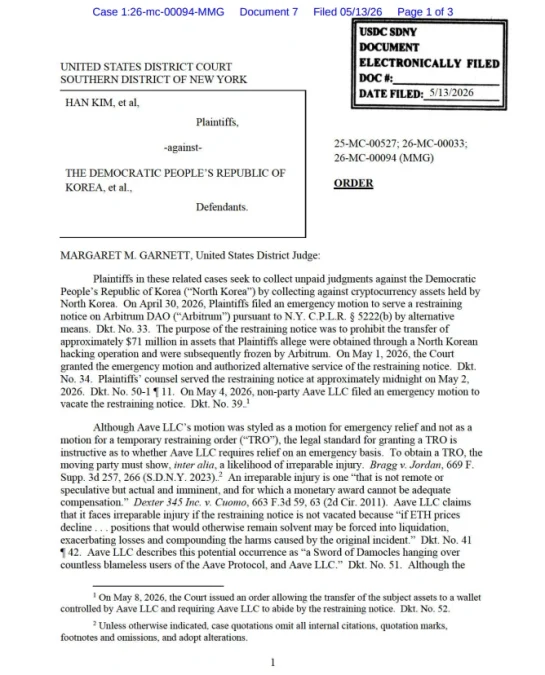
Source: Official Order, U.S. District Court, Southern District of New York
The legal tension at the core of the case remains unresolved. Whether recovered hack funds belong to innocent protocol users or can be claimed by judgment creditors. Which based on attacker attribution to a sanctioned state actor.
Recovery Is Progressing in Parallel
While the legal battle continues, the technical recovery is moving forward independently. Aave confirmed the transfer of the first rsETH tranche into the LayerZero OFT adapter, following the coordinated restart plan with KelpDAO. The teams have now fully resumed bridging between Ethereum mainnet and L2s.
rsETH withdrawals are set to unpause within 24 hours. Deposits and exchange rate updates will follow within 48 hours. It is accruing staking rewards from the pause period to all rsETH holders. Remaining tranches from Aave’s Recovery Guardian and KelpDAO’s safe will complete the full lockbox refill over the next two weeks.
What This Means for Investors and Developers
For Aave users and rsETH holders, the recovery timeline is clear and progressing. The legal restriction on the $71 million does not block the technical recovery. That separate funds are being used to cover the gap while the court deliberates.
For the broader DeFi ecosystem, this case is writing new legal precedent in real time. Can U.S. courts seize DAO-held assets recovered from state-sponsored hackers on behalf of unrelated terrorism judgment creditors? The answer is arriving around June 5. It will shape how every future DeFi recovery effort is structured.
KelpDAO exploit news today carries a message beyond the immediate crisis. DeFi protocols can coordinate, recover, and restore user funds at scale. What they cannot yet control is what happens when legacy legal systems arrive at the recovery scene first.
The post Judge Delays Aave Bid to Unlock $71M ETH From Kelp DAO Hack appeared first on Coinfomania.


You May Also Like
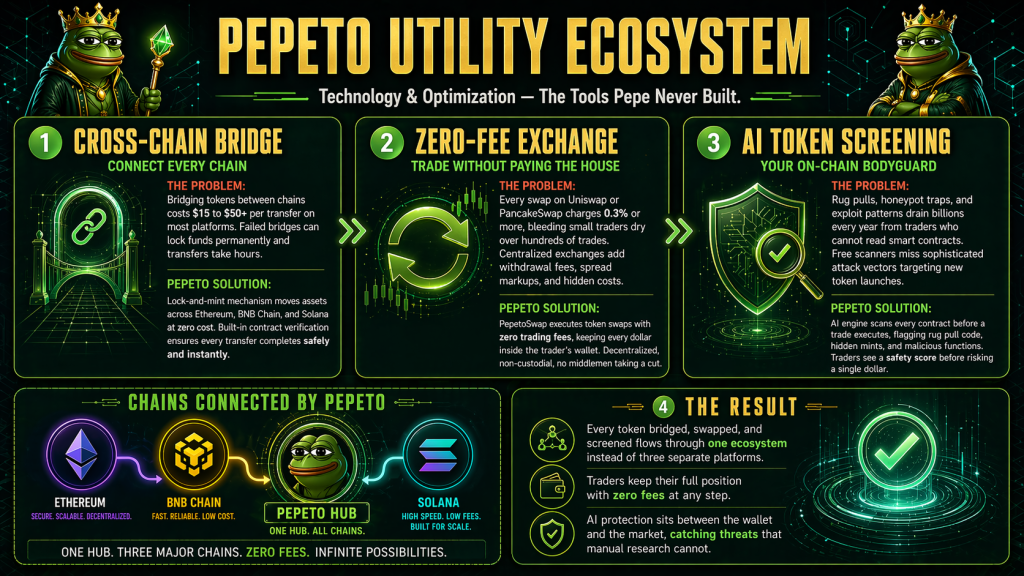
Which Are the Top 3 Cryptos to Buy Now as Solana Lands Mastercard and Pepeto Presale Nears Sold-Out Close
Ondas (ONDS) Stock Soars After Revenue Explodes Over 1,000% in Q1 2026




