Shibarium, the Layer 2 blockchain tied to Shiba Inu, has resumed operations following a multi-million-dollar exploit that forced developers to halt activity and initiate a 10-day emergency response. The attack targeted the network’s bridge to Ethereum, exposing validator controls and draining millions of dollars in assets before developers regained control. The breach unfolded when a malicious actor borrowed 4.6 million BONE, Shibarium’s governance token, through a flash loan. By temporarily amplifying their stake, the attacker was able to control 10 of the 12 validator keys, surpassing the two-thirds consensus threshold needed to push fraudulent checkpoints to Heimdall, Shibarium’s consensus layer. Shibarium Restores Security After $2.4M Exploit, Implements Long-Term Safeguards With that leverage, the attacker drained approximately 224.57 ETH and 92.6 billion SHIB tokens from the bridge contract, worth around $2.4 million at the time. An additional $700,000 in KNINE tokens from K9 Finance was impacted. K9 Finance’s DAO responded by blacklisting the attacker’s wallet, rendering the stolen KNINE unsellable. Developers immediately froze staking and unstaking functions across the network to prevent further outflows. Because the borrowed BONE was subject to a withdrawal delay, the attacker was blocked from fully exiting their validator position, giving Shibarium’s core team time to isolate the threat. Shiba Inu developer Kaal Dhairya described the exploit as “sophisticated” and said it had likely been prepared for months. He confirmed that law enforcement had been contacted and that security firms, including Hexens, Seal 911, and PeckShield, had been brought in to investigate. Over the past 10 days, the Shibarium team and external partners have worked continuously to contain the breach and restore the network. In a detailed update, developers said ownership of more than 100 key contracts spanning Shibarium, ShibaSwap, and related projects had been migrated to hardware-secured custody with multi-party controls. All validator signer keys were rotated to cut off exposure from the compromised state, while new blacklisting mechanisms were added to staking flows. These measures allow developers to block any address identified as malicious from staking, unstaking, or withdrawing rewards. A key step in the recovery involved neutralizing the 4.6 million BONE delegation tied to the attacker. Developers introduced a contract upgrade to rescue the tokens, cleaning up legacy staking data and removing the malicious delegation from the ledger. The fix was first tested on Shibarium’s Devnet and Puppynet before being applied to mainnet, with Hexens reviewing the process. To further reduce risk, the withdrawal delay for staking was increased from one checkpoint to around 30, giving developers more time to detect anomalies before funds can be moved. The exploit also disrupted Shibarium’s checkpointing process. By injecting three fake checkpoints into the Root Chain Manager contract on Ethereum, the attacker caused Heimdall to halt, preventing legitimate checkpoints from being posted. Shibarium Developers Resume Checkpointing, Outline Post-Hack Roadmap Developers corrected the issue by adjusting the on-chain pointer to the last valid checkpoint, using a built-in housekeeping function. After a three-stage validation across test networks and mainnet, checkpointing resumed normally. The decision not to offer the attacker a bounty contract was also explained. Developers said no response was received to the initial outreach and that on-chain evidence showed the attacker was moving stolen funds. They argued that deploying a bounty contract would have added unnecessary complexity without benefit, so they kept their focus on securing the protocol and restoring integrity. Looking ahead, Shibarium developers outlined several near-term priorities. Work is underway to add blacklisting controls to the Plasma Bridge, which was paused following the hack. The team also plans to re-initiate the bridge with phased safeguards and said a mechanism to make affected users whole will be introduced once it can be done securely. Details of the refund plan will be released at a later date. Technical improvements are also being rolled out. Shibarium has partnered with dRPC.org to expand infrastructure access and has consolidated its official RPC endpoint at rpc.shibarium.shib.io. Also, documentation for node operators is being overhauled to simplify setup, while new monitoring and playbooks have been developed to detect checkpoint mismatches and key rotations more effectively. The incident marks one of the largest attacks on Shibarium since its launch, showing the risks of validator manipulation in proof-of-stake systems. Despite the breach, Shiba Inu’s SHIB token has risen 7.3% in the past week, trading at $0.00001268.Source: CryptoNews It remains 85% below its all-time high of $0.00008616 reached in 2021. BONE, meanwhile, briefly spiked from $0.165 to $0.294 in the immediate aftermath of the attack before stabilizing near $0.202Shibarium, the Layer 2 blockchain tied to Shiba Inu, has resumed operations following a multi-million-dollar exploit that forced developers to halt activity and initiate a 10-day emergency response. The attack targeted the network’s bridge to Ethereum, exposing validator controls and draining millions of dollars in assets before developers regained control. The breach unfolded when a malicious actor borrowed 4.6 million BONE, Shibarium’s governance token, through a flash loan. By temporarily amplifying their stake, the attacker was able to control 10 of the 12 validator keys, surpassing the two-thirds consensus threshold needed to push fraudulent checkpoints to Heimdall, Shibarium’s consensus layer. Shibarium Restores Security After $2.4M Exploit, Implements Long-Term Safeguards With that leverage, the attacker drained approximately 224.57 ETH and 92.6 billion SHIB tokens from the bridge contract, worth around $2.4 million at the time. An additional $700,000 in KNINE tokens from K9 Finance was impacted. K9 Finance’s DAO responded by blacklisting the attacker’s wallet, rendering the stolen KNINE unsellable. Developers immediately froze staking and unstaking functions across the network to prevent further outflows. Because the borrowed BONE was subject to a withdrawal delay, the attacker was blocked from fully exiting their validator position, giving Shibarium’s core team time to isolate the threat. Shiba Inu developer Kaal Dhairya described the exploit as “sophisticated” and said it had likely been prepared for months. He confirmed that law enforcement had been contacted and that security firms, including Hexens, Seal 911, and PeckShield, had been brought in to investigate. Over the past 10 days, the Shibarium team and external partners have worked continuously to contain the breach and restore the network. In a detailed update, developers said ownership of more than 100 key contracts spanning Shibarium, ShibaSwap, and related projects had been migrated to hardware-secured custody with multi-party controls. All validator signer keys were rotated to cut off exposure from the compromised state, while new blacklisting mechanisms were added to staking flows. These measures allow developers to block any address identified as malicious from staking, unstaking, or withdrawing rewards. A key step in the recovery involved neutralizing the 4.6 million BONE delegation tied to the attacker. Developers introduced a contract upgrade to rescue the tokens, cleaning up legacy staking data and removing the malicious delegation from the ledger. The fix was first tested on Shibarium’s Devnet and Puppynet before being applied to mainnet, with Hexens reviewing the process. To further reduce risk, the withdrawal delay for staking was increased from one checkpoint to around 30, giving developers more time to detect anomalies before funds can be moved. The exploit also disrupted Shibarium’s checkpointing process. By injecting three fake checkpoints into the Root Chain Manager contract on Ethereum, the attacker caused Heimdall to halt, preventing legitimate checkpoints from being posted. Shibarium Developers Resume Checkpointing, Outline Post-Hack Roadmap Developers corrected the issue by adjusting the on-chain pointer to the last valid checkpoint, using a built-in housekeeping function. After a three-stage validation across test networks and mainnet, checkpointing resumed normally. The decision not to offer the attacker a bounty contract was also explained. Developers said no response was received to the initial outreach and that on-chain evidence showed the attacker was moving stolen funds. They argued that deploying a bounty contract would have added unnecessary complexity without benefit, so they kept their focus on securing the protocol and restoring integrity. Looking ahead, Shibarium developers outlined several near-term priorities. Work is underway to add blacklisting controls to the Plasma Bridge, which was paused following the hack. The team also plans to re-initiate the bridge with phased safeguards and said a mechanism to make affected users whole will be introduced once it can be done securely. Details of the refund plan will be released at a later date. Technical improvements are also being rolled out. Shibarium has partnered with dRPC.org to expand infrastructure access and has consolidated its official RPC endpoint at rpc.shibarium.shib.io. Also, documentation for node operators is being overhauled to simplify setup, while new monitoring and playbooks have been developed to detect checkpoint mismatches and key rotations more effectively. The incident marks one of the largest attacks on Shibarium since its launch, showing the risks of validator manipulation in proof-of-stake systems. Despite the breach, Shiba Inu’s SHIB token has risen 7.3% in the past week, trading at $0.00001268.Source: CryptoNews It remains 85% below its all-time high of $0.00008616 reached in 2021. BONE, meanwhile, briefly spiked from $0.165 to $0.294 in the immediate aftermath of the attack before stabilizing near $0.202

Shibarium Reboots After $4M Hack, Pledges User Refunds – Here’s the Plan

Shibarium, the Layer 2 blockchain tied to Shiba Inu, has resumed operations following a multi-million-dollar exploit that forced developers to halt activity and initiate a 10-day emergency response.

The attack targeted the network’s bridge to Ethereum, exposing validator controls and draining millions of dollars in assets before developers regained control.

The breach unfolded when a malicious actor borrowed 4.6 million BONE, Shibarium’s governance token, through a flash loan.

By temporarily amplifying their stake, the attacker was able to control 10 of the 12 validator keys, surpassing the two-thirds consensus threshold needed to push fraudulent checkpoints to Heimdall, Shibarium’s consensus layer.

Shibarium Restores Security After $2.4M Exploit, Implements Long-Term Safeguards

With that leverage, the attacker drained approximately 224.57 ETH and 92.6 billion SHIB tokens from the bridge contract, worth around $2.4 million at the time.

An additional $700,000 in KNINE tokens from K9 Finance was impacted. K9 Finance’s DAO responded by blacklisting the attacker’s wallet, rendering the stolen KNINE unsellable.

Developers immediately froze staking and unstaking functions across the network to prevent further outflows. Because the borrowed BONE was subject to a withdrawal delay, the attacker was blocked from fully exiting their validator position, giving Shibarium’s core team time to isolate the threat.

Shiba Inu developer Kaal Dhairya described the exploit as “sophisticated” and said it had likely been prepared for months. He confirmed that law enforcement had been contacted and that security firms, including Hexens, Seal 911, and PeckShield, had been brought in to investigate.

Over the past 10 days, the Shibarium team and external partners have worked continuously to contain the breach and restore the network.

In a detailed update, developers said ownership of more than 100 key contracts spanning Shibarium, ShibaSwap, and related projects had been migrated to hardware-secured custody with multi-party controls.

All validator signer keys were rotated to cut off exposure from the compromised state, while new blacklisting mechanisms were added to staking flows. These measures allow developers to block any address identified as malicious from staking, unstaking, or withdrawing rewards.

A key step in the recovery involved neutralizing the 4.6 million BONE delegation tied to the attacker. Developers introduced a contract upgrade to rescue the tokens, cleaning up legacy staking data and removing the malicious delegation from the ledger.

The fix was first tested on Shibarium’s Devnet and Puppynet before being applied to mainnet, with Hexens reviewing the process.

To further reduce risk, the withdrawal delay for staking was increased from one checkpoint to around 30, giving developers more time to detect anomalies before funds can be moved.

The exploit also disrupted Shibarium’s checkpointing process. By injecting three fake checkpoints into the Root Chain Manager contract on Ethereum, the attacker caused Heimdall to halt, preventing legitimate checkpoints from being posted.

Shibarium Developers Resume Checkpointing, Outline Post-Hack Roadmap

Developers corrected the issue by adjusting the on-chain pointer to the last valid checkpoint, using a built-in housekeeping function. After a three-stage validation across test networks and mainnet, checkpointing resumed normally.

The decision not to offer the attacker a bounty contract was also explained. Developers said no response was received to the initial outreach and that on-chain evidence showed the attacker was moving stolen funds.

They argued that deploying a bounty contract would have added unnecessary complexity without benefit, so they kept their focus on securing the protocol and restoring integrity.

Looking ahead, Shibarium developers outlined several near-term priorities. Work is underway to add blacklisting controls to the Plasma Bridge, which was paused following the hack.

The team also plans to re-initiate the bridge with phased safeguards and said a mechanism to make affected users whole will be introduced once it can be done securely. Details of the refund plan will be released at a later date.

Technical improvements are also being rolled out. Shibarium has partnered with dRPC.org to expand infrastructure access and has consolidated its official RPC endpoint at rpc.shibarium.shib.io.

Also, documentation for node operators is being overhauled to simplify setup, while new monitoring and playbooks have been developed to detect checkpoint mismatches and key rotations more effectively.

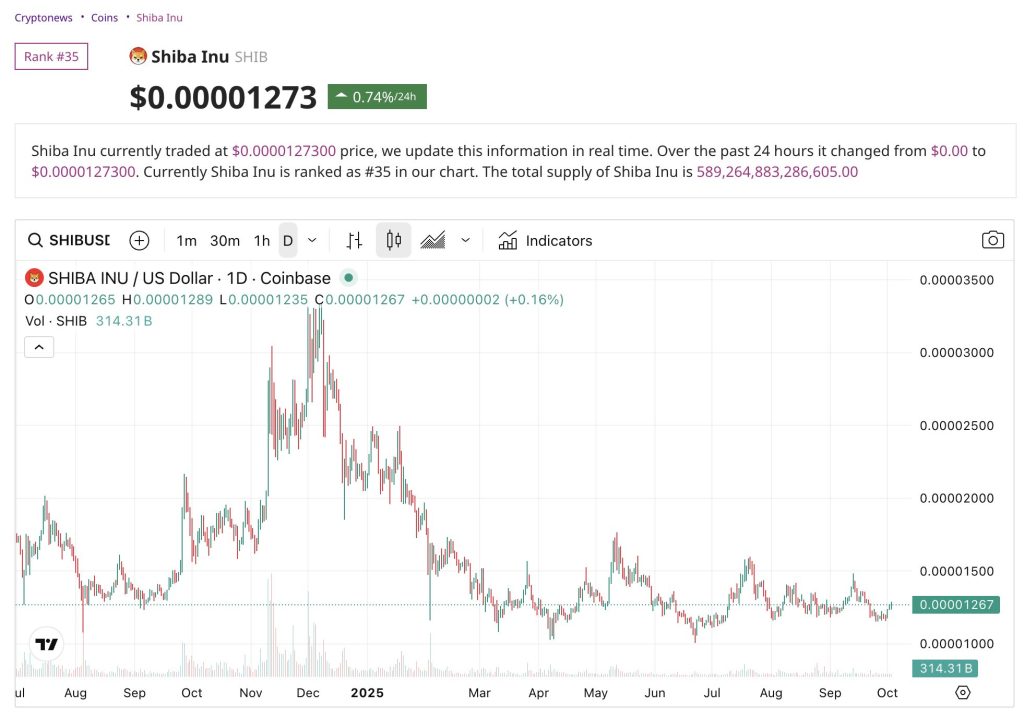
The incident marks one of the largest attacks on Shibarium since its launch, showing the risks of validator manipulation in proof-of-stake systems. Despite the breach, Shiba Inu’s SHIB token has risen 7.3% in the past week, trading at $0.00001268.
Source: CryptoNews

It remains 85% below its all-time high of $0.00008616 reached in 2021. BONE, meanwhile, briefly spiked from $0.165 to $0.294 in the immediate aftermath of the attack before stabilizing near $0.202.


Disclaimer: The articles reposted on this site are sourced from public platforms and are provided for informational purposes only. They do not necessarily reflect the views of MEXC. All rights remain with the original authors. If you believe any content infringes on third-party rights, please contact service@support.mexc.com for removal. MEXC makes no guarantees regarding the accuracy, completeness, or timeliness of the content and is not responsible for any actions taken based on the information provided. The content does not constitute financial, legal, or other professional advice, nor should it be considered a recommendation or endorsement by MEXC.

You May Also Like

The Channel Factories We’ve Been Waiting For

The Channel Factories We’ve Been Waiting For

The post The Channel Factories We’ve Been Waiting For appeared on BitcoinEthereumNews.com. Visions of future technology are often prescient about the broad strokes while flubbing the details. The tablets in “2001: A Space Odyssey” do indeed look like iPads, but you never see the astronauts paying for subscriptions or wasting hours on Candy Crush.  Channel factories are one vision that arose early in the history of the Lightning Network to address some challenges that Lightning has faced from the beginning. Despite having grown to become Bitcoin’s most successful layer-2 scaling solution, with instant and low-fee payments, Lightning’s scale is limited by its reliance on payment channels. Although Lightning shifts most transactions off-chain, each payment channel still requires an on-chain transaction to open and (usually) another to close. As adoption grows, pressure on the blockchain grows with it. The need for a more scalable approach to managing channels is clear. Channel factories were supposed to meet this need, but where are they? In 2025, subnetworks are emerging that revive the impetus of channel factories with some new details that vastly increase their potential. They are natively interoperable with Lightning and achieve greater scale by allowing a group of participants to open a shared multisig UTXO and create multiple bilateral channels, which reduces the number of on-chain transactions and improves capital efficiency. Achieving greater scale by reducing complexity, Ark and Spark perform the same function as traditional channel factories with new designs and additional capabilities based on shared UTXOs.  Channel Factories 101 Channel factories have been around since the inception of Lightning. A factory is a multiparty contract where multiple users (not just two, as in a Dryja-Poon channel) cooperatively lock funds in a single multisig UTXO. They can open, close and update channels off-chain without updating the blockchain for each operation. Only when participants leave or the factory dissolves is an on-chain transaction…
Share
BitcoinEthereumNews2025/09/18 00:09
Zwitserse bankgigant UBS wil crypto beleggen mogelijk maken

Zwitserse bankgigant UBS wil crypto beleggen mogelijk maken

De grootste vermogensbeheerder ter wereld, UBS, maakt zich op om een stap te zetten richting crypto. Volgens bronnen binnen de bank kijkt het Zwitserse concern
Share
Coinstats2026/01/24 02:48
Trump Nears Decision on New Federal Reserve Chair

Trump Nears Decision on New Federal Reserve Chair

The post Trump Nears Decision on New Federal Reserve Chair appeared on BitcoinEthereumNews.com. Key Points: Trump nears decision on Federal Reserve Chair, evaluating
Share
BitcoinEthereumNews2026/01/24 02:53