SoSoValue analysts noted that on October 6th, asset management company Grayscale announced the introduction of a staking mechanism for its Ethereum Trust ETF (ETHE), Ethereum Mini Trust ETF (ETH), and Solana Trust (GSOL), which is in the process of transitioning to an ETF. These products became the first spot crypto ETFs in the United States to support staking. This initiative is facilitated by the recently launched Generic Listing Standards (GLSS) by the U.S. Securities and Exchange Commission (SEC). Under the new regulations, spot crypto ETFs that meet these standards no longer need separate SEC approval and can only conduct staking operations with shareholder authorization. Meanwhile, the SEC's previous policy proposal for staking, which was previously open for public comment, was withdrawn on September 26th. Grayscale disclosed its differentiated profit distribution model in the announcement: • Ethereum Trust ETF (ETHE): The issuer, custodian, and staking service provider share a combined 23% of the staking income, with investors receiving 77%; •Ethereum Mini Trust ETF (ETH): The share of the issuer, custodian and staking service provider is reduced to 6%, and investors can obtain 94% of the returns. This institutional breakthrough is positive for Ethereum. The addition of staking functionality will bring ETF returns closer to those of directly holding and staking the token, significantly increasing institutional investment appetite. Furthermore, other ETF issuers are expected to quickly follow suit, triggering a price war among ETF issuers over staking returns, further benefiting ETF investors. Solana is also expected to benefit. As the next asset expected to have staking functionality available at launch, the Solana ETF is expected to significantly enhance its appeal. The industry generally believes that with the implementation of universal standards, all future crypto spot ETFs listed based on this mechanism will simultaneously introduce staking functionality. This development not only expands the product form and functional boundaries of crypto ETFs, but is also seen as a significant step in accelerating the entry of crypto assets into mainstream capital markets. SoSoValue analysts noted that on October 6th, asset management company Grayscale announced the introduction of a staking mechanism for its Ethereum Trust ETF (ETHE), Ethereum Mini Trust ETF (ETH), and Solana Trust (GSOL), which is in the process of transitioning to an ETF. These products became the first spot crypto ETFs in the United States to support staking. This initiative is facilitated by the recently launched Generic Listing Standards (GLSS) by the U.S. Securities and Exchange Commission (SEC). Under the new regulations, spot crypto ETFs that meet these standards no longer need separate SEC approval and can only conduct staking operations with shareholder authorization. Meanwhile, the SEC's previous policy proposal for staking, which was previously open for public comment, was withdrawn on September 26th. Grayscale disclosed its differentiated profit distribution model in the announcement: • Ethereum Trust ETF (ETHE): The issuer, custodian, and staking service provider share a combined 23% of the staking income, with investors receiving 77%; •Ethereum Mini Trust ETF (ETH): The share of the issuer, custodian and staking service provider is reduced to 6%, and investors can obtain 94% of the returns. This institutional breakthrough is positive for Ethereum. The addition of staking functionality will bring ETF returns closer to those of directly holding and staking the token, significantly increasing institutional investment appetite. Furthermore, other ETF issuers are expected to quickly follow suit, triggering a price war among ETF issuers over staking returns, further benefiting ETF investors. Solana is also expected to benefit. As the next asset expected to have staking functionality available at launch, the Solana ETF is expected to significantly enhance its appeal. The industry generally believes that with the implementation of universal standards, all future crypto spot ETFs listed based on this mechanism will simultaneously introduce staking functionality. This development not only expands the product form and functional boundaries of crypto ETFs, but is also seen as a significant step in accelerating the entry of crypto assets into mainstream capital markets.

Grayscale Opens ETF Staking, U.S. Spot Crypto ETFs Enter the Staking Era

2025/10/07 18:18
2 min read
For feedback or concerns regarding this content, please contact us at crypto.news@mexc.com

SoSoValue analysts noted that on October 6th, asset management company Grayscale announced the introduction of a staking mechanism for its Ethereum Trust ETF (ETHE), Ethereum Mini Trust ETF (ETH), and Solana Trust (GSOL), which is in the process of transitioning to an ETF. These products became the first spot crypto ETFs in the United States to support staking.

This initiative is facilitated by the recently launched Generic Listing Standards (GLSS) by the U.S. Securities and Exchange Commission (SEC). Under the new regulations, spot crypto ETFs that meet these standards no longer need separate SEC approval and can only conduct staking operations with shareholder authorization. Meanwhile, the SEC's previous policy proposal for staking, which was previously open for public comment, was withdrawn on September 26th.

Grayscale disclosed its differentiated profit distribution model in the announcement:

• Ethereum Trust ETF (ETHE): The issuer, custodian, and staking service provider share a combined 23% of the staking income, with investors receiving 77%;

•Ethereum Mini Trust ETF (ETH): The share of the issuer, custodian and staking service provider is reduced to 6%, and investors can obtain 94% of the returns.

This institutional breakthrough is positive for Ethereum. The addition of staking functionality will bring ETF returns closer to those of directly holding and staking the token, significantly increasing institutional investment appetite. Furthermore, other ETF issuers are expected to quickly follow suit, triggering a price war among ETF issuers over staking returns, further benefiting ETF investors.

Solana is also expected to benefit. As the next asset expected to have staking functionality available at launch, the Solana ETF is expected to significantly enhance its appeal.

The industry generally believes that with the implementation of universal standards, all future crypto spot ETFs listed based on this mechanism will simultaneously introduce staking functionality. This development not only expands the product form and functional boundaries of crypto ETFs, but is also seen as a significant step in accelerating the entry of crypto assets into mainstream capital markets.

Market Opportunity
Union Logo
Union Price(U)
$0.001049
$0.001049$0.001049
-0.28%
USD
Union (U) Live Price Chart
Disclaimer: The articles reposted on this site are sourced from public platforms and are provided for informational purposes only. They do not necessarily reflect the views of MEXC. All rights remain with the original authors. If you believe any content infringes on third-party rights, please contact crypto.news@mexc.com for removal. MEXC makes no guarantees regarding the accuracy, completeness, or timeliness of the content and is not responsible for any actions taken based on the information provided. The content does not constitute financial, legal, or other professional advice, nor should it be considered a recommendation or endorsement by MEXC.

You May Also Like

BlackRock boosts AI and US equity exposure in $185 billion models

BlackRock boosts AI and US equity exposure in $185 billion models

The post BlackRock boosts AI and US equity exposure in $185 billion models appeared on BitcoinEthereumNews.com. BlackRock is steering $185 billion worth of model portfolios deeper into US stocks and artificial intelligence. The decision came this week as the asset manager adjusted its entire model suite, increasing its equity allocation and dumping exposure to international developed markets. The firm now sits 2% overweight on stocks, after money moved between several of its biggest exchange-traded funds. This wasn’t a slow shuffle. Billions flowed across multiple ETFs on Tuesday as BlackRock executed the realignment. The iShares S&P 100 ETF (OEF) alone brought in $3.4 billion, the largest single-day haul in its history. The iShares Core S&P 500 ETF (IVV) collected $2.3 billion, while the iShares US Equity Factor Rotation Active ETF (DYNF) added nearly $2 billion. The rebalancing triggered swift inflows and outflows that realigned investor exposure on the back of performance data and macroeconomic outlooks. BlackRock raises equities on strong US earnings The model updates come as BlackRock backs the rally in American stocks, fueled by strong earnings and optimism around rate cuts. In an investment letter obtained by Bloomberg, the firm said US companies have delivered 11% earnings growth since the third quarter of 2024. Meanwhile, earnings across other developed markets barely touched 2%. That gap helped push the decision to drop international holdings in favor of American ones. Michael Gates, lead portfolio manager for BlackRock’s Target Allocation ETF model portfolio suite, said the US market is the only one showing consistency in sales growth, profit delivery, and revisions in analyst forecasts. “The US equity market continues to stand alone in terms of earnings delivery, sales growth and sustainable trends in analyst estimates and revisions,” Michael wrote. He added that non-US developed markets lagged far behind, especially when it came to sales. This week’s changes reflect that position. The move was made ahead of the Federal…
Share
BitcoinEthereumNews2025/09/18 01:44
Oil Jumps Above $90 as Iran Tensions Rise, Crypto Markets React
Oil Jumps Above $90 as Iran Tensions Rise, Crypto Markets React

The post Oil Jumps Above $90 as Iran Tensions Rise, Crypto Markets React appeared on BitcoinEthereumNews.com. Crypto sells off with Bitcoin as the Fear and Greed
Share
BitcoinEthereumNews2026/03/07 23:19
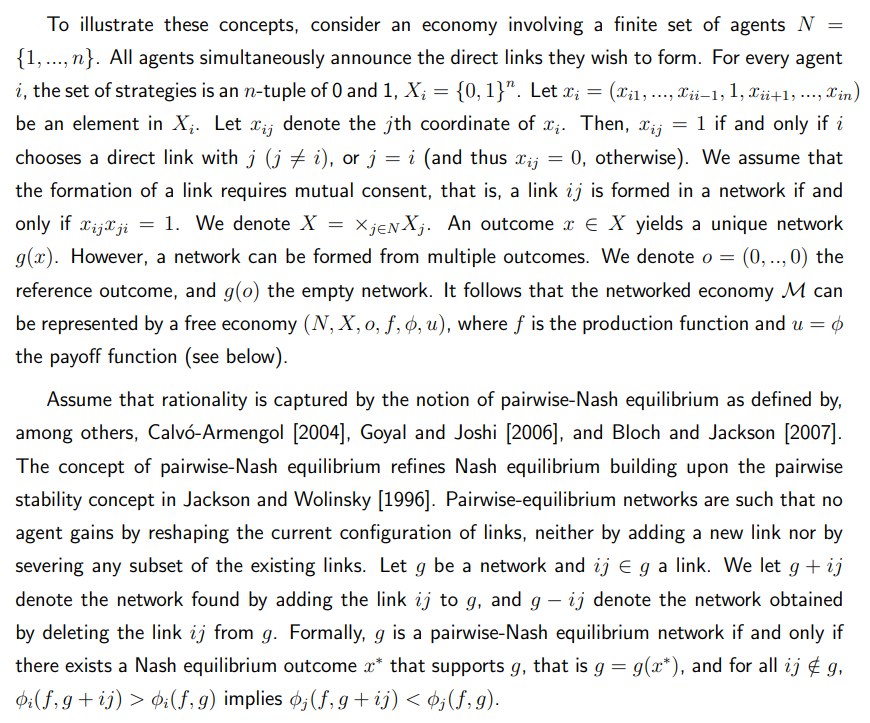
The Economics of Self-Isolation: A Game-Theoretic Analysis of Contagion in a Free Economy

The Economics of Self-Isolation: A Game-Theoretic Analysis of Contagion in a Free Economy

Exploring how the costs of a pandemic can lead to a self-enforcing lockdown in a networked economy, analyzing the resulting changes in network structure and the existence of stable equilibria.
Share
Hackernoon2025/09/17 23:00
