The post Trump accuses China of an "economically hostile act" for not buying US soybeans appeared on BitcoinEthereumNews.com. Trump accused China of committing an “economically hostile act” after Beijing stopped buying U.S. soybeans, escalating tensions in a trade fight that’s already spreading across agriculture, shipping, and energy. In a fiery post on Truth Social, he wrote: “I believe that China purposefully not buying our Soybeans, and causing difficulty for our Soybean Farmers, is an Economically Hostile Act. We are considering terminating business with China having to do with Cooking Oil, and other elements of Trade, as retribution. As an example, we can easily produce Cooking Oil ourselves, we don’t need to purchase it from China.” China has been the largest buyer of U.S. soybeans for years, importing about 27 million metric tons valued at roughly $12.8 billion in 2024.But since May, Beijing has refused to purchase a single shipment. The halt came as the trade war between Washington and Beijing heated up again, with tariffs driving prices higher for Chinese importers.Instead, China began sourcing soybeans from Argentina and other South American producers. Coincidentally, Argentina lifted export taxes on the same day Trump’s administration announced a $20 billion currency swap with Buenos Aires. Hours later, Argentina’s President Javier Milei visited Trump at the White House. By the end of the day, the U.S. president had unleashed his public rebuke against China. Markets drop after Trump’s trade warning The timing of Trump’s post sent markets tumbling. The S&P 500 fell sharply by the end of the day, closing lower after a volatile session. Traders were already on edge following Trump’s warning on Friday that he would raise tariffs on Chinese imports in response to Beijing’s new export controls on rare earth minerals. Hours after that threat, he said he would impose an additional 100% tariff on Chinese goods starting November 1. But by Sunday, he changed tone, posting, “Don’t worry… The post Trump accuses China of an "economically hostile act" for not buying US soybeans appeared on BitcoinEthereumNews.com. Trump accused China of committing an “economically hostile act” after Beijing stopped buying U.S. soybeans, escalating tensions in a trade fight that’s already spreading across agriculture, shipping, and energy. In a fiery post on Truth Social, he wrote: “I believe that China purposefully not buying our Soybeans, and causing difficulty for our Soybean Farmers, is an Economically Hostile Act. We are considering terminating business with China having to do with Cooking Oil, and other elements of Trade, as retribution. As an example, we can easily produce Cooking Oil ourselves, we don’t need to purchase it from China.” China has been the largest buyer of U.S. soybeans for years, importing about 27 million metric tons valued at roughly $12.8 billion in 2024.But since May, Beijing has refused to purchase a single shipment. The halt came as the trade war between Washington and Beijing heated up again, with tariffs driving prices higher for Chinese importers.Instead, China began sourcing soybeans from Argentina and other South American producers. Coincidentally, Argentina lifted export taxes on the same day Trump’s administration announced a $20 billion currency swap with Buenos Aires. Hours later, Argentina’s President Javier Milei visited Trump at the White House. By the end of the day, the U.S. president had unleashed his public rebuke against China. Markets drop after Trump’s trade warning The timing of Trump’s post sent markets tumbling. The S&P 500 fell sharply by the end of the day, closing lower after a volatile session. Traders were already on edge following Trump’s warning on Friday that he would raise tariffs on Chinese imports in response to Beijing’s new export controls on rare earth minerals. Hours after that threat, he said he would impose an additional 100% tariff on Chinese goods starting November 1. But by Sunday, he changed tone, posting, “Don’t worry…

Trump accuses China of an "economically hostile act" for not buying US soybeans

For feedback or concerns regarding this content, please contact us at crypto.news@mexc.com

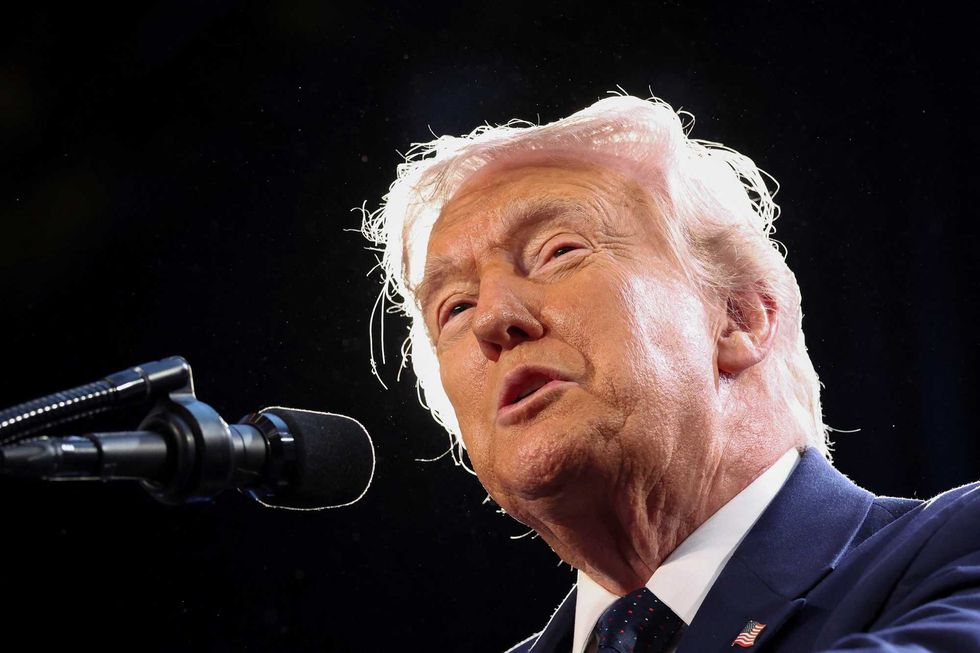
Trump accused China of committing an “economically hostile act” after Beijing stopped buying U.S. soybeans, escalating tensions in a trade fight that’s already spreading across agriculture, shipping, and energy.

In a fiery post on Truth Social, he wrote:

China has been the largest buyer of U.S. soybeans for years, importing about 27 million metric tons valued at roughly $12.8 billion in 2024.But since May, Beijing has refused to purchase a single shipment.

The halt came as the trade war between Washington and Beijing heated up again, with tariffs driving prices higher for Chinese importers.Instead, China began sourcing soybeans from Argentina and other South American producers.

Coincidentally, Argentina lifted export taxes on the same day Trump’s administration announced a $20 billion currency swap with Buenos Aires. Hours later, Argentina’s President Javier Milei visited Trump at the White House. By the end of the day, the U.S. president had unleashed his public rebuke against China.

Markets drop after Trump’s trade warning

The timing of Trump’s post sent markets tumbling. The S&P 500 fell sharply by the end of the day, closing lower after a volatile session. Traders were already on edge following Trump’s warning on Friday that he would raise tariffs on Chinese imports in response to Beijing’s new export controls on rare earth minerals.

Hours after that threat, he said he would impose an additional 100% tariff on Chinese goods starting November 1. But by Sunday, he changed tone, posting, “Don’t worry about China, it will all be fine!”

Meanwhile, data showed China’s exports of used cooking oil hit record highs in 2024, and the U.S. accounted for 43% of the total.

That number added to Washington’s frustration as Trump considered cutting ties in the cooking oil trade altogether. His comments deepened doubts about ongoing U.S.-China trade talks, already stalled after months of tit-for-tat measures.

Beijing responded by introducing its own round of economic measures. It started collecting special port fees on U.S.-owned, operated, or built vessels, while exempting Chinese-built ships.

Chinese state broadcaster CCTV explained that the new fees would apply to a vessel’s first port of entry for a single voyage or up to five voyages per year, with exceptions for empty ships entering for repairs. The move mirrored the U.S. policy announced earlier this year, when Trump’s administration approved similar fees on China-linked vessels to boost the U.S. shipbuilding sector.

China hits back with sanctions and maritime countermeasures

The standoff extended beyond soybeans and tariffs into the shipping industry.An investigation that began during the Biden administration had concluded that China used unfair practices to dominate global shipping and shipbuilding.

That finding gave Trump the authority to impose penalties aimed at reducing Beijing’s control. China fired back by introducing identical port charges on U.S.-linked vessels the same day America’s fees took effect.

Athens-based Xclusiv Shipbrokers said in a research note that the situation created a “spiral of maritime taxation” between the two economies, warning of disruptions to global freight flows.

Shipping analyst Ed Finley-Richardson said operators were scrambling to reroute ships to avoid Chinese ports. He said some U.S. shipowners were trying to sell their cargo mid-voyage so vessels could divert elsewhere. Analysts estimated China’s state-owned COSCO would take the hardest hit, bearing almost half of the $3.2 billion in extra costs expected by 2026.

Major international carriers like Maersk, Hapag-Lloyd, and CMA CGM reduced exposure by pulling China-linked ships off U.S. trade routes. American trade officials later lowered the proposed port fees after backlash from agriculture, energy, and shipping industries, which argued that the tariffs would raise costs for consumers and exporters alike. The U.S. Trade Representative (USTR) declined to comment.

China’s commerce ministry responded Tuesday, saying, “If the U.S. chooses confrontation, China will see it through to the end; if it chooses dialogue, China’s door remains open.”

Hours later, Beijing announced sanctions against five U.S.-linked subsidiaries of South Korea’s Hanwha Ocean, accusing them of supporting a U.S. investigation into China’s trade practices. Hanwha, which owns Philly Shipyard in the U.S. and builds Navy vessels, confirmed it was monitoring the situation after its stock plunged nearly 6%, as Cryptopolitan reported.

Want your project in front of crypto’s top minds? Feature it in our next industry report, where data meets impact.

Source: https://www.cryptopolitan.com/trump-says-china-economically-hostile-act/

Market Opportunity
OFFICIAL TRUMP Logo
OFFICIAL TRUMP Price(TRUMP)
$2.912
$2.912$2.912
-1.55%
USD
OFFICIAL TRUMP (TRUMP) Live Price Chart
Disclaimer: The articles reposted on this site are sourced from public platforms and are provided for informational purposes only. They do not necessarily reflect the views of MEXC. All rights remain with the original authors. If you believe any content infringes on third-party rights, please contact crypto.news@mexc.com for removal. MEXC makes no guarantees regarding the accuracy, completeness, or timeliness of the content and is not responsible for any actions taken based on the information provided. The content does not constitute financial, legal, or other professional advice, nor should it be considered a recommendation or endorsement by MEXC.

You May Also Like

Here’s How Consumers May Benefit From Lower Interest Rates

Here’s How Consumers May Benefit From Lower Interest Rates

The post Here’s How Consumers May Benefit From Lower Interest Rates appeared on BitcoinEthereumNews.com. Topline The Federal Reserve on Wednesday opted to ease interest rates for the first time in months, leading the way for potentially lower mortgage rates, bond yields and a likely boost to cryptocurrency over the coming weeks. Average long-term mortgage rates dropped to their lowest levels in months ahead of the central bank’s policy shift. Copyright{2018} The Associated Press. All rights reserved. Key Facts The central bank’s policymaking panel voted this week to lower interest rates, which have sat between 4.25% and 4.5% since December, to a new range of 4% and 4.25%. How Will Lower Interest Rates Impact Mortgage Rates? Mortgage rates tend to fall before and during a period of interest rate cuts: The average 30-year fixed-rate mortgage dropped to 6.35% from 6.5% last week, the lowest level since October 2024, mortgage buyer Freddie Mac reported. Borrowing costs on 15-year fixed-rate mortgages also dropped to 5.5% from 5.6% as they neared the year-ago rate of 5.27%. When the Federal Reserve lowered the funds rate to between 0% and 0.25% during the pandemic, 30-year mortgage rates hit record lows between 2.7% and 3% by the end of 2020, according to data published by Freddie Mac. Consumers who refinanced their mortgages in 2020 saved about $5.3 billion annually as rates dropped, according to the Consumer Financial Protection Bureau. Similarly, mortgage rates spiked around 7% as interest rates were hiked in 2022 and 2023, though mortgage rates appeared to react within weeks of the Fed opting to cut or raise rates. How Do Treasury Bonds Respond To Lower Interest Rates? Long-term Treasury yields are more directly influenced by interest rates, as lower rates tend to result in lower yields. When the Fed pushed rates to near zero during the pandemic, 10-year Treasury yields fell to an all-time low of 0.5%. As…
Share
BitcoinEthereumNews2025/09/18 05:59
Tunis–Carthage Airport Expansion Targets Capacity Surge

Tunis–Carthage Airport Expansion Targets Capacity Surge

Tunisia’s Tunis–Carthage airport expansion is set to transform the country’s aviation capacity as authorities plan a $1 billion investment to significantly increase
Share
Furtherafrica2026/03/10 13:00
Hoskinson to Attend Senate Roundtable on Crypto Regulation

Hoskinson to Attend Senate Roundtable on Crypto Regulation

The post Hoskinson to Attend Senate Roundtable on Crypto Regulation appeared on BitcoinEthereumNews.com. Hoskinson confirmed for Senate roundtable on U.S. crypto regulation and market structure. Key topics include SEC vs CFTC oversight split, DeFi regulation, and securities rules. Critics call the roundtable slow, citing Trump’s 2025 executive order as faster. Cardano founder Charles Hoskinson has confirmed that he will attend the Senate Banking Committee roundtable on crypto market structure legislation.  Hoskinson left a hint about his attendance on X while highlighting Journalist Eleanor Terrett’s latest post about the event. Crypto insiders will meet with government officials Terrett shared information gathered from some invitees to the event, noting that a group of leaders from several major cryptocurrency establishments would attend the event. According to Terrett, the group will meet with the Senate Banking Committee leadership in a roundtable to continue talks on market structure regulation. Meanwhile, Terrett noted that the meeting will be held on Thursday, September 18, following an industry review of the committee’s latest approach to distinguishing securities from commodities, DeFi treatment, and other key issues, which has lasted over one week.  Related: Senate Draft Bill Gains Experts’ Praise for Strongest Developer Protections in Crypto Law Notably, the upcoming roundtable between US legislators and crypto industry leaders is a continuation of the process of regularising cryptocurrency regulation in the United States. It is part of the Donald Trump administration’s efforts to provide clarity in the US cryptocurrency ecosystem, which many crypto supporters consider a necessity for the digital asset industry. Despite the ongoing process, some crypto users are unsatisfied with how the US government is handling the issue, particularly the level of bureaucracy involved in creating a lasting cryptocurrency regulatory framework. One such user criticized the process, describing it as a “masterclass in bureaucratic foot-dragging.” According to the critic, America is losing ground to nations already leading in blockchain innovation. He cited…
Share
BitcoinEthereumNews2025/09/18 06:37