The post Can New York’s new crypto office thaw America’s coldest market? appeared on BitcoinEthereumNews.com. New York City Mayor Eric Adams just built a new power center for crypto inside City Hall. On Oct. 14, he signed Executive Order 57 and created the Office of Digital Assets and Blockchain Technology, a unit that sits in the Mayor’s Office, reports to the city CTO, and is led by Moises Rendon. City Hall calls it the nation’s first municipal office focused on digital assets. The order takes effect immediately. What does that actually unlock? The order directs the office to coordinate across agencies, study and draft policy proposals, run public education on risks and fraud, and work with the city’s economic-development arm on investment and jobs. In plain language, this gives startups and large institutions a front door at City Hall for pilots, procurement, and regulatory troubleshooting that cross multiple bureaus. There’s a reason this matters in New York. State law still controls licensing of exchanges and custodians through the BitLicense framework, which critics say keeps costs high and timelines long. A City Hall office cannot rewrite state rules, but it can standardize how municipal agencies evaluate blockchain pilots, help big banks navigate public-sector use cases, and coordinate with state and federal counterparts when a project hits the gray areas. Adams has been vocal about bringing crypto closer to the city, and this hires permanent staff to do that mission. Abroad, you can see versions of this playbook already running. Hong Kong formed a government-level Web3 Task Force in 2023, chaired by the Financial Secretary, to steer policy and industry coordination. That group was renewed in 2025 with fresh appointments, showing staying power across market cycles. Singapore’s MAS runs Project Guardian, a regulator-led program where banks and asset managers test tokenization for funds, FX, and collateral. The initiative has widened in 2024–2025 to include more global buy-side… The post Can New York’s new crypto office thaw America’s coldest market? appeared on BitcoinEthereumNews.com. New York City Mayor Eric Adams just built a new power center for crypto inside City Hall. On Oct. 14, he signed Executive Order 57 and created the Office of Digital Assets and Blockchain Technology, a unit that sits in the Mayor’s Office, reports to the city CTO, and is led by Moises Rendon. City Hall calls it the nation’s first municipal office focused on digital assets. The order takes effect immediately. What does that actually unlock? The order directs the office to coordinate across agencies, study and draft policy proposals, run public education on risks and fraud, and work with the city’s economic-development arm on investment and jobs. In plain language, this gives startups and large institutions a front door at City Hall for pilots, procurement, and regulatory troubleshooting that cross multiple bureaus. There’s a reason this matters in New York. State law still controls licensing of exchanges and custodians through the BitLicense framework, which critics say keeps costs high and timelines long. A City Hall office cannot rewrite state rules, but it can standardize how municipal agencies evaluate blockchain pilots, help big banks navigate public-sector use cases, and coordinate with state and federal counterparts when a project hits the gray areas. Adams has been vocal about bringing crypto closer to the city, and this hires permanent staff to do that mission. Abroad, you can see versions of this playbook already running. Hong Kong formed a government-level Web3 Task Force in 2023, chaired by the Financial Secretary, to steer policy and industry coordination. That group was renewed in 2025 with fresh appointments, showing staying power across market cycles. Singapore’s MAS runs Project Guardian, a regulator-led program where banks and asset managers test tokenization for funds, FX, and collateral. The initiative has widened in 2024–2025 to include more global buy-side…

Can New York’s new crypto office thaw America’s coldest market?

For feedback or concerns regarding this content, please contact us at crypto.news@mexc.com

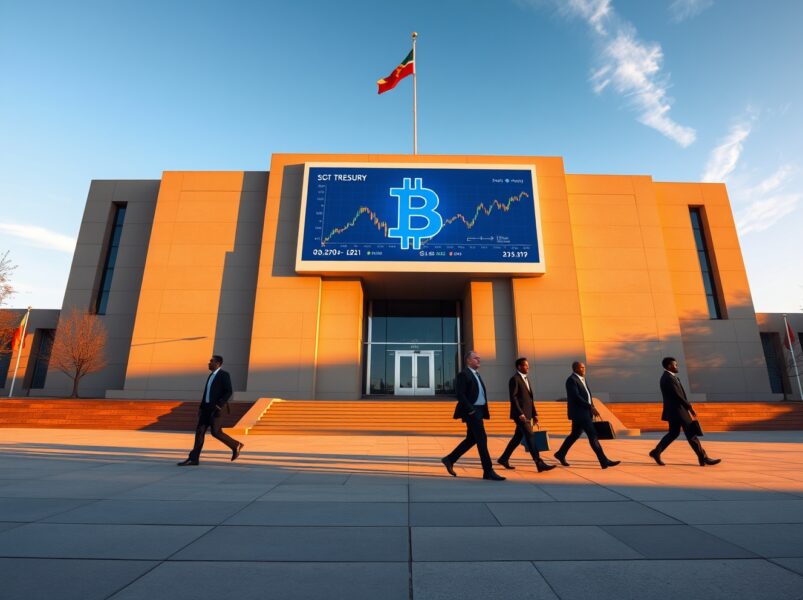
New York City Mayor Eric Adams just built a new power center for crypto inside City Hall. On Oct. 14, he signed Executive Order 57 and created the Office of Digital Assets and Blockchain Technology, a unit that sits in the Mayor’s Office, reports to the city CTO, and is led by Moises Rendon.

City Hall calls it the nation’s first municipal office focused on digital assets. The order takes effect immediately.

What does that actually unlock?

The order directs the office to coordinate across agencies, study and draft policy proposals, run public education on risks and fraud, and work with the city’s economic-development arm on investment and jobs.

In plain language, this gives startups and large institutions a front door at City Hall for pilots, procurement, and regulatory troubleshooting that cross multiple bureaus.

There’s a reason this matters in New York. State law still controls licensing of exchanges and custodians through the BitLicense framework, which critics say keeps costs high and timelines long.

A City Hall office cannot rewrite state rules, but it can standardize how municipal agencies evaluate blockchain pilots, help big banks navigate public-sector use cases, and coordinate with state and federal counterparts when a project hits the gray areas.

Adams has been vocal about bringing crypto closer to the city, and this hires permanent staff to do that mission.

Abroad, you can see versions of this playbook already running.

Hong Kong formed a government-level Web3 Task Force in 2023, chaired by the Financial Secretary, to steer policy and industry coordination. That group was renewed in 2025 with fresh appointments, showing staying power across market cycles.

Singapore’s MAS runs Project Guardian, a regulator-led program where banks and asset managers test tokenization for funds, FX, and collateral. The initiative has widened in 2024–2025 to include more global buy-side groups, and it functions as a standing sandbox that pushes pilots toward production.

Dubai went further, creating VARA by law in 2022 with its own rulebook for virtual asset service providers. That gave firms a clear licensing path, and the authority has since issued a full regulatory framework that traditional law firms now treat as a baseline reference.

New York’s model is different.

It is municipal, not a sector regulator, and it covers both public-sector modernization and industry growth. That can be an advantage. The city’s buying power and data infrastructure are large enough to make pilots matter, and the office can use procurement to pull private standards toward public needs, for example, identity, payments, or records that must interoperate with legacy systems.

So what does this look like for companies?

First, a single counterparty. If you are a custody shop offering secure disbursements to city vendors, or a bank testing tokenized deposits for municipal receivables, you now have an owner inside City Hall who can herd agencies and keep timelines from drifting.

The order assigns the office to liaise with OTI and EDC, which means projects can move from memo to milestone without dying in the interagency maze.

Second, a pipeline for pilots. Expect early tests where blockchain’s audit trails offer clear value: permit and license registries, vendor payments with automated reconciliation, grants management, or proof-of-delivery for social services.

Singapore’s Project Guardian shows that tokenized collateral and fund units are viable in controlled environments; a New York pilot could copy the pattern with city treasurers and partner banks.

Third, clearer expectations for risk teams. The office is charged with public education on scams and consumer risks. If it publishes playbooks for vendor diligence or wallet hygiene, compliance teams at exchanges and fintechs will get a common language to reference in RFPs and risk committees. That shortens sales cycles and cuts duplication across departments.

There are limits.

The office does not issue licenses, does not pre-empt state or federal law, and its influence will depend on budget and headcount.

Adams leaves office in January 2026, so continuity depends on whether the next administration treats this as critical infrastructure or a political ornament. Those caveats aside, the structure fits a broader pattern: jurisdictions that concentrate digital-asset work inside named bodies tend to move faster from speech to standard.

Hong Kong’s task force and Dubai’s VARA are two examples at different ends of the spectrum, one advisory and coordination-heavy, the other an outright regulator with a binding rulebook.

If you are a crypto company with New York clients, yesterday’s knock on the door was a patchwork of agency staff who rotate every budget season.

Today, there is an office with a name and a mandate. That alone reduces transaction costs. If you are a bank trading tokenized funds in Singapore or expanding a compliance program for Dubai, you now have a reason to add New York City to the same slide of “jurisdictions with a living contact.”

The office cannot change the BitLicense, but it can make New York easier to work with, and in this sector, ease of doing business often decides where the next pilot lands.

For a city that runs on capital markets, this is a move to plug blockchains into the civic stack rather than treat them as a sideshow. If the office ships even two or three credible pilots and publishes the playbooks, it will reset the default question from “can the city use this” to “which agency does it first.”

Mentioned in this article

Source: https://cryptoslate.com/can-new-yorks-new-crypto-office-thaw-americas-coldest-market/

Market Opportunity
Manchester City Fan Logo
Manchester City Fan Price(CITY)
$0.5888
$0.5888$0.5888
+0.70%
USD
Manchester City Fan (CITY) Live Price Chart
Disclaimer: The articles reposted on this site are sourced from public platforms and are provided for informational purposes only. They do not necessarily reflect the views of MEXC. All rights remain with the original authors. If you believe any content infringes on third-party rights, please contact crypto.news@mexc.com for removal. MEXC makes no guarantees regarding the accuracy, completeness, or timeliness of the content and is not responsible for any actions taken based on the information provided. The content does not constitute financial, legal, or other professional advice, nor should it be considered a recommendation or endorsement by MEXC.

You May Also Like

Here’s How Consumers May Benefit From Lower Interest Rates

Here’s How Consumers May Benefit From Lower Interest Rates

The post Here’s How Consumers May Benefit From Lower Interest Rates appeared on BitcoinEthereumNews.com. Topline The Federal Reserve on Wednesday opted to ease interest rates for the first time in months, leading the way for potentially lower mortgage rates, bond yields and a likely boost to cryptocurrency over the coming weeks. Average long-term mortgage rates dropped to their lowest levels in months ahead of the central bank’s policy shift. Copyright{2018} The Associated Press. All rights reserved. Key Facts The central bank’s policymaking panel voted this week to lower interest rates, which have sat between 4.25% and 4.5% since December, to a new range of 4% and 4.25%. How Will Lower Interest Rates Impact Mortgage Rates? Mortgage rates tend to fall before and during a period of interest rate cuts: The average 30-year fixed-rate mortgage dropped to 6.35% from 6.5% last week, the lowest level since October 2024, mortgage buyer Freddie Mac reported. Borrowing costs on 15-year fixed-rate mortgages also dropped to 5.5% from 5.6% as they neared the year-ago rate of 5.27%. When the Federal Reserve lowered the funds rate to between 0% and 0.25% during the pandemic, 30-year mortgage rates hit record lows between 2.7% and 3% by the end of 2020, according to data published by Freddie Mac. Consumers who refinanced their mortgages in 2020 saved about $5.3 billion annually as rates dropped, according to the Consumer Financial Protection Bureau. Similarly, mortgage rates spiked around 7% as interest rates were hiked in 2022 and 2023, though mortgage rates appeared to react within weeks of the Fed opting to cut or raise rates. How Do Treasury Bonds Respond To Lower Interest Rates? Long-term Treasury yields are more directly influenced by interest rates, as lower rates tend to result in lower yields. When the Fed pushed rates to near zero during the pandemic, 10-year Treasury yields fell to an all-time low of 0.5%. As…
Share
BitcoinEthereumNews2025/09/18 05:59
Tunis–Carthage Airport Expansion Targets Capacity Surge

Tunis–Carthage Airport Expansion Targets Capacity Surge

Tunisia’s Tunis–Carthage airport expansion is set to transform the country’s aviation capacity as authorities plan a $1 billion investment to significantly increase
Share
Furtherafrica2026/03/10 13:00
Hoskinson to Attend Senate Roundtable on Crypto Regulation

Hoskinson to Attend Senate Roundtable on Crypto Regulation

The post Hoskinson to Attend Senate Roundtable on Crypto Regulation appeared on BitcoinEthereumNews.com. Hoskinson confirmed for Senate roundtable on U.S. crypto regulation and market structure. Key topics include SEC vs CFTC oversight split, DeFi regulation, and securities rules. Critics call the roundtable slow, citing Trump’s 2025 executive order as faster. Cardano founder Charles Hoskinson has confirmed that he will attend the Senate Banking Committee roundtable on crypto market structure legislation.  Hoskinson left a hint about his attendance on X while highlighting Journalist Eleanor Terrett’s latest post about the event. Crypto insiders will meet with government officials Terrett shared information gathered from some invitees to the event, noting that a group of leaders from several major cryptocurrency establishments would attend the event. According to Terrett, the group will meet with the Senate Banking Committee leadership in a roundtable to continue talks on market structure regulation. Meanwhile, Terrett noted that the meeting will be held on Thursday, September 18, following an industry review of the committee’s latest approach to distinguishing securities from commodities, DeFi treatment, and other key issues, which has lasted over one week.  Related: Senate Draft Bill Gains Experts’ Praise for Strongest Developer Protections in Crypto Law Notably, the upcoming roundtable between US legislators and crypto industry leaders is a continuation of the process of regularising cryptocurrency regulation in the United States. It is part of the Donald Trump administration’s efforts to provide clarity in the US cryptocurrency ecosystem, which many crypto supporters consider a necessity for the digital asset industry. Despite the ongoing process, some crypto users are unsatisfied with how the US government is handling the issue, particularly the level of bureaucracy involved in creating a lasting cryptocurrency regulatory framework. One such user criticized the process, describing it as a “masterclass in bureaucratic foot-dragging.” According to the critic, America is losing ground to nations already leading in blockchain innovation. He cited…
Share
BitcoinEthereumNews2025/09/18 06:37