U.S. AI data centers to lead surge in energy storage demand over the next five years, UBS
According to UBS Securities, the expansion of U.S. AI data centers is expected to drive an increase in energy storage demand over the next five years, as batteries become increasingly necessary to handle variations from intermittent wind and solar power.
According to analyst Yan Yishu, Global energy storage demand is expected to increase by 40% annually in 2026, with the U.S. market remaining vital for both U.S. and Chinese producers. Yishu stated that the U.S. has a very strong demand for AI data centers, but the largest obstacle is the availability of electricity.
Renewables drive U.S. battery and storage growth
Yishu claimed that the only power-generating sector in the U.S. that is predicted to increase significantly over the next five years is renewable energy. According to Yishu, the increase is because the renewable energy sectors generate power sporadically, and the system requires additional batteries to store that power.
The U.S. market is crucial for Chinese energy storage producers because it is one of the highest-margin industries, where they own a 20% market share. However, Yishu stated in the briefing that emerging markets in the Middle East, Latin America, Africa, and Southeast Asia are expected to experience the fastest growth rates, ranging from 30% to 50%.
Yishu stated that U.S. President Trump’s bill, which restricts Chinese-owned or controlled enterprises’ ability to participate in the U.S. energy sector, poses the greatest threat to Chinese exports to the U.S. Additionally, he mentioned that energy storage projects, which make money by charging up when prices are low and selling power when prices are high, may benefit further from China’s push to adopt market-based pricing for renewable energy.
According to Yishu, independent storage projects that are not coupled with a renewable power plant can be profitable with a peak-valley electricity price difference of 0.4 yuan ($0.06) per kilowatt-hour.
AI data centers driving global electricity demand
On September 23, UBS reported that Nvidia suggested global spending on AI data center infrastructure might exceed $3–4 trillion per year by 2030. According to Nvidia, spending on AI data centers is expected to result in a potential increase in electricity demand of 110 GW in the U.S. and 170 GW worldwide, which aligns with industry projections.
For context, the installed generating capacity in the U.S. was approximately 1,000 GW in 2024. An investment of approximately $220 billion is required to increase the current U.S. capacity by 10%, for $2,000 per kilowatt (kW). The same calculation yields a total of $340 billion globally.
According to the Pew Research report, in 2024, U.S. data centers consumed 183 terawatt-hours (TWh) of electricity, accounting for 4% of the country’s total electricity consumption. According to the report, electricity consumption is expected to increase by 133% to 426 TWh by 2030.
AI-optimized hyperscale facilities consume power at a huge rate. According to the report, servers alone account for 60% of data center energy use, with cooling systems contributing an additional 7–30%.
The repercussions are starting to show. According to the report, data centers contributed to a $9.3 billion price increase in the 2025–2026 capacity market in the PJM power market, resulting in higher residential electricity rates in areas such as western Maryland and Ohio.
According to UBS, the expansion of AI data centers is not the only factor sustaining the world’s growing demand for electricity. Global electricity consumption is expected to increase due to the ongoing electrification of the world economy, industrial reshoring trends, and growing energy demand in developing nations.
The International Energy Agency (IEA) projects the world’s energy consumption will increase at a rate of about 4% per year until 2027, which is more than Japan’s yearly use. According to the IEA, the rising rate indicates that additional electricity supplies and related energy infrastructure are required.
According to Research and Markets, the data center energy storage market was estimated to be worth $1.6 billion in 2024 and is expected to expand at a compound annual growth rate (CAGR) of 8.1% to reach $2.5 billion by 2030.
Want your project in front of crypto’s top minds? Feature it in our next industry report, where data meets impact.


You May Also Like
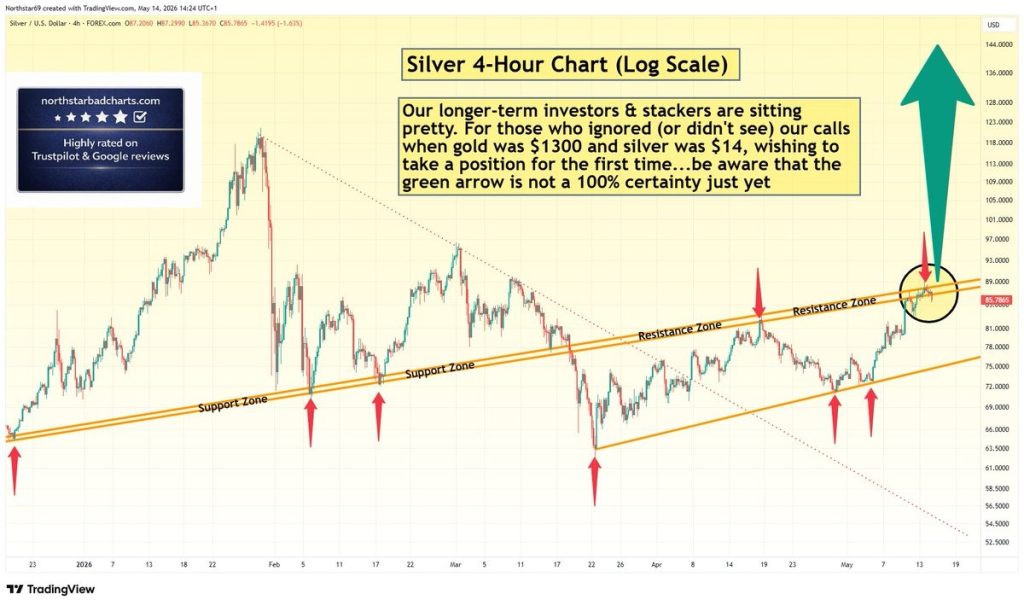
Silver Price Warning: Green Arrow Setup Is Not Confirmed – Wait for Clear Signal

Facebook spotlights African cinema in 6th ‘Made by Africa, loved by the world’ campaign