Highlights: Japan will classify cryptocurrencies as financial products under the Financial Instruments and Exchange Act. The new flat tax rate on approved crypto assets will be 20%, down from 55%. Exchanges must disclose details about 105 crypto tokens, including risks and technology. Japan is gearing up for a significant shift in its crypto asset regulation. The Financial Services Agency (FSA) has proposed reclassifying 105 cryptocurrencies, such as Bitcoin and Ethereum, as financial products. According to a report by Asahi Shinmun, this plan will bring them under the Financial Instruments and Exchange Act. Currently, crypto gains are subject to taxation as miscellaneous income. Traders face tax rates of up to 55%. But once the changes are approved, these 105 approved assets are going to be taxed at a flat 20%, like stocks. The FSA is planning to present the amendment bill to the National Diet by 2026. Moreover, negotiations are already being made to push related tax changes into next year’s budget. Japan’s Financial Services Agency (FSA) plans to reclassify 105 cryptoassets, including BTC and ETH, as “financial products” and push for a tax overhaul in fiscal year 2026—reducing the current progressive crypto tax rate of up to 55% to a flat 20% capital gains tax. The agency… — Wu Blockchain (@WuBlockchain) November 16, 2025 Tighter Regulations and Mandatory Disclosures Japan classifying cryptocurrencies as financial products will also see the regulator implement stricter regulations. Exchanges in Japan are required to disclose information regarding each of the 105 tokens approved. This contains the presence or absence of an issuer, the underlying technology employed, and volatility risks. This is aimed at enhancing transparency in the crypto industry. These conditions are to make investors understand completely what assets they are purchasing. Further, the move will align digital assets to the existing financial products according to current law. The Japan Virtual Currency Exchange Association, which regulates listed coins, already monitors listed assets. They maintain a “green list” with vetted tokens, covering BTC, ETH, MATIC, XRP, and LTC. With the new plan, though, all 105 tokens handled by domestic exchanges will be subject to the same strict standards. This will bring about uniformity in the process and promote investor confidence in the market. Insider Trading Restrictions and Exchange Oversight The FSA also intends to crack down on insider trading in the crypto space. New regulations will not allow individuals with privileged access to purchase or sell tokens on the basis of undisclosed information. This covers future listing, delisting, and bankruptcy announcements. Exchanges will still be run on a registration system. However, a new notification system will be implemented among individuals managing key operational processes. Banks and insurance companies, however, will still be unable to sell cryptocurrencies to retail customers. The government consequently seeks to separate banking services and unstable crypto trading activities. These reforms are aimed at subjecting cryptocurrencies as financial products under the law while providing fairness and transparency in trading. Moreover, the 20% tax is seen as a move towards international standards. Most nations already impose capital gains tax on digital assets. The move will enable Japan to become more competitive in its crypto policy. As Japan moves to classify cryptocurrencies, its leading banks, MUFG, SMBC, and Mizuho, are piloting a stablecoin issuance program. Backed by the FSA, the experiment will determine the ability of the existing frameworks to facilitate regulated bank-issued stablecoins. Japan’s Financial Services Agency has announced support for a pilot project in which MUFG, SMBC, and Mizuho will jointly issue a yen-backed stablecoin. As the first initiative under the Payment Innovation Project (PIP), the experiment aims to test the legal and operational… — Wu Blockchain (@WuBlockchain) November 7, 2025 eToro Platform Best Crypto Exchange Over 90 top cryptos to trade Regulated by top-tier entities User-friendly trading app 30+ million users 9.9 Visit eToro eToro is a multi-asset investment platform. The value of your investments may go up or down. Your capital is at risk. Don’t invest unless you’re prepared to lose all the money you invest. This is a high-risk investment, and you should not expect to be protected if something goes wrong. Highlights: Japan will classify cryptocurrencies as financial products under the Financial Instruments and Exchange Act. The new flat tax rate on approved crypto assets will be 20%, down from 55%. Exchanges must disclose details about 105 crypto tokens, including risks and technology. Japan is gearing up for a significant shift in its crypto asset regulation. The Financial Services Agency (FSA) has proposed reclassifying 105 cryptocurrencies, such as Bitcoin and Ethereum, as financial products. According to a report by Asahi Shinmun, this plan will bring them under the Financial Instruments and Exchange Act. Currently, crypto gains are subject to taxation as miscellaneous income. Traders face tax rates of up to 55%. But once the changes are approved, these 105 approved assets are going to be taxed at a flat 20%, like stocks. The FSA is planning to present the amendment bill to the National Diet by 2026. Moreover, negotiations are already being made to push related tax changes into next year’s budget. Japan’s Financial Services Agency (FSA) plans to reclassify 105 cryptoassets, including BTC and ETH, as “financial products” and push for a tax overhaul in fiscal year 2026—reducing the current progressive crypto tax rate of up to 55% to a flat 20% capital gains tax. The agency… — Wu Blockchain (@WuBlockchain) November 16, 2025 Tighter Regulations and Mandatory Disclosures Japan classifying cryptocurrencies as financial products will also see the regulator implement stricter regulations. Exchanges in Japan are required to disclose information regarding each of the 105 tokens approved. This contains the presence or absence of an issuer, the underlying technology employed, and volatility risks. This is aimed at enhancing transparency in the crypto industry. These conditions are to make investors understand completely what assets they are purchasing. Further, the move will align digital assets to the existing financial products according to current law. The Japan Virtual Currency Exchange Association, which regulates listed coins, already monitors listed assets. They maintain a “green list” with vetted tokens, covering BTC, ETH, MATIC, XRP, and LTC. With the new plan, though, all 105 tokens handled by domestic exchanges will be subject to the same strict standards. This will bring about uniformity in the process and promote investor confidence in the market. Insider Trading Restrictions and Exchange Oversight The FSA also intends to crack down on insider trading in the crypto space. New regulations will not allow individuals with privileged access to purchase or sell tokens on the basis of undisclosed information. This covers future listing, delisting, and bankruptcy announcements. Exchanges will still be run on a registration system. However, a new notification system will be implemented among individuals managing key operational processes. Banks and insurance companies, however, will still be unable to sell cryptocurrencies to retail customers. The government consequently seeks to separate banking services and unstable crypto trading activities. These reforms are aimed at subjecting cryptocurrencies as financial products under the law while providing fairness and transparency in trading. Moreover, the 20% tax is seen as a move towards international standards. Most nations already impose capital gains tax on digital assets. The move will enable Japan to become more competitive in its crypto policy. As Japan moves to classify cryptocurrencies, its leading banks, MUFG, SMBC, and Mizuho, are piloting a stablecoin issuance program. Backed by the FSA, the experiment will determine the ability of the existing frameworks to facilitate regulated bank-issued stablecoins. Japan’s Financial Services Agency has announced support for a pilot project in which MUFG, SMBC, and Mizuho will jointly issue a yen-backed stablecoin. As the first initiative under the Payment Innovation Project (PIP), the experiment aims to test the legal and operational… — Wu Blockchain (@WuBlockchain) November 7, 2025 eToro Platform Best Crypto Exchange Over 90 top cryptos to trade Regulated by top-tier entities User-friendly trading app 30+ million users 9.9 Visit eToro eToro is a multi-asset investment platform. The value of your investments may go up or down. Your capital is at risk. Don’t invest unless you’re prepared to lose all the money you invest. This is a high-risk investment, and you should not expect to be protected if something goes wrong.

Japan to Classify Cryptocurrencies as Financial Products, Slashing Tax Rate to 20%

2025/11/16 23:17

Highlights:

  • Japan will classify cryptocurrencies as financial products under the Financial Instruments and Exchange Act.
  • The new flat tax rate on approved crypto assets will be 20%, down from 55%.
  • Exchanges must disclose details about 105 crypto tokens, including risks and technology.

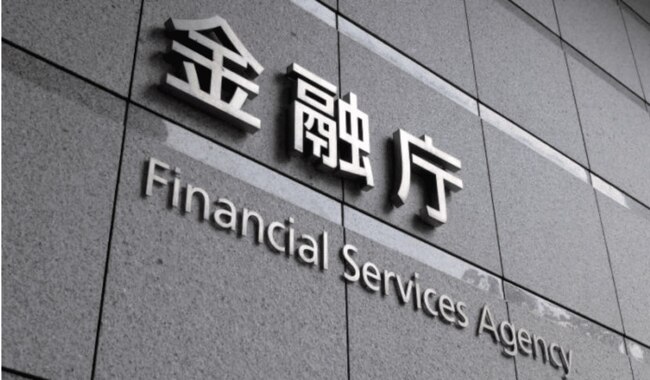
Japan is gearing up for a significant shift in its crypto asset regulation. The Financial Services Agency (FSA) has proposed reclassifying 105 cryptocurrencies, such as Bitcoin and Ethereum, as financial products. According to a report by Asahi Shinmun, this plan will bring them under the Financial Instruments and Exchange Act.

Currently, crypto gains are subject to taxation as miscellaneous income. Traders face tax rates of up to 55%. But once the changes are approved, these 105 approved assets are going to be taxed at a flat 20%, like stocks. The FSA is planning to present the amendment bill to the National Diet by 2026. Moreover, negotiations are already being made to push related tax changes into next year’s budget.

Tighter Regulations and Mandatory Disclosures

Japan classifying cryptocurrencies as financial products will also see the regulator implement stricter regulations. Exchanges in Japan are required to disclose information regarding each of the 105 tokens approved. This contains the presence or absence of an issuer, the underlying technology employed, and volatility risks.

This is aimed at enhancing transparency in the crypto industry. These conditions are to make investors understand completely what assets they are purchasing. Further, the move will align digital assets to the existing financial products according to current law.

The Japan Virtual Currency Exchange Association, which regulates listed coins, already monitors listed assets. They maintain a “green list” with vetted tokens, covering BTC, ETH, MATIC, XRP, and LTC. With the new plan, though, all 105 tokens handled by domestic exchanges will be subject to the same strict standards. This will bring about uniformity in the process and promote investor confidence in the market.

Insider Trading Restrictions and Exchange Oversight

The FSA also intends to crack down on insider trading in the crypto space. New regulations will not allow individuals with privileged access to purchase or sell tokens on the basis of undisclosed information. This covers future listing, delisting, and bankruptcy announcements.

Exchanges will still be run on a registration system. However, a new notification system will be implemented among individuals managing key operational processes. Banks and insurance companies, however, will still be unable to sell cryptocurrencies to retail customers. The government consequently seeks to separate banking services and unstable crypto trading activities.

These reforms are aimed at subjecting cryptocurrencies as financial products under the law while providing fairness and transparency in trading. Moreover, the 20% tax is seen as a move towards international standards. Most nations already impose capital gains tax on digital assets. The move will enable Japan to become more competitive in its crypto policy.

As Japan moves to classify cryptocurrencies, its leading banks, MUFG, SMBC, and Mizuho, are piloting a stablecoin issuance program. Backed by the FSA, the experiment will determine the ability of the existing frameworks to facilitate regulated bank-issued stablecoins.

eToro Platform

Best Crypto Exchange

  • Over 90 top cryptos to trade
  • Regulated by top-tier entities
  • User-friendly trading app
  • 30+ million users
9.9
Visit eToro

eToro is a multi-asset investment platform. The value of your investments may go up or down. Your capital is at risk. Don’t invest unless you’re prepared to lose all the money you invest. This is a high-risk investment, and you should not expect to be protected if something goes wrong.


Disclaimer: The articles reposted on this site are sourced from public platforms and are provided for informational purposes only. They do not necessarily reflect the views of MEXC. All rights remain with the original authors. If you believe any content infringes on third-party rights, please contact service@support.mexc.com for removal. MEXC makes no guarantees regarding the accuracy, completeness, or timeliness of the content and is not responsible for any actions taken based on the information provided. The content does not constitute financial, legal, or other professional advice, nor should it be considered a recommendation or endorsement by MEXC.

You May Also Like

OSL Hong Kong Lists XRP for Professional Investors Amid Signs of Sustained Market Interest

OSL Hong Kong Lists XRP for Professional Investors Amid Signs of Sustained Market Interest

The post OSL Hong Kong Lists XRP for Professional Investors Amid Signs of Sustained Market Interest appeared on BitcoinEthereumNews.com. OSL Hong Kong has listed XRP for professional investors, enabling deposits, withdrawals, and trading through pairs like XRP/HKD, XRP/USD, and XRP/USDT. This move supports Hong Kong’s regulated framework and reflects growing institutional interest in XRP amid ETF inflows exceeding $897 million. OSL Hong Kong launches XRP trading for professional investors under local licensing rules, expanding access to regulated digital asset services. XRP pairs including XRP/HKD, XRP/USD, and XRP/USDT are now available via Flash Trade, OTC channels, and the XRP Ledger. Market data from Santiment and SoSo indicates sustained accumulation by large holders, with $897.35 million in XRP ETF inflows despite a 32% market cap drop over two months. Discover how OSL Hong Kong’s XRP listing boosts professional trading options amid rising ETF interest. Explore key details, market insights, and implications for investors in this regulated expansion. What is the Significance of OSL Hong Kong Listing XRP? OSL Hong Kong’s listing of XRP marks a key expansion in regulated cryptocurrency trading for professional investors in the region. The exchange, licensed under Hong Kong’s Securities and Futures Commission, now supports XRP deposits, withdrawals, and trading through established pairs, enhancing accessibility via the XRP Ledger. This development aligns with broader institutional adoption trends, providing secure channels for cross-border transaction capabilities inherent to XRP. How Does OSL Hong Kong Facilitate XRP Trading? OSL Hong Kong enables XRP trading exclusively for professional investors, adhering to local regulatory standards that define eligibility based on financial expertise and net worth criteria. Trading pairs such as XRP/HKD, XRP/USD, and XRP/USDT became available this week, with operations routed through the platform’s Flash Trade for spot trading and OTC desk for larger transactions. Deposits and withdrawals integrate directly with the XRP Ledger, ensuring efficient settlement times of just a few seconds, as per blockchain specifications. The exchange’s official announcement emphasized…
Share
BitcoinEthereumNews2025/12/07 23:12
XRP Dips 6% Yet Spot ETFs Draw Steady Inflows Amid Potential Consolidation

XRP Dips 6% Yet Spot ETFs Draw Steady Inflows Amid Potential Consolidation

The post XRP Dips 6% Yet Spot ETFs Draw Steady Inflows Amid Potential Consolidation appeared on BitcoinEthereumNews.com. XRP experienced a 6% price slip last week, yet spot ETF inflows exceeded $10 million, signaling robust investor confidence. This resilience stems from steady open interest and positive funding rates, indicating long-term holders are undeterred by short-term volatility in the XRP market. XRP spot ETF inflows reached $10.23 million daily, pushing total net assets to $861.32 million despite price dips. XRP traded near $2.02, with consistent buying even on quieter market days. Momentum indicators like RSI and CMF show weak but stable demand, with capital flow remaining slightly positive at 0.04. Discover why XRP’s 6% dip didn’t deter investors, with strong ETF inflows and steady open interest. Explore the latest XRP price action and market signals for informed decisions. What Are the Latest XRP ETF Inflows and Their Impact? XRP ETF inflows demonstrated impressive resilience last week, totaling over $10.23 million in daily net additions despite the token’s 6% price decline. This surge, highlighted by a peak of more than $240 million earlier in the period, underscores sustained institutional interest in XRP. Total net assets under management climbed to $861.32 million, reflecting a broader trend of accumulation amid market fluctuations. How Has XRP’s Price Action Evolved Amid Recent Volatility? XRP’s price action has shown a pattern of consolidation around the $2.05 level, retreating from recent highs as resistance at $2.10 consistently capped upward moves. Technical indicators reveal a cooling but controlled environment: the Relative Strength Index (RSI) indicated subdued momentum without entering oversold territory, while the Chaikin Money Flow (CMF) hovered near 0.04, suggesting modest positive capital inflows. Data from TradingView illustrates this stability, with XRP positioned below the 20-day Exponential Moving Average (EMA) at $2.29, yet avoiding panic selling. According to market analysts at SoSoValue, such indicators point to a healthy pause rather than a bearish reversal. This phase…
Share
BitcoinEthereumNews2025/12/07 23:30