Kenya Says No Crypto Firms Licensed Yet — But Bitcoin ATMs Are Already Live
Bitcoin ATMs have appeared in several major Nairobi shopping centers just days after Kenya’s new crypto law took effect. However, regulators confirmed that no operators have yet received formal approval, according to a local report.
The installations at Two Rivers Mall, Westlands, and along Ngong Road coincide with the Virtual Assets Service Providers Act becoming effective on November 4, creating a regulatory gray area as the government finalizes licensing procedures.
In a joint notice dated November 18, the Central Bank of Kenya and Capital Markets Authority cautioned that no VASPs have been licensed under the Act to operate in or from Kenya, warning that any firm claiming authorization is doing so illegally.
“The Cabinet Secretary, National Treasury… is developing and shall issue Regulations for further guidance on implementation of the Act,” CBK and CMA stated.
The regulators added that licensing will begin only after the National Treasury issues detailed implementation regulations currently under development.
 Source: Capital News
New Law Creates Framework But Leaves Gap Between Rules and Reality
The Virtual Assets Service Providers Act, gazetted on October 21 and effective November 4, establishes the legislative framework for regulating cryptocurrency service providers in Kenya.
The law designates CBK and CMA as joint regulators responsible for licensing all VASPs, including exchanges, custodial wallets, and digital asset platforms, while outlining obligations to prevent money laundering and terrorism financing.
Kenya’s parliament passed the bill in October following sustained lobbying from fintech advocates.
Finance committee chair Kuria Kimani said the legislation, modeled on US and UK frameworks, aims to fill a regulatory void that has stifled investor confidence.
The timing came amid broader momentum across East Africa, as neighboring Uganda launched a $5.5 billion real-world asset tokenization project paired with a CBDC pilot in October.
Bitcoin Circulates Across Kenya
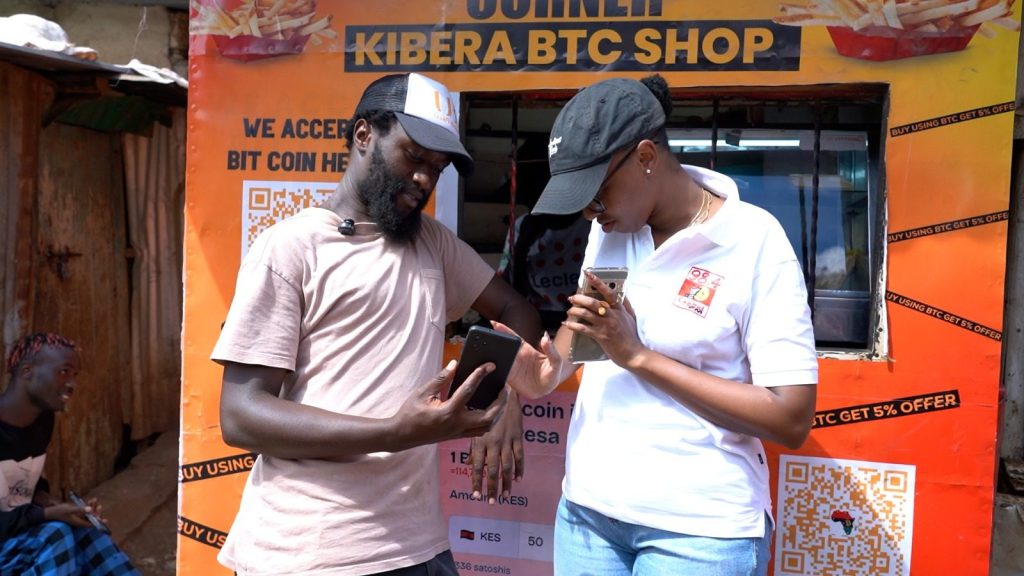
While the mall installations mark the most visible crypto infrastructure in Nairobi’s formal retail economy, Bitcoin has already circulated in lower-income neighborhoods for years.
According to the Capital News, in Soweto West within Kibera, fintech startup Afrobit Africa began Bitcoin-denominated grants in 2022, targeting garbage collectors who lacked IDs, bank accounts, or mobile money access.
Workers receive Bitcoin after weekend clean-ups rather than shillings, with roughly $10,000 injected into the community.
Around 200 Bitcoin users live in Soweto West today, with merchants and motorcycle taxi drivers accepting crypto via the Lightning network for near-zero fees.
Damiano Magak, a 23-year-old garbage collector, said he often prefers Bitcoin over M-PESA, citing higher transaction fees and occasional delays.
Global Crackdown on Crypto ATMs Intensifies
The unregulated emergence of Bitcoin ATMs in Kenya contrasts sharply with mounting international enforcement against similar operations.
Just today, federal prosecutors in Chicago indicted Firas Isa, founder of Crypto Dispensers, in November on money-laundering conspiracy charges alleging his company processed at least $10 million in fraud and drug proceeds through ATMs nationwide between 2018 and 2025.
The charge carries a maximum 20-year sentence, and Isa and Virtual Assets LLC have pleaded not guilty.
Back in October, Australian Home Affairs Minister Tony Burke announced that AUSTRAC would receive powers to restrict or prohibit crypto ATMs after finding that 85 percent of funds from top users were involved in scams.
Australia’s machines surged from 73 in 2022 to over 2,000 by late 2024. The FBI reported nearly 11,000 crypto ATM-related complaints in 2024, totaling more than $246 million, while Federal Trade Commission data showed losses jumped from $12 million in 2020 to $114 million in 2023, with victims aged 60 and above accounting for over two-thirds of cases.


You May Also Like

MicroStrategy’s STRC Perpetual Preferred Stock Hits Record $1.5 Billion Daily Volume

Crypto market maker B2C2 secures MiCA license for EU-wide expansion