The post Michael Saylor’s Strategy Faces Nasdaq & MSCI Delisting as MSTR Stock Drops 57% appeared first on Coinpedia Fintech News Michael Saylor’s Strategy, the company famous for buying huge amounts of Bitcoin, is now in trouble. Its stock (MSTR) is at risk of being delisted from the Nasdaq 100 and MSCI USA indexes after a sharp price crash. Over the last six months, MSTR has performed too worst, dropping more than 57% in the past …The post Michael Saylor’s Strategy Faces Nasdaq & MSCI Delisting as MSTR Stock Drops 57% appeared first on Coinpedia Fintech News Michael Saylor’s Strategy, the company famous for buying huge amounts of Bitcoin, is now in trouble. Its stock (MSTR) is at risk of being delisted from the Nasdaq 100 and MSCI USA indexes after a sharp price crash. Over the last six months, MSTR has performed too worst, dropping more than 57% in the past …

Michael Saylor’s Strategy Faces Nasdaq & MSCI Delisting as MSTR Stock Drops 57%

2025/11/21 14:57
3 min read
For feedback or concerns regarding this content, please contact us at crypto.news@mexc.com
Strategy Bitcoin Purchase

The post Michael Saylor’s Strategy Faces Nasdaq & MSCI Delisting as MSTR Stock Drops 57% appeared first on Coinpedia Fintech News

Michael Saylor’s Strategy, the company famous for buying huge amounts of Bitcoin, is now in trouble. Its stock (MSTR) is at risk of being delisted from the Nasdaq 100 and MSCI USA indexes after a sharp price crash. Over the last six months, MSTR has performed too worst, dropping more than 57% in the past 6 months.

And more importantly, what does this mean for investors who trusted Saylor’s bold Bitcoin plan?

Why is Strategy on the Verge Of Being Delisted?

Strategy’s heavy exposure to Bitcoin as its primary treasury asset has made the company start to behave like a Bitcoin-powered stock. When Bitcoin went up, Strategy’s stock went up even faster. But now the opposite is happening.

Currently Bitcoin price has dropped from its ATH of $126,000 to around $85,000, and this big fall has hit Strategy very hard.

• The MSTR stock fell 40% in just one month

• And more than 57% in the last six months

Because of this huge drop, Strategy is no longer big or stable enough to stay inside the Nasdaq 100 or MSCI USA Index.

Meanwhile, these Indexes have strict rules. They only keep companies that show strong market value, steady trading activity, and good performance. When a stock becomes too small or too weak compared to others, it gets removed, even if it is well-known.

What Happens After Delisting?

JPMorgan analysts have cautioned that MSCI’s January 15, 2026, decision could formalize Strategy’s removal, which would take effect after the February 2026 index rebalancing. 

If Strategy is removed from an index like MSCI USA, passive funds will likely sell their shares. One estimate says such forced selling could total $2.8 billion, and if more indices follow, it might reach up to $8 billion.

However, the company is still active on the market, it is not being removed from Nasdaq itself, only from the Nasdaq 100 and MSCI USA index lists.

If Strategy is removed from an index like MSCI USA, passive funds will likely sell their shares. One estimate says such forced selling could total $2.8 billion, and if more indices follow, it might reach up to $8 billion.

How Will This Affect Bitcoin?

Since Strategy holds 649,870 BTC, worth around $55.65 billion, its stock is often treated as a way for investors to get exposure to Bitcoin through a U.S. stock. If Strategy’s stock drops because of index exclusion, that channel of Bitcoin exposure shrinks.

In the short term, Bitcoin could drop more if people start to think that Strategy might sell BTC to raise money or cover losses. Even the rumor of selling can add pressure.

But if Strategy keeps holding and doesn’t sell, the delisting may not hurt Bitcoin directly.

Market Opportunity
SIX Logo
SIX Price(SIX)
$0.00924
$0.00924$0.00924
+0.10%
USD
SIX (SIX) Live Price Chart
Disclaimer: The articles reposted on this site are sourced from public platforms and are provided for informational purposes only. They do not necessarily reflect the views of MEXC. All rights remain with the original authors. If you believe any content infringes on third-party rights, please contact crypto.news@mexc.com for removal. MEXC makes no guarantees regarding the accuracy, completeness, or timeliness of the content and is not responsible for any actions taken based on the information provided. The content does not constitute financial, legal, or other professional advice, nor should it be considered a recommendation or endorsement by MEXC.

You May Also Like

Shocking OpenVPP Partnership Claim Draws Urgent Scrutiny

Shocking OpenVPP Partnership Claim Draws Urgent Scrutiny

The post Shocking OpenVPP Partnership Claim Draws Urgent Scrutiny appeared on BitcoinEthereumNews.com. The cryptocurrency world is buzzing with a recent controversy surrounding a bold OpenVPP partnership claim. This week, OpenVPP (OVPP) announced what it presented as a significant collaboration with the U.S. government in the innovative field of energy tokenization. However, this claim quickly drew the sharp eye of on-chain analyst ZachXBT, who highlighted a swift and official rebuttal that has sent ripples through the digital asset community. What Sparked the OpenVPP Partnership Claim Controversy? The core of the issue revolves around OpenVPP’s assertion of a U.S. government partnership. This kind of collaboration would typically be a monumental endorsement for any private cryptocurrency project, especially given the current regulatory climate. Such a partnership could signify a new era of mainstream adoption and legitimacy for energy tokenization initiatives. OpenVPP initially claimed cooperation with the U.S. government. This alleged partnership was said to be in the domain of energy tokenization. The announcement generated considerable interest and discussion online. ZachXBT, known for his diligent on-chain investigations, was quick to flag the development. He brought attention to the fact that U.S. Securities and Exchange Commission (SEC) Commissioner Hester Peirce had directly addressed the OpenVPP partnership claim. Her response, delivered within hours, was unequivocal and starkly contradicted OpenVPP’s narrative. How Did Regulatory Authorities Respond to the OpenVPP Partnership Claim? Commissioner Hester Peirce’s statement was a crucial turning point in this unfolding story. She clearly stated that the SEC, as an agency, does not engage in partnerships with private cryptocurrency projects. This response effectively dismantled the credibility of OpenVPP’s initial announcement regarding their supposed government collaboration. Peirce’s swift clarification underscores a fundamental principle of regulatory bodies: maintaining impartiality and avoiding endorsements of private entities. Her statement serves as a vital reminder to the crypto community about the official stance of government agencies concerning private ventures. Moreover, ZachXBT’s analysis…
Share
BitcoinEthereumNews2025/09/18 02:13
Solana Sees $10M Capital Rotation, Eyes $100 Breakout
Solana Sees $10M Capital Rotation, Eyes $100 Breakout

The post Solana Sees $10M Capital Rotation, Eyes $100 Breakout appeared on BitcoinEthereumNews.com. Capital rotation into Solana accelerated this week as traders
Share
BitcoinEthereumNews2026/03/18 00:18
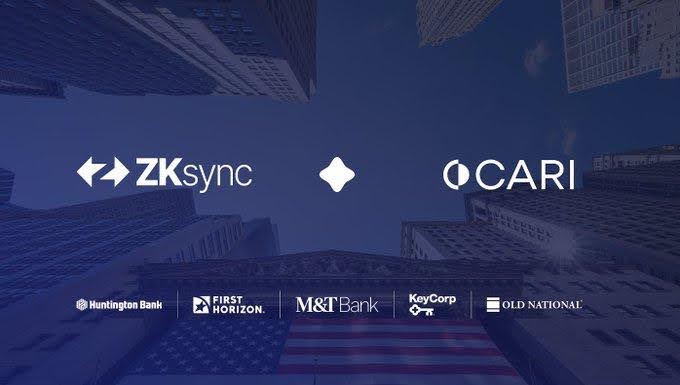
ZKsync Powers Tokenized Deposits in Major U.S. Bank Network

ZKsync Powers Tokenized Deposits in Major U.S. Bank Network

Key Takeaways: Five U.S. regional banks are building a tokenized deposit network on ZKsync. Deposits remain FDIC-insured bank liabilities, not stablecoins. The
Share
Crypto Ninjas2026/03/18 00:41
