Cryptocurrency Markets React to U.S. Jobs Data Amid Federal Reserve Rate Outlook Bitcoin experienced a decline from its 2025 yearly open amid significant market reactions to the latest U.S. employment figures. Despite robust job data suggesting a resilient economy, markets continue to anticipate a potential interest rate cut by the Federal Reserve as early as [...]Cryptocurrency Markets React to U.S. Jobs Data Amid Federal Reserve Rate Outlook Bitcoin experienced a decline from its 2025 yearly open amid significant market reactions to the latest U.S. employment figures. Despite robust job data suggesting a resilient economy, markets continue to anticipate a potential interest rate cut by the Federal Reserve as early as [...]

Bitcoin Bear Thesis Persists After New $93,500 Rejection
For feedback or concerns regarding this content, please contact us at crypto.news@mexc.com
Bitcoin Bear Thesis Persists After New $93,500 Rejection

Cryptocurrency Markets React to U.S. Jobs Data Amid Federal Reserve Rate Outlook

Bitcoin experienced a decline from its 2025 yearly open amid significant market reactions to the latest U.S. employment figures. Despite robust job data suggesting a resilient economy, markets continue to anticipate a potential interest rate cut by the Federal Reserve as early as December. This divergence has led to a complex trading environment, with Bitcoin and other cryptocurrencies maintaining a cautious stance as key resistance levels loom.

Key Takeaways

  • Strong U.S. labor market data did not deter expectations of a rate cut by the Fed in December.
  • Cryptocurrencies are diverging from stock market trends, which are expected to see a strong finish in 2025.
  • Bitcoin faces crucial resistance levels that must be reclaimed to shift from a bearish trend.
  • Market participants remain divided on the future trajectory of interest rates, adding volatility to the space.

Tickers mentioned:
Crypto → $BTC, $ETH
Stocks → None

Sentiment: Neutral

Price impact: Negative. Bitcoin’s retreat reflects caution amid conflicting signals on rate hikes and cuts.

Market context: The ongoing debate over Fed policy continues to influence crypto market dynamics amid broader economic resilience.

Market Reaction to U.S. Employment Data

Data from St. Louis Fed revealed both initial and ongoing jobless claims fell below expectations, indicating ongoing strength in the U.S. labor market. Despite this robust data, markets speculate that the Federal Reserve will proceed with a rate cut at its upcoming December meeting, driven by the widening gap between risk assets and consumer spending.

BTC/USD one-hour chart. Source: Cointelegraph/TradingView

The anticipation of a rate cut is supported by market tools such as the CME FedWatch, which signals a growing probability of easing measures. However, economic analysis points to ongoing tension between inflation concerns, running at around 3%, and the desire to stimulate consumer activity through monetary policy.
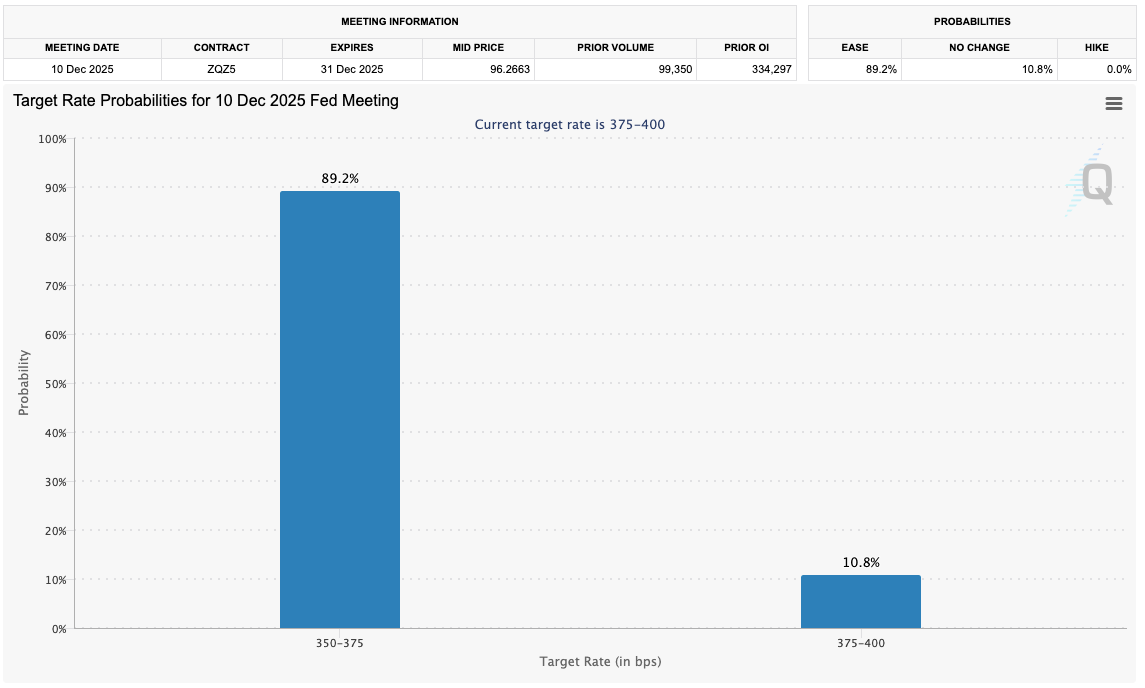
Fed target rate probabilities for December 10 meeting. Source: CME Group FedWatch Tool

Meanwhile, contrasting policies abroad, Japan’s central bank announced a substantial $135 billion stimulus—a move that adds to the global complexity of monetary policy. The country’s simultaneous rate hikes and stimulus injections highlight the fragmented nature of global economic strategies.
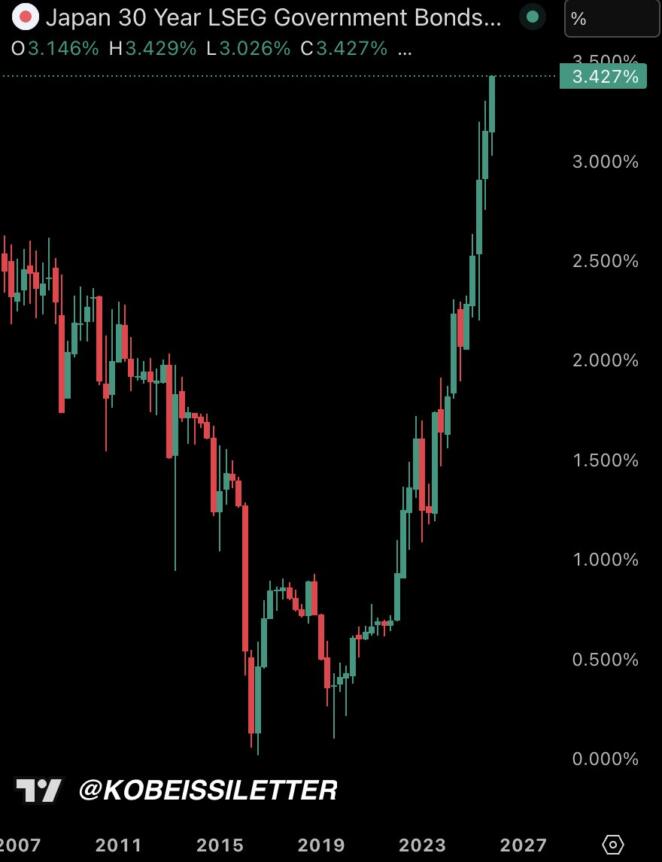
Japan’s 30-year bond chart. Source: The Kobeissi Letter/X

Analysis from Mosaic Asset Company warns that despite market optimism, the path of future rate cuts remains uncertain, with internal divisions creating potential volatility. Nonetheless, early signals suggest a favorable environment for a year-end rally in risk assets, including cryptocurrencies.

Bitcoin’s Bearish Outlook Persists

While the S&P 500 remains close to its all-time highs, Bitcoin and other altcoins continue to show signs of weakness. Resistance levels at around 96,000 to 98,000 dollars need to be cleared, including key moving averages and liquidity zones near 100,000 dollars. Market analysts caution that Bitcoin failing to retake the yearly open indicates the bearish trend remains intact, with key indicators such as RSI and order book liquidity pointing to continued caution.

Further, recent analyses emphasize that the inability of Bitcoin to surpass its beginning-of-year price has solidified the bearish thesis, casting doubt on a swift recovery in the near term. Market participants watch the resistance zones closely, awaiting confirmation of a potential reversal or continuation of the current downtrend.

Investors are advised to approach current market movements with caution, as the conflicting signals from macroeconomic data and monetary policy outlooks continue to create a nuanced and volatile environment for cryptocurrencies.

This article was originally published as Bitcoin Bear Thesis Persists After New $93,500 Rejection on Crypto Breaking News – your trusted source for crypto news, Bitcoin news, and blockchain updates.


Market Opportunity
Wrapped REACT Logo
Wrapped REACT Price(REACT)
$0.01502
$0.01502$0.01502
+21.81%
USD
Wrapped REACT (REACT) Live Price Chart
Disclaimer: The articles reposted on this site are sourced from public platforms and are provided for informational purposes only. They do not necessarily reflect the views of MEXC. All rights remain with the original authors. If you believe any content infringes on third-party rights, please contact crypto.news@mexc.com for removal. MEXC makes no guarantees regarding the accuracy, completeness, or timeliness of the content and is not responsible for any actions taken based on the information provided. The content does not constitute financial, legal, or other professional advice, nor should it be considered a recommendation or endorsement by MEXC.

You May Also Like

Dovish patience with geopolitical risks – TD Securities

Dovish patience with geopolitical risks – TD Securities

The post Dovish patience with geopolitical risks – TD Securities appeared on BitcoinEthereumNews.com. TD Securities analysts characterize the Bank of Canada’s (
Share
BitcoinEthereumNews2026/04/02 21:22
Cashing In On University Patents Means Giving Up On Our Innovation Future

Cashing In On University Patents Means Giving Up On Our Innovation Future

The post Cashing In On University Patents Means Giving Up On Our Innovation Future appeared on BitcoinEthereumNews.com. “It’s a raid on American innovation that would deliver pennies to the Treasury while kneecapping the very engine of our economic and medical progress,” writes Pipes. Getty Images Washington is addicted to taxing success. Now, Commerce Secretary Howard Lutnick is floating a plan to skim half the patent earnings from inventions developed at universities with federal funding. It’s being sold as a way to shore up programs like Social Security. In reality, it’s a raid on American innovation that would deliver pennies to the Treasury while kneecapping the very engine of our economic and medical progress. Yes, taxpayer dollars support early-stage research. But the real payoff comes later—in the jobs created, cures discovered, and industries launched when universities and private industry turn those discoveries into real products. By comparison, the sums at stake in patent licensing are trivial. Universities collectively earn only about $3.6 billion annually in patent income—less than the federal government spends on Social Security in a single day. Even confiscating half would barely register against a $6 trillion federal budget. And yet the damage from such a policy would be anything but trivial. The true return on taxpayer investment isn’t in licensing checks sent to Washington, but in the downstream economic activity that federally supported research unleashes. Thanks to the bipartisan Bayh-Dole Act of 1980, universities and private industry have powerful incentives to translate early-stage discoveries into real-world products. Before Bayh-Dole, the government hoarded patents from federally funded research, and fewer than 5% were ever licensed. Once universities could own and license their own inventions, innovation exploded. The result has been one of the best returns on investment in government history. Since 1996, university research has added nearly $2 trillion to U.S. industrial output, supported 6.5 million jobs, and launched more than 19,000 startups. Those companies pay…

Share
BitcoinEthereumNews2025/09/18 03:26
Unpacking The ‘Extreme Fear’ Gripping Digital Asset Markets

Unpacking The ‘Extreme Fear’ Gripping Digital Asset Markets

The post Unpacking The ‘Extreme Fear’ Gripping Digital Asset Markets appeared on BitcoinEthereumNews.com. Crypto Fear & Greed Index Plummets To 9: Unpacking The
Share
BitcoinEthereumNews2026/04/03 09:13

Starter Gold Rush: Win $2,500!

Starter Gold Rush: Win $2,500!Starter Gold Rush: Win $2,500!

Start your first trade & capture every Alpha move

