BitcoinWorld Crypto Liquidations: The Staggering $187M Wipeout That Crushed Long Positions The cryptocurrency market just witnessed a brutal 24-hour period where over $187 million in positions were forcibly closed. This wave of crypto liquidations disproportionately hammered traders betting on higher prices, offering a stark reminder of the market’s inherent volatility. Let’s break down what happened and what it means for you. What Caused This Massive Wave […] This post Crypto Liquidations: The Staggering $187M Wipeout That Crushed Long Positions first appeared on BitcoinWorld.BitcoinWorld Crypto Liquidations: The Staggering $187M Wipeout That Crushed Long Positions The cryptocurrency market just witnessed a brutal 24-hour period where over $187 million in positions were forcibly closed. This wave of crypto liquidations disproportionately hammered traders betting on higher prices, offering a stark reminder of the market’s inherent volatility. Let’s break down what happened and what it means for you. What Caused This Massive Wave […] This post Crypto Liquidations: The Staggering $187M Wipeout That Crushed Long Positions first appeared on BitcoinWorld.

Crypto Liquidations: The Staggering $187M Wipeout That Crushed Long Positions

2025/12/05 11:10
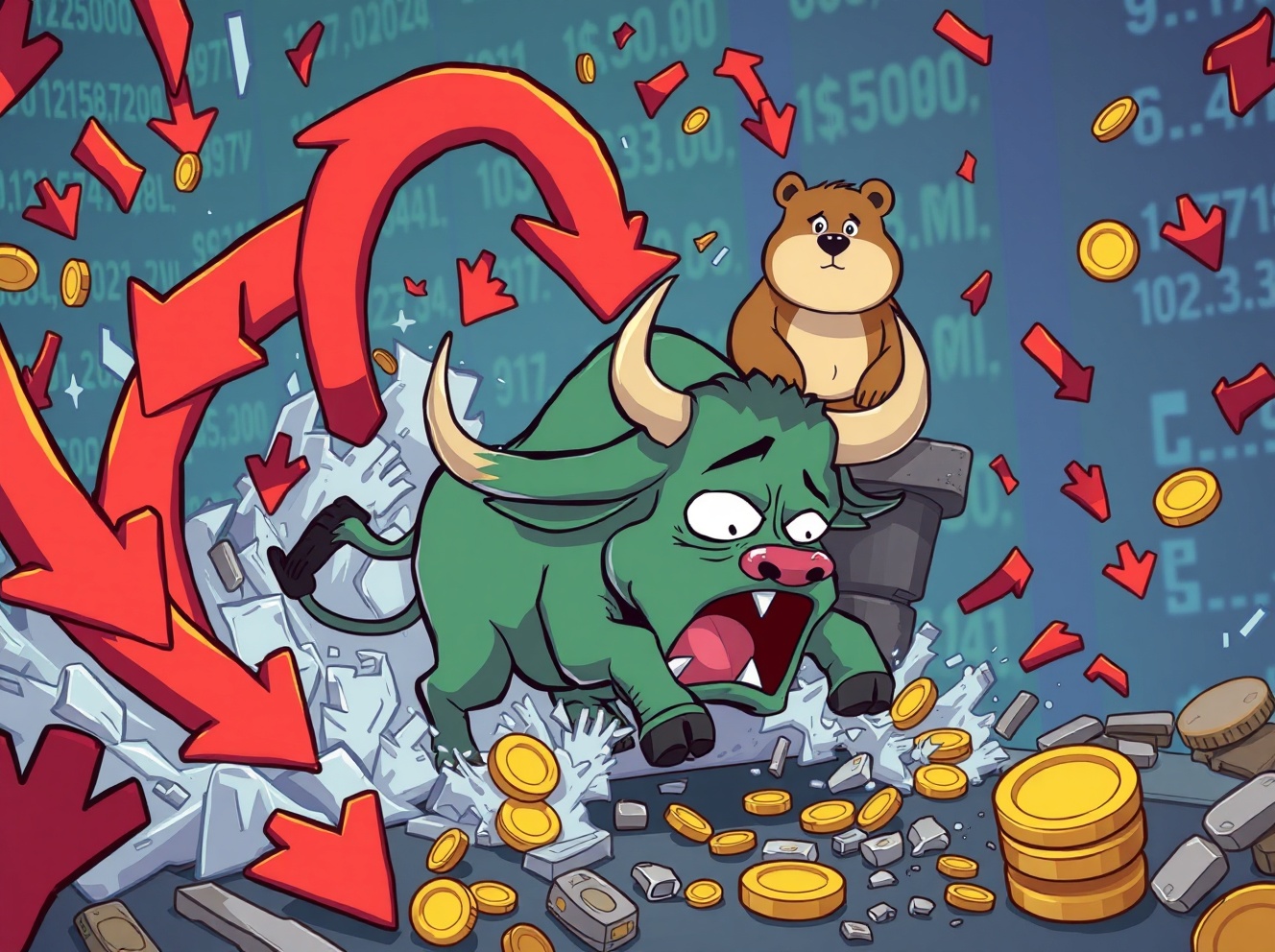
A cartoon illustrating the dramatic crypto liquidations event crushing bullish traders.

BitcoinWorld

Crypto Liquidations: The Staggering $187M Wipeout That Crushed Long Positions

The cryptocurrency market just witnessed a brutal 24-hour period where over $187 million in positions were forcibly closed. This wave of crypto liquidations disproportionately hammered traders betting on higher prices, offering a stark reminder of the market’s inherent volatility. Let’s break down what happened and what it means for you.

What Caused This Massive Wave of Crypto Liquidations?

When traders use leverage in perpetual futures markets, they must maintain a minimum margin. If the market moves against their position and their collateral value falls below this level, exchanges automatically close, or ‘liquidate,’ their trade to prevent further loss. The recent crypto liquidations event, totaling $187 million, was triggered by a sharp price decline that breached critical support levels for many leveraged traders.

A Breakdown of the $187M Liquidation Carnage

The data reveals a clear and painful trend: the majority of losses came from long positions. Here is the detailed breakdown:

  • Bitcoin (BTC): $90.06 million liquidated. A significant 67.33% of this came from long positions.
  • Ethereum (ETH): $87.9 million liquidated, with 63.5% being longs.
  • Solana (SOL): $9.37 million liquidated. An overwhelming 87.52% were long positions caught in the downdraft.

This pattern shows that bullish sentiment was overly crowded, leaving many traders exposed when the market turned.

Why Were Long Positions Hit So Hard?

The dominance of long position crypto liquidations points to a classic market scenario. Before the drop, optimism likely prevailed, encouraging traders to take leveraged long bets. However, when prices fell rapidly, these highly leveraged longs became the most vulnerable. Their forced selling then added more downward pressure, creating a cascade effect that amplified the initial move. This is a key mechanism behind market volatility spikes.

How Can Traders Navigate Future Liquidation Risks?

While crypto liquidations are a market reality, you can manage your risk. First, always use stop-loss orders to define your exit point before you enter a trade. Second, employ sensible leverage; higher leverage magnifies both gains and losses. Third, never invest more than you can afford to lose, especially with margin trading. Finally, stay informed about market sentiment and technical levels to avoid getting caught in crowded trades.

The Bigger Picture: What Do These Liquidations Signal?

Large-scale crypto liquidations often act as a reset button, flushing out excessive leverage from the system. While painful for those affected, this can lead to a healthier market foundation with less speculative froth. It serves as a powerful lesson on the importance of risk management over blind speculation. The market’s recovery will depend on broader factors, but the removal of weak leveraged positions can sometimes pave the way for more sustainable moves.

In summary, the recent $187 million liquidation event was a forceful demonstration of crypto market risk. Long positions bore the brunt of the damage across major assets like Bitcoin, Ethereum, and Solana. This episode underscores a non-negotiable rule for survival: robust risk management is not optional. By understanding the forces behind these crypto liquidations, you can trade with more awareness and better protect your capital from future storms.

Frequently Asked Questions (FAQs)

What are crypto liquidations?
Crypto liquidations occur when an exchange forcibly closes a trader’s leveraged position because they can no longer meet the margin requirements, usually due to the market moving against them.

Why were mostly long positions liquidated?
This indicates that before the price drop, there was a high concentration of traders using leverage to bet on prices going up (longs). The sudden downturn hit these crowded positions hardest.

Do large liquidations mean the market will crash further?
Not necessarily. While liquidations can cause short-term selling pressure, they also remove weak leverage from the market, which can sometimes stabilize prices and allow for a rebound.

How can I avoid getting liquidated?
Use lower leverage, set strategic stop-loss orders, maintain adequate margin collateral above minimum requirements, and avoid overexposing your portfolio to a single trade.

Is trading perpetual futures riskier than spot trading?
Yes, significantly. Perpetual futures involve leverage, which amplifies potential gains and losses, making you susceptible to liquidation. Spot trading, where you own the asset outright, does not carry this specific risk.

Where can I track liquidation data?
Several analytics websites like Coinglass provide real-time data on crypto liquidations across exchanges, helping you gauge market leverage and sentiment.

Found this breakdown of the recent crypto liquidations helpful? Share this article with fellow traders on Twitter or Telegram to help them understand market risks and improve their strategy. Knowledge is the best defense in a volatile market.

To learn more about the latest crypto market trends, explore our article on key developments shaping Bitcoin and Ethereum price action.

This post Crypto Liquidations: The Staggering $187M Wipeout That Crushed Long Positions first appeared on BitcoinWorld.

Disclaimer: The articles reposted on this site are sourced from public platforms and are provided for informational purposes only. They do not necessarily reflect the views of MEXC. All rights remain with the original authors. If you believe any content infringes on third-party rights, please contact service@support.mexc.com for removal. MEXC makes no guarantees regarding the accuracy, completeness, or timeliness of the content and is not responsible for any actions taken based on the information provided. The content does not constitute financial, legal, or other professional advice, nor should it be considered a recommendation or endorsement by MEXC.

You May Also Like

Spot XRP ETFs Nears $1B AUM Milestone as Streak of No Outflows Continues

Spot XRP ETFs Nears $1B AUM Milestone as Streak of No Outflows Continues

The post Spot XRP ETFs Nears $1B AUM Milestone as Streak of No Outflows Continues appeared on BitcoinEthereumNews.com. The U.S. Spot XRP ETFs is now near the $1 billion mark of assets under management in less than a month since their launch. This follows from the product maintaining consistent inflows with no single outflow recorded yet. XRP ETFs See Continuous Inflows Since Launch Since its first launch on November 14, spot XRP funds have seen continued inflows. According to data from SoSoValue, the total inflows into these funds have now risen to $881.25 million. The funds attracted $12.84 million of new money yesterday. The daily trading volumes remained stable at $26.74 million. Source: SoSoValue Reaching nearly $1 billion in less than 30 days makes the product among the fastest growing crypto investment products in the United States. Notably, Spot Solana ETFs also accumulated over $600 million since their launch. On the other hand, Bitcoin and Ethereum ETFs are holding about $58 billion and about $13 billion in assets under management respectively. Much of the early growth traces back to the first Canary Capital’s XRP ETF. Its opening on November 13 brought one of the strongest crypto ETF openings to date. It saw more than $59 million in first-day trading volume and $245 million in net inflows. Shortly after Canary’s launch, firms like Grayscale, Bitwise, and Franklin Templeton introduced their own XRP products. Bitwise’s fund also did well on its launch, recording over $105 million in early inflows. Meanwhile, the market is getting ready for yet another addition. 21Shares’ U.S. spot XRP fund also got the green light from the SEC. It will trade under the ticker TOXR on the Cboe BZX Exchange. XRP Products Keep Gaining Momentum in the Market The token’s funds continued to expand this week. REX Shares and Tuttle Capital have launched the T-REX 2X Long XRP Daily Target ETF. This new ETF allows traders…
Share
BitcoinEthereumNews2025/12/05 14:11
Headwind Helps Best Wallet Token

Headwind Helps Best Wallet Token

The post Headwind Helps Best Wallet Token appeared on BitcoinEthereumNews.com. Google has announced the launch of a new open-source protocol called Agent Payments Protocol (AP2) in partnership with Coinbase, the Ethereum Foundation, and 60 other organizations. This allows AI agents to make payments on behalf of users using various methods such as real-time bank transfers, credit and debit cards, and, most importantly, stablecoins. Let’s explore in detail what this could mean for the broader cryptocurrency markets, and also highlight a presale crypto (Best Wallet Token) that could explode as a result of this development. Google’s Push for Stablecoins Agent Payments Protocol (AP2) uses digital contracts known as ‘Intent Mandates’ and ‘Verifiable Credentials’ to ensure that AI agents undertake only those payments authorized by the user. Mandates, by the way, are cryptographically signed, tamper-proof digital contracts that act as verifiable proof of a user’s instruction. For example, let’s say you instruct an AI agent to never spend more than $200 in a single transaction. This instruction is written into an Intent Mandate, which serves as a digital contract. Now, whenever the AI agent tries to make a payment, it must present this mandate as proof of authorization, which will then be verified via the AP2 protocol. Alongside this, Google has also launched the A2A x402 extension to accelerate support for the Web3 ecosystem. This production-ready solution enables agent-based crypto payments and will help reshape the growth of cryptocurrency integration within the AP2 protocol. Google’s inclusion of stablecoins in AP2 is a massive vote of confidence in dollar-pegged cryptocurrencies and a huge step toward making them a mainstream payment option. This widens stablecoin usage beyond trading and speculation, positioning them at the center of the consumption economy. The recent enactment of the GENIUS Act in the U.S. gives stablecoins more structure and legal support. Imagine paying for things like data crawls, per-task…
Share
BitcoinEthereumNews2025/09/18 01:27