

Digital lending drives FCMB’s digital revenue to N113.6b in first 9 months of 2025
In First City Monument Bank Group’s (FCMB) nine-month financial results for the period ending 31st September 2025, the company saw a significant surge in its digital business arm.
The section, which comprises digital lending, payments and wealth management, has supported the group’s digital transformation. By creating its own core banking platform, FCMB is accelerating innovation, reducing dependency on third-party vendors and lowering technology ownership costs.
During the period under review, the digital business contributed 13.7% (N113.6 billion) to FCMB’s total gross revenue of N828.1 billion.
The result means that the digital business saw 54% year-on-year growth in digital revenues from N73.6 billion as at September 2024 to N113.6 billion in September 2025. This further shows that more customers are using FCMB’s apps, platforms, loans, and payment services.
The digital services initiative has enabled FCMB to attract more customers and increase the utilisation of its digital channels. In October, the group noted that innovative financial offerings, such as mobile wallets and digital lending, further expand the revenue base.
“The implementation of digital banking has significantly improved FCMB’s operational efficiency by automating various processes, resulting in reduced manual workloads, reduced costs, and enhanced profit margins,” the group said.
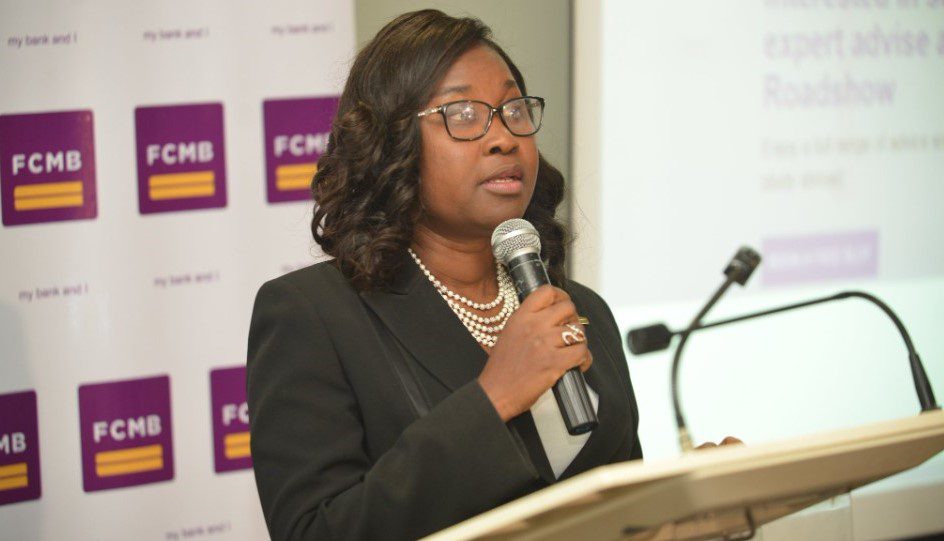 FCMB CEO and MD, Yemisi Edun
Notably, the core banking platform has been deployed across its three operating companies: Commercial and Retail Banking, Investment Banking, and Asset and Wealth Management.
Also Read: 16 banks have met the new CBN minimum capital base – Cardoso
The shape of FCMB’s digital business
The digital business arm, comprising three divisions, contributed N133.6 billion to the section’s revenue during the nine months ended September 31st, 2025. The breakdown is as follows.
Digital lending
Digital lending is the largest contributor, 74.4% (N84.5 billion). With a large contributing factor, most of FCMB’s digital money is earned from customers who borrow through digital channels.
The reason behind the growth is not far-fetched. In October, the group said it recorded loan disbursements of over N357 billion and over 1.6 million individual loans granted in 2024 through the digital channels.
FCMB, through digital lending, offers FastCash loans, Salary-plus loans for salary account holders, SME digital loans and Nano loans. In 2024, the group reportedly disbursed 18,000 loans to SMEs.

Payment
Payments recorded a 23% (N26.1 billion) contribution to the group’s Digital Business, signalling a positive customer response to increased use of digital payments.
The digital payment segment includes services available through the FCMB mobile app and FCMBOnline Business platforms, allowing for transfers, bill payments, and bulk payments. The bank also offers specific collection platforms like FCMBCollect to help businesses manage multiple payment inflows and inventory.
Other digital payment features are POS transactions, card payments, online merchant payments, USSD and app payments.
Wealth Management
At a 2.6% (3 billion) contribution to Digital Business, the group has witnessed growth in its Asset Under Management (AUM), supported by digital innovation.
The digital wealth propositions on the FCMB app include mutual funds, digital savings, investment advisories and asset management tools.
| Digital Segment | Contribution | Revenue |
| Lending | 74.4% | N84.5 billion |
| Payments | 23% | N26.1 billion |
| Wealth | 2.6% | N3 billion |
| Total | 100% | N113.6 billion |
In its continued push for digital banking innovation, the group recently launched a digital cross-border global banking and payments platform, www.getrova.com, in the U.K. and Nigeria.
The initiative aims to enhance remittance, trade flows, and the cross-border payments platform, known as the Rova App. The group seeks to support remittances and inbound and outbound payments to and from Africa for SMEs and individuals.
FCMB’s profit
FCMB reported a profit before tax of N134.497 billion for the nine months ended 30 September 2025, representing a 46.2% increase from the N91.83 billion recorded in the same period last year.
In terms of revenue, the Group recorded a 40.89% growth in gross earnings, totalling N828.128 billion, up from N587.773 billion in the same period of 2024.
In the financial result, the Group said it has completed its public offer, positioning the company to meet the N500 billion capital requirement set by the Central Bank of Nigeria (CBN). FCMB confirmed that it is also on track to finalise the sale of a minority stake in one of its subsidiaries before the end of December.


You May Also Like

UN Deploys AI Platform to Monitor Global Hunger Risks in Real Time

Trump Iran Talks: Historic Diplomatic Breakthrough May Begin This Friday




