Despite leading the world in grassroots adoption, Africa is largely absent from the infrastructure layer of the crypto…Despite leading the world in grassroots adoption, Africa is largely absent from the infrastructure layer of the crypto…

Crypto mining: Africa is missing out on a key pillar of the global digital economy

2025/12/09 22:00
4 min read
For feedback or concerns regarding this content, please contact us at crypto.news@mexc.com

Despite leading the world in grassroots adoption, Africa is largely absent from the infrastructure layer of the crypto ecosystem. The continent is effectively invisible in the latest rankings of global crypto mining, and the economic gap is becoming impossible to ignore.

A November 2025 study by decentralised exchange ApeX Protocol reveals the extent to which crypto mining has concentrated in the Northern Hemisphere, highlighting a stark disconnect: while African nations are rapidly adopting digital assets, they remain completely shut out of the industry’s value creation.

That absence carries real economic consequences.

According to the research, China alone produces more than one-fifth of the world’s crypto output. Remarkably, it uses just 0.33% of its total power capacity for mining. The United States goes further, handling nearly 38% of global crypto mining, with heavier pressure on its electricity grid.
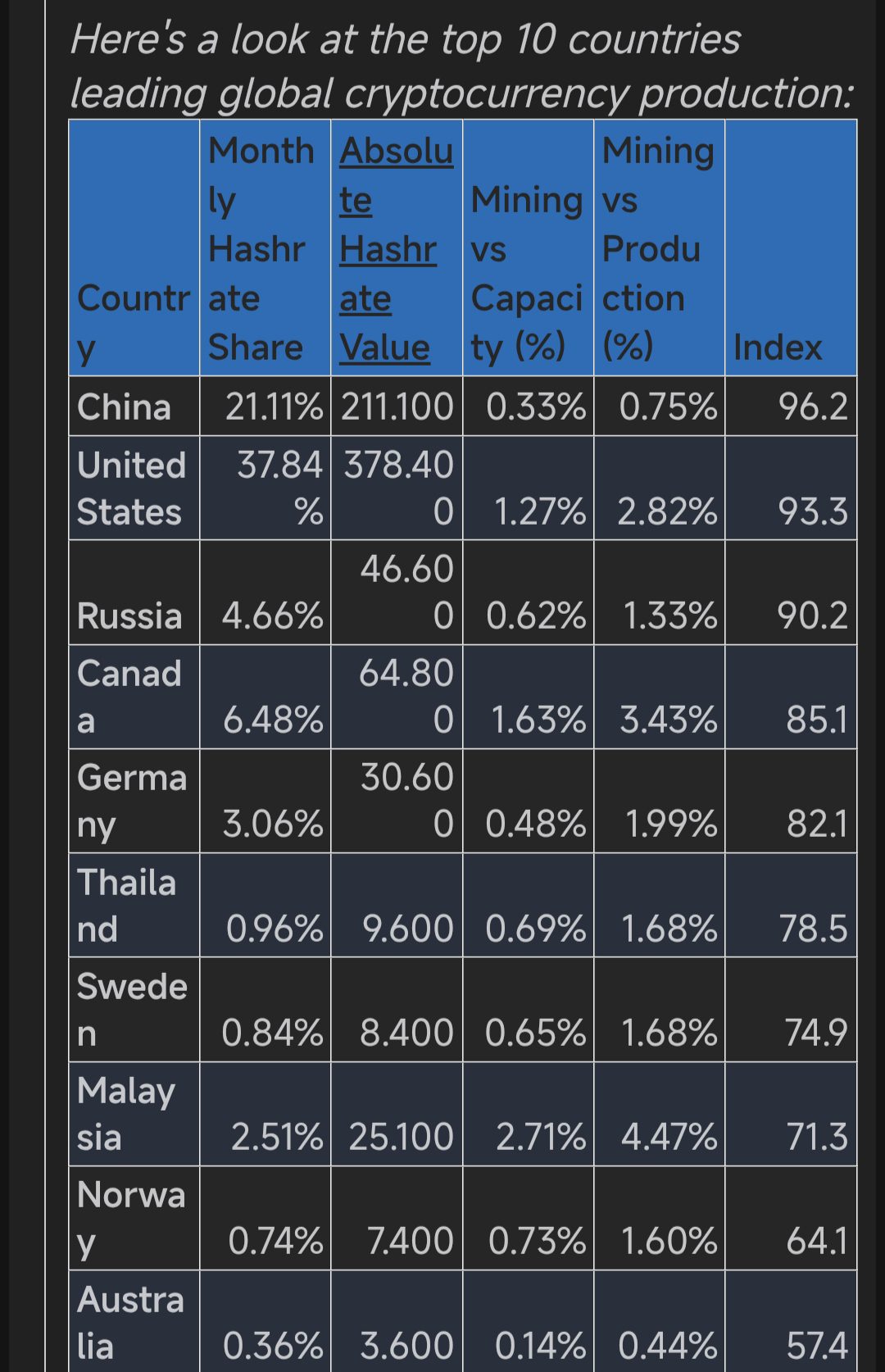
Africa is missing out on a key pillar of the global digital economy – crypto miningTop 10 crypto-producing countries

Russia, Canada and Germany complete the top five. Each has built a balance between computing power, grid resilience and energy efficiency. Even countries with smaller economies, such as Malaysia and Thailand, are making deliberate moves.

Malaysia now dedicates close to 5% of its electricity production to cryptocurrency mining, among the highest ratios globally.

What stands out most is not who is on the list, but who is not. No African country appears among the top global crypto producers. This absence is striking given Africa’s growing role in cryptocurrency adoption, peer-to-peer trading, and blockchain innovation.

Across Nigeria, Kenya, South Africa and Ghana, crypto usage has surged over the past five years. Africans increasingly rely on digital assets for remittances, inflation hedging and cross-border payments. Yet when it comes to the infrastructure layer of crypto, where value creation is capital-intensive and long-term, Africa remains largely excluded.

There are structural reasons for this.

Many African power grids remain fragile, expensive, or unreliable. Large-scale crypto mining requires stable electricity, predictable regulation and access to capital.

Countries like China and the US benefit from mature energy markets, surplus power capacity, and clear industrial policy frameworks. In comparison, African governments often view mining as a risk rather than an opportunity.

That caution, however, may be costing the continent a seat at the table.

Meanwhile, it’s important to point out that the absence is not due to a lack of potential. Many African countries hold structural advantages that mining operators actively seek, like surplus energy capacity, especially from hydroelectric, solar, and wind sources.

Others flare or waste natural gas that could be converted into mining power.

Africa is missing out on a key pillar of the global digital economy – crypto miningCrypto mining site

The ApeX Protocol index assessed countries across four areas. These included global hashrate share, total computing power, electricity efficiency and the strain placed on national grids. Scores ranged from 0 to 100, rewarding countries that mine at scale while keeping power systems stable.

China topped the index with a score of 96.2. The US followed closely on 93.3. Russia’s relatively low energy usage kept it competitive, while Canada’s higher draw from its grid slightly lowered its score despite strong output.

Energy efficiency is rewriting the crypto mining map

The data makes one thing clear. This is no longer about cheap electricity alone. It is about efficiency, grid planning and regulatory clarity.

Germany is a useful example. Despite high energy prices and a complex power market, it controls over 3% of global crypto production. Mining there consumes less than 0.5% of national electricity capacity. That balance keeps political pressure low and investor interest steady.

Malaysia shows the opposite risk. Its aggressive allocation of energy to crypto mining boosts output but increases grid strain. As the ApeX Protocol spokesperson noted, cryptocurrency mining has become an economic sector governments cannot ignore. Checks and balances are now essential.

Africa could learn from both models. Instead, many governments continue to treat crypto mining as a regulatory threat rather than an industrial opportunity. In some cases, outright bans remain on the table. In others, electricity tariffs are unpredictable, discouraging long-term investment.
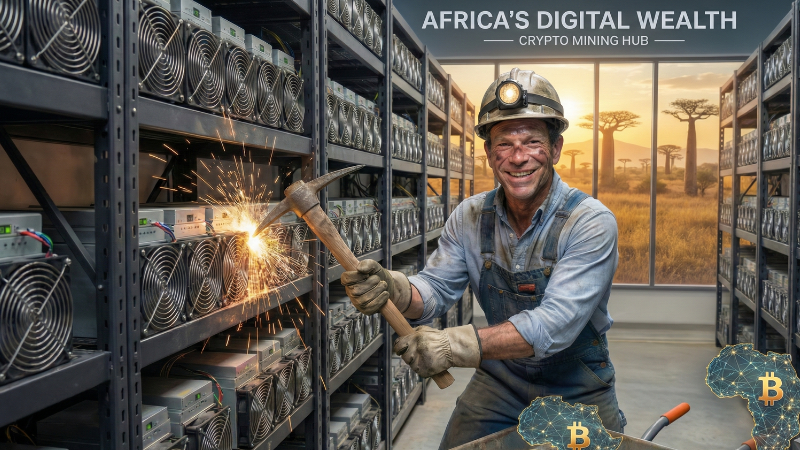
Africa is missing out on a key pillar of the global digital economy – crypto mining

This caution has costs. Crypto mining is capital-intensive. It creates demand for data centres, grid upgrades, fibre connectivity and skilled labour. It can anchor renewable energy projects that struggle to attract industrial buyers. It also keeps digital value creation within national borders rather than exporting it.

Without a coordinated framework, Africa risks repeating a familiar pattern. Raw resources and energy potential will exist, but the value creation will happen elsewhere.

The global crypto mining industry is consolidating fast. Hashrate is concentrated in countries that make early, deliberate choices. Every year of delay narrows the window for late entrants.

For African economies facing youth unemployment, fragile currencies and energy monetisation challenges, this is a missed strategic play. Crypto mining is not a cure-all. But neither is it a fringe activity anymore.


Market Opportunity
Solayer Logo
Solayer Price(LAYER)
$0.08138
$0.08138$0.08138
+1.91%
USD
Solayer (LAYER) Live Price Chart
Disclaimer: The articles reposted on this site are sourced from public platforms and are provided for informational purposes only. They do not necessarily reflect the views of MEXC. All rights remain with the original authors. If you believe any content infringes on third-party rights, please contact crypto.news@mexc.com for removal. MEXC makes no guarantees regarding the accuracy, completeness, or timeliness of the content and is not responsible for any actions taken based on the information provided. The content does not constitute financial, legal, or other professional advice, nor should it be considered a recommendation or endorsement by MEXC.

You May Also Like

Revolutionary: CME SOL XRP Futures Options Set to Transform Crypto Trading

Revolutionary: CME SOL XRP Futures Options Set to Transform Crypto Trading

BitcoinWorld Revolutionary: CME SOL XRP Futures Options Set to Transform Crypto Trading Exciting news is rippling through the cryptocurrency world! The U.S. Chicago Mercantile Exchange (CME), a titan in traditional finance, is reportedly planning to launch CME SOL XRP futures options. This significant development, initially reported by Walter Bloomberg, marks a pivotal moment for institutional involvement in the altcoin market. It signals a new era for how Solana (SOL) and Ripple (XRP) might be traded, potentially opening doors to broader adoption and increased market maturity. What Does the Launch of CME SOL XRP Futures Mean for Crypto? When an institution like CME, known for its rigorous standards and vast trading volume, enters a new market, it brings a wave of legitimacy. The introduction of CME SOL XRP futures options indicates a growing acceptance of these digital assets within mainstream finance. This move could fundamentally change how investors perceive and interact with SOL and XRP. Futures options are financial derivatives that give traders the right, but not the obligation, to buy or sell an underlying asset at a specific price on or before a certain date. For SOL and XRP, this means: Enhanced Price Discovery: More participants and trading volume can lead to more efficient and accurate pricing. Institutional Access: It provides regulated avenues for large institutional investors to gain exposure to SOL and XRP without directly owning the underlying assets. Risk Management: Traders can use these options to hedge against potential price fluctuations in their existing SOL and XRP holdings. Why Are SOL and XRP Chosen for CME SOL XRP Futures? The selection of Solana (SOL) and Ripple (XRP) for these new futures options is not arbitrary. Both cryptocurrencies hold significant positions in the market and offer distinct value propositions: Solana (SOL): Known for its high-performance blockchain, offering fast transaction speeds and low costs. Its robust ecosystem supports numerous decentralized applications (dApps), NFTs, and DeFi projects, attracting considerable developer and user interest. Ripple (XRP): Primarily focused on facilitating fast, low-cost international payments for financial institutions. Despite ongoing regulatory discussions, XRP maintains a strong market presence and a dedicated community, highlighting its potential for cross-border transactions. Their substantial market capitalization and existing liquidity make them attractive candidates for institutional-grade derivative products. This choice reflects a strategic assessment by CME of assets that can sustain significant trading interest and volume. Navigating the Landscape: Opportunities and Considerations for CME SOL XRP Futures The introduction of CME SOL XRP futures options presents a wealth of opportunities, yet it also comes with important considerations. On the opportunity front, we can expect increased liquidity, which benefits all market participants by making it easier to buy and sell without significant price impact. Moreover, it could attract new capital from traditional financial players who prefer regulated products. However, traders and investors should also consider the implications: Market Volatility: While derivatives can offer hedging, they can also amplify market movements. Regulatory Clarity: The regulatory landscape for cryptocurrencies, particularly for XRP, continues to evolve. CME’s move might encourage further clarity but also means ongoing scrutiny. Learning Curve: Understanding futures options requires a certain level of financial literacy, which new entrants to the crypto market may need to develop. These products offer sophisticated tools for managing exposure and speculating on price movements, but they demand a careful approach. What’s Next for the Crypto Market with CME SOL XRP Futures? The reported launch of CME SOL XRP futures options is more than just a new product offering; it represents a significant milestone in the ongoing convergence of traditional finance and the digital asset space. It underscores the growing maturity of the cryptocurrency market and its increasing integration into global financial systems. As institutional interest continues to surge, we can anticipate further innovation and a broader range of regulated products for other altcoins. This development is poised to offer sophisticated tools for investors and traders, potentially stabilizing market dynamics while simultaneously introducing new avenues for growth and investment. The crypto market is evolving rapidly, and CME’s latest initiative is a clear indicator of this exciting trajectory. To learn more about the latest crypto market trends, explore our article on key developments shaping the cryptocurrency market institutional adoption. Frequently Asked Questions (FAQs) What is the Chicago Mercantile Exchange (CME)? The CME is one of the world’s largest and most diverse derivatives marketplaces, offering a wide range of futures and options products across various asset classes, including equities, commodities, and now, expanding into specific cryptocurrencies. What are futures options in the context of SOL and XRP? Futures options for SOL and XRP are financial contracts that give the holder the right, but not the obligation, to buy or sell SOL or XRP futures contracts at a predetermined price on or before a specific date. They allow for hedging and speculation on price movements. Why are Solana (SOL) and Ripple (XRP) chosen for these new options? SOL and XRP were likely chosen due to their significant market capitalization, established liquidity, and distinct use cases within the crypto ecosystem, making them attractive for institutional-grade derivative products. How might CME SOL XRP futures options affect the prices of SOL and XRP? The introduction of these options could lead to increased liquidity and institutional participation, potentially influencing price discovery and stability. However, like all derivatives, they can also contribute to market volatility. When are these CME SOL XRP futures options expected to launch? While Walter Bloomberg reported CME’s plans, an official launch date has not yet been publicly announced by CME. Market participants should monitor official CME channels for updates. If you found this article insightful, please consider sharing it with your network! Help us spread the word about the exciting developments in the crypto space by sharing this article on your social media platforms. This post Revolutionary: CME SOL XRP Futures Options Set to Transform Crypto Trading first appeared on BitcoinWorld.
Share
Coinstats2025/09/18 00:45
Swap xStocks Tokens Instantly on StealthEX

Swap xStocks Tokens Instantly on StealthEX

Discover 10 xStocks tokenized stock tokens — TSLAX, NVDAX, SPYX & more — now available to swap for 2,000+ cryptos on StealthEX. No registration required. The post
Share
Stealthex2026/03/27 14:40
UK Targets Southeast Asian Crypto Networks with Major Sanctions

UK Targets Southeast Asian Crypto Networks with Major Sanctions

The post UK Targets Southeast Asian Crypto Networks with Major Sanctions appeared on BitcoinEthereumNews.com. In a bold strategy to tackle crypto-enabled scams,
Share
BitcoinEthereumNews2026/03/27 14:22