Ethereum’s Vision as the Internet’s Operating System Draws Closer The Ethereum network, often dubbed a decentralized layer-1 blockchain executing smart contractsEthereum’s Vision as the Internet’s Operating System Draws Closer The Ethereum network, often dubbed a decentralized layer-1 blockchain executing smart contracts

Ethereum: The Linux of the Open Internet of Value

Ethereum: The Linux Of The Open Internet Of Value

Ethereum’s Vision as the Internet’s Operating System Draws Closer

The Ethereum network, often dubbed a decentralized layer-1 blockchain executing smart contracts, is increasingly being likened to an open-source operating system similar to Linux. Ethereum co-founder Vitalik Buterin emphasized that, like Linux, Ethereum’s open-source architecture enables extensive customization through layer-2 scaling solutions, fostering scalability and user autonomy.

In an insightful comparison, Buterin explained that just as Linux provides value to billions globally—serving individuals, enterprises, and governments—without sacrificing its decentralized ethos, Ethereum aspires to function as the backbone of the internet. “We must ensure that Ethereum’s layer-1 remains the trusted home for finance, identity, social interactions, and governance, empowering users to operate independently of intermediaries,” he stated.

Source: Vitalik Buterin

This analogy underscores the long-term vision of Ethereum as a versatile operating system for the internet—facilitating distributed computation, secure value transfer, and consensus on a global scale. Building on this foundation, the Ethereum Foundation aims to create a network that balances scalability with decentralization, ensuring broad participation and resilience.

Expanding Layer-2 Ecosystem and Persistent Challenges

Currently, the Ethereum ecosystem hosts approximately 127 layer-2 networks, according to data from L2Beat. Proponents argue that this diverse ecosystem enhances user options and cements Ethereum’s position as a scalable platform. Layer-2 solutions, from rollups to sidechains, enable high throughput and reduced transaction costs, which are critical for mainstream adoption.

Despite the promising prospects, critics highlight hurdles such as an overabundance of competing layer-2 networks. Some argue that this proliferation leads to ecosystem fragmentation and cannibalizes the base layer’s revenue, which saw a significant decline following the March 2024 Dencun upgrade. The risk is that multiple high-performance chains operate in silos, trapping user liquidity within isolated pools and diminishing the overall user experience.
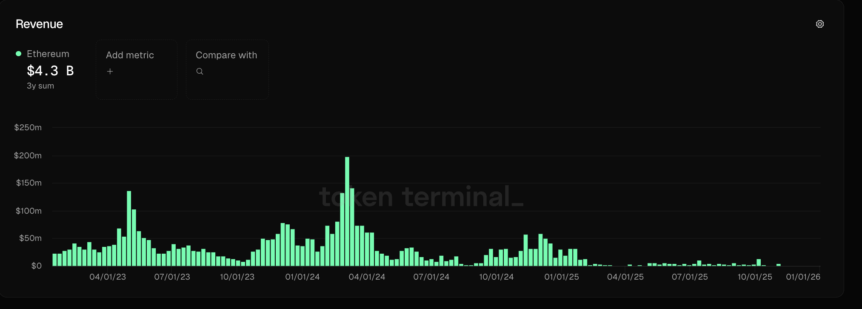
Ethereum layer-1 revenueEthereum layer-1 revenue. Source: Token Terminal

Supporters argue that the modular, rollup-centric scaling approach provides flexibility for experimentation, allowing teams to develop multiple high-throughput chains tailored to diverse use cases. Anurag Arjun, co-founder of Ethereum layer-2 Polygon, noted that this architecture enables innovation by testing different execution environments.

However, he warned that without true interoperability, the ecosystem risks further fragmentation, which could impede liquidity flow and degrade the user experience. Balancing innovation with cohesive integration remains a critical challenge as Ethereum advances toward its vision of a decentralized internet operating system.

This article was originally published as Ethereum: The Linux of the Open Internet of Value on Crypto Breaking News – your trusted source for crypto news, Bitcoin news, and blockchain updates.


Market Opportunity
OpenLedger Logo
OpenLedger Price(OPEN)
$0.16538
$0.16538$0.16538
-0.28%
USD
OpenLedger (OPEN) Live Price Chart
Disclaimer: The articles reposted on this site are sourced from public platforms and are provided for informational purposes only. They do not necessarily reflect the views of MEXC. All rights remain with the original authors. If you believe any content infringes on third-party rights, please contact service@support.mexc.com for removal. MEXC makes no guarantees regarding the accuracy, completeness, or timeliness of the content and is not responsible for any actions taken based on the information provided. The content does not constitute financial, legal, or other professional advice, nor should it be considered a recommendation or endorsement by MEXC.

You May Also Like

Ripple acquires UK approvals to expand payments business

Ripple acquires UK approvals to expand payments business

Ripple will expand its payments business in the UK after securing key approvals from the country’s top financial regulator. The company behind the XRP cryptocurrency
Share
Coinstats2026/01/10 07:45
Tokyo’s Metaplanet Launches Miami Subsidiary to Amplify Bitcoin Income

Tokyo’s Metaplanet Launches Miami Subsidiary to Amplify Bitcoin Income

Metaplanet Inc., the Japanese public company known for its bitcoin treasury, is launching a Miami subsidiary to run a dedicated derivatives and income strategy aimed at turning holdings into steady, U.S.-based cash flow. Japanese Bitcoin Treasury Player Metaplanet Opens Miami Outpost The new entity, Metaplanet Income Corp., sits under Metaplanet Holdings, Inc. and is based […]
Share
Coinstats2025/09/18 00:32
Italy passes law on AI outlining privacy and child access

Italy passes law on AI outlining privacy and child access

The post Italy passes law on AI outlining privacy and child access appeared on BitcoinEthereumNews.com. Italy has formally passed a sweeping new law to regulate artificial intelligence, becoming the first member of the European Union to roll out comprehensive legislation in step with the bloc’s landmark AI Act. The Italian Senate granted final approval after a year of debate, concluding what Prime Minister Giorgia Meloni’s government described as a decisive step in shaping how new technologies are deployed across the country. Italy sets tough penalties for offenders The legislation, ministers argue, lays out the boundaries for human-centric, transparent, and safe use of AI while balancing the need to foster innovation, cybersecurity, and economic growth. The law casts its net widely, and it stretches into healthcare, schools, the justice system, workplaces, sport, and the public sector. AI access for children under 14 has also been tightened, and it now requires parental consent. “This law brings innovation back within the perimeter of the public interest, steering AI toward growth, rights and full protection of citizens.” Alessio Butti, the undersecretary for digital transformation. Lawmakers also opted for a hard line on abuses. A new offence has been added to the criminal code covering the unlawful spread of AI-generated or manipulated content, such as deepfakes. Anyone found guilty faces between one and five years in prison if their actions cause harm. Using AI to commit fraud, identity theft, market manipulation, or money laundering will now be treated as an aggravating circumstance, raising potential sentences by a third. Judges remain the sole authority in legal rulings, though courts are empowered to demand rapid takedowns of illicit material. Government agencies to oversee its implementation Responsibility for enforcing the regime lies with the Agency for Digital Italy and the National Cybersecurity Agency, though existing financial watchdogs such as the Bank of Italy and Consob retain powers in their own spheres. The Department…
Share
BitcoinEthereumNews2025/09/18 06:05