

CES 2026 Live: The Thrilling Rise of Physical AI and Robots Dominates the Tech Landscape
BitcoinWorld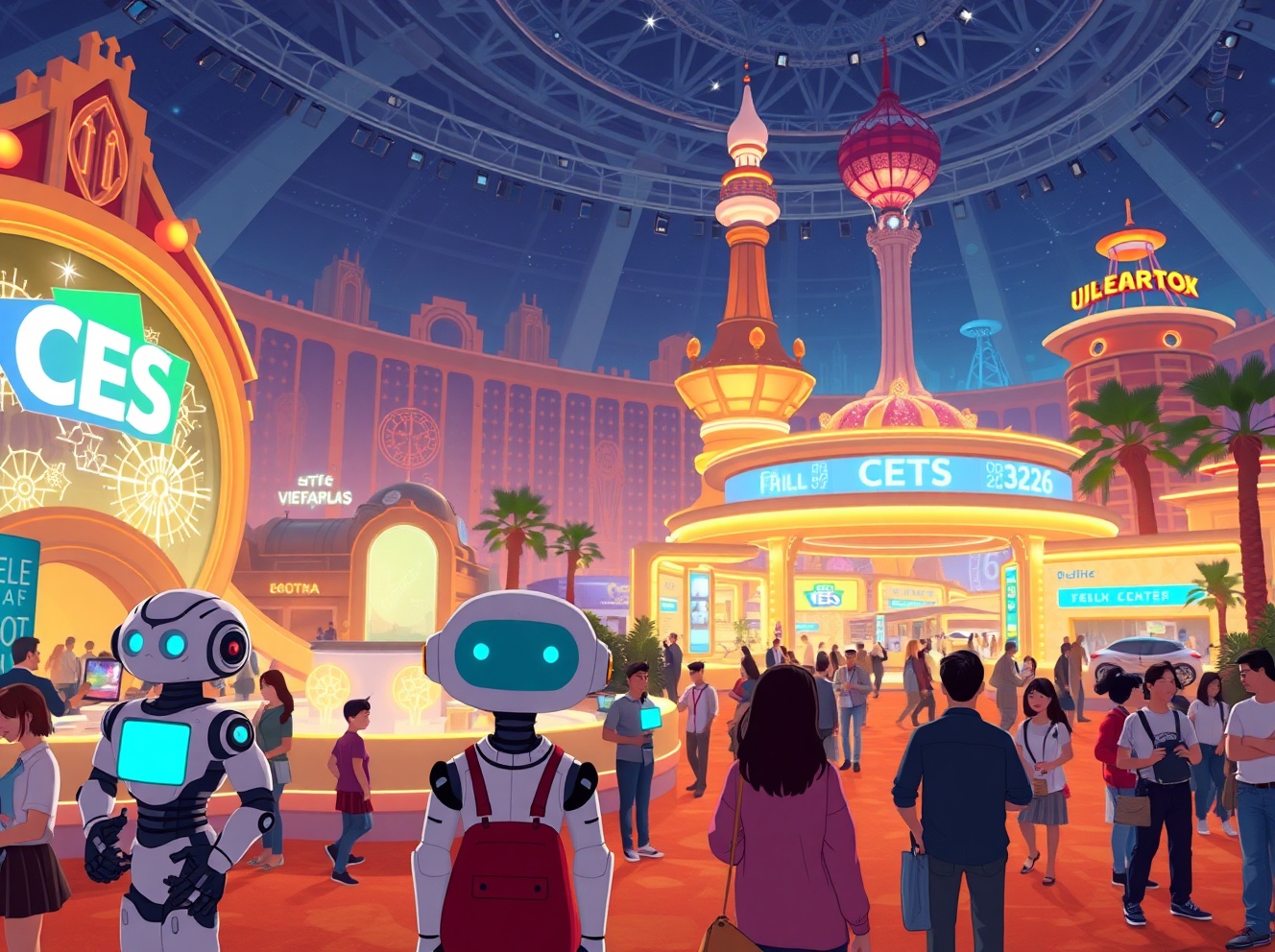
CES 2026 Live: The Thrilling Rise of Physical AI and Robots Dominates the Tech Landscape
LAS VEGAS, NV – January 2026: The Consumer Electronics Show has officially entered its third day, and the narrative is unmistakable. CES 2026 live coverage confirms a seismic shift from purely digital artificial intelligence to its tangible, physical embodiment. Robots, autonomous systems, and AI-powered hardware are not just on display; they are the central protagonists of this year’s event, signaling a new era for consumer technology.
CES 2026 Live: The Dawn of Physical AI
The halls of the Las Vegas Convention Center are buzzing with activity, even as some high-profile executives begin their departures. Eureka Park, home to thousands of startups, remains a hive of innovation. The dominant theme, however, is the materialization of AI. This trend moves beyond software algorithms and large language models, focusing instead on intelligent systems that interact directly with the physical world. Consequently, companies are racing to integrate AI into vehicles, manufacturing, home devices, and personal wearables.
Major chipmakers are fueling this transition. Nvidia and AMD have made significant announcements aimed at powering next-generation robotics and autonomous machines. Simultaneously, tech giants like Amazon and Google are aggressively pushing for AI’s use in logistics, smart homes, and industrial applications. This collective focus creates a tangible energy on the show floor, where theoretical AI meets practical, mechanical form.
Transportation and Mobility Innovations
The transportation sector showcases some of the most concrete applications of physical AI. Aurora’s co-founder and CEO, Chris Urmson, joined Hirschbach Motor Lines President Richard Stocking for a keynote focused squarely on autonomous trucking technology. Their discussion highlighted real-world progress toward self-driving freight logistics, a development with profound implications for global supply chains.
Furthermore, Ford announced a strategic move into the AI assistant space. The automaker revealed plans for an AI assistant that will debut in its smartphone app before migrating to its vehicles in 2027. More importantly, Ford teased a next-generation BlueCruise advanced driver-assistance system. Senior reporter Sean O’Kane notes this system is designed to be both more capable and cheaper to produce, with a roadmap targeting eyes-off highway driving by 2028.
Breakthroughs in EV Battery Technology
Alongside AI, energy storage is witnessing a potential revolution. Finnish startup Donut Lab, a subsidiary of Verge Motorcycles, announced what it claims is the first solid-state battery (SSB) ready for vehicle production. This technology represents a significant leap from conventional lithium-ion batteries.
- Faster Charging: Donut Lab’s SSB can reportedly achieve a full charge in just five minutes.
- Greater Range: The long-range version promises up to 600 kilometers on a single charge.
- Enhanced Safety: The solid electrolyte eliminates flammable liquid, reducing fire risk and improving stability in extreme temperatures.
The batteries will first appear in Verge Motorcycles’ TS Pro and TS Ultra models early this year. This development could address two major barriers to EV adoption: charging time and range anxiety, particularly in cold climates.
The Weird, Wonderful, and Wearable
CES has always celebrated the eclectic, and 2026 is no exception. Beyond the major keynotes, smaller gadgets and concepts point to the future of personal technology. Brooklyn-based Infinite Machine turned heads with its P1 and other scooters, featuring stark, angular styling reminiscent of a Cybertruck. Early test rides indicate these are more than just aesthetic statements; they are competent and fun electric vehicles.
In the wearable space, a new trend is emerging post-Humane Ai Pin. Startups like Looki and Memories.ai are experimenting with camera and voice-activated AI wearables. Notably, Lenovo entered the fray through an experimental Motorola device codenamed Project Maxwell. This conceptual gadget features an assistant designed to continuously hear and capture surroundings to provide recommendations. However, Lenovo provided no privacy details for this always-on device, and stressed it remains only a concept with no guaranteed commercial release.
For the smart home, Skylight unveiled the Calendar 2, a sleeker version of its digital family organizer. Viaim also debuted a battery-powered AI smart speaker for conference rooms, capable of gesture-controlled camera views, live transcription, and translation.
Entertainment and Ethics in the AI Age
The intersection of AI and creative industries sparked significant dialogue at the Variety Entertainment Summit. Actor and founder Joseph Gordon-Levitt delivered pointed criticism of prevailing AI business models. He argued the core issue is not the technology itself, but the business incentives driving major AI companies. Gordon-Levitt stressed that large language model developers should not be forgiven for training their systems on copyrighted content without consent or compensation, a statement met with audience applause.
Conversely, Jonathan Yunger, CEO of AI production company Arcana, offered a more blended vision. He reported that while Hollywood’s rejection of AI has turned to consultation, the technology is not poised to replace actors. Instead, Yunger foresees a hybrid future where AI handles elements like visual effects and volume screen generation, while human actors remain essential for conveying genuine emotion.
The business of data also came into focus. Mike O’Donnell, VP of Vizio at Walmart, candidly explained the retailer’s $2.3 billion acquisition of the TV maker. The primary motive was access to Automatic Content Recognition (ACR) data. This data, which tracks what viewers watch across platforms, will be merged with Walmart’s shopping data to create detailed advertising profiles and attribution solutions.
Conclusion
CES 2026 live reports collectively paint a picture of a technological inflection point. The event is dominated by the thrilling and tangible rise of physical AI and robots, moving intelligence from the cloud into our hands, homes, and highways. From five-minute EV charges and self-driving trucks to ethical debates and always-listening wearables, the show reflects a industry rapidly prototyping the future. The key takeaway is that AI is no longer just a feature; it is becoming the foundational layer for the next generation of physical, interactive consumer technology.
FAQs
Q1: What is the main trend at CES 2026?
The dominant trend is the shift to “physical AI,” where artificial intelligence is integrated into robots, autonomous vehicles, and hardware that interacts with the physical world, moving beyond purely software-based applications.
Q2: What was the major battery announcement at CES 2026?
Donut Lab announced a solid-state battery for electric vehicles that claims a full charge in five minutes and a range of up to 600 kilometers, with improved safety and cold-weather performance.
Q3: Which automaker announced a new AI assistant?
Ford announced it is developing an AI assistant that will launch in its smartphone app before expanding to its vehicles in 2027. It also previewed a next-generation BlueCruise driver-assistance system.
Q4: Are there new AI wearable devices?
Yes, following the Humane Ai Pin, several companies are exploring the category. Lenovo showed a Motorola concept device called Project Maxwell, while startups like Looki and Memories.ai are also developing AI-powered wearables.
Q5: What were the key concerns about AI raised at the event?
Actor and founder Joseph Gordon-Levitt criticized AI companies’ business models and the use of copyrighted data without consent or compensation. Privacy concerns were also raised regarding always-on, always-listening AI devices.
This post CES 2026 Live: The Thrilling Rise of Physical AI and Robots Dominates the Tech Landscape first appeared on BitcoinWorld.


You May Also Like

What Happened, Who Lost Money, and What’s Next – Featured Bitcoin News

Strait of Hormuz: President Trump’s Strategic Pivot to Reopen Critical Shipping Lane




