The post Japanese Yen bulls hesitant amid political uncertainty and BoJ doubts appeared on BitcoinEthereumNews.com. The Japanese Yen (JPY) recovers slightly afterThe post Japanese Yen bulls hesitant amid political uncertainty and BoJ doubts appeared on BitcoinEthereumNews.com. The Japanese Yen (JPY) recovers slightly after

Japanese Yen bulls hesitant amid political uncertainty and BoJ doubts

The Japanese Yen (JPY) recovers slightly after touching a fresh one-year low against a broadly weaker US Dollar (USD) during the Asian session on Monday. The global risk sentiment takes a hit amid concerns about further escalation of geopolitical tensions, which, in turn, is seen driving some safe-haven flows toward the JPY. The USD, on the other hand, is pressured by growing concerns about the Federal Reserve’s (Fed) independence, which offsets reduced bets for more aggressive policy easing this year, and exerts pressure on the USD/JPY pair.

However, a deepening Japan-China rift and reports that Japan’s Prime Minister Sanae Takaichi may call an early general election add a layer of uncertainty amid the lack of clarity about the likely timing of the next Bank of Japan (BoJ) interest rate hike. This might hold back the JPY bulls from placing aggressive bets and help limit the downside for the USD/JPY pair. Moreover, traders might opt to wait for the release of the latest US inflation figures – the Consumer Price Index (CPI) and the Producer Price Index (PPI), due on Tuesday and Wednesday, respectively.

Japanese Yen bears have the upper hand amid reports of snap elections in Japan and BoJ rate-hike doubts

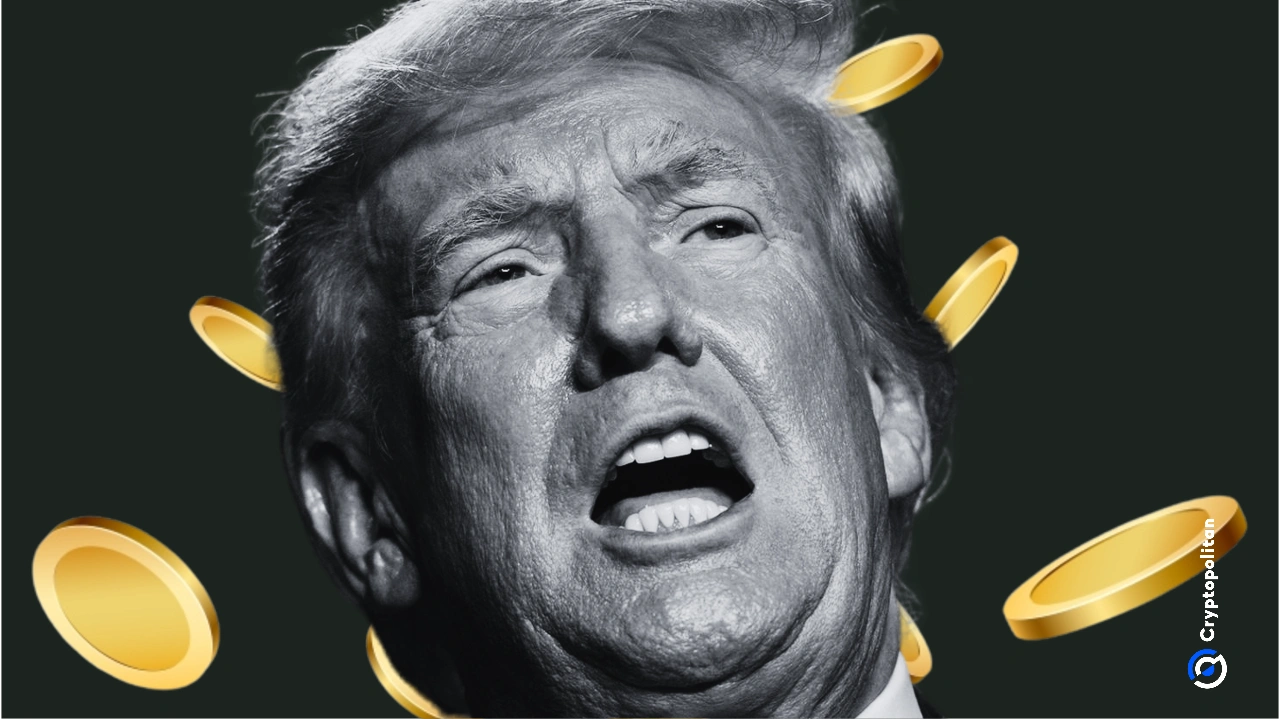
  • US President Donald Trump told reporters on Sunday that he was considering a range of options, including potential military action, in response to the unrest in Iran. The latter threatened to target US military bases if Trump carries out threats to intervene on behalf of protesters.
  • This comes on top of the intensifying Russia-Ukraine war and tempers investors’ appetite for riskier assets, lending some support to the safe-haven Japanese Yen at the start of a new week. However, a combination of factors holds back traders from placing aggressive JPY bullish bets.
  • Last week, China prohibited dual-use goods, including some rare earth elements, from being exported to Japan with immediate effect. The ban follows a diplomatic row over Taiwan and heightens supply-chain risk for Japanese manufacturers, which could act as a headwind for the JPY.
  • The Yomiuri newspaper reported on Friday that Japan’s Prime Minister Sanae Takaichi was considering holding a snap parliamentary election in the first half of February. Adding to this, the uncertainty over the timing of the next Bank of Japan interest rate hike could cap the JPY.
  • The US Dollar, on the other hand, attracts heavy selling amid growing worries about the US Federal Reserve’s independence and moves away from its highest level since December 5, touched on Friday. This further contributes to the USD/JPY pair’s Asian session slide to mid-157.00s.
  • Fed Chair Jerome Powell said that the Department of Justice is threatening a criminal indictment against him. Powell added that the threat of criminal charges is a consequence of the Fed, based on its best assessment of what will serve the public, rather than following the preference of the President.
  • On the economic data front, the US Bureau of Labor Statistics (BLS) reported on Friday that Nonfarm Payrolls rose by 50K in December, below expectations for a reading of 60K and November’s 56K (revised from 64K). However, the Unemployment Rate fell to 4.4% from 4.6% in November.
  • This led to a shift in the likelihood of a Fed rate cut at the next policy meeting on January 28, though it failed to impress the USD bulls. Nevertheless, the Fed is still expected to lower borrowing costs further this year, which marks a significant divergence compared to hawkish BoJ bets.
  • In fact, BoJ Governor Kazuo Ueda reiterated last week that the central bank would continue to raise interest rates if economic and price developments move in line with forecasts, leaving the door open for further policy tightening. This, in turn, caps the upside for the USD/JPY pair.
  • Traders now look forward to the release of the latest US inflation figures – the Consumer Price Index (CPI) and the Producer Price Index (PPI) on Tuesday and Wednesday, respectively. This would influence the USD price dynamics and provide a fresh impetus to the USD/JPY pair.

USD/JPY could appreciate further while above mid-157.00s; slightly overbought RSI warrants caution for bulls

The 200-period Simple Moving Average (SMA) on the 4-hour chart nudges higher at 156.14, with the USD/JPY pair holding above it to preserve a bullish bias. As a slower trend gauge, the rising SMA underscores underlying demand. The Moving Average Convergence Divergence (MACD) line stands above the Signal line and above zero, while the histogram remains positive, suggesting firm upside momentum. The Relative Strength Index (RSI) prints at 75 (overbought), pointing to stretched conditions that could cap immediate gains.

Price remains supported by the rising 200-period SMA, and a sustained hold above that average would keep buyers in control. MACD’s positive alignment reinforces the bullish tone. With RSI above 70, any dip could be a pause to unwind overbought readings before the trend resumes. Failure to maintain the SMA base would open room for a corrective pullback.

(The technical analysis of this story was written with the help of an AI tool)

Japanese Yen FAQs

The Japanese Yen (JPY) is one of the world’s most traded currencies. Its value is broadly determined by the performance of the Japanese economy, but more specifically by the Bank of Japan’s policy, the differential between Japanese and US bond yields, or risk sentiment among traders, among other factors.

One of the Bank of Japan’s mandates is currency control, so its moves are key for the Yen. The BoJ has directly intervened in currency markets sometimes, generally to lower the value of the Yen, although it refrains from doing it often due to political concerns of its main trading partners. The BoJ ultra-loose monetary policy between 2013 and 2024 caused the Yen to depreciate against its main currency peers due to an increasing policy divergence between the Bank of Japan and other main central banks. More recently, the gradually unwinding of this ultra-loose policy has given some support to the Yen.

Over the last decade, the BoJ’s stance of sticking to ultra-loose monetary policy has led to a widening policy divergence with other central banks, particularly with the US Federal Reserve. This supported a widening of the differential between the 10-year US and Japanese bonds, which favored the US Dollar against the Japanese Yen. The BoJ decision in 2024 to gradually abandon the ultra-loose policy, coupled with interest-rate cuts in other major central banks, is narrowing this differential.

The Japanese Yen is often seen as a safe-haven investment. This means that in times of market stress, investors are more likely to put their money in the Japanese currency due to its supposed reliability and stability. Turbulent times are likely to strengthen the Yen’s value against other currencies seen as more risky to invest in.

Source: https://www.fxstreet.com/news/japanese-yen-bulls-seem-hesitant-as-political-and-boj-doubts-offset-flight-to-safety-202601120344


Market Opportunity
BULLS Logo
BULLS Price(BULLS)
$386.58
$386.58$386.58
+3.33%
USD
BULLS (BULLS) Live Price Chart
Disclaimer: The articles reposted on this site are sourced from public platforms and are provided for informational purposes only. They do not necessarily reflect the views of MEXC. All rights remain with the original authors. If you believe any content infringes on third-party rights, please contact service@support.mexc.com for removal. MEXC makes no guarantees regarding the accuracy, completeness, or timeliness of the content and is not responsible for any actions taken based on the information provided. The content does not constitute financial, legal, or other professional advice, nor should it be considered a recommendation or endorsement by MEXC.

You May Also Like

Which Altcoins Stand to Gain from the SEC’s New ETF Listing Standards?

Which Altcoins Stand to Gain from the SEC’s New ETF Listing Standards?

On Wednesday, the US SEC (Securities and Exchange Commission) took a landmark step in crypto regulation, approving generic listing standards for spot crypto ETFs (exchange-traded funds). This new framework eliminates the case-by-case 19b-4 approval process, streamlining the path for multiple digital asset ETFs to enter the market in the coming weeks. Grayscale’s Multi-Crypto Milestone Grayscale secured a first-mover advantage as its Digital Large Cap Fund (GDLC) received approval under the new listing standards. Products that will be traded under the ticker GDLC include Bitcoin, Ethereum, XRP, Solana, and Cardano. “Grayscale Digital Large Cap Fund $GDLC was just approved for trading along with the Generic Listing Standards. The Grayscale team is working expeditiously to bring the FIRST multi-crypto asset ETP to market with Bitcoin, Ethereum, XRP, Solana, and Cardano,” wrote Grayscale CEO Peter Mintzberg. The approval marks the US’s first diversified, multi-crypto ETP, signaling a shift toward broader portfolio products rather than single-asset ETFs. Bloomberg’s Eric Balchunas explained that around 12–15 cryptocurrencies now qualify for spot ETF consideration. However, this is contingent on the altcoins having established futures trading on Coinbase Derivatives for at least six months. This includes well-known altcoins like Dogecoin (DOGE), Litecoin (LTC), and Chainlink (LINK), alongside the majors already included in Grayscale’s GDLC. Altcoins in the Spotlight Amid New Era of ETF Eligibility Several assets have already met the key condition, regulated futures trading on Coinbase. For example, Solana futures launched in February 2024, making the token eligible as of August 19. “The SEC approved generic ETF listing standards. Assets with a regulated futures contract trading for 6 months qualify for a spot ETF. Solana met this criterion on Aug 19, 6 months after SOL futures launched on Coinbase Derivatives,” SolanaFloor indicated. Crypto investors and communities also identified which tokens stand to gain. Chainlink community liaison Zach Rynes highlighted that LINK could soon see its own ETF. He noted that both Bitwise and Grayscale have already filed applications. Meanwhile, the Litecoin Foundation indicated that the new standards provide the regulatory framework for LTC to be listed on US exchanges. Hedera is also in the spotlight, with digital asset investor Mark anticipating an HBAR ETF. Market observers see the decision as a potential turning point for broader adoption, bringing the much-needed clarity and accessibility for investors. At the same time, it boosts confidence in the market’s maturity. The general sentiment is that with the SEC’s approval, the next phase of crypto ETFs is no longer a question of ‘if,’ but ‘when.’ The shift to generic listing standards could expand the US-listed digital asset ETFs roster beyond Bitcoin and Ethereum. Such a move would usher in new investment vehicles covering a dozen or more altcoins. This represents the clearest path yet toward mainstream, regulated access to diversified crypto exposure. More importantly, it comes without the friction of direct custody. “We’re gonna be off to the races in a matter of weeks,” ETF analyst James Seyffart quipped.
Share
Coinstats2025/09/18 12:57
Doorbraak voor altcoins: SEC keurt Grayscale’s GDLC ETF goed

Doorbraak voor altcoins: SEC keurt Grayscale’s GDLC ETF goed

Connect met Like-minded Crypto Enthusiasts! Connect op Discord! Check onze Discord   Na maanden van speculatie heeft de Amerikaanse toezichthouder eindelijk groen licht gegeven voor een nieuw crypto product dat de manier van beleggen in digitale munten fundamenteel kan veranderen. Het besluit komt op een moment dat de markt snakt naar meer institutionele producten, en beleggers reageren direct. Eerste multi-asset crypto ETF in de VS Grayscale CEO Peter Mintzberg kondigde vandaag op social media platform X aan dat zijn Digital Large-Cap Fund (GDLC) aanvraag is goedgekeurd door de Amerikaanse Securities and Exchange Commission (SEC). Het gaat om een conversie van het fonds naar een Exchange Traded Fund (ETF), waarmee GDLC dus ook op de Amerikaanse beurs verhandelbaar wordt. Grayscale Digital Large Cap Fund $GDLC was just approved for trading along with the Generic Listing Standards. The Grayscale team is working expeditiously to bring the FIRST multi #crypto asset ETP to market with Bitcoin, Ethereum, XRP, Solana, and Cardano#BTC #ETH $XRP $SOL… — Peter Mintzberg (@PeterMintzberg) September 17, 2025 Daarmee krijgen de financiële markten voor het eerst toegang tot een multi-asset crypto ETF: een beursgenoteerd fonds dat niet een munt volgt, maar meerdere tegelijk. Volgens Mintzberg gaat het product in eerste instantie bestaan uit een mix van de grootste digitale valuta’s, waaronder Bitcoin (BTC), Ethereum (ETH), Ripple (XRP), Solana (SOL) en Cardano (ADA). Vooralsnog is het onduidelijk wat precies de weging wordt tussen de verschillende large caps binnen de ETF. Of Grayscale over de levensduur van het fonds de weging en munt selectie kan veranderen is ook nog niet duidelijk. Nieuwe standaard voor crypto ETF’s De goedkeuring van GDLC kan een precedent scheppen. Zo kan er een multi-asset standaard ontstaan voor crypto ETF’s, wat betekent dat we in de toekomst een tal van creatieve combinaties kunnen zien op de beurs. Denk bijvoorbeeld aan ETF’s die zich puur focussen op Decentralized Finance (DeFi) leiders in de crypto markt of zelfs memecoin fondsen. Daarnaast vormt de komst van Grayscale’s fonds een belangrijk signaal richting lopende aanvragen. Waar de SEC onlangs nog een beslissing over een XRP Spot ETF uitstelde, lijkt de houding van de toezichthouder duidelijk te veranderen. ETF expert Nate Geraci benadrukt deze koerswijziging: twee jaar geleden vocht de SEC nog een harde juridische strijd met Grayscale uit over een spot Bitcoin ETF, nu wordt juist een generiek raamwerk voor crypto ETF’s omarmd. Verschillende altcoins, van XRP, ADA tot zelfs Dogecoin (DOGE), wachten op hun eerste goedkeuring. Met de introductie van dit eerste large-cap fonds lijkt bredere SEC acceptatie dan ook slechts een kwestie van tijd. Directe impact op altcoin koersen Voor institutionele partijen verlaagt het nieuwe fonds de drempel om in crypto te stappen, zonder de complexiteit van munt selectie en wallet beheer. De cryptocurrency gemeenschap hoopt dan ook dat de nieuwe ETF kan zorgen voor miljarden dollars aan kapitaalstromen richting de grote altcoins. Dat optimisme is ook terug te zien in de prijzen van veel munten. Veel large caps wisten een aardige stijging door te maken. Zo klommen SOL en ADA over de afgelopen 24 uur met respectievelijk 3,4% en 3,2% waardoor de solana koers dicht bij de grens van $245 komt. De cardano prijs heeft de significante weerstand van $0,90 doorbroken. Opvallend genoeg bleef de bitcoin koers neutraal, de ETH prijs klom minder hard dan andere altcoins met een groei van 1,1%. Best wallet - betrouwbare en anonieme wallet Best wallet - betrouwbare en anonieme wallet Meer dan 60 chains beschikbaar voor alle crypto Vroege toegang tot nieuwe projecten Hoge staking belongingen Lage transactiekosten Best wallet review Koop nu via Best Wallet Let op: cryptocurrency is een zeer volatiele en ongereguleerde investering. Doe je eigen onderzoek. Het bericht Doorbraak voor altcoins: SEC keurt Grayscale’s GDLC ETF goed is geschreven door Thomas Welsenes en verscheen als eerst op Bitcoinmagazine.nl.
Share
Coinstats2025/09/18 17:32
The Shocking Zero-Tolerance Policy That’s Reshaping Crypto Security

The Shocking Zero-Tolerance Policy That’s Reshaping Crypto Security

The post The Shocking Zero-Tolerance Policy That’s Reshaping Crypto Security appeared on BitcoinEthereumNews.com. OKX Account Trading: The Shocking Zero-Tolerance
Share
BitcoinEthereumNews2026/01/12 13:27