

iOSG Internal Memo (Part 2): From Market Clearing to Finding the Next 10x Growth Opportunity
Author: IOSG Ventures Team
This is the second half of "IOSG Internal Memo (Part 1): How Do We Bet on Mainstream Assets in 2026?"
The gateway to financial accessibility: Super Apps and Tokenization
Macroeconomic tailwinds and regulatory clarity have laid the foundation, but large-scale adoption requires channels. The next wave of growth in the crypto space will be driven by two complementary forces.
Big tech companies are bringing in entirely new users: Big tech companies will play a significant role in driving the adoption of crypto. For these companies, crypto offers a path to becoming super apps—platforms that integrate payments, social networking, and financial services. X and Meta are both exploring crypto integrations. A US-based social media company with operations in most countries globally is likely to become a "Trojan horse" for global stablecoin adoption. The effect will be to draw liquidity from bank balance sheets and smaller economies to the digital dollar.
Tokenization brings entirely new asset classes: to support the growth of stablecoins, a richer variety of assets is needed on-chain. Crypto-native funding opportunities alone cannot support a tenfold increase in stablecoin size. To balance the equation, a better connection is needed between the off-chain and on-chain worlds. Tokenization of traditional products (stocks, bonds, etc.) serves as this bridge. Ultimately, on-chain native asset issuance represents the future of finance. Institutions like Robinhood and BlackRock will play key roles in this transformation.
The world belongs to the younger generation: the aforementioned forces—currency devaluation, regulatory shifts, and corporate adoption—are all operating at their own pace. But there's another tailwind that may be underestimated: intergenerational wealth transfer and the younger generation's preference for digital assets.
▲Main reference sources: Federal Reserve, UBS Global Wealth Report 2025, Cerulli Associates 2024, Gemini State of Crypto 2024, YouGov 2025, State Street GoldETF Impact Study 2024
The Gen Z data is an estimate (the Federal Reserve combines Gen Z with Millennials in its statistics) | Limited survey data: Crypto asset ownership is significantly rising among younger generations. Gen Z's crypto ownership rate is approximately 45%, while their gold ownership rate is only 20%—the complete opposite of Baby Boomers' preferences. An obvious counter-argument is that younger generations simply have a higher risk appetite. But this ignores a deeper reality: digital natives have a fundamentally different perception of value compared to older generations. As over $100 trillion in wealth shifts from Baby Boomers to younger generations over the next few decades, asset allocation preferences will also change accordingly.
Conclusion: In the short term, the crypto market's performance will continue to be driven by familiar macroeconomic factors: Federal Reserve policy, AI stock sentiment, and overall risk appetite. Market volatility will persist, with headlines oscillating between euphoria and despair. However, the aforementioned structural tailwinds will have a much longer lifespan. Currency devaluation won't disappear; the weaponization of the financial system has created persistent demand for alternatives; regulatory clarity has finally arrived; the younger generation clearly favors crypto over gold; and the world's largest technology and financial companies are building the infrastructure needed for mainstream adoption. The question isn't whether crypto will take a larger share of global financial assets, but how quickly this shift will occur—and which assets within the ecosystem will benefit the most.
3. A Game with No Winners: How to Break the Mold in the Altcoin Market
The altcoin market has experienced its most difficult year yet, and understanding the reasons requires looking back at decisions made several years ago. The funding bubble of 2021-2022 spawned a number of projects that raised substantial amounts of capital, and these projects are currently in their token issuance cycle. This has created a fundamental problem: a large supply has flooded the market, while there is almost no corresponding demand.
The root cause isn't just oversupply; it's that the mechanisms that created this problem have remained virtually unchanged since their inception. Projects continue issuing tokens, regardless of whether they find product-market fit (PMF), treating token launches as inevitable milestones rather than strategic decisions. With VC funding drying up and primary market investment declining, many teams see token launches as the only way to raise funds or facilitate insider exits. This article will dissect the lose-lose situation that is destroying the altcoin market, examine failed attempts at remediation, and propose possible forms of equilibrium.
Low circulation dilemma: a game where all parties lose.
For the past three years, the industry has relied on a seriously flawed mechanism: low-circulation token issuance. Projects issue tokens with extremely low circulating supply—typically only a single-digit percentage—to artificially maintain an inflated fully diluted valuation (FDV). The logic seems plausible at first glance: less supply, more stable price. But low circulation cannot last forever. As more supply inevitably enters the market, prices collapse. Early supporters are punished for their loyalty, and data fully confirms this—most tokens have underperformed since launch.
What's particularly insidious is that low circulation creates a situation where everyone thinks they're winning, but in reality, everyone loses: #Centralized exchanges believe they're protecting retail investors by demanding lower circulation and more control. The result is an angry community and poor price performance. #Token holders believe maintaining low circulation will prevent insider dumping. The result is never true price discovery, and early supporters are punished. When they require insiders to limit holdings to 50%, they push primary market valuations to unreasonable levels, forcing insiders to maintain these valuations using—yes—low circulation strategies. #Project teams believe low circulation manipulation will rationalize high valuations and minimize dilution. But overall, if this trend continues, it will destroy the entire industry's funding channels. #VC firms believe they can raise more funds by pricing tokens at market capitalization based on low circulation. The result is that, as the strategy's flaws become increasingly apparent, they lose funding channels in the medium to long term.
This is a perfect lose-lose matrix. Everyone thinks they're playing a smart game, but the game itself is disadvantageous to all participants. Market reaction: Meme Coin and MetaDAO: The market attempted to solve this problem twice, and both attempts revealed the complexity of token design. #First Iteration: Meme Coin Experiment: Meme Coin was a reaction to low-circulation issuance backed by VCs. Its advertising was simple and enticing: 100% circulation on the first day, no VCs, completely fair. Finally, the game was no longer disadvantageous to retail investors. Reality, however, was much bleaker. Without any screening mechanism, the market was flooded with unaudited token issuances. Lone wolf and often anonymous operators replaced VC-backed teams, not creating fairness but instead creating an environment where over 98% of participants lost money. Tokens became tools for scams, with holders being wiped out within minutes or hours of listing. Centralized exchanges were caught in a dilemma. If they didn't list Meme Coin, users would bypass them and go directly to the blockchain; if they did list it, they would be blamed when prices crashed. Token holders suffered the most severe losses. The only winners are the publishing team and platforms like Pump.fun that have gained significant value.
#Second Iteration: MetaDAO Model. MetaDAO represents the market's second major attempt at a solution, swinging the pendulum to the other extreme, heavily favoring token holder protection. Its advantages are tangible: #Token holders gain control and leverage, making fund deployment more attractive; #Insiders can only access liquidity by achieving specific KPIs; #It opens up new financing mechanisms in a capital-scarce environment; #Relatively low initial valuations provide a fairer opportunity for participation.
However, MetaDAO created new problems through overcorrection: #Founders prematurely lost too much control. This created a "founder lemon market"—teams with resources and choices avoided this model, while those with no other options embraced it. #Tokens were still being issued in a very early stage, resulting in high volatility, but the screening mechanisms were even fewer than those provided during the VC cycle. #The unlimited issuance mechanism made listing on top-tier exchanges virtually impossible. MetaDAO is fundamentally mismatched with centralized exchanges that control the vast majority of liquidity. Without CEX listings, the tokens are trapped in a illiquid market.
Each iteration attempts to solve a problem for a specific stakeholder, and each time demonstrates the market's self-regulating ability. However, we are still searching for a balanced solution that takes into account the interests of all key players—exchanges, token holders, project teams, and investors. Evolution continues, and we will not have a sustainable model until we find an equilibrium. This equilibrium must satisfy all stakeholders—not by giving everyone everything they want, but by drawing a clear line between harmful behavior and legitimate rights.
The appearance of the equilibrium state
Centralized exchanges: #Must stop: Demanding excessively long lock-up periods hinders genuine price discovery. Extended lock-up periods create a false sense of protection, actually impairing the market's ability to find fair value. #Right to receive: Predictability of token supply schedules and effective accountability mechanisms. The focus should shift from arbitrary, time-based lock-up to KPI-based unlocking, adopting shorter, more frequent token release arrangements linked to verifiable progress.
Token Holders: #Must Stop : Overcompensating for historical power vacuums and demanding excessive control drives away top talent, exchanges, and VCs. Not all insiders are created equal; demanding the same long lock-up periods for everyone ignores the differences between roles and hinders genuine price discovery. Obsession with certain magical holding thresholds (such as "insider holdings cannot exceed 50%)" creates conditions for low-liquidity manipulation. #Right to Obtain: Strong access to information and operational transparency. Token holders have the right to a clear understanding of the business behind the token, regular reports on progress and project challenges, and open communication regarding funding reserves and resource allocation. They have the right to assurance that value will not be lost through side transactions or alternative structures—the token should be the primary IP holder, ensuring that created value accrues to token holders. Finally, token holders should have reasonable control over budget allocation, especially for major expenditures, but should not micromanage day-to-day operations.
Project Team: #Must Stop: Issuing tokens without a clear product-market fit or compelling token utility. Too many teams issue tokens as "beautiful equity" with lower rights—equivalent to a subordinated tranche of venture equity—without legal protection. Tokens shouldn't be issued simply because "all crypto projects do it" or because funding is running out. #Right to Have: The ability to make strategic decisions, make bold bets, and drive day-to-day operations without having to submit every decision to the DAO for approval. Teams need executive power if they are to be accountable for results.
Venture Capital Firms: #Must Stop: Forcing every portfolio company to issue tokens, regardless of their legitimacy. Not every crypto company needs a token, and pushing token issuances to value positions or create exit events has flooded the market with low-quality offerings. VCs need to be more prudent and honestly assess which companies are truly suited to a token model. #Right to Reap: A fair return for taking on the extremely high risks of investing in early-stage crypto projects. High-risk capital deserves a high-risk return when its bets succeed. This means reasonable shareholdings, fair token release arrangements that reflect its contribution and risk-taking, and the ability to achieve liquid exits on successful investments without being demonized.
Even with a path to equilibrium, timing is crucial. The near-term outlook remains challenging.
The next 12 months: The last wave of oversupply
The next 12 months are likely to be the last wave of oversupply caused by the previous VC boom. After this digestion period, the situation should improve: by the end of 2026, the projects from the previous cycle will either have issued tokens or gone bankrupt; funding channels remain expensive, limiting the formation of new projects. The pool of VC-backed projects seeking token issuance has shrunk significantly; primary market valuations have returned to more reasonable levels, reducing the pressure to artificially maintain high valuations with low circulation. What we did three years ago determined today's market landscape. What we do today will determine the market two to three years from now. Beyond the supply cycle, there is a deeper threat to the entire token model.
Existential Risk: Lemon Market; The biggest long-term threat is that the altcoin market becomes a "lemon market," a market that excludes quality participants and attracts those who have no other choice.
Possible evolution paths: Unsuccessful projects continue to issue tokens to gain liquidity or extend their lifespan, even without any product-market fit. As long as the expectation exists that "projects should issue tokens, regardless of success or failure," failed projects will continue to flood the market. #Successful projects observe this chaos and choose to exit. When excellent teams see that the overall performance of tokens remains poor, they may switch to traditional equity structures. Why invite the trouble of entering the chaotic token market when a successful equity company can be built? Many projects don't actually have a good reason to issue tokens; for most application-layer projects, tokens are becoming increasingly optional rather than necessary. If this dynamic continues, the token market will be dominated by projects that cannot succeed by other means—the "lemons" nobody wants. Despite these risks, there are still good reasons to remain optimistic.
Why Tokens Still Win: Despite the challenges, we remain optimistic that the worst-case scenario of a lemon market won't materialize. Tokens offer unique game-theoretic mechanisms that equity structures simply cannot replicate. Accelerated growth through ownership distribution. Tokens enable precise distribution strategies and growth flywheels that traditional equity cannot achieve. Ethena exemplifies this by using token mechanisms to drive rapid adoption and create sustainable protocol economics. A passionate, loyal community forms a moat. When functioning correctly, tokens can create a community with a vested interest—participants become more sticky and loyal to the ecosystem. Hyperliquid is a prime example: its trader community becomes deeply involved, creating network effects and loyalty that are impossible to replicate without tokens. Tokens enable growth far faster than equity models while opening up vast game-theoretic design space, unlocking enormous opportunities when used correctly. When these mechanisms work, their transformative power is truly disruptive.
Signs of self-correction: Despite the challenges, there are encouraging signs that the market is correcting: Top-tier exchanges are becoming extremely stringent. Issuance and listing requirements have been significantly tightened. Exchanges are implementing better quality controls and conducting more rigorous assessments before listing new tokens. Investor protection mechanisms are evolving. MetaDAO's innovations, the IP rights owned by DAOs (as seen in the governance controversies of Uniswap and Aave), and other governance innovations show that the community is actively experimenting with better structures. The market is learning—slowly and painfully, but it is truly learning.
Recognizing that we are in the midst of a cycle: the crypto market is highly cyclical, and we are currently at a trough. We are digesting the negative consequences of the 2021-2022 VC bull run, the hype cycle, overinvestment, and the resulting structural mismatches. But the cycle will turn. Two years from now, once the 2021-2022 wave of projects has been fully absorbed, once the new token supply decreases due to current funding constraints, and once better standards emerge through trial and error—market dynamics should improve significantly. The key question is: will successful projects revert to a token model, or will they permanently shift to an equity structure? The answer depends on whether the industry can resolve issues of interest coordination and project screening.
The Road Ahead: The altcoin market stands at a crossroads. A lose-lose situation for exchanges, token holders, project teams, and VCs has created an unsustainable market condition. But this is not permanent. The next 12 months will be painful as the final supply shock of 2021-2022 hits the market. But after this digestion period, three things could drive a recovery: better standards emerging from painful trial and error; a coordination mechanism that satisfies the interests of all four parties; and more prudent token issuance—teams only issuing tokens if they truly add value. The answer depends on the choices made today. Three years from now, we will look back on 2026 in the same way we look back on 2021-2022. What are we building?
4. Overview of Venture Capital Opportunities
The cryptocurrency ecosystem is undergoing a fundamental transformation. From its initial independent experiments with digital currencies, it has evolved into a complex financial infrastructure, increasingly overlapping with traditional finance and emerging technologies such as artificial intelligence, and ultimately converging with them.
Stablecoins: near-perfect currencies, lacking only one crucial element: stablecoins have proven superior to traditional fiat currencies in almost every dimension. Compared to traditional payment tracks, they offer advantages in accessibility, ease of use, speed, portability, and programmability. Counterparty risk is comparable to traditional banking, while the technology itself provides a clear advantage. However, a key limitation exists: stablecoins still have limited investment options compared to fiat currencies. Traditional financial markets offer a vast array of productive investment opportunities—stocks, bonds, real estate, and alternative assets. Despite their technological superiority, stablecoins are still constrained by crypto-native yield sources and investment opportunities, which alone cannot support their sustainable growth beyond the $1 trillion mark.
This is precisely why RWA (Real-World Assets) are becoming so crucial. Tokenizing RWAs is the only viable path to expanding the investment scope of the stablecoin ecosystem, thereby addressing the most critical issues currently facing stablecoins. In time, this will create a convergence trajectory: almost all assets will be natively issued, traded, and settled on-chain. Who is most likely to win? Traditional institutions like Robinhood and BlackRock have a clear advantage, both having expressed a willingness to tokenize more assets. However, startups are moving faster and are more flexible in building natively on-chain, giving them a competitive edge. BackedFinance launched XStocks, leveraging Switzerland's innovative legal structure, enabling permissionless stock issuance similar to stablecoins, with anyone able to access stock tokens. However, liquidity remains a challenge. OndoFinance has addressed the liquidity issue, but its product is more restricted. Liquidity, accessibility, and trust are the key variables for success in this space.
DeFi Yield Generation Challenges: From Basic to Structured Returns: Historical data shows that for every $1 increase in stablecoin market capitalization, DeFi TVL increases by approximately $0.60. This indicates that most new on-chain funds are seeking yield. The growth of stablecoins themselves also depends on DeFi's ability to generate diversified, scalable, and sustainable returns. The crypto ecosystem has gone through different stages of yield generation, evolving from establishing crypto risk-free rates (such as AAVE) to more advanced products. Each iteration requires stronger risk underwriting capabilities, while also bringing higher value-added per unit of deployed funds. The current landscape presents increasingly complex on-chain returns across multiple categories. We are also seeing greater interoperability and composability between DeFi protocols becoming increasingly important. A prime example: the Ethena<>Pendle<>AAVE strategy. In this strategy, Ethena deposit tokens are split into principal tokens and yield tokens on Pendle. As long as there is a positive interest rate spread between the AAVE borrowing rate and the Ethena funding rate, the principal tokens are used as collateral to borrow more assets on AAVE and then deployed back to Ethena.
This demonstrates that even familiar strategies can unlock unique opportunities when deployed in new ways. This should incentivize more participants to tokenize a wider range of yield products and leverage on-chain composability to access opportunities that simply don't exist in the fragmented off-chain ledger world. Another opportunity: abstracting the complexity of on-chain yield products to create a DeFi channel that can dynamically adjust exposure across the broader DeFi landscape. This can be seen as an upgrade to Yearn's original vision adapted to current needs—that is, successful DeFi vaults require more aggressive management and risk underwriting. Projects like YuzuMoney are pursuing this path.
Who is most likely to win? It heavily depends on execution. It requires talent with deep financial engineering expertise, strong risk control capabilities, and experience in the crypto industry. Teams possessing all three are relatively rare.
Prediction Markets: Growth and Opportunities for Kalshi/Polymarket and Other Derivative Applications: We are optimistic about the growth prospects of prediction markets in 2026. The World Cup and the US midterm elections will bring significant traffic boosts to the market, especially with the potential catalyst of TGE (token issuance), and trading volume growth is expected. Sports betting will be a highlight, and as prediction market mechanisms mature, this vertical is expected to experience explosive growth and innovative gameplay. Another important trend is localization. Recently, Polymarket has seen an increasing number of regionally relevant topics, especially events that are of interest to young people in Asia, which contrasts sharply with the earlier focus on the US market. This means that leading platforms are beginning to pay attention to global cultural differences, and the resulting incremental market should not be underestimated. Derivative products in the ecosystem layer will grow alongside Kalshi and Polymarket. After the two major platforms begin to focus on ecosystem building in 2025, various tools, trading terminals, aggregators, and even DeFi applications will develop rapidly. This opportunity is so obvious that entrepreneurs are rushing to enter the market, resulting in extremely rapid product iterations and overall growth, but it is too early to judge the winners.
Who is most likely to emerge victorious? At the ontological level of prediction markets, directly challenging Kalshi and Polymarket is extremely difficult. However, the following areas are worth noting: #Innovative Mechanism Breakthroughs: Innovations such as leveraged trading, parlay (chained succession), futarchy (future governance), long-tail markets, new oracles, and settlement methods may open up differentiated niche markets. #Localization and Deep Cultivation: Focusing on the crypto user base and cultivating local niche markets is another path. Kalshi and Polymarket are just starting out in this area and have no clear advantage. This presents a real window of opportunity for teams that understand local culture, regulatory environments, and user habits. #In the Derivatives Ecosystem, winners will emerge through rapid iteration . The key lies in whether they can capitalize on user pain points and build network effects during the expansion window of the Kalshi/Polymarket ecosystem.
Neobanks: A Natural Beneficiary of Stablecoin Adoption: The widespread adoption of stablecoins will fundamentally reshape the banking industry, potentially shrinking traditional bank balance sheets and triggering numerous chain reactions—these are not the focus of this article. The key question is: how will people manage their stablecoin balances? We believe this is unlikely to be achieved through personal wallets. Instead, Neobanks is likely to be a major beneficiary of this trend. Understanding the Neobanks opportunity requires understanding the source and nature of demand.
There are three main user groups: native crypto enthusiasts, users in developing regions, and users in developed regions.
a. Cryptocurrency holders seek access to capital markets, consumer choices, income-generating opportunities, tax optimization, and credit services. Etherfi already leads in this category, but there is room for improvement in access to capital markets, income-generating products, and credit offerings. b. Developing regions need access to USD-denominated financial systems, Visa/Mastercard networks, remittance channels, competitive savings rates, and credit. Redotpay currently leads in Southeast Asia, leveraging crypto infrastructure to offer Revolut-like products. Other regions present significant opportunities for localized solutions and micro-loan products that can improve user retention. c. Opportunities appear less apparent in developed regions due to well-established existing financial infrastructure. However, as mentioned earlier, rising uncertainty surrounding global leadership could drive these users to alternatives. This creates a triple market opportunity where Neobanks can leverage the same underlying stablecoin infrastructure to serve fundamentally different customer needs.
Who is most likely to succeed? Accessing capital markets requires creative legal solutions and financial expertise to provide deep liquidity. Providing credit requires financial expertise. Improving interest-bearing schemes requires crypto and DeFi expertise. Penetrating local markets requires an understanding of local laws, markets, and culture. These variables present key differentiating opportunities for new entrants, especially if existing players fail to unlock these capabilities and expand their service offerings.
The Evolution of Crypto Payments: The global payment system is being reshaped by crypto infrastructure, with large-scale adoption progressing along three distinct channels. The C2B (consumer-to-merchant) channel currently favors traditional finance, requiring crypto applications to integrate with existing Visa/Mastercard networks, which have established a strong moat thanks to their extensive merchant reach. A greater opportunity lies in P2P (peer-to-peer) flows, where currently dominant traditional financial transactions are expected to migrate to crypto infrastructure. Facing Neobanks, wallets, and large tech platforms integrating stablecoins, WesternUnion appears to lack a strong defensive moat. The B2B (business-to-business) sector may present the greatest opportunity. Crypto payment service providers can offer genuine alternatives for cross-border business payments. This represents a fundamental infrastructure shift, requiring deep integration of stablecoins with fintech platforms. The core value proposition is significant cost savings and increased speed. However, the challenge lies in establishing “last-mile” liquidity and local compliance capabilities in key regions to ensure seamless customer integration with new solutions.
Who is most likely to win? For P2P payments, geographic focus and user experience are paramount: solutions already well-prepared for use, withdrawals, and spending are most likely to succeed. For B2B payments, companies that have established relationships with SMEs and large enterprises, and possess regulatory expertise, are in the most advantageous position.
Internet Capital Markets: The End of Tokenization: Blockchain technology enables a single, programmable global ledger, allowing capital to flow 24/7. Tokenization makes any asset identifiable, tradable, and instantly settled across borders. The evolution of tokenization has gone through different meta-cycles: from initial cryptocurrencies, to tokens (such as altcoins and digital assets), to NFTs and meme coins, then to information markets (prediction markets), and now encompassing stocks, RWAs, and a wide range of financial derivatives. Looking ahead, cutting-edge areas include collectibles (such as trading card games and high-end goods), attention and influence markets, and ultimately, personalized tokens. With each new meta-narrative emerging, specialized trading infrastructure follows. The crypto trading landscape has evolved from basic Bitcoin exchanges (Binance, OKX, Coinbase, Huobi) to on-chain DEXs (Uniswap) and aggregators (1inch, 0x), then to NFT marketplaces (OpenSea) and terminals (Blur), meme token launchers (Pump.fun) and terminals (Axiom, GMGN, FOMO), PerpDEXs (Hyperliquid, Lighter) and their emerging terminals and aggregators, and prediction market platforms (Polymarket, Kalshi) and their own emerging terminal infrastructure. Each meta-narrative requires interfaces specifically tailored for retail users seeking simplicity and professional users requiring advanced functionality. The current generation of products (focusing on perpetual contracts and prediction markets) presents significant venture capital opportunities as the market matures and integrates with traditional finance.
Who is most likely to win? The terminal and aggregator sectors require a deep understanding of user workflows and excellent product design. In the professional user segment, teams with trading backgrounds and technical depth have an advantage. In the retail user segment, consumer product expertise and growth marketing capabilities are more important. The winners will be those teams that achieve the optimal balance between feature depth and user experience for their target market, while also building a moat around liquidity aggregation or unique data/insights.
ICM: The Restructuring of the Token Mechanism in 2026: A crucial question for 2026 is: how will tokens evolve? The core problem with current cryptotokens is an imbalanced supply structure coupled with flawed incentive design, leading all participants—exchanges, token holders, teams, VCs, etc.—into a seemingly rational but ultimately detrimental game. Tokens are treated as tools for fundraising and liquidity, rather than for product decision-making. This results in significant market distortions: mature projects lack the motivation to maintain product operations after issuing tokens, or are bogged down in token-related matters, impacting product decisions. Consequently, good projects simply abandon token issuance, bad money drives out good, and bad projects continue to enter the market. Early-stage projects issue tokens without Product-Market Fit (PMF), making it difficult to raise further funds and securing sufficient institutional support.
The concept of ICM (Integrated Capital Markets) originated in the Solana ecosystem, but a more general understanding is: how to better launch more high-quality assets and ensure they remain high-quality assets. These assets can be early-stage Web2/Web3 company equity, pre-IPO/IPO stocks, etc. This requires breakthroughs in multiple areas: legal research, market education, operational efforts, and mechanism innovation, including ownership coins and launchpads. Making tokens better products—this is the cryptographic challenge to be addressed by 2026.
The Convergence of Crypto and AI: Creating First-Class Digital Citizens: Perhaps the most compelling investment narrative will emerge at the intersection of crypto and AI. Existing internet and financial infrastructure, designed entirely for humans, relegates AI to "second-class citizenship," with significant infrastructure limitations fundamentally constraining its economic potential. Without crypto infrastructure, AI agents face severe constraints. They cannot open bank accounts or make payments, relying entirely on humans for financial transactions. They are constantly blocked by CAPTCHAs and bot detection systems, unable to complete basic network interactions. They cannot interact with other agents to create inter-agent economies. They cannot own assets. They are trapped in centralized corporate servers or the cloud, unable to migrate. Cryptocurrencies fundamentally change this, making AI first-class citizens with genuine economic agency capabilities. With Crypto, AI agents can have wallets and autonomously send and receive funds, independently earning, spending, and investing without human intermediaries. They can bypass most bot detections through distributed blockchain networks. They can autonomously discover, negotiate, and transact with other AI agents, creating a new AI-on-AI economy where economic interests and cryptographic consensus and trust mechanisms will determine right and wrong. They can enter into contracts and programmatically execute payments. They can hold digital assets, with ownership enforced by an immutable blockchain.
Google spearheaded the A2A protocol, providing an open standard for AI agents that enables them to communicate, exchange information, and coordinate actions across different platforms and vendors, facilitating interoperable multi-agent systems. However, trust issues remain, which is precisely what the Ethereum ERC-8004 standard aims to address through on-chain identity, reputation, and verification, allowing AI agents to discover, authenticate, and collaborate in a decentralized economy without pre-established trust. These developments collectively unlock the ability for AI to participate in programmable, agent-driven commerce on the blockchain.
Who is most likely to emerge victorious? Visionary entrepreneurs who can architect decentralized economies, where AI Agents interact trustlessly via protocols such as ERC-8004, will stand out. These leaders excel at interdisciplinary innovation, seamlessly blending cryptography (for secure, tamper-proof trust mechanisms), economics (for designing incentive-aligned agent behavior, staking, penalties, and emerging markets), and systems design (for building scalable, interoperable architectures that enable open, cross-organizational agent coordination without gatekeepers).
Resource aggregation opportunities: The scaling laws driving the development of artificial intelligence are very clear and have been well-proven empirically: more computing power, more data, and more parameters almost inevitably lead to stronger model performance. Therefore, this diagram encapsulates the most important insights from the past five years:
Cryptocurrencies excel at aggregating resources through well-designed incentive mechanisms. Their potential scale is remarkable: before the merge, Ethereum's proof-of-work miners provided approximately 50 times the computing power required to train GPT-4. With proper incentives and coordination, this represents enormous untapped potential. Data opportunities are equally significant. The crypto industry can aggregate proprietary personal and enterprise data at scale. On the other hand, protocols like Grass enable distributed scraping and real-time access to public network data, achieving better robot detection avoidance and improved unit economics through distributed approaches that leverage existing resources. The challenge lies not in resource availability, but in effective coordination and quality control. With proper execution and incentive design, the crypto industry has the real potential to unlock vast resources for AI development that are difficult or impossible to aggregate through traditional corporate structures.
Who is most likely to win? This requires deep technical expertise in distributed systems, AI infrastructure, and game theory design. Teams will need to solve challenges such as computational power verification, data quality assessment, and large-scale, efficient coordination. Companies with experience in large-scale infrastructure operation and cryptographic protocol design will have the strongest advantage. The winners will be those teams that can achieve the scale benefits of decentralized coordination while maintaining quality standards.
Conclusion: The common thread behind these opportunities is integration. Crypto-native capabilities are increasingly converging with traditional finance, payment systems, and even today's artificial intelligence. The era of isolated development is over; the phase of overlapping integration is accelerating. The ultimate goal is comprehensive integration: blockchain infrastructure will become "invisible" yet indispensable, serving as the underlying engine supporting next-generation financial and technological services, achieving seamless integration between decentralized and centralized systems, and leveraging the strengths of both.
For venture capitalists, the real opportunity lies not in betting on "crypto" versus "traditional finance," but in identifying companies that are building bridges, infrastructure, and application layers that will define this converged future. The most successful startups will no longer view crypto as a parallel financial system, but rather as an infrastructure layer: a foundation that enables programmability, global clearing, autonomous agents, resource coordination, and other capabilities that are simply impossible in traditional architectures.


You May Also Like
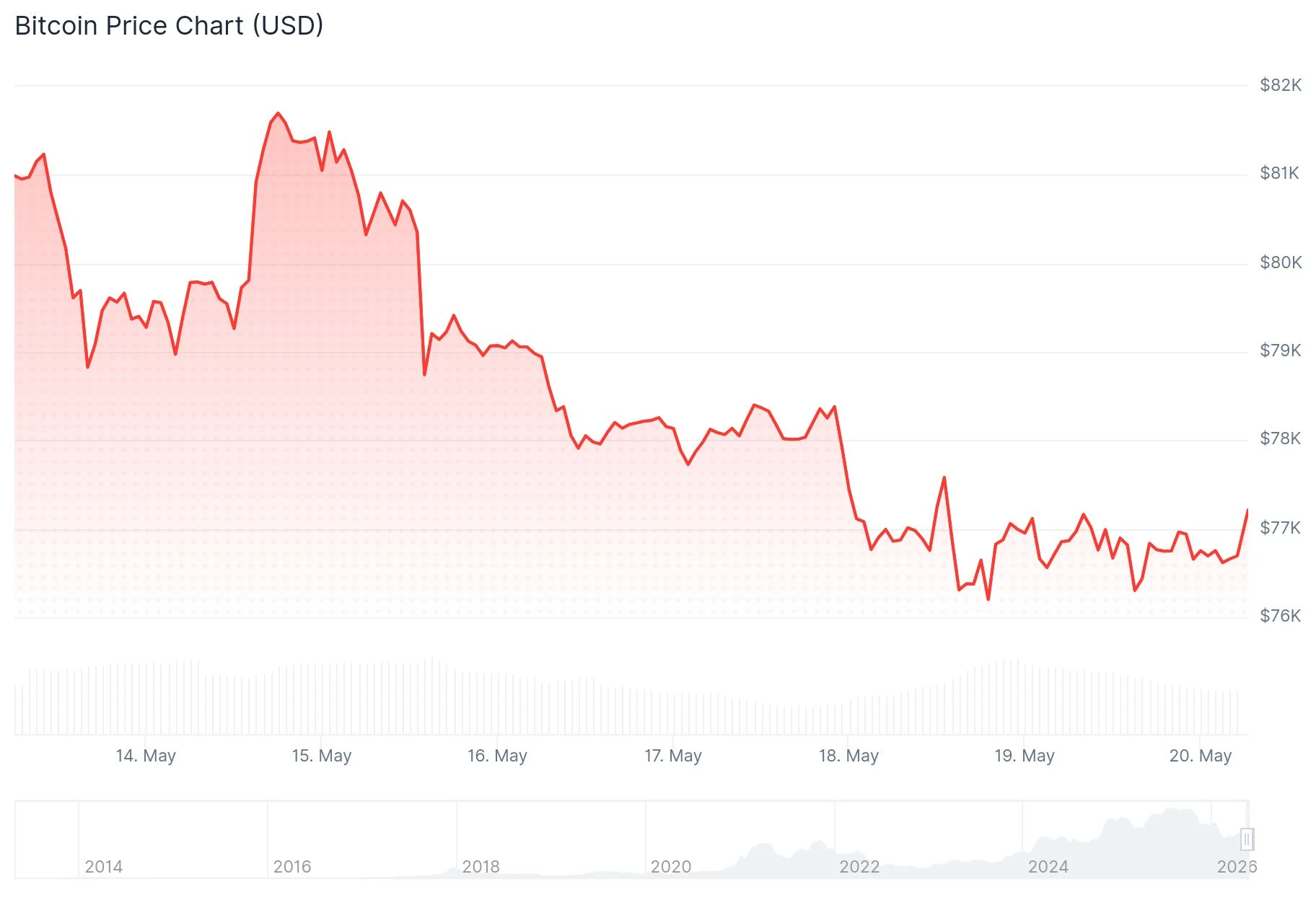
Bitcoin (BTC) Hovers Above $77K Amid Iran Diplomacy and Rising Treasury Yields

Beyond Cleaning: What Else You Must Check Before Moving Out




