Pi Coin Price Back to October Lows: What’s Behind the Drop?
Pi Network’s native token PI $0.19 24h volatility: 7.0% Market cap: $1.59 B Vol. 24h: $32.30 M has slid back toward its October 2025 lows. The cryptocurrency is under pressure from persistent sell pressure from daily unlocks, weak trading activity, and broader market headwinds.
After trading in a narrow range for much of January, Pi’s price recently dipped near $0.19, levels not seen since its October bottom.
Heavy Daily Unlocks Saturate Supply
One of the most significant drivers behind the renewed weakness is the ongoing token unlock schedule. On average, over 4.6 million PI tokens enter the market each day. They expand the circulating supply and add consistent selling pressure as more holders seek to liquidate. This high unlock rate is occurring without proportional demand from new buyers, creating a supply-demand imbalance that amplifies downward price pressure.
As of Jan. 19, Pi Network is expected to unlock over 139 million Pi in the next 30 days.
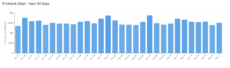
Pi unlock chart | Source: piscan.io
January Performance Shows Continued Weakness
Throughout January 2026, Pi Coin has struggled to gain traction, trading sideways and underperforming broader market trends. Trading activity remains subdued relative to many other digital assets, with daily volumes often below levels that would indicate strong buyer interest.
Despite occasional stabilization attempts, technical indicators point to continued bearish sentiment, with prices hovering near October’s lows rather than forming a sustained uptrend. At the time of writing, Pi is trading at $0.1890, only 19% above its all-time low of $0.1585 in October 2025. At the same time, it’s 93% down from its ATH in February, 2025.
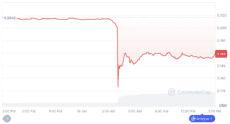
Massive Pi drop in the recent 24 hours | Source: CoinMarketCap
Possible Reasons Behind the Pi Price Drop
To sum up, the most possible reasons behind the Pi price drop are the following:
-
Oversupply from token unlocks: As millions of PI tokens unlock daily, the flood of additional supply has outpaced demand.
-
Weak trading demand: Limited liquidity and modest trading volume (around $28 million, as of today) have left the market vulnerable to price swings, with insufficient buyer interest to absorb new token supply.
-
Broader market volatility: Recent macroeconomic shifts and risk-off sentiment in crypto markets, driven by US behavior, have dampened appetite for speculative assets like PI and have driven demand for gold, silver, and other safe havens.
-
Listing and adoption challenges: Pi Coin’s trading activity remains constrained compared to that of established cryptocurrencies. The delays or hesitancy around listings on Binance and other major exchanges have weighed on investor confidence.
The post Pi Coin Price Back to October Lows: What’s Behind the Drop? appeared first on Coinspeaker.


You May Also Like

Beyond Cleaning: What Else You Must Check Before Moving Out

Justice Department has 'gone off the rails' for Trump's 'pretzel logic': analysis