How much will I make if I invest $100 a month? — 2026 realistic projections
Why $100 a month matters — and how to think about it
investing $100 a month is more than a headline; it’s a habit that combines time, regularity, and the power of compounding. If you can set aside what a few coffees cost each month, you’re starting a predictable path toward future financial flexibility. The combination of small, steady contributions and reinvested returns is what makes modest monthly saving surprisingly effective.
People often expect big moves to begin with big sums. Yet consistent, modest contributions exploit two powerful ingredients: time and compound interest. Compound interest is not a trick. It’s the mathematical result of returns earned on past returns. The earlier you start, the more interest gets to work on both your contributions and the gains those contributions produce.

There’s also a psychological benefit. Committing a fixed amount each month—especially through automatic transfers—turns investing from a choice you make repeatedly into a default. That helps you avoid the “I’ll get to it later” trap. Investor-education bodies like the SEC and FINRA highlight both the mechanics and the behavioral benefits of regular investing in their guidance for beginners. They also emphasize that returns vary and past patterns do not guarantee the future, which is why we work with a few reasonable return scenarios below.
The simple math behind the projection
When you ask, “How much will I make if I invest $100 a month?” the cleanest way to answer is with a standard financial formula for the future value of a series of equal payments. At a basic level, the formula takes three inputs: how much you add each month, the periodic return you expect, and how long you keep contributing.
For monthly contributions, the future value formula is:
FV = payment × [ (1 + r)^{n} − 1 ] / r
In this formula, r is the periodic interest rate (annual rate divided by 12 for monthly contributions), and n is the total number of contributions (months). Financial educators and calculators across Investor.gov, FINRA, and asset managers use the same math. What changes are the assumptions about the annual return.
Which annual return to use? Conservative, middle, and aggressive scenarios
No single answer fits everyone. Educational sources often show a range of possible returns so readers can see how sensitive future wealth is to different assumptions. A reasonable, illustrative set might be 4% (conservative), 7% (middle), and 10% (aggressive). Historically, broad stock-market indices have produced long-run nominal averages often cited in the 7–10% range, but those averages include decades with very different economic conditions and are never guaranteed.
To make the idea concrete, imagine you are investing $100 every month for 30 years. Using the monthly formula above and converting annual rates to monthly equivalents, the outcomes look like this:
-
At 4% annual return, your $100 monthly contributions become roughly $69,000 after 30 years.
-
At 7%, that same habit grows to about $122,000.
-
If you assume a 10% annual return, the total rises to roughly $226,000.
The same pattern appears for 20 or 40 years of contributions: the longer you stay invested, the more dramatic the difference between rates becomes. Those numbers illustrate two important truths. First, modest changes in long-term return assumptions matter a lot. Second, time amplifies differences: 10% over decades compounds into far more than 4% because the extra percentage point compounds each year.
A small example of the math in action
If you like numbers, here’s a compact walk-through of the 7% case for 30 years. The monthly rate is 0.07 divided by 12, which equals about 0.0058333. If you make 360 monthly contributions, the future value factor becomes (1 + 0.0058333)^{360} − 1 divided by 0.0058333. That factor works out to about 1,219.9, and multiplying by $100 per month gives roughly $122,000. You don’t need to carry these calculations in your head: reputable calculators like the Compound Interest Calculator on Investor.gov (https://www.investor.gov/financial-tools-calculators/calculators/compound-interest-calculator), the Compound Savings Calculator at FinRed (https://finred.usalearning.gov/ToolsAndAddRes/Calculators/Savings/calculator/Compound-and-Your-Return), or Schwab’s Compound Savings Calculator (https://www.schwabmoneywise.com/compound-savings-calculator) will compute the same results for you.
Why fees and expenses deserve attention
Returns quoted in headline numbers are usually gross returns—before fees and taxes. But fees matter, especially over long periods. Imagine a fund charges an expense ratio that reduces your annual return by 0.5% to 1%. That might not sound like much now, but spread over 30 or 40 years the loss compounds. A 1% drag on an assumed 7% return effectively reduces the long-term rate to 6%, which can shave tens of thousands of dollars from the final value when you’re investing $100 a month.
To illustrate: using the earlier 30-year example, a drop from 7% to 6% (roughly the effect of a 1% annual fee difference) lowers the final total from about $122,000 to around $100,000. That’s a meaningful difference for someone relying on investment gains to meet future goals. Investor education sources routinely stress choosing low-cost funds—index funds and many ETFs commonly have lower expense ratios than actively managed options.
Taxes: another quiet compounder’s cost
Taxes on dividends and capital gains reduce your net returns. How large the drag is depends on the account you use and your tax situation. Tax-advantaged accounts such as Roth IRAs, traditional IRAs, 401(k) plans, and health savings accounts can shelter growth from annual taxation in different ways. For example, money in a Roth IRA grows tax-free and qualified withdrawals in retirement are tax-free, while a traditional IRA provides tax deferral, with taxes owed when you withdraw.
If you invest in a taxable brokerage account, qualified dividends and long-term capital gains may be taxed at favorable rates compared with ordinary income, but they still reduce the growth you keep. Different rates apply to short-term gains, non-qualified distributions, and to different taxpayers, and the IRS updates rules periodically. Even relatively low effective tax impacts—say, a reduction in annual net return of 0.5% to 1.5%—can shift outcomes materially over decades.
Where to put your $100: funds, diversification, and the beginner’s approach
For many people starting with $100 a month, the sensible approach is to look for low-cost, broadly diversified funds—either broad-market index funds or ETFs. Those funds spread risk across many companies and sectors, reducing the impact of any single company’s misfortune on your overall portfolio. Investor-education pages and mainstream asset managers consistently recommend diversification as a foundational principle for individual investors.
If you’re new, think about ease and cost. Some brokerage platforms let you buy fractional shares, which allows $100 to be invested fully across a fund or two at once (see our roundup of best micro-investment apps for platforms and features). A common beginner allocation is to emphasize a broad stock-market fund for growth and add some bond exposure as you get closer to using the money. How much equity versus fixed income you hold depends on your timeline and risk comfort.
One practical tip: if you want simple, clear beginner help, check out the FinancePolice beginner guides and plain-language explainers — they make it easy to choose low-cost funds and set up automatic transfers. Visit the FinancePolice homepage to read straightforward, non-sales-focused guidance that’s written for everyday people: FinancePolice.
The value of consistency, automation, and patience
Three habits reliably help: set a monthly contribution you can maintain, automate it, and resist the urge to react to every market swing. Automation removes many of the emotional decisions that can derail long-term plans. When markets drop, automatic investors keep buying at lower prices—a behavior often called dollar-cost averaging. When markets surge, the plan keeps contributing without getting swept up in the momentum.
Patience is not passive resignation. It’s the practical acceptance that markets move in cycles. Savings and long-term investing are rhythms more than sprints. Over decades, your regular contributions plus reinvested returns are what create the bulk of the result. If you stay consistent investing $100 a month, you’ll be surprised how quickly habit accumulates into capital.
Common risks and how to set realistic expectations
Risk and return go hand in hand. Stocks offer higher expected returns than bonds because they are riskier. That risk includes price swings along the way. The scenarios earlier—4%, 7%, 10%—are useful to show how different outcomes would change your final balance, but each comes with different likelihoods and different kinds of risk.
Conservative assumptions are useful for creating a safe planning floor. Aggressive assumptions show what might be possible if markets do well and you tolerate volatility. Using multiple scenarios in your planning helps you prepare emotionally and financially for a range of futures.
Even modest monthly habits—like investing $100 a month—use time as their most powerful ally. Over decades, those steady contributions plus reinvested returns compound to create a meaningful balance. The difference between starting earlier, keeping fees low, and staying consistent often outweighs chasing higher short-term returns.
People often underestimate the surprising effect of even minimal monthly habits. The example in this article shows clearly that investing $100 a month over decades uses time as an ally. Even if you can’t increase contributions immediately, keeping the habit alive while minimizing fees and taxes often yields better long-term outcomes than trying to time the market or chase hot tips.
Practical examples and variations
Imagine two people. One starts at 25 and invests $100 each month for 40 years. Another starts at 35 and invests $100 each month for 30 years. Using a 7% annual return as a middle-case scenario, the 25-year-old who invests for 40 years ends up with roughly $263,000, while the person who starts at 35 and invests for 30 years ends with about $122,000. The difference comes mostly from the extra decade of compounding. Starting earlier is one of the most reliable ways to increase the eventual total without increasing monthly saving.
Now consider fees. If the 35-year-old pays higher fees that reduce the net annual return by 1% (cutting 7% down to 6%), the final sum drops to about $100,000. If the 25-year-old pays the same higher fees, the 40-year final value might fall from $263,000 to roughly $213,000. Fees compound just like returns—only in the wrong direction.
A word about emergency savings and sequencing
Before you invest every extra dollar, make sure you have a small buffer for near-term surprises. A common rule is to hold three to six months’ worth of essential expenses in a liquid emergency fund before emphasizing investing, but each situation is different. If you carry high-interest debt, especially credit-card debt, it usually makes sense to reduce that first, because interest charges can be higher than what you will reliably earn by investing.
Putting contributions into a retirement account while maintaining an appropriate emergency fund and paying down costly debt is a common and sensible order for many people. How you prioritize will depend on employer matches, interest rates on debt, and your personal comfort with risk.
If you need help organizing priorities and trimming monthly costs before you commit to automatic investing, see our practical guide on how to budget.
How to pick specific funds — without the jargon
As you move from general habit to specifics, focus on a handful of clear things: straightforward fund names that track broad markets, low expense ratios, and funds large enough to be liquid and stable. Read the fund’s summary prospectus to understand what it holds and what it charges. If there’s an employer plan with a low-cost target-date fund that meets your needs, that can be an easy place to start. If you prefer DIY, many investors choose a total-market or S&P-like fund for the stock portion and a broad bond fund for fixed income.
If you have questions about tax treatment or the best account for your circumstances, IRS guidance and your plan administrator can help. Tax rules change occasionally, so staying current matters. Many investors find that a simple two-fund or three-fund mix is easier to manage and less likely to lead to costly mistakes than a complicated lineup of niche funds. For additional reading, check the investing section for related posts and fund explanations.
Common questions people ask, answered plainly
How much will I make investing $100 a month? The short answer: it depends on how long you invest and what yearly return you actually earn after fees and taxes. For 30 years, a simple set of examples gives a wide range: roughly $69,000 at a 4% average return, $122,000 at 7%, and $226,000 at 10%, before taxes and fees. That range is intended to show plausible outcomes, not promises.
What returns should I expect investing $100 per month? No one can predict returns. Use a range. Conservative planning might use 4–5%. Many long-term estimates center near 7% for diversified equity-heavy portfolios before fees and taxes. Aggressive scenarios might assume more, but they also carry more volatility and risk.
Do fees really matter that much? Yes. Even a fee difference of 0.5% to 1% annually compounds over decades and can materially reduce your final balance. Read expense ratios and minimize costs where you can without sacrificing diversification.
How to get started with $100
Make saving automatic. Choose a low-cost, broadly diversified fund or a simple target-date fund that matches your intended timeline. Keep your emergency fund and manage high-interest debt. Then stick with the plan and revisit allocations occasionally or after major life changes.
Practical steps: pick an account (employer plan with match, IRA, or taxable account), choose low-cost funds, set up automatic monthly transfer of $100, and reinvest dividends. If you get a raise, consider increasing the monthly contribution before you’ve had a chance to spend the extra.
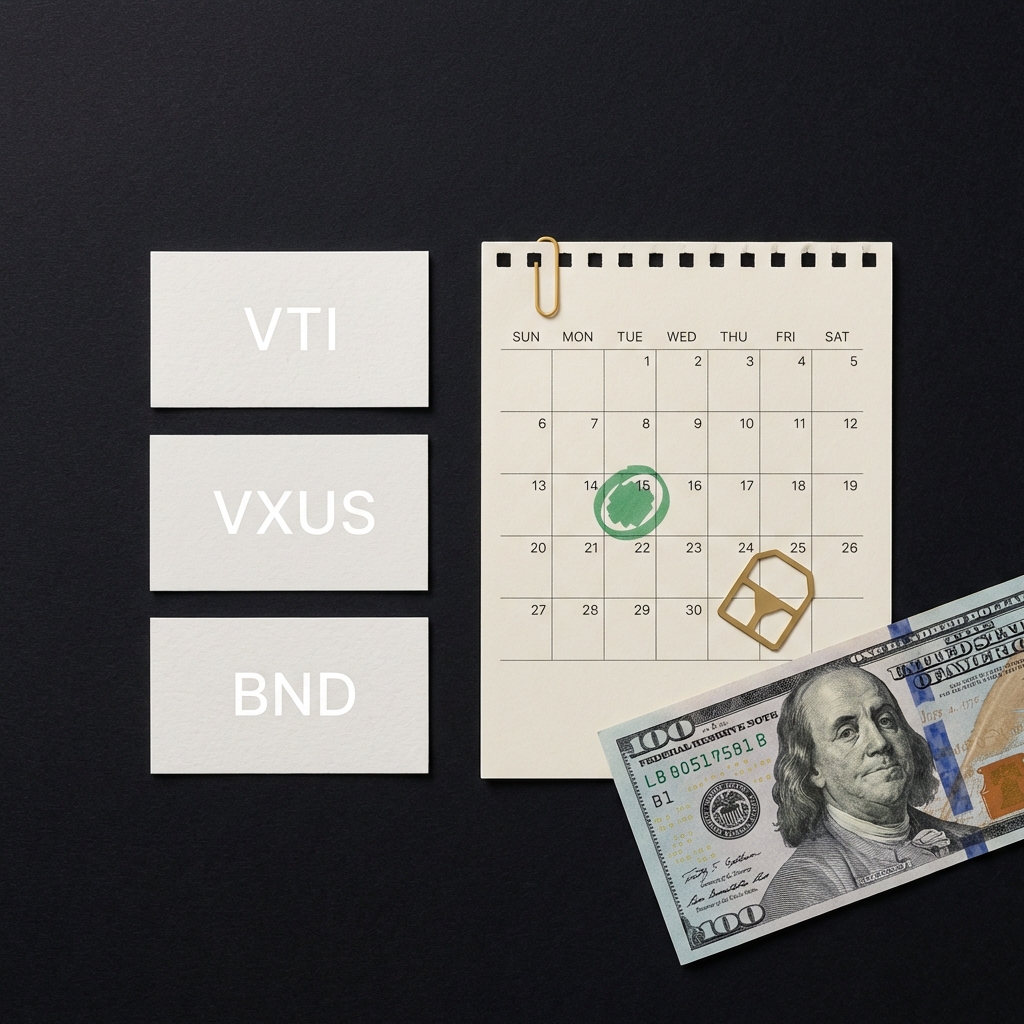
Saving $100 a month is less about a number and more about a habit. It builds financial discipline, invites curiosity about fees and taxes, and, most importantly, sets compounding in motion. Decades of steady savings, even at modest amounts, can accumulate into a meaningful nest egg. Start where you are, automate what you can, keep fees low, use tax-advantaged accounts when they fit, and revisit your plan from time to time. Keep an eye out for the FinancePolice logo when you return to the site for more practical guides.
Get clear, actionable steps to start investing today
Ready to put a plan in place? For clear next steps on building a habit, automating contributions, and choosing low-cost funds, visit FinancePolice’s resources for simple, actionable guides: Get started with FinancePolice advice. They offer plain-language explanations to help you act.
Start with FinancePolice
If you start today, you give future you the valuable gift of time. That gift tends to reward patience in ways that feel almost magical: small, almost invisible contributions that become substantial with the quiet help of compound interest.
Meaningful results depend on your goals and timeline. Generally, the longer you stay invested, the larger the effect of compound interest. As examples: over 20 years, $100 a month can grow substantially; over 30 years it can reach roughly $69,000 at 4%, $122,000 at 7%, or $226,000 at 10% (before fees and taxes). If you’re saving for retirement or long-term goals, treating contributions as decades-long commitments tends to deliver the most dramatic outcomes. That said, even 10–15 years of consistent saving creates a meaningful cushion and improves financial options.
No. For most beginners, low-cost, broadly diversified funds—index funds or ETFs—are the most practical and reliable choice. They spread risk across many companies, are cheaper to own (lower expense ratios), and remove the need to pick winners. Many platforms allow fractional shares, so $100 can be fully invested each month. Over long periods, a simple, diversified approach often outperforms attempts to time the market or pick individual stocks, especially after fees and taxes are considered.
Yes—FinancePolice offers clear, plain-language guides to help beginners choose low-cost funds, understand account types, and set up automatic contributions. While FinancePolice isn’t financial advice from a registered advisor, its practical articles and checklists help you take the right first steps and ask informed questions when you consult a paid professional.
References
- https://www.investor.gov/financial-tools-calculators/calculators/compound-interest-calculator
- https://finred.usalearning.gov/ToolsAndAddRes/Calculators/Savings/calculator/Compound-and-Your-Return
- https://www.schwabmoneywise.com/compound-savings-calculator
- https://financepolice.com/best-micro-investment-apps/
- https://financepolice.com/how-to-budget/
- https://financepolice.com/category/investing/
- https://financepolice.com/
- https://financepolice.com/advertise/


You May Also Like
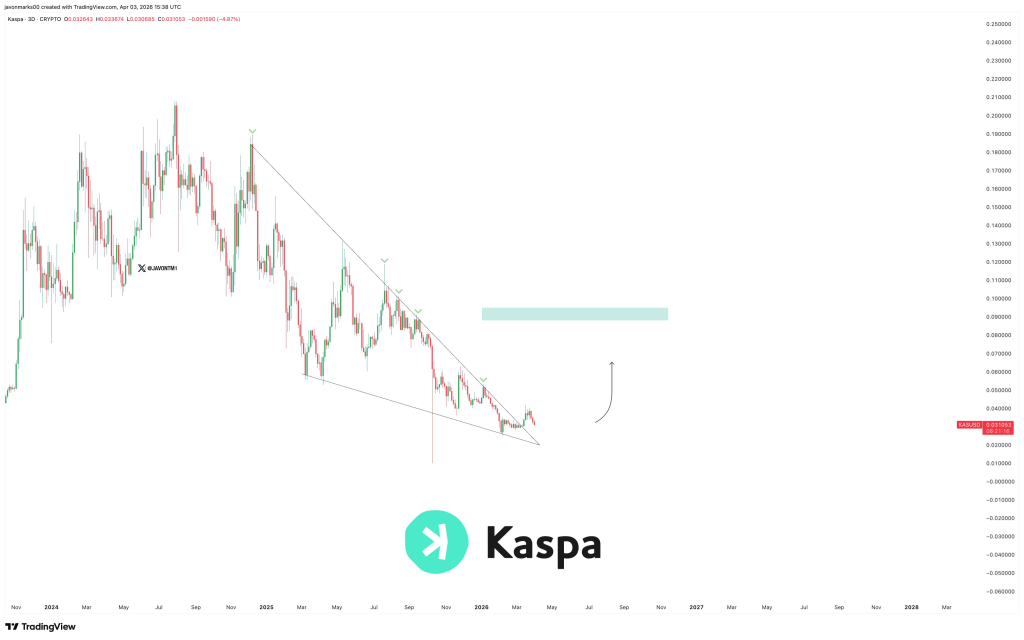
Elite Crypto Trades Updates His Kaspa (KAS) Price Prediction

Leap Wallet to Shut Down by May 28 as Team Winds Down Apps and Validator