

Federal Prison Sentence Highlights Growing DOJ Focus on Crypto Money Laundering Networks
A federal court has imposed a nearly four-year prison sentence on an individual at the center of a $37 million cryptocurrency money laundering operation, marking another significant enforcement action as the Justice Department intensifies its pursuit of digital asset criminals. The sentence reflects the government’s increasingly sophisticated approach to prosecuting complex blockchain-based financial crimes.
The substantial prison term underscores the Justice Department’s commitment to dismantling cryptocurrency laundering networks that have become critical infrastructure for criminal enterprises. With illicit crypto transfers reaching a record $154 billion in 2025, federal prosecutors have prioritized cases involving sophisticated money laundering schemes that exploit the perceived anonymity of digital assets.
The $37 million operation represents the type of mid-tier laundering enterprise that has proliferated as criminals seek to convert illicit proceeds into clean funds. These networks typically employ multi-layered obfuscation techniques, including the use of cryptocurrency mixers, privacy coins, and cross-chain transactions to obscure the origin of funds. The nearly four-year sentence signals federal courts’ recognition that such operations cause substantial harm to the financial system’s integrity.
Federal sentencing guidelines for cryptocurrency-related money laundering have become increasingly stringent as blockchain forensics capabilities have advanced. The ability to trace digital asset movements across multiple wallets and exchanges has enabled prosecutors to build stronger cases against participants in laundering networks. Modern blockchain analysis tools can now follow fund flows through complex transaction patterns that criminals once believed were untraceable.
The timing of this sentence coincides with heightened federal enforcement against crypto crime. Recent months have seen authorities seize over $3.5 million in cryptocurrency from ransomware operators and impose substantial penalties on institutions facilitating illicit transactions. The Treasury Department has simultaneously expanded its sanctions targeting crypto addresses linked to criminal activities, creating additional compliance burdens for digital asset service providers.
Cryptocurrency money laundering operations have evolved significantly since the early days of Bitcoin mixers and privacy-focused altcoins. Today’s schemes often involve sophisticated cross-border networks that exploit regulatory gaps between jurisdictions. Nation-state actors have increasingly used stablecoins to circumvent economic sanctions, with Tether recently freezing $182 million in tokens linked to sanctioned entities.
The $37 million scale of this particular operation places it among the mid-range cases that federal prosecutors have prioritized for deterrent effect. Unlike billion-dollar schemes that generate headlines, these operations represent the day-to-day criminal infrastructure that enables everything from drug trafficking to ransomware attacks. The nearly four-year sentence reflects the cumulative damage such networks inflict on legitimate commerce and financial institutions.
Law enforcement’s success in prosecuting this case demonstrates the maturation of blockchain forensics as an investigative tool. Federal agencies now routinely trace cryptocurrency movements across multiple exchanges, privacy protocols, and international boundaries. This capability has fundamentally altered the risk calculus for criminals who previously viewed digital assets as offering anonymity comparable to cash transactions.
The sentence also highlights the importance of international cooperation in cryptocurrency enforcement. Many laundering operations span multiple jurisdictions, requiring coordination between U.S. authorities and foreign counterparts. The ability to quickly share blockchain analysis data and coordinate simultaneous enforcement actions has become crucial to dismantling these networks before funds can be moved to non-cooperative jurisdictions.
Federal prosecutors have emphasized that cryptocurrency’s technological sophistication does not place it beyond the reach of traditional money laundering statutes. The core elements of money laundering – knowledge of criminal proceeds and intent to conceal their source – apply equally to digital and traditional assets. The four-year sentence reinforces that courts will impose substantial penalties regardless of the underlying technology.
This enforcement action occurs against the backdrop of regulatory uncertainty surrounding digital assets. While Congress debates comprehensive cryptocurrency legislation, federal prosecutors continue applying existing anti-money laundering statutes to blockchain-based schemes. The consistency of these prosecutorial approaches provides clarity for the industry about enforcement priorities and acceptable conduct standards.
The nearly four-year prison term sends a clear message to other participants in cryptocurrency laundering networks. As blockchain analytics capabilities continue advancing and international cooperation deepens, the operational security that once protected these schemes has largely evaporated. Federal authorities now possess the technical tools and legal framework necessary to pursue complex digital asset crimes with the same effectiveness as traditional financial investigations.


You May Also Like

Collision with ambulances kills unlicensed teen motorcyclist in Terengganu
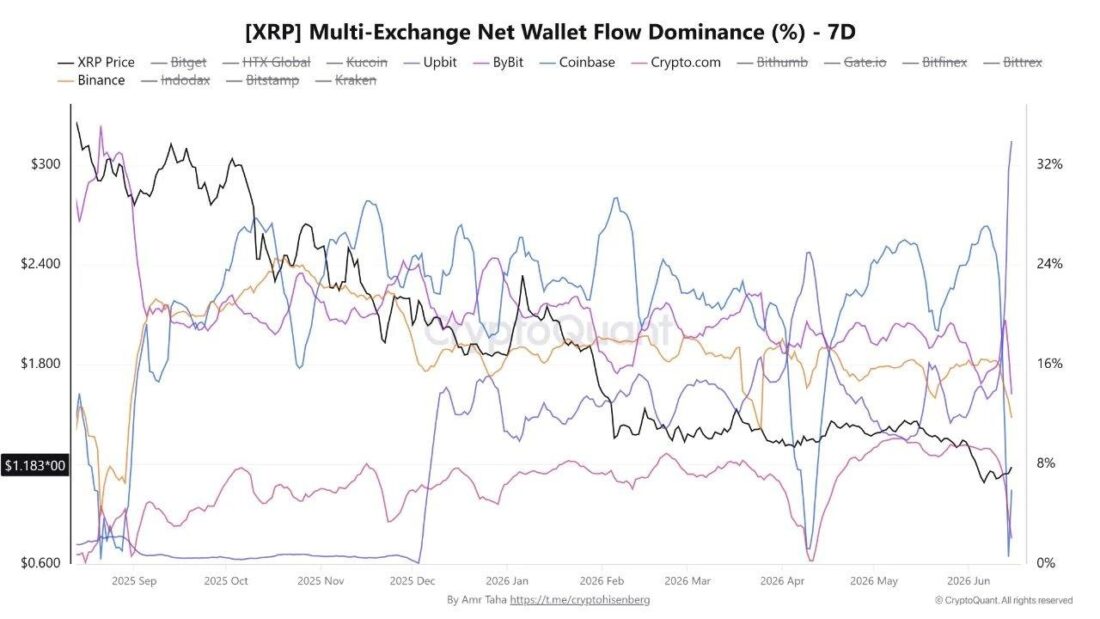
One Exchange Now Controls XRP Flow While the Bear Market Rages

Metaplanet Stock Passes MARA to Become Third-Largest BTC Holder — Stock Slips Anyway



