A cybersecurity veteran turned quantum infrastructure CEO warns that the cryptocurrency industry is dangerously unprepared for the imminent threat of quantum computing to blockchain security. David Carvalho, CEO of post-quantum infrastructure firm Naoris Protocol and a former ethical hacker since age 13, claims that quantum computers could silently dismantle Bitcoin’s cryptographic foundations within years, not decades. His warning comes as governments and tech giants already implement “harvest now, decrypt later” strategies, collecting encrypted blockchain data today for future decryption by quantum computers. Today, approximately 30% of Bitcoin’s circulating supply, roughly 6-7 million BTC , sits vulnerable in older address formats that expose public keys directly to potential quantum attacks. Understanding the Quantum Threat to Bitcoin’s Core Security Unlike traditional computers, which process information in binary bits of 0s and 1s, quantum computers utilize quantum bits, or “qubits,” that can exist in multiple states simultaneously through a property called superposition. This quantum advantage allows these machines to perform calculations exponentially faster than classical computers for specific mathematical problems, particularly those involving large number factorization. Bitcoin’s security relies on elliptic curve cryptography (ECC), specifically the Elliptic Curve Digital Signature Algorithm (ECDSA), which creates a mathematical relationship between public and private keys. Elliptic Curve Digital Signature Algorithm used by Bitcoin (Source: Learn Me A Bitcoin ) Current computers would require billions of years to reverse-engineer a private key from its corresponding public key due to the computational complexity of solving the discrete logarithm problem underlying ECC. However, mathematician Peter Shor demonstrated in 1999 that quantum computers could solve these factorization problems exponentially faster using Shor’s algorithm . This breakthrough would render obsolete the one-way mathematical function that protects Bitcoin wallets, enabling quantum computers to derive private keys from exposed public keys. Carvalho believes this countdown has already begun because adversaries are systematically collecting encrypted blockchain data under the “harvest now, decrypt later” model. “The adversaries collecting encrypted blockchain data right now aren’t waiting to attack today,” Carvalho explained , “They’re building data sets for tomorrow.” ⁉️ Up to 30% of all Bitcoin in circulation could be at risk of theft when Q-Day arrives in three years, according to Naoris CEO David Carvalho. #BTC #QuantumComputing #Crypto https://t.co/nuaDec03hz — Cryptonews.com (@cryptonews) July 21, 2025 Bitcoin addresses fall into different vulnerability categories, with Pay-to-Public-Key (P2PK) formats directly exposing public keys and making them immediate targets for quantum attacks. Reused Pay-to-Pubkey-Hash (P2PKH) addresses also become vulnerable once their owners move funds, as the transaction reveals the previously hidden public key. Due to the accelerating development in quantum computing, federal agencies, such as NIST, have warned since 2022 about the urgent need to adopt quantum-resistant algorithms. Bitcoin users holding funds in older address formats face the highest immediate risk, while node operators and mining infrastructure could become targets for broader network compromise attempts. Crypto’s Collision Course With Advanced Computing The quantum threat to Bitcoin reflects a broader technological inflection point where traditional cryptographic assumptions may no longer hold across digital infrastructure. Major technology companies, including IBM, Google, and Microsoft, are advancing quantum processors with ambitious timelines, with some targeting millions of qubits within this decade. The joint weapon of quantum computing with artificial intelligence creates, as Carvalho describes, an even more perilous scenario, where AI systems could automatically scan blockchain networks for vulnerabilities while quantum processors compromise cryptographic protections. Financial institutions are beginning to acknowledge these risks, with companies like BlackRock noting quantum threats in Bitcoin ETF filings and Tether CEO Paolo Ardoino warning about the impact of quantum computing on inactive wallets . 🚀 @Tether_to CEO @paoloardoino has warned that quantum computing could eventually pose a threat to inactive Bitcoin wallets. #Bitcoin #Quantum https://t.co/u8DCYrTjYw — Cryptonews.com (@cryptonews) February 9, 2025 The threat timeline varies among experts, with estimates ranging from 2027 to the mid-2030s for quantum computers capable of breaking Bitcoin’s cryptographic security. “When the tech catches up, they’ll unlock a decade of secrets in minutes,” Carvalho warned, emphasizing that quantum attacks won’t announce themselves with dramatic computational displays. The key question remains whether legacy cryptocurrencies can adapt fast enough, or if quantum-resistant blockchains will take the lead in the race to secure digital value.A cybersecurity veteran turned quantum infrastructure CEO warns that the cryptocurrency industry is dangerously unprepared for the imminent threat of quantum computing to blockchain security. David Carvalho, CEO of post-quantum infrastructure firm Naoris Protocol and a former ethical hacker since age 13, claims that quantum computers could silently dismantle Bitcoin’s cryptographic foundations within years, not decades. His warning comes as governments and tech giants already implement “harvest now, decrypt later” strategies, collecting encrypted blockchain data today for future decryption by quantum computers. Today, approximately 30% of Bitcoin’s circulating supply, roughly 6-7 million BTC , sits vulnerable in older address formats that expose public keys directly to potential quantum attacks. Understanding the Quantum Threat to Bitcoin’s Core Security Unlike traditional computers, which process information in binary bits of 0s and 1s, quantum computers utilize quantum bits, or “qubits,” that can exist in multiple states simultaneously through a property called superposition. This quantum advantage allows these machines to perform calculations exponentially faster than classical computers for specific mathematical problems, particularly those involving large number factorization. Bitcoin’s security relies on elliptic curve cryptography (ECC), specifically the Elliptic Curve Digital Signature Algorithm (ECDSA), which creates a mathematical relationship between public and private keys. Elliptic Curve Digital Signature Algorithm used by Bitcoin (Source: Learn Me A Bitcoin ) Current computers would require billions of years to reverse-engineer a private key from its corresponding public key due to the computational complexity of solving the discrete logarithm problem underlying ECC. However, mathematician Peter Shor demonstrated in 1999 that quantum computers could solve these factorization problems exponentially faster using Shor’s algorithm . This breakthrough would render obsolete the one-way mathematical function that protects Bitcoin wallets, enabling quantum computers to derive private keys from exposed public keys. Carvalho believes this countdown has already begun because adversaries are systematically collecting encrypted blockchain data under the “harvest now, decrypt later” model. “The adversaries collecting encrypted blockchain data right now aren’t waiting to attack today,” Carvalho explained , “They’re building data sets for tomorrow.” ⁉️ Up to 30% of all Bitcoin in circulation could be at risk of theft when Q-Day arrives in three years, according to Naoris CEO David Carvalho. #BTC #QuantumComputing #Crypto https://t.co/nuaDec03hz — Cryptonews.com (@cryptonews) July 21, 2025 Bitcoin addresses fall into different vulnerability categories, with Pay-to-Public-Key (P2PK) formats directly exposing public keys and making them immediate targets for quantum attacks. Reused Pay-to-Pubkey-Hash (P2PKH) addresses also become vulnerable once their owners move funds, as the transaction reveals the previously hidden public key. Due to the accelerating development in quantum computing, federal agencies, such as NIST, have warned since 2022 about the urgent need to adopt quantum-resistant algorithms. Bitcoin users holding funds in older address formats face the highest immediate risk, while node operators and mining infrastructure could become targets for broader network compromise attempts. Crypto’s Collision Course With Advanced Computing The quantum threat to Bitcoin reflects a broader technological inflection point where traditional cryptographic assumptions may no longer hold across digital infrastructure. Major technology companies, including IBM, Google, and Microsoft, are advancing quantum processors with ambitious timelines, with some targeting millions of qubits within this decade. The joint weapon of quantum computing with artificial intelligence creates, as Carvalho describes, an even more perilous scenario, where AI systems could automatically scan blockchain networks for vulnerabilities while quantum processors compromise cryptographic protections. Financial institutions are beginning to acknowledge these risks, with companies like BlackRock noting quantum threats in Bitcoin ETF filings and Tether CEO Paolo Ardoino warning about the impact of quantum computing on inactive wallets . 🚀 @Tether_to CEO @paoloardoino has warned that quantum computing could eventually pose a threat to inactive Bitcoin wallets. #Bitcoin #Quantum https://t.co/u8DCYrTjYw — Cryptonews.com (@cryptonews) February 9, 2025 The threat timeline varies among experts, with estimates ranging from 2027 to the mid-2030s for quantum computers capable of breaking Bitcoin’s cryptographic security. “When the tech catches up, they’ll unlock a decade of secrets in minutes,” Carvalho warned, emphasizing that quantum attacks won’t announce themselves with dramatic computational displays. The key question remains whether legacy cryptocurrencies can adapt fast enough, or if quantum-resistant blockchains will take the lead in the race to secure digital value.

Bitcoin’s Quantum Countdown Has Already Begun, Warns Veteran Hacker

4 min read

A cybersecurity veteran turned quantum infrastructure CEO warns that the cryptocurrency industry is dangerously unprepared for the imminent threat of quantum computing to blockchain security.

David Carvalho, CEO of post-quantum infrastructure firm Naoris Protocol and a former ethical hacker since age 13, claims that quantum computers could silently dismantle Bitcoin’s cryptographic foundations within years, not decades.

His warning comes as governments and tech giants already implement “harvest now, decrypt later” strategies, collecting encrypted blockchain data today for future decryption by quantum computers.

Today, approximately 30% of Bitcoin’s circulating supply, roughly 6-7 million BTC, sits vulnerable in older address formats that expose public keys directly to potential quantum attacks.

Understanding the Quantum Threat to Bitcoin’s Core Security

Unlike traditional computers, which process information in binary bits of 0s and 1s, quantum computers utilize quantum bits, or “qubits,” that can exist in multiple states simultaneously through a property called superposition.

This quantum advantage allows these machines to perform calculations exponentially faster than classical computers for specific mathematical problems, particularly those involving large number factorization.

Bitcoin’s security relies on elliptic curve cryptography (ECC), specifically the Elliptic Curve Digital Signature Algorithm (ECDSA), which creates a mathematical relationship between public and private keys.
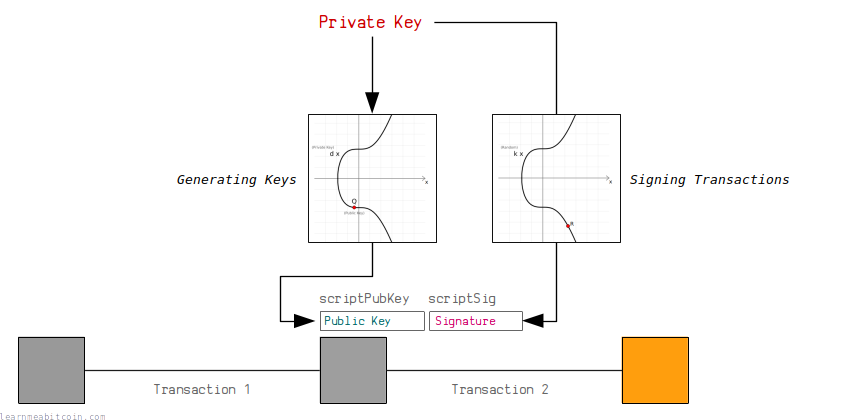
Bitcoin's Quantum Countdown Has Already Begun, Warns Veteran HackerElliptic Curve Digital Signature Algorithm used by Bitcoin (Source: Learn Me A Bitcoin)

Current computers would require billions of years to reverse-engineer a private key from its corresponding public key due to the computational complexity of solving the discrete logarithm problem underlying ECC.

However, mathematician Peter Shor demonstrated in 1999 that quantum computers could solve these factorization problems exponentially faster using Shor’s algorithm.

This breakthrough would render obsolete the one-way mathematical function that protects Bitcoin wallets, enabling quantum computers to derive private keys from exposed public keys.

Carvalho believes this countdown has already begun because adversaries are systematically collecting encrypted blockchain data under the “harvest now, decrypt later” model.

“The adversaries collecting encrypted blockchain data right now aren’t waiting to attack today,” Carvalho explained, “They’re building data sets for tomorrow.”

Bitcoin addresses fall into different vulnerability categories, with Pay-to-Public-Key (P2PK) formats directly exposing public keys and making them immediate targets for quantum attacks.

Reused Pay-to-Pubkey-Hash (P2PKH) addresses also become vulnerable once their owners move funds, as the transaction reveals the previously hidden public key.

Due to the accelerating development in quantum computing, federal agencies, such as NIST, have warned since 2022 about the urgent need to adopt quantum-resistant algorithms.

Bitcoin users holding funds in older address formats face the highest immediate risk, while node operators and mining infrastructure could become targets for broader network compromise attempts.

Crypto’s Collision Course With Advanced Computing

The quantum threat to Bitcoin reflects a broader technological inflection point where traditional cryptographic assumptions may no longer hold across digital infrastructure.

Major technology companies, including IBM, Google, and Microsoft, are advancing quantum processors with ambitious timelines, with some targeting millions of qubits within this decade.

The joint weapon of quantum computing with artificial intelligence creates, as Carvalho describes, an even more perilous scenario, where AI systems could automatically scan blockchain networks for vulnerabilities while quantum processors compromise cryptographic protections.

Financial institutions are beginning to acknowledge these risks, with companies like BlackRock noting quantum threats in Bitcoin ETF filings and Tether CEO Paolo Ardoino warning about the impact of quantum computing on inactive wallets.

The threat timeline varies among experts, with estimates ranging from 2027 to the mid-2030s for quantum computers capable of breaking Bitcoin’s cryptographic security.

“When the tech catches up, they’ll unlock a decade of secrets in minutes,” Carvalho warned, emphasizing that quantum attacks won’t announce themselves with dramatic computational displays.

The key question remains whether legacy cryptocurrencies can adapt fast enough, or if quantum-resistant blockchains will take the lead in the race to secure digital value.


Market Opportunity
Quack AI Logo
Quack AI Price(Q)
$0.017825
$0.017825$0.017825
-5.36%
USD
Quack AI (Q) Live Price Chart
Disclaimer: The articles reposted on this site are sourced from public platforms and are provided for informational purposes only. They do not necessarily reflect the views of MEXC. All rights remain with the original authors. If you believe any content infringes on third-party rights, please contact service@support.mexc.com for removal. MEXC makes no guarantees regarding the accuracy, completeness, or timeliness of the content and is not responsible for any actions taken based on the information provided. The content does not constitute financial, legal, or other professional advice, nor should it be considered a recommendation or endorsement by MEXC.

You May Also Like

Eric Trump bets Fed rate cut will send crypto stocks skyrocketing

Eric Trump bets Fed rate cut will send crypto stocks skyrocketing

Eric Trump is betting big on the fourth quarter. He says if the Federal Reserve cuts rates like everyone’s expecting, crypto stocks are going to rip higher… fast. “I just think you would potentially see this thing skyrocket,” Eric told Yahoo Finance, pointing to the usual year-end momentum in crypto. He says this moment matters […]
Share
Cryptopolitan2025/09/18 00:24
Vlna BitcoinFi boomu sa začína s HYPER

Vlna BitcoinFi boomu sa začína s HYPER

The post Vlna BitcoinFi boomu sa začína s HYPER appeared on BitcoinEthereumNews.com. Bitcoin Hyper získava 16 miliónov USD: Vlna BitcoinFi boomu sa začína s HYPER Sign Up for Our Newsletter! For updates and exclusive offers enter your email. Với hơn 5 năm làm việc trong lĩnh vực phân tích thị trường tiền điện tử, Khang luôn hướng tới mục tiêu đem lại các kiến thức bổ ích về crypto cho bạn đọc. Anh có rất nhiều bài viết chất lượng phân tích xu hướng blockchain, DeFi và các dự án presale coin tiềm năng mới. This website uses cookies. By continuing to use this website you are giving consent to cookies being used. Visit our Privacy Center or Cookie Policy. I Agree Source: https://bitcoinist.com/bitcoin-hyper-raises-16m-bitcoinfi-boom-with-hyper-vn/
Share
BitcoinEthereumNews2025/09/18 10:00
China Blocks Nvidia’s RTX Pro 6000D as Local Chips Rise

China Blocks Nvidia’s RTX Pro 6000D as Local Chips Rise

The post China Blocks Nvidia’s RTX Pro 6000D as Local Chips Rise appeared on BitcoinEthereumNews.com. China Blocks Nvidia’s RTX Pro 6000D as Local Chips Rise China’s internet regulator has ordered the country’s biggest technology firms, including Alibaba and ByteDance, to stop purchasing Nvidia’s RTX Pro 6000D GPUs. According to the Financial Times, the move shuts down the last major channel for mass supplies of American chips to the Chinese market. Why Beijing Halted Nvidia Purchases Chinese companies had planned to buy tens of thousands of RTX Pro 6000D accelerators and had already begun testing them in servers. But regulators intervened, halting the purchases and signaling stricter controls than earlier measures placed on Nvidia’s H20 chip. Image: Nvidia An audit compared Huawei and Cambricon processors, along with chips developed by Alibaba and Baidu, against Nvidia’s export-approved products. Regulators concluded that Chinese chips had reached performance levels comparable to the restricted U.S. models. This assessment pushed authorities to advise firms to rely more heavily on domestic processors, further tightening Nvidia’s already limited position in China. China’s Drive Toward Tech Independence The decision highlights Beijing’s focus on import substitution — developing self-sufficient chip production to reduce reliance on U.S. supplies. “The signal is now clear: all attention is focused on building a domestic ecosystem,” said a representative of a leading Chinese tech company. Nvidia had unveiled the RTX Pro 6000D in July 2025 during CEO Jensen Huang’s visit to Beijing, in an attempt to keep a foothold in China after Washington restricted exports of its most advanced chips. But momentum is shifting. Industry sources told the Financial Times that Chinese manufacturers plan to triple AI chip production next year to meet growing demand. They believe “domestic supply will now be sufficient without Nvidia.” What It Means for the Future With Huawei, Cambricon, Alibaba, and Baidu stepping up, China is positioning itself for long-term technological independence. Nvidia, meanwhile, faces…
Share
BitcoinEthereumNews2025/09/18 01:37