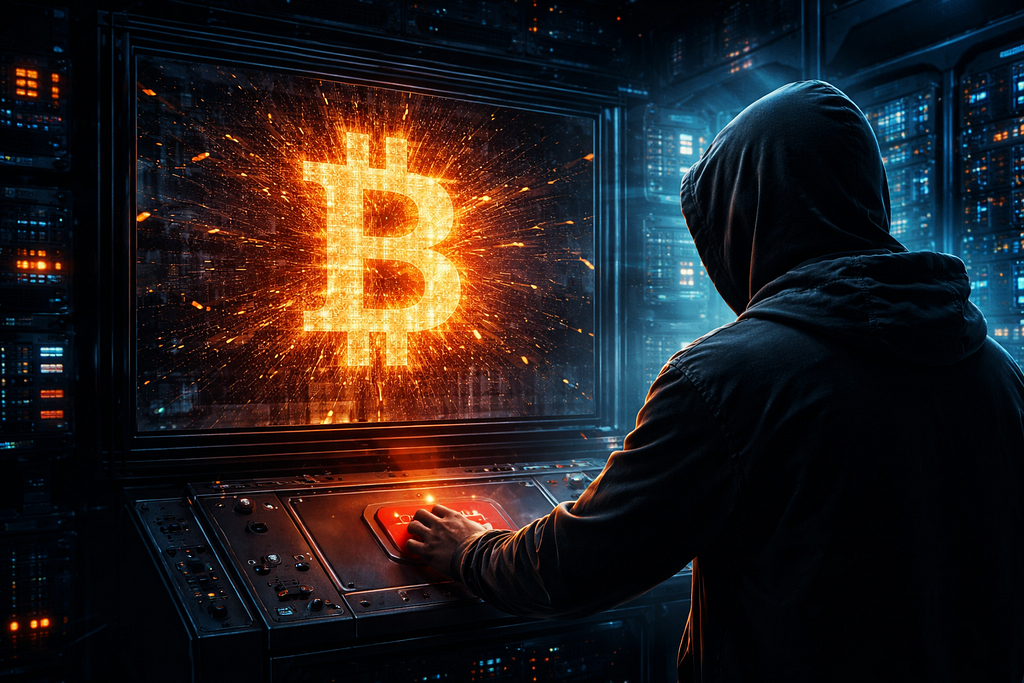
Bitcoin miners halt operations during a major storm, boosting profits by selling power back to grids.Bitcoin miners halt operations during a major storm, boosting profits by selling power back to grids.

Bitcoin Miners Profit Amid US Winter Weather Disruptions

Bitcoin Miners Profit Amid US Winter Weather Disruptions
Key Takeaways:
  • Bitcoin miners halted production during a US winter storm.
  • Miners capitalized through power sale profits.
  • Significant hashrate drop impacted Bitcoin network.

Bitcoin miners profited significantly by shutting down during a severe winter storm in January 2026, particularly in Texas. Miners earned millions through curtailment credits and demand response programs, with some reporting a 150% increase in profits.

Main Story:

A severe winter storm from January 23-25, 2026, led major Bitcoin miners in Texas, under ERCOT, to halt operations, resulting in substantial profits by selling power back to the grid.

The halting of Bitcoin mining operations during the storm underscores the network’s adaptability and the financial incentives involved. The incentive to engage in power sales highlights economic opportunities beyond traditional mining during environmental stress.

Bitcoin miners in Texas, under ERCOT, curtailed operations during a massive winter storm in January 2026. This reduction, about 40% hashrate, allowed miners to profit by selling electricity back to strained grids.

Riot Platforms, Foundry USA, and others were involved, with curtailment credits boosting profits. This temporary shutdown dropped the hashrate to 663 EH/s, affecting Bitcoin block times and production.

Industries, including Bitcoin, were significantly impacted, demonstrating how environmental conditions can shape energy sectors. The financial implications highlight Bitcoin miners’ profit opportunities through non-traditional means, like grid sales.

Miners saw temporary revenue from selling power back during peak demand times. Without official regulatory actions, the role of the ERCOT grid emphasizes miners’ demand on local energy ecosystems.

Bitcoin’s versatility as a power consumer highlights potential regulatory interest in energy dynamics. Past events like Winter Storm Uri suggest ongoing network resiliency adaptations are likely as miners eye economic benefits beyond digital assets.


Disclaimer: The articles reposted on this site are sourced from public platforms and are provided for informational purposes only. They do not necessarily reflect the views of MEXC. All rights remain with the original authors. If you believe any content infringes on third-party rights, please contact service@support.mexc.com for removal. MEXC makes no guarantees regarding the accuracy, completeness, or timeliness of the content and is not responsible for any actions taken based on the information provided. The content does not constitute financial, legal, or other professional advice, nor should it be considered a recommendation or endorsement by MEXC.

You May Also Like

Trump welcomes China and India investment as Venezuela slashes oil taxes

Trump welcomes China and India investment as Venezuela slashes oil taxes

The post Trump welcomes China and India investment as Venezuela slashes oil taxes appeared on BitcoinEthereumNews.com. President Donald Trump said Saturday he’s
Share
BitcoinEthereumNews2026/02/01 17:51
UAE firm bought 49% of Trump-linked crypto startup for $500M: WSJ

UAE firm bought 49% of Trump-linked crypto startup for $500M: WSJ

A Tahnoon-backed Abu Dhabi entity reportedly agreed to buy 49% of World Liberty Financial for $500 million just days before Donald Trump returned to the White House
Share
Coinstats2026/02/01 18:04
SHIB Price Drops as Leadership Concerns Grow

SHIB Price Drops as Leadership Concerns Grow

The post SHIB Price Drops as Leadership Concerns Grow appeared on BitcoinEthereumNews.com. Shiba Inu investors uneasy as Kusama’s silence fuels leadership concerns. SHIB slid 13% in three days, retracing from $0.00001484 to $0.00001305. Shibarium exploit and Kusama’s absence have weighed on investor trust. Shiba Inu investors are voicing concerns about the project’s long-term direction as leadership uncertainty and slow ecosystem progress erode confidence.  The token, which rallied from its meme-coin origins to become the second-largest meme asset by market cap, counts more than 1.5 million holders worldwide. But as SHIB matures, the gap between early hype and current delivery has widened.  The project’s transition into an “ecosystem coin” with spin-off projects and Shibarium, its layer-2 network, once raised expectations. Analysts now point to internal challenges as the main factor holding SHIB back from fulfilling that potential. Kusama’s Silence Adds to Instability Central to the debate is the role of Shytoshi Kusama, Shiba Inu’s pseudonymous lead developer. Investors are concerned about the intermittent disappearance of the project’s lead developer, who repeatedly takes unannounced social media breaks.  For instance, Kusama went silent on X for over a month before resurfacing this week amid growing speculation that he had abandoned the Shiba Inu project.  Kusama returned shortly after the Shibarium bridge suffered an exploit worth around $3 million. However, he did not directly address the issue but only reassured Shiba Inu community members of his commitment to advancing the project.  Although most community members didn’t complain about Kusama’s anonymity in the project’s initial stages, his recent behavior has raised concerns. Many are beginning to develop trust issues, particularly because nobody could reveal the SHIB developer’s identity for the past five years. He has conducted all communications under pseudonyms. SHIB Price Action Reflects Sentiment Shift Market reaction has mirrored the doubts. SHIB, which spiked 26% at the start of September, has since reversed. Over the last…
Share
BitcoinEthereumNews2025/09/18 04:13