The U.S. Securities and Exchange Commission (SEC) has published new guidance that may accelerate institutional adoption of liquid staking in the United States, according to industry sources. In a statement released Tuesday, the agency’s Division of Corporation Finance outlined its view that certain liquid staking arrangements—including the issuance of receipt tokens like stETH—do not constitute securities transactions. The clarification represents progress for the decentralized finance (DeFi) industry, which has long sought regulatory certainty around staking models. It also shows a potential shift in how U.S. regulators approach blockchain-based innovations that involve derivative representations of crypto assets. Liquid Staking Receives Long-Awaited Regulatory Clarity Liquid staking refers to a process in which users stake their crypto assets with a third-party protocol and, in return, receive a new token that represents their deposit and accrued staking rewards. These receipt tokens—such as stETH in the case of Ethereum—allow users to maintain liquidity while still participating in network staking. The SEC’s latest statement seeks to clarify whether these arrangements are subject to U.S. securities laws. For many in the industry, the answer comes as welcome news. Sam Kim, Chief Legal Officer of Lido Labs Foundation, described the guidance as a breakthrough moment: “Yesterday’s SEC guidance confirming that liquid staking and receipt tokens like stETH do not constitute securities provides the much-needed guidance that Lido and the wider industry have needed.” A Big Day for Ethereum: SEC Clarity on Liquid Staking Yesterday's SEC guidance confirming that liquid staking and receipt tokens like stETH do not constitute securities provides the much needed guidance that Lido and the industry have needed. As the leading liquid staking… https://t.co/H2WN1BWKSF — Lido (@LidoFinance) August 6, 2025 Kim explains that the clarity will encourage further participation from institutional investors and platforms that had previously been hesitant due to legal uncertainty. Path Cleared for Institutional and Platform Integration With the regulatory fog lifting, liquid staking protocols may now gain broader acceptance by centralized exchanges, fintech platforms, and regulated investment firms. “This opens the door for U.S.-based platforms, financial institutions, and users to engage with liquid staking protocols more freely,” Kim said. “Without the fear of triggering securities laws, more protocols may integrate liquid staking tokens, expanding their utility across DeFi.” By removing the perceived legal risk associated with staking receipts, the SEC’s position could help increase liquidity and utility for such tokens across the U.S. financial ecosystem. Legal Experts Outline Implications for Broader Token Design Legal analysts suggest the SEC’s language on liquid staking may have broader implications beyond staking itself. Jason Gottlieb, a partner at Morrison Cohen, said the agency’s approach reflects a logical evolution in how it categorizes crypto assets and derivatives. “At heart, a liquid staking token is just a receipt on a token,” said Gottlieb. “With the SEC now correctly taking the position that cryptocurrency tokens themselves are not securities, it makes sense that a receipt for a token is not a receipt for a security.” Gottlieb adds that this reasoning could influence future regulatory considerations around cross-chain bridges and wrapped tokens—mechanisms that similarly rely on receipt-style representations. A Major Step for U.S. Crypto Market Maturity As the world’s largest capital market, the United States remains a key frontier for the growth of digital asset ecosystems. With liquid staking protocols now operating under clearer rules, DeFi builders and institutional actors alike may find renewed confidence to innovate and engage. For stakeholders like Lido and other major protocols, the SEC’s latest stance is more than a legal indicator—it’s an invitation to scale.The U.S. Securities and Exchange Commission (SEC) has published new guidance that may accelerate institutional adoption of liquid staking in the United States, according to industry sources. In a statement released Tuesday, the agency’s Division of Corporation Finance outlined its view that certain liquid staking arrangements—including the issuance of receipt tokens like stETH—do not constitute securities transactions. The clarification represents progress for the decentralized finance (DeFi) industry, which has long sought regulatory certainty around staking models. It also shows a potential shift in how U.S. regulators approach blockchain-based innovations that involve derivative representations of crypto assets. Liquid Staking Receives Long-Awaited Regulatory Clarity Liquid staking refers to a process in which users stake their crypto assets with a third-party protocol and, in return, receive a new token that represents their deposit and accrued staking rewards. These receipt tokens—such as stETH in the case of Ethereum—allow users to maintain liquidity while still participating in network staking. The SEC’s latest statement seeks to clarify whether these arrangements are subject to U.S. securities laws. For many in the industry, the answer comes as welcome news. Sam Kim, Chief Legal Officer of Lido Labs Foundation, described the guidance as a breakthrough moment: “Yesterday’s SEC guidance confirming that liquid staking and receipt tokens like stETH do not constitute securities provides the much-needed guidance that Lido and the wider industry have needed.” A Big Day for Ethereum: SEC Clarity on Liquid Staking Yesterday's SEC guidance confirming that liquid staking and receipt tokens like stETH do not constitute securities provides the much needed guidance that Lido and the industry have needed. As the leading liquid staking… https://t.co/H2WN1BWKSF — Lido (@LidoFinance) August 6, 2025 Kim explains that the clarity will encourage further participation from institutional investors and platforms that had previously been hesitant due to legal uncertainty. Path Cleared for Institutional and Platform Integration With the regulatory fog lifting, liquid staking protocols may now gain broader acceptance by centralized exchanges, fintech platforms, and regulated investment firms. “This opens the door for U.S.-based platforms, financial institutions, and users to engage with liquid staking protocols more freely,” Kim said. “Without the fear of triggering securities laws, more protocols may integrate liquid staking tokens, expanding their utility across DeFi.” By removing the perceived legal risk associated with staking receipts, the SEC’s position could help increase liquidity and utility for such tokens across the U.S. financial ecosystem. Legal Experts Outline Implications for Broader Token Design Legal analysts suggest the SEC’s language on liquid staking may have broader implications beyond staking itself. Jason Gottlieb, a partner at Morrison Cohen, said the agency’s approach reflects a logical evolution in how it categorizes crypto assets and derivatives. “At heart, a liquid staking token is just a receipt on a token,” said Gottlieb. “With the SEC now correctly taking the position that cryptocurrency tokens themselves are not securities, it makes sense that a receipt for a token is not a receipt for a security.” Gottlieb adds that this reasoning could influence future regulatory considerations around cross-chain bridges and wrapped tokens—mechanisms that similarly rely on receipt-style representations. A Major Step for U.S. Crypto Market Maturity As the world’s largest capital market, the United States remains a key frontier for the growth of digital asset ecosystems. With liquid staking protocols now operating under clearer rules, DeFi builders and institutional actors alike may find renewed confidence to innovate and engage. For stakeholders like Lido and other major protocols, the SEC’s latest stance is more than a legal indicator—it’s an invitation to scale.


SEC Clarity on Crypto Liquid Staking Opens Door to Institutional Adoption in U.S.

2025/08/06 21:43
3 min read
For feedback or concerns regarding this content, please contact us at crypto.news@mexc.com

The U.S. Securities and Exchange Commission (SEC) has published new guidance that may accelerate institutional adoption of liquid staking in the United States, according to industry sources.

In a statement released Tuesday, the agency’s Division of Corporation Finance outlined its view that certain liquid staking arrangements—including the issuance of receipt tokens like stETH—do not constitute securities transactions.

The clarification represents progress for the decentralized finance (DeFi) industry, which has long sought regulatory certainty around staking models. It also shows a potential shift in how U.S. regulators approach blockchain-based innovations that involve derivative representations of crypto assets.

Liquid Staking Receives Long-Awaited Regulatory Clarity

Liquid staking refers to a process in which users stake their crypto assets with a third-party protocol and, in return, receive a new token that represents their deposit and accrued staking rewards. These receipt tokens—such as stETH in the case of Ethereum—allow users to maintain liquidity while still participating in network staking.

The SEC’s latest statement seeks to clarify whether these arrangements are subject to U.S. securities laws. For many in the industry, the answer comes as welcome news.

Sam Kim, Chief Legal Officer of Lido Labs Foundation, described the guidance as a breakthrough moment: “Yesterday’s SEC guidance confirming that liquid staking and receipt tokens like stETH do not constitute securities provides the much-needed guidance that Lido and the wider industry have needed.”

Kim explains that the clarity will encourage further participation from institutional investors and platforms that had previously been hesitant due to legal uncertainty.

Path Cleared for Institutional and Platform Integration

With the regulatory fog lifting, liquid staking protocols may now gain broader acceptance by centralized exchanges, fintech platforms, and regulated investment firms.

“This opens the door for U.S.-based platforms, financial institutions, and users to engage with liquid staking protocols more freely,” Kim said. “Without the fear of triggering securities laws, more protocols may integrate liquid staking tokens, expanding their utility across DeFi.”

By removing the perceived legal risk associated with staking receipts, the SEC’s position could help increase liquidity and utility for such tokens across the U.S. financial ecosystem.

Legal Experts Outline Implications for Broader Token Design

Legal analysts suggest the SEC’s language on liquid staking may have broader implications beyond staking itself. Jason Gottlieb, a partner at Morrison Cohen, said the agency’s approach reflects a logical evolution in how it categorizes crypto assets and derivatives.

“At heart, a liquid staking token is just a receipt on a token,” said Gottlieb. “With the SEC now correctly taking the position that cryptocurrency tokens themselves are not securities, it makes sense that a receipt for a token is not a receipt for a security.”

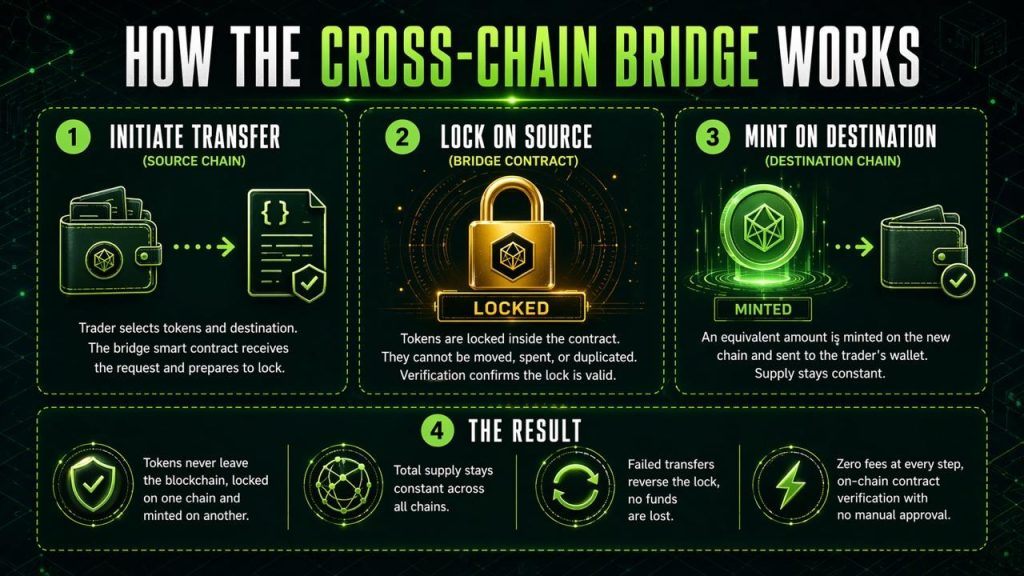
Gottlieb adds that this reasoning could influence future regulatory considerations around cross-chain bridges and wrapped tokens—mechanisms that similarly rely on receipt-style representations.

A Major Step for U.S. Crypto Market Maturity

As the world’s largest capital market, the United States remains a key frontier for the growth of digital asset ecosystems. With liquid staking protocols now operating under clearer rules, DeFi builders and institutional actors alike may find renewed confidence to innovate and engage.

For stakeholders like Lido and other major protocols, the SEC’s latest stance is more than a legal indicator—it’s an invitation to scale.

Market Opportunity
Threshold Logo
Threshold Price(T)
$0.006514
$0.006514$0.006514
-2.90%
USD
Threshold (T) Live Price Chart
Disclaimer: The articles reposted on this site are sourced from public platforms and are provided for informational purposes only. They do not necessarily reflect the views of MEXC. All rights remain with the original authors. If you believe any content infringes on third-party rights, please contact crypto.news@mexc.com for removal. MEXC makes no guarantees regarding the accuracy, completeness, or timeliness of the content and is not responsible for any actions taken based on the information provided. The content does not constitute financial, legal, or other professional advice, nor should it be considered a recommendation or endorsement by MEXC.

You May Also Like

Top Low-Cost Cryptocurrencies Analysts Are Watching for 2027

Top Low-Cost Cryptocurrencies Analysts Are Watching for 2027

Investors are now hunting for projects that combine affordability with actual utility. While famous names still hold the spotlight, a new crypto era of decentralized
Share
Techbullion2026/03/14 10:49
Google Cloud taps EigenLayer to bring trust to agentic payments

Google Cloud taps EigenLayer to bring trust to agentic payments

The post Google Cloud taps EigenLayer to bring trust to agentic payments appeared on BitcoinEthereumNews.com. Two days after unveiling AP2 — a universal payment layer for AI agents that supports everything from credit cards to stablecoins — Google and EigenLayer have released details of their partnership to bring verifiability and restaking security to the stack, using Ethereum. In addition to enabling verifiable compute and slashing-backed payment coordination, EigenCloud will support insured and sovereign AI agents, which introduce consequences for failure or deviation from specified behavior. Sovereign agents are positioned as autonomous actors that can own property, make decisions, and execute actions independently — think smart contracts with embedded intelligence. From demos to dollars AP2 extends Google’s agent-to-agent (A2A) protocol using the HTTP 402 status code — long reserved for “payment required” — to standardize payment requests between agents across different networks. It already supports stablecoins like USDC, and Coinbase has demoed an agent checkout using its Wallet-as-a-Service. Paired with a system like Lit Protocol’s Vincent — which enforces per-action policies and key custody at signing — Google’s AP2 with EigenCloud’s verifiability and cross-chain settlement could form an end-to-end trust loop. Payments between agents aren’t as simple as they are often made to sound by “Crypto x AI” LARPs. When an AI agent requests a payment in USDC on Base and the payer’s funds are locked in ETH on Arbitrum, the transaction stalls — unless something abstracts the bridging, swapping and delivery. That’s where EigenCloud comes in. Sreeram Kannan, founder of EigenLayer, said the integration will create agents that not only run on-chain verifiable compute, but are also economically incentivized to behave within programmable bounds. Through restaked operators, EigenCloud powers a verifiable payment service that handles asset routing and chain abstraction, with dishonest behavior subject to slashing. It also introduces cryptographic accountability to the agents themselves, enabling proofs that an agent actually executed the task it…
Share
BitcoinEthereumNews2025/09/19 03:52
SEC Approves First US Multi-Crypto ETP — Insights from Grayscale CEO

SEC Approves First US Multi-Crypto ETP — Insights from Grayscale CEO

The U.S. Securities and Exchange Commission (SEC) has greenlit the first multi-asset cryptocurrency exchange-traded product (ETP) in the United States, authorizing Grayscale’s Digital Large Cap Fund (GLDC) for public listing. This groundbreaking development offers investors exposure to five leading cryptocurrencies: Bitcoin (BTC), Ethereum (ETH), XRP (XRP), Solana (SOL), and Cardano (ADA). The approval, disclosed in [...]
Share
Crypto Breaking News2025/09/18 17:26