

Crypto Fear & Greed Index Plummets to 14: Navigating the Chilling ‘Extreme Fear’ Zone
BitcoinWorld
Crypto Fear & Greed Index Plummets to 14: Navigating the Chilling ‘Extreme Fear’ Zone
Global cryptocurrency markets entered a new week gripped by palpable anxiety, as the widely monitored Crypto Fear & Greed Index registered a sobering score of 14, firmly entrenched in the “Extreme Fear” territory. This critical sentiment gauge, published by data provider Alternative on April 7, 2025, represents a seven-point increase from the previous day’s reading but remains perilously close to zero—the threshold for maximum market pessimism. The index’s stubborn position highlights a period of significant stress and uncertainty for digital asset investors worldwide, prompting deeper analysis into the mechanics and implications of this powerful market barometer.
Decoding the Crypto Fear & Greed Index Score of 14
The Crypto Fear & Greed Index serves as a composite thermometer for market psychology. Analysts calculate its value from 0 to 100 using a specific, weighted formula. A score of 14, while up from 7, unequivocally signals extreme fear. The index’s methodology is transparent and multi-faceted, designed to capture both on-chain and off-chain signals. Market volatility and trading volume each contribute 25% to the final score, reflecting raw price action and investor participation. Social media sentiment and survey data each account for 15%, gauging the crowd’s emotional pulse. Finally, Bitcoin’s dominance share of the total crypto market cap and relevant Google search trends each provide a 10% weighting, indicating market structure and public interest levels.
This quantitative approach transforms subjective emotion into a tangible metric. Consequently, the current reading provides a data-backed confirmation of the nervous climate. Historically, prolonged periods with scores below 20 have often coincided with market capitulation or consolidation phases. However, they have also frequently preceded major buying opportunities for contrarian investors, a point many analysts emphasize during such downturns.
Historical Context and Market Impact of Extreme Fear
To understand the gravity of a score of 14, we must examine historical parallels. The index has dipped into “Extreme Fear” during several notable crypto winters and sharp corrections. For instance, it reached single digits during the market trough following the FTX collapse in late 2022 and again during the prolonged bear market of 2018-2019. These periods were characterized by high volatility, negative news cycles, and declining trading volumes—factors clearly present in the current calculation.
The persistence of extreme fear directly impacts market behavior. Firstly, it often correlates with decreased liquidity as risk-averse traders move to the sidelines. Secondly, it can amplify sell-offs, as fearful investors rush to exit positions at any price, creating a negative feedback loop. Conversely, this environment typically sees a reduction in speculative “meme coin” mania and leverage, potentially laying a more stable foundation for future growth. The market’s structure often becomes healthier, albeit painfully, during these phases.
| Index Range | Sentiment Label | Typical Market Behavior |
|---|---|---|
| 0-24 | Extreme Fear | Capitulation, high volatility, low volume |
| 25-49 | Fear | Caution, consolidation, selective buying |
| 50-74 | Greed | Growing confidence, increased speculation |
| 75-100 | Extreme Greed | Euphoria, FOMO, potential market tops |
Expert Analysis on the Current Sentiment Climate
Market strategists point to a confluence of factors sustaining the extreme fear reading. Macroeconomic headwinds, including persistent inflation concerns and hawkish central bank policies, continue to pressure risk assets globally. Within the crypto ecosystem, specific triggers include regulatory uncertainty in key jurisdictions and the maturation of the market post the 2021 bull run. As noted by several blockchain analysts, the current sentiment is not an anomaly but a recurring feature of the asset class’s volatile cycles.
Furthermore, the seven-point daily increase to 14, while minor, may indicate initial signs of fear exhaustion. This subtle shift could stem from bargain-hunting by long-term investors or a reduction in panic selling. However, experts universally caution that a single day’s movement does not constitute a trend reversal. They advise monitoring for a sustained climb above the 25 threshold to signal a meaningful shift from “Extreme Fear” to mere “Fear.” The path forward likely depends on broader financial market stability and clear regulatory developments.
The Role of Volatility and Social Media in the Index
Volatility, a 25% component of the index, has been exceptionally pronounced. Sharp intraday price swings, particularly in Bitcoin and major altcoins, contribute directly to the low score. High volatility in a downtrend typically exacerbates fear, as investors struggle to find stable support levels. Simultaneously, social media analysis (15% of the index) reveals a predominance of negative or anxious commentary across platforms like X (formerly Twitter) and Reddit. The tone of discussion has shifted from price predictions to risk management and survival strategies, a classic hallmark of fear-dominated markets.
Key metrics from this sector include:
- Negative Sentiment Ratio: The proportion of bearish to bullish social posts has widened significantly.
- Volume of “Fear” Keywords: Mentions of terms like “crash,” “sell,” and “bottom” have spiked.
- Survey Data: Retail investor surveys show a marked decline in short-term optimism.
These digital footprints collectively paint a picture of a cautious and worried community, which the index quantitatively captures.
Conclusion
The Crypto Fear & Greed Index reading of 14 serves as a stark, data-driven reflection of the prevailing “Extreme Fear” in cryptocurrency markets. This metric, derived from volatility, volume, social sentiment, and search trends, provides invaluable context beyond simple price charts. While historically such depths of pessimism have presented long-term buying opportunities, they also signify periods of significant risk and potential further downside. For investors, the index is a crucial tool for gauging market psychology, reminding them that emotional extremes often mark turning points. Navigating the current landscape requires patience, rigorous risk assessment, and an understanding that market sentiment, as measured by indices like this, is inherently cyclical.
FAQs
Q1: What does a Crypto Fear & Greed Index score of 14 mean?
A score of 14 indicates “Extreme Fear” in the market. The index ranges from 0 (maximum fear) to 100 (maximum greed). This low score suggests investors are highly pessimistic, which often occurs during sharp downturns or periods of high uncertainty.
Q2: How is the Crypto Fear & Greed Index calculated?
The index uses a weighted formula: volatility (25%), trading volume (25%), social media sentiment (15%), surveys (15%), Bitcoin’s market dominance (10%), and Google search trends (10%). These factors combine to create a single sentiment score.
Q3: Has the index been this low before?
Yes. The index has entered “Extreme Fear” (below 25) multiple times, notably during the 2018 bear market, the March 2020 COVID crash, and the late 2022 FTX collapse. These periods were followed by significant market recoveries, though timing varied greatly.
Q4: Is extreme fear a good time to buy cryptocurrency?
Contrarian investors often view extreme fear as a potential buying opportunity, as prices may be undervalued. However, it is not a timing signal. It indicates high risk and potential for further decline. Any investment should be based on personal research and risk tolerance.
Q5: How often does the Crypto Fear & Greed Index update?
The index updates daily. The data provider, Alternative, typically publishes the new score based on a 24-hour rolling analysis of its component metrics, giving a near real-time view of market sentiment.
This post Crypto Fear & Greed Index Plummets to 14: Navigating the Chilling ‘Extreme Fear’ Zone first appeared on BitcoinWorld.


You May Also Like
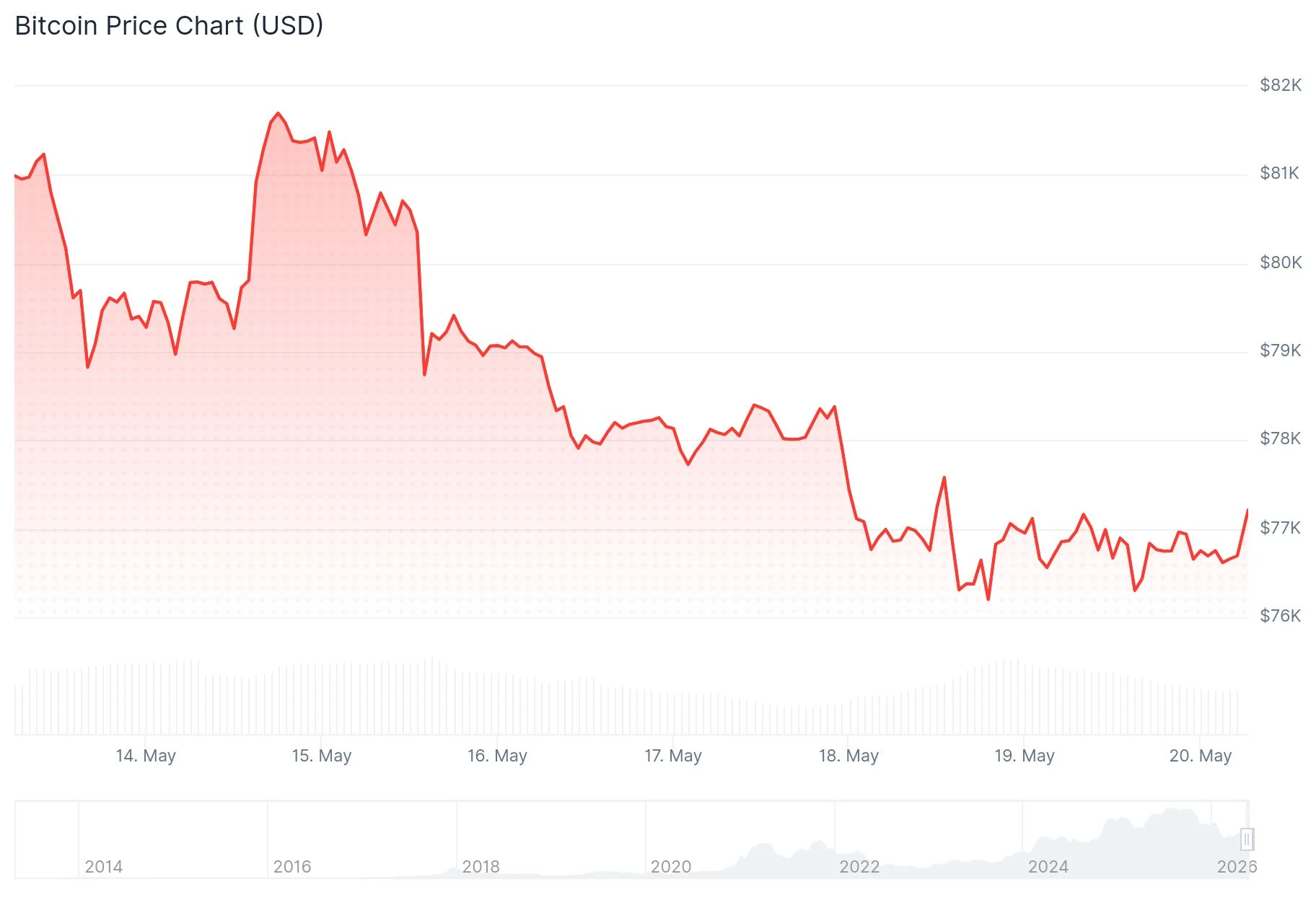
Bitcoin (BTC) Hovers Above $77K Amid Iran Diplomacy and Rising Treasury Yields

Beyond Cleaning: What Else You Must Check Before Moving Out




