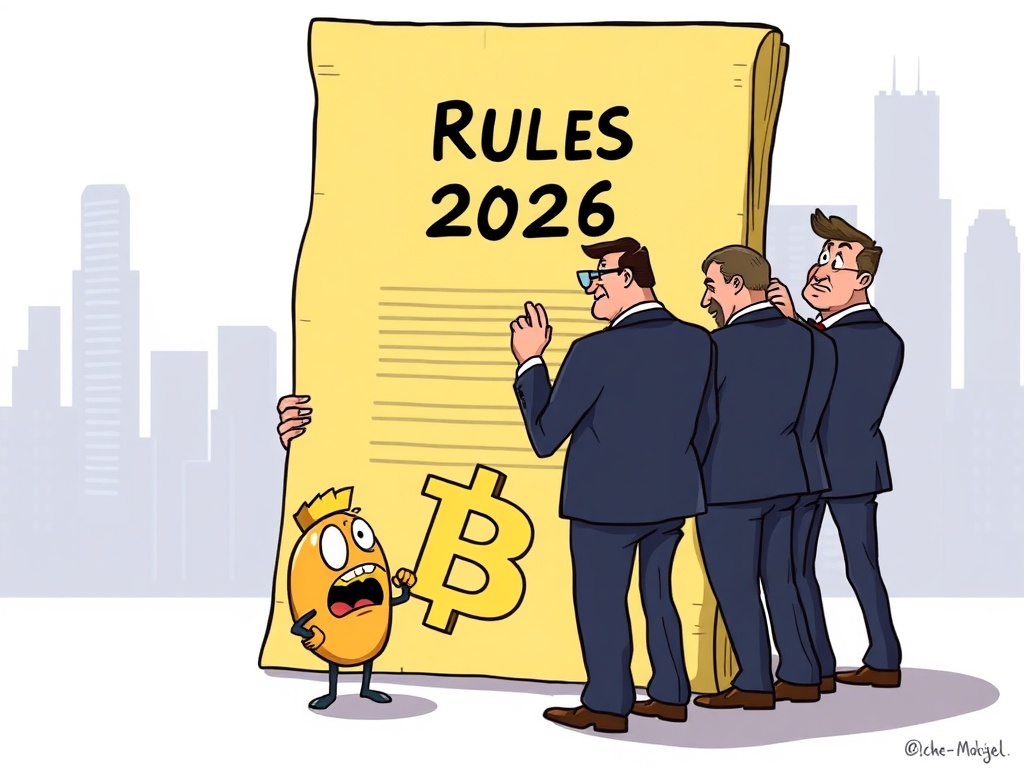
BitcoinWorld Basel Crypto Rules: Why Financial Giants Demand a Crucial Pause on 2026 Standards The global financial landscape constantly evolves, and with the rise of digital assets, regulators face the complex task of integrating cryptocurrencies into traditional banking frameworks. A significant development has emerged as major financial industry associations are now urging the Basel Committee on Banking Supervision (BCBS) to reconsider its impending 2026 Basel crypto rules. This push highlights growing concerns about the feasibility and impact of these stringent regulations on the evolving crypto market. Understanding the Proposed Basel Crypto Rules What exactly are these Basel crypto rules that have the financial world buzzing? The Basel Committee, a global standard-setter for banking regulation, developed a framework to manage banks’ exposure to crypto assets. These rules, initially drafted in 2022, assign significant risk weights to cryptocurrencies held by banks. High-Risk Classification: Under the current framework, popular cryptocurrencies like Bitcoin (BTC) and Ethereum (ETH) carry a 100% risk weight. This means banks holding these assets must set aside capital equivalent to their full value. Extreme Capital Charges: For many other tokens, the rules impose an even more severe 1,250% charge. To put this in perspective, this is substantially higher than capital requirements for traditional assets such as corporate bonds or equities. This extreme charge essentially makes it economically unviable for banks to hold these types of crypto assets. These standards were conceived in a period of market turbulence, specifically following major collapses like the Terra token ecosystem and the FTX crypto exchange. Regulators aimed to protect the financial system from similar shocks by imposing strict capital requirements. Why Are Financial Groups Urging a Pause on Basel Crypto Rules? Eight prominent financial industry associations, including powerful groups like the Institute of International Finance (IIF) and the Global Financial Markets Association (GFMA), recently sent a letter to the BCBS. Their core message was clear: “temporarily pause” the implementation of these Basel crypto rules set for January 2026. Their primary argument centers on a fundamental shift in market conditions. They contend that the policy environment in 2025 is “fundamentally different” from 2022, when the rules were initially drafted. Here’s why they believe a pause is necessary: Market Evolution: The crypto market has matured significantly since the collapses of Terra and FTX. There’s greater clarity, improved risk management practices, and evolving regulatory approaches in various jurisdictions. Innovation Constraint: The current punitive capital charges could stifle innovation within traditional finance by discouraging banks from engaging with digital assets. This might push crypto activities outside regulated banking sectors, potentially increasing systemic risk rather than reducing it. Global Consistency: Financial groups seek a more harmonized global approach. A pause allows for further dialogue and refinement, ensuring the rules align better with emerging national regulations and foster a level playing field. The associations emphasize that a pause would allow for a more thorough review and adjustment of the framework to reflect the current state of the digital asset market, ensuring that the rules are both effective and practical. What Are the Potential Impacts of These Basel Crypto Rules? The implications of the current Basel crypto rules are far-reaching for banks and the broader financial ecosystem. If implemented as planned, these rules could significantly alter how traditional financial institutions interact with cryptocurrencies. Limited Bank Participation: The high capital charges could deter banks from offering crypto-related services, such as custody, trading, or lending, to their clients. This might mean fewer regulated pathways for institutional crypto adoption. Competitive Disadvantage: Banks operating under these strict rules might find themselves at a disadvantage compared to less regulated entities or those in jurisdictions with more lenient frameworks. Impact on Crypto Market: While the rules aim to de-risk banks, they could inadvertently slow down the integration of digital assets into the mainstream financial system, potentially hindering the market’s overall growth and maturation within regulated channels. The industry groups are not against regulation, but they advocate for a framework that is proportionate to the actual risks and does not unduly penalize responsible engagement with digital assets. The Road Ahead: Revisiting Basel Crypto Rules The call for a pause puts the ball back in the Basel Committee’s court. What might happen next for these crucial Basel crypto rules? The BCBS will likely consider the industry’s concerns, weighing the need for financial stability against fostering innovation and ensuring a practical regulatory environment. Dialogue between regulators and the financial industry is crucial to finding a balanced approach. This situation underscores the dynamic nature of cryptocurrency regulation. As the digital asset space continues to evolve, regulatory frameworks must also adapt to ensure they remain relevant, effective, and supportive of responsible innovation. The industry’s plea for a pause is a clear signal that current conditions warrant a fresh look at the rules governing banks’ crypto exposures. In conclusion, the unified call from major financial trade groups to pause the 2026 Basel crypto rules highlights a critical juncture in cryptocurrency regulation. Their argument—that market conditions have fundamentally changed since the rules were drafted—underscores the need for adaptive and proportionate frameworks. The outcome of this appeal will significantly influence how traditional banks engage with digital assets and shape the future integration of crypto into the global financial system. Frequently Asked Questions (FAQs) About Basel Crypto Rules Q1: What are the Basel Committee’s 2026 crypto rules? A1: These rules, drafted by the Basel Committee on Banking Supervision (BCBS), set capital requirements for banks’ exposure to cryptocurrencies. They assign high risk weights (e.g., 100% for BTC/ETH, 1,250% for many other tokens) to ensure financial stability. Q2: Why are financial groups asking for a pause on the Basel crypto rules? A2: Major financial industry associations argue that market conditions have fundamentally changed since the rules were drafted in 2022. They believe the current framework is too punitive, could stifle innovation, and needs reassessment to reflect the evolving digital asset landscape. Q3: Which organizations signed the letter to the BCBS? A3: Eight major financial industry associations sent the letter, including prominent groups like the Institute of International Finance (IIF) and the Global Financial Markets Association (GFMA). Q4: How do these rules impact banks holding crypto assets? A4: The stringent capital charges make it economically challenging for banks to hold crypto assets or offer related services. This could limit bank participation in the crypto market and potentially put them at a competitive disadvantage. Q5: What does a ‘1,250% charge’ mean for crypto assets? A5: A 1,250% charge means banks must hold capital equal to 12.5 times the value of the crypto asset. This makes it extremely expensive and often unfeasible for banks to hold such assets, effectively acting as a deterrent. Q6: Will the Basel Committee likely pause the rules? A6: While the BCBS has not yet formally responded, they will likely consider the industry’s concerns. The outcome will depend on ongoing dialogue and their assessment of the evolving market and regulatory environment. If you found this article insightful, consider sharing it with your network on social media. Your shares help spread awareness about crucial developments in crypto regulation and foster a more informed community. To learn more about the latest crypto market trends, explore our article on key developments shaping digital asset institutional adoption. This post Basel Crypto Rules: Why Financial Giants Demand a Crucial Pause on 2026 Standards first appeared on BitcoinWorld and is written by Editorial TeamBitcoinWorld Basel Crypto Rules: Why Financial Giants Demand a Crucial Pause on 2026 Standards The global financial landscape constantly evolves, and with the rise of digital assets, regulators face the complex task of integrating cryptocurrencies into traditional banking frameworks. A significant development has emerged as major financial industry associations are now urging the Basel Committee on Banking Supervision (BCBS) to reconsider its impending 2026 Basel crypto rules. This push highlights growing concerns about the feasibility and impact of these stringent regulations on the evolving crypto market. Understanding the Proposed Basel Crypto Rules What exactly are these Basel crypto rules that have the financial world buzzing? The Basel Committee, a global standard-setter for banking regulation, developed a framework to manage banks’ exposure to crypto assets. These rules, initially drafted in 2022, assign significant risk weights to cryptocurrencies held by banks. High-Risk Classification: Under the current framework, popular cryptocurrencies like Bitcoin (BTC) and Ethereum (ETH) carry a 100% risk weight. This means banks holding these assets must set aside capital equivalent to their full value. Extreme Capital Charges: For many other tokens, the rules impose an even more severe 1,250% charge. To put this in perspective, this is substantially higher than capital requirements for traditional assets such as corporate bonds or equities. This extreme charge essentially makes it economically unviable for banks to hold these types of crypto assets. These standards were conceived in a period of market turbulence, specifically following major collapses like the Terra token ecosystem and the FTX crypto exchange. Regulators aimed to protect the financial system from similar shocks by imposing strict capital requirements. Why Are Financial Groups Urging a Pause on Basel Crypto Rules? Eight prominent financial industry associations, including powerful groups like the Institute of International Finance (IIF) and the Global Financial Markets Association (GFMA), recently sent a letter to the BCBS. Their core message was clear: “temporarily pause” the implementation of these Basel crypto rules set for January 2026. Their primary argument centers on a fundamental shift in market conditions. They contend that the policy environment in 2025 is “fundamentally different” from 2022, when the rules were initially drafted. Here’s why they believe a pause is necessary: Market Evolution: The crypto market has matured significantly since the collapses of Terra and FTX. There’s greater clarity, improved risk management practices, and evolving regulatory approaches in various jurisdictions. Innovation Constraint: The current punitive capital charges could stifle innovation within traditional finance by discouraging banks from engaging with digital assets. This might push crypto activities outside regulated banking sectors, potentially increasing systemic risk rather than reducing it. Global Consistency: Financial groups seek a more harmonized global approach. A pause allows for further dialogue and refinement, ensuring the rules align better with emerging national regulations and foster a level playing field. The associations emphasize that a pause would allow for a more thorough review and adjustment of the framework to reflect the current state of the digital asset market, ensuring that the rules are both effective and practical. What Are the Potential Impacts of These Basel Crypto Rules? The implications of the current Basel crypto rules are far-reaching for banks and the broader financial ecosystem. If implemented as planned, these rules could significantly alter how traditional financial institutions interact with cryptocurrencies. Limited Bank Participation: The high capital charges could deter banks from offering crypto-related services, such as custody, trading, or lending, to their clients. This might mean fewer regulated pathways for institutional crypto adoption. Competitive Disadvantage: Banks operating under these strict rules might find themselves at a disadvantage compared to less regulated entities or those in jurisdictions with more lenient frameworks. Impact on Crypto Market: While the rules aim to de-risk banks, they could inadvertently slow down the integration of digital assets into the mainstream financial system, potentially hindering the market’s overall growth and maturation within regulated channels. The industry groups are not against regulation, but they advocate for a framework that is proportionate to the actual risks and does not unduly penalize responsible engagement with digital assets. The Road Ahead: Revisiting Basel Crypto Rules The call for a pause puts the ball back in the Basel Committee’s court. What might happen next for these crucial Basel crypto rules? The BCBS will likely consider the industry’s concerns, weighing the need for financial stability against fostering innovation and ensuring a practical regulatory environment. Dialogue between regulators and the financial industry is crucial to finding a balanced approach. This situation underscores the dynamic nature of cryptocurrency regulation. As the digital asset space continues to evolve, regulatory frameworks must also adapt to ensure they remain relevant, effective, and supportive of responsible innovation. The industry’s plea for a pause is a clear signal that current conditions warrant a fresh look at the rules governing banks’ crypto exposures. In conclusion, the unified call from major financial trade groups to pause the 2026 Basel crypto rules highlights a critical juncture in cryptocurrency regulation. Their argument—that market conditions have fundamentally changed since the rules were drafted—underscores the need for adaptive and proportionate frameworks. The outcome of this appeal will significantly influence how traditional banks engage with digital assets and shape the future integration of crypto into the global financial system. Frequently Asked Questions (FAQs) About Basel Crypto Rules Q1: What are the Basel Committee’s 2026 crypto rules? A1: These rules, drafted by the Basel Committee on Banking Supervision (BCBS), set capital requirements for banks’ exposure to cryptocurrencies. They assign high risk weights (e.g., 100% for BTC/ETH, 1,250% for many other tokens) to ensure financial stability. Q2: Why are financial groups asking for a pause on the Basel crypto rules? A2: Major financial industry associations argue that market conditions have fundamentally changed since the rules were drafted in 2022. They believe the current framework is too punitive, could stifle innovation, and needs reassessment to reflect the evolving digital asset landscape. Q3: Which organizations signed the letter to the BCBS? A3: Eight major financial industry associations sent the letter, including prominent groups like the Institute of International Finance (IIF) and the Global Financial Markets Association (GFMA). Q4: How do these rules impact banks holding crypto assets? A4: The stringent capital charges make it economically challenging for banks to hold crypto assets or offer related services. This could limit bank participation in the crypto market and potentially put them at a competitive disadvantage. Q5: What does a ‘1,250% charge’ mean for crypto assets? A5: A 1,250% charge means banks must hold capital equal to 12.5 times the value of the crypto asset. This makes it extremely expensive and often unfeasible for banks to hold such assets, effectively acting as a deterrent. Q6: Will the Basel Committee likely pause the rules? A6: While the BCBS has not yet formally responded, they will likely consider the industry’s concerns. The outcome will depend on ongoing dialogue and their assessment of the evolving market and regulatory environment. If you found this article insightful, consider sharing it with your network on social media. Your shares help spread awareness about crucial developments in crypto regulation and foster a more informed community. To learn more about the latest crypto market trends, explore our article on key developments shaping digital asset institutional adoption. This post Basel Crypto Rules: Why Financial Giants Demand a Crucial Pause on 2026 Standards first appeared on BitcoinWorld and is written by Editorial Team

Basel Crypto Rules: Why Financial Giants Demand a Crucial Pause on 2026 Standards

BitcoinWorld
Basel Crypto Rules: Why Financial Giants Demand a Crucial Pause on 2026 Standards

The global financial landscape constantly evolves, and with the rise of digital assets, regulators face the complex task of integrating cryptocurrencies into traditional banking frameworks. A significant development has emerged as major financial industry associations are now urging the Basel Committee on Banking Supervision (BCBS) to reconsider its impending 2026 Basel crypto rules. This push highlights growing concerns about the feasibility and impact of these stringent regulations on the evolving crypto market.

Understanding the Proposed Basel Crypto Rules

What exactly are these Basel crypto rules that have the financial world buzzing? The Basel Committee, a global standard-setter for banking regulation, developed a framework to manage banks’ exposure to crypto assets. These rules, initially drafted in 2022, assign significant risk weights to cryptocurrencies held by banks.

  • High-Risk Classification: Under the current framework, popular cryptocurrencies like Bitcoin (BTC) and Ethereum (ETH) carry a 100% risk weight. This means banks holding these assets must set aside capital equivalent to their full value.
  • Extreme Capital Charges: For many other tokens, the rules impose an even more severe 1,250% charge. To put this in perspective, this is substantially higher than capital requirements for traditional assets such as corporate bonds or equities. This extreme charge essentially makes it economically unviable for banks to hold these types of crypto assets.

These standards were conceived in a period of market turbulence, specifically following major collapses like the Terra token ecosystem and the FTX crypto exchange. Regulators aimed to protect the financial system from similar shocks by imposing strict capital requirements.

Why Are Financial Groups Urging a Pause on Basel Crypto Rules?

Eight prominent financial industry associations, including powerful groups like the Institute of International Finance (IIF) and the Global Financial Markets Association (GFMA), recently sent a letter to the BCBS. Their core message was clear: “temporarily pause” the implementation of these Basel crypto rules set for January 2026.

Their primary argument centers on a fundamental shift in market conditions. They contend that the policy environment in 2025 is “fundamentally different” from 2022, when the rules were initially drafted. Here’s why they believe a pause is necessary:

  • Market Evolution: The crypto market has matured significantly since the collapses of Terra and FTX. There’s greater clarity, improved risk management practices, and evolving regulatory approaches in various jurisdictions.
  • Innovation Constraint: The current punitive capital charges could stifle innovation within traditional finance by discouraging banks from engaging with digital assets. This might push crypto activities outside regulated banking sectors, potentially increasing systemic risk rather than reducing it.
  • Global Consistency: Financial groups seek a more harmonized global approach. A pause allows for further dialogue and refinement, ensuring the rules align better with emerging national regulations and foster a level playing field.

The associations emphasize that a pause would allow for a more thorough review and adjustment of the framework to reflect the current state of the digital asset market, ensuring that the rules are both effective and practical.

What Are the Potential Impacts of These Basel Crypto Rules?

The implications of the current Basel crypto rules are far-reaching for banks and the broader financial ecosystem. If implemented as planned, these rules could significantly alter how traditional financial institutions interact with cryptocurrencies.

  • Limited Bank Participation: The high capital charges could deter banks from offering crypto-related services, such as custody, trading, or lending, to their clients. This might mean fewer regulated pathways for institutional crypto adoption.
  • Competitive Disadvantage: Banks operating under these strict rules might find themselves at a disadvantage compared to less regulated entities or those in jurisdictions with more lenient frameworks.
  • Impact on Crypto Market: While the rules aim to de-risk banks, they could inadvertently slow down the integration of digital assets into the mainstream financial system, potentially hindering the market’s overall growth and maturation within regulated channels.

The industry groups are not against regulation, but they advocate for a framework that is proportionate to the actual risks and does not unduly penalize responsible engagement with digital assets.

The Road Ahead: Revisiting Basel Crypto Rules

The call for a pause puts the ball back in the Basel Committee’s court. What might happen next for these crucial Basel crypto rules?

The BCBS will likely consider the industry’s concerns, weighing the need for financial stability against fostering innovation and ensuring a practical regulatory environment. Dialogue between regulators and the financial industry is crucial to finding a balanced approach.

This situation underscores the dynamic nature of cryptocurrency regulation. As the digital asset space continues to evolve, regulatory frameworks must also adapt to ensure they remain relevant, effective, and supportive of responsible innovation. The industry’s plea for a pause is a clear signal that current conditions warrant a fresh look at the rules governing banks’ crypto exposures.

In conclusion, the unified call from major financial trade groups to pause the 2026 Basel crypto rules highlights a critical juncture in cryptocurrency regulation. Their argument—that market conditions have fundamentally changed since the rules were drafted—underscores the need for adaptive and proportionate frameworks. The outcome of this appeal will significantly influence how traditional banks engage with digital assets and shape the future integration of crypto into the global financial system.

Frequently Asked Questions (FAQs) About Basel Crypto Rules

Q1: What are the Basel Committee’s 2026 crypto rules?
A1: These rules, drafted by the Basel Committee on Banking Supervision (BCBS), set capital requirements for banks’ exposure to cryptocurrencies. They assign high risk weights (e.g., 100% for BTC/ETH, 1,250% for many other tokens) to ensure financial stability.

Q2: Why are financial groups asking for a pause on the Basel crypto rules?
A2: Major financial industry associations argue that market conditions have fundamentally changed since the rules were drafted in 2022. They believe the current framework is too punitive, could stifle innovation, and needs reassessment to reflect the evolving digital asset landscape.

Q3: Which organizations signed the letter to the BCBS?
A3: Eight major financial industry associations sent the letter, including prominent groups like the Institute of International Finance (IIF) and the Global Financial Markets Association (GFMA).

Q4: How do these rules impact banks holding crypto assets?
A4: The stringent capital charges make it economically challenging for banks to hold crypto assets or offer related services. This could limit bank participation in the crypto market and potentially put them at a competitive disadvantage.

Q5: What does a ‘1,250% charge’ mean for crypto assets?
A5: A 1,250% charge means banks must hold capital equal to 12.5 times the value of the crypto asset. This makes it extremely expensive and often unfeasible for banks to hold such assets, effectively acting as a deterrent.

Q6: Will the Basel Committee likely pause the rules?
A6: While the BCBS has not yet formally responded, they will likely consider the industry’s concerns. The outcome will depend on ongoing dialogue and their assessment of the evolving market and regulatory environment.

If you found this article insightful, consider sharing it with your network on social media. Your shares help spread awareness about crucial developments in crypto regulation and foster a more informed community.

To learn more about the latest crypto market trends, explore our article on key developments shaping digital asset institutional adoption.

This post Basel Crypto Rules: Why Financial Giants Demand a Crucial Pause on 2026 Standards first appeared on BitcoinWorld and is written by Editorial Team


Market Opportunity
Gravity Logo
Gravity Price(G)
$0.004907
$0.004907$0.004907
+4.09%
USD
Gravity (G) Live Price Chart
Disclaimer: The articles reposted on this site are sourced from public platforms and are provided for informational purposes only. They do not necessarily reflect the views of MEXC. All rights remain with the original authors. If you believe any content infringes on third-party rights, please contact service@support.mexc.com for removal. MEXC makes no guarantees regarding the accuracy, completeness, or timeliness of the content and is not responsible for any actions taken based on the information provided. The content does not constitute financial, legal, or other professional advice, nor should it be considered a recommendation or endorsement by MEXC.

You May Also Like

A Netflix ‘KPop Demon Hunters’ Short Film Has Been Rated For Release

A Netflix ‘KPop Demon Hunters’ Short Film Has Been Rated For Release

The post A Netflix ‘KPop Demon Hunters’ Short Film Has Been Rated For Release appeared on BitcoinEthereumNews.com. KPop Demon Hunters Netflix Everyone has wondered what may be the next step for KPop Demon Hunters as an IP, given its record-breaking success on Netflix. Now, the answer may be something exactly no one predicted. According to a new filing with the MPA, something called Debut: A KPop Demon Hunters Story has been rated PG by the ratings body. It’s listed alongside some other films, and this is obviously something that has not been publicly announced. A short film could be well, very short, a few minutes, and likely no more than ten. Even that might be pushing it. Using say, Pixar shorts as a reference, most are between 4 and 8 minutes. The original movie is an hour and 36 minutes. The “Debut” in the title indicates some sort of flashback, perhaps to when HUNTR/X first arrived on the scene before they blew up. Previously, director Maggie Kang has commented about how there were more backstory components that were supposed to be in the film that were cut, but hinted those could be explored in a sequel. But perhaps some may be put into a short here. I very much doubt those scenes were fully produced and simply cut, but perhaps they were finished up for this short film here. When would Debut: KPop Demon Hunters theoretically arrive? I’m not sure the other films on the list are much help. Dead of Winter is out in less than two weeks. Mother Mary does not have a release date. Ne Zha 2 came out earlier this year. I’ve only seen news stories saying The Perfect Gamble was supposed to come out in Q1 2025, but I’ve seen no evidence that it actually has. KPop Demon Hunters Netflix It could be sooner rather than later as Netflix looks to capitalize…
Share
BitcoinEthereumNews2025/09/18 02:23
Ripple Partners DBS, Franklin Templeton To Launch Trading And Lending Backed by RLUSD

Ripple Partners DBS, Franklin Templeton To Launch Trading And Lending Backed by RLUSD

                         Read the full article at                             coingape.com.                         
Share
Coinstats2025/09/18 12:38
Here’s why Bitcoin mining stocks Bitfarms and IREN are surging

Here’s why Bitcoin mining stocks Bitfarms and IREN are surging

Top Bitcoin mining stocks like IREN and Bitfarms have surged this year, helped by their expansion into the lucrative artificial intelligence data center industry. IREN stock jumped from $5.17 in April to $37, pushing its market capitalization from $1.29 billion…
Share
Crypto.news2025/09/18 01:23