This article explores the creation of an OCR system for Kurdish, a low-resource language with vast unprocessed historical archives. Using Tesseract, researchers built and trained a model on digitized pre-1950 texts from the Zheen Center, achieving notable accuracy rates. The study highlights both the technical challenges of dataset preparation and the cultural significance of preserving Kurdish heritage through digital accessibility.This article explores the creation of an OCR system for Kurdish, a low-resource language with vast unprocessed historical archives. Using Tesseract, researchers built and trained a model on digitized pre-1950 texts from the Zheen Center, achieving notable accuracy rates. The study highlights both the technical challenges of dataset preparation and the cultural significance of preserving Kurdish heritage through digital accessibility.

Training Tesseract for Low-Resource Languages

Abstract and 1. Introduction

1.1 Printing Press in Iraq and Iraqi Kurdistan

1.2 Challenges in Historical Documents

1.3 Kurdish Language

  1. Related work and 2.1 Arabic/Persian

    2.2 Chinese/Japanese and 2.3 Coptic

    2.4 Greek

    2.5 Latin

    2.6 Tamizhi

  2. Method and 3.1 Data Collection

    3.2 Data Preparation and 3.3 Preprocessing

    3.4 Environment Setup, 3.5 Dataset Preparation, and 3.6 Evaluation

  3. Experiments, Results, and Discussion and 4.1 Processed Data

    4.2 Dataset and 4.3 Experiments

    4.4 Results and Evaluation

    4.5 Discussion

  4. Conclusion

    5.1 Challenges and Limitations

    Online Resources, Acknowledgments, and References

5 Conclusion

The primary motivation for this study stems from the significant amounts of historical documents stored in libraries that still need to be processed. The lack of processing capabilities has led to exploring OCR technology for Kurdish, a low-resource language. Implementing OCR for extracting text from historical documents in Kurdish would greatly enhance available resources.

\ Extensive research was conducted to assess existing OCR systems for Kurdish and other languages worldwide. The investigation focused on previous work, accuracy, and underlying

\ Figure 18: A sample page from the book titled ’Awreky Pashawa’ published in 1930 (Zheen Center for Documentation and Research)
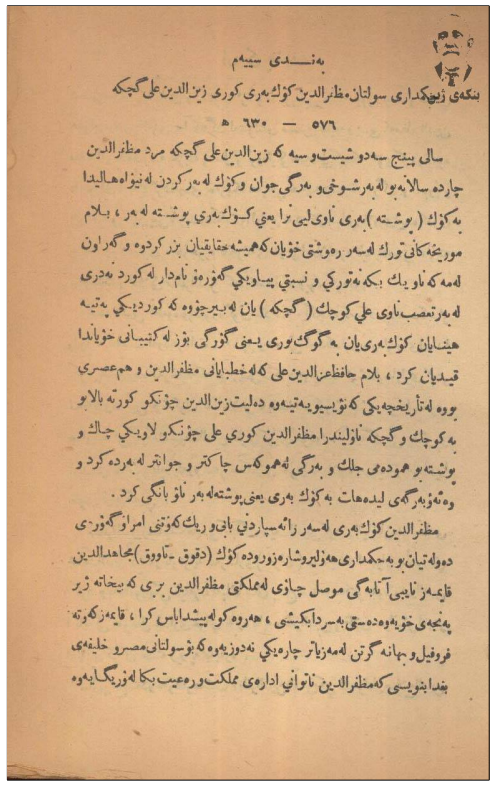
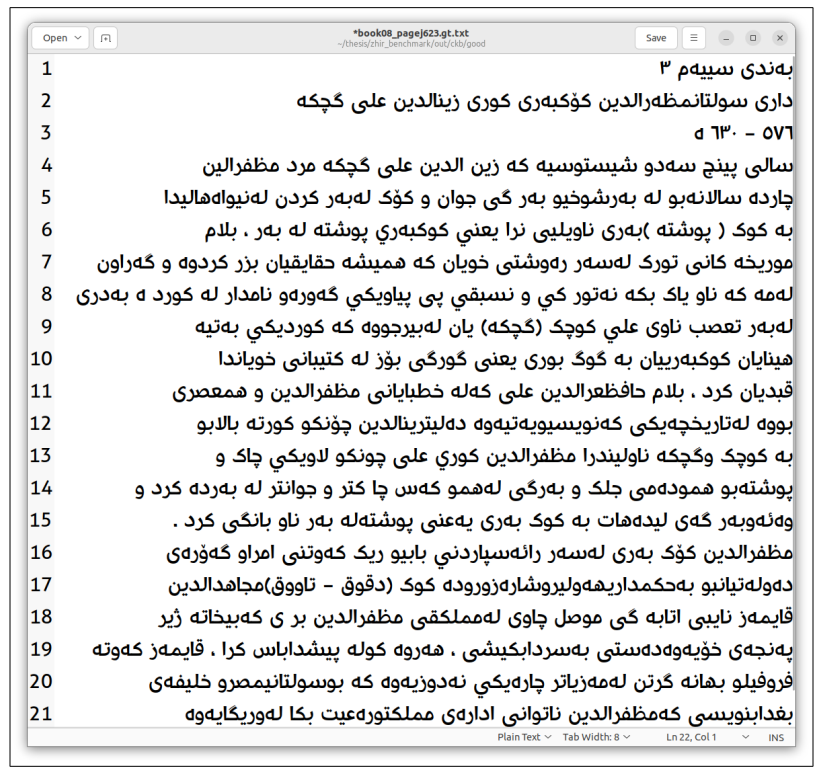
\ Figure 19: Manual transcription of the page

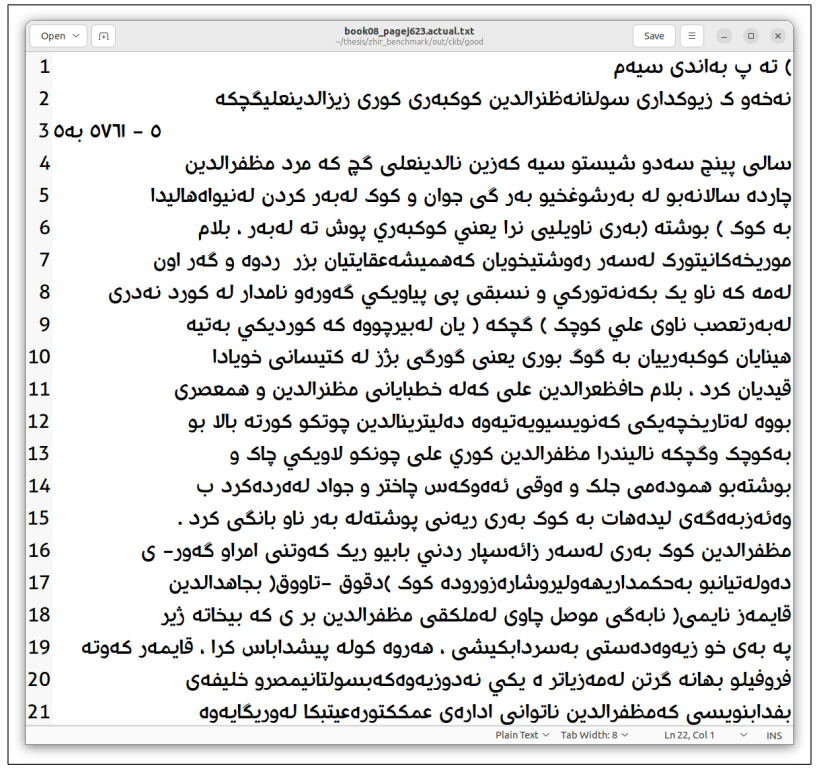
\ Figure 20: The transcription generated by our model

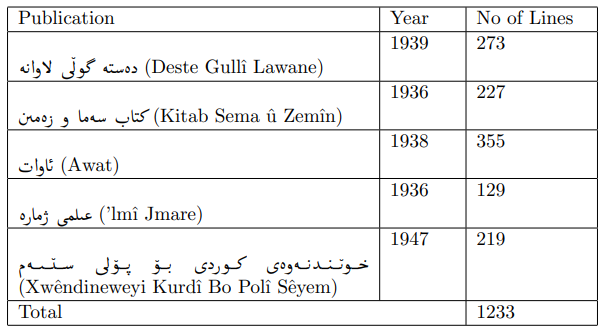
\ Table 1: Summary of the dataset

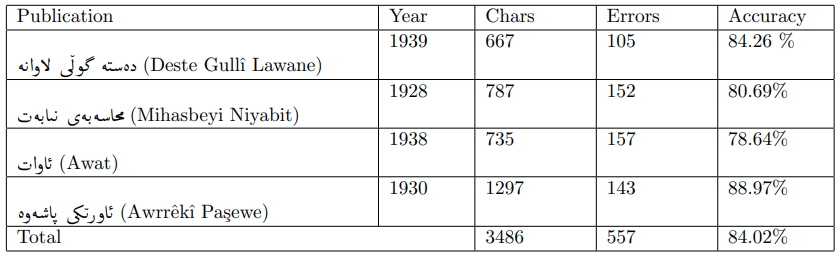
\ Table 2: Ocreval result

\ technology. It was determined that Tesseract was a suitable option for this research.

\ Once the technology was identified, efforts were made to collect digital copies of historical documents printed before 1950. This task proved challenging, as locating documents and converting them into digital format presented additional hurdles. Fortunately, the Zheen Center for Documentation and Research in Sulaymaniyah, which specializes in archiving historical documents, provided some books in the form of digital copies.

\ Upon receiving the digitized copies, a dataset was created to train the Tesseract model. Text lines were extracted from the pages, transcribed individually, and subjected to preprocessing to prepare the dataset.

\ With a dataset of 1233 lines, the model was trained based on the Arabic model. Following the training, the model’s performance was evaluated using various methods. Tesseract’s built-in evaluator lstmeval indicated a CER of 0.755%. Additionally, Ocreval demonstrated an average character accuracy of 84.02%. Finally, an in-house web application was developed to provide an easy-to-use interface for end-users, allowing them to interact with the model by inputting an image of a page and extracting the text.

\ This model could be a valuable tool for libraries and centers, enabling them to extract text from historical documents and perform further processing effectively.

\

:::info Authors:

(1) Blnd Yaseen, University of Kurdistan Howler, Kurdistan Region - Iraq (blnd.yaseen@ukh.edu.krd);

(2) Hossein Hassani University of Kurdistan Howler Kurdistan Region - Iraq (hosseinh@ukh.edu.krd).

:::


:::info This paper is available on arxiv under ATTRIBUTION-NONCOMMERCIAL-NODERIVS 4.0 INTERNATIONAL license.

:::

\

Disclaimer: The articles reposted on this site are sourced from public platforms and are provided for informational purposes only. They do not necessarily reflect the views of MEXC. All rights remain with the original authors. If you believe any content infringes on third-party rights, please contact service@support.mexc.com for removal. MEXC makes no guarantees regarding the accuracy, completeness, or timeliness of the content and is not responsible for any actions taken based on the information provided. The content does not constitute financial, legal, or other professional advice, nor should it be considered a recommendation or endorsement by MEXC.

You May Also Like

FCA, crackdown on crypto

FCA, crackdown on crypto

The post FCA, crackdown on crypto appeared on BitcoinEthereumNews.com. The regulation of cryptocurrencies in the United Kingdom enters a decisive phase. The Financial Conduct Authority (FCA) has initiated a consultation to set minimum standards on transparency, consumer protection, and digital custody, in order to strengthen market confidence and ensure safer operations for exchanges, wallets, and crypto service providers. The consultation was published on May 2, 2025, and opened a public discussion on operational responsibilities and safeguarding requirements for digital assets (CoinDesk). The goal is to make the rules clearer without hindering the sector’s evolution. According to the data collected by our regulatory monitoring team, in the first weeks following the publication, the feedback received from professionals and operators focused mainly on custody, incident reporting, and insurance requirements. Industry analysts note that many responses require technical clarifications on multi-sig, asset segregation, and recovery protocols, as well as proposals to scale obligations based on the size of the operator. FCA Consultation: What’s on the Table The consultation document clarifies how to apply rules inspired by traditional finance to the crypto perimeter, balancing innovation, market integrity, and user protection. In this context, the goal is to introduce minimum standards for all firms under the supervision of the FCA, an essential step for a more transparent and secure sector, with measurable benefits for users. The proposed pillars Obligations towards consumers: assessment on the extension of the Consumer Duty – a requirement that mandates companies to provide “good outcomes” – to crypto services, with outcomes for users that are traceable and verifiable. Operational resilience: introduction of continuity requirements, incident response plans, and periodic testing to ensure the operational stability of platforms even in adverse scenarios. Financial Crime Prevention: strengthening AML/CFT measures through more stringent transaction monitoring and structured counterpart checks. Custody and safeguarding: definition of operational methods for the segregation of client assets, secure…
Share
BitcoinEthereumNews2025/09/18 05:40
Bitcoin struggles at $113K as Fed's Bowman hints at faster rate cuts

Bitcoin struggles at $113K as Fed's Bowman hints at faster rate cuts

                                                                               Bitcoin traders revealed new BTC price bottom targets as BTC price action wobbles, while a dovish Fed speech offered bulls little relief.                     Key points:Bitcoin faces problems recovering from its dip to $112,000 as traders agree on the odds of a fresh dip.Nasdaq Performance is on the radar as overheated RSI conditions raise concerns over a crypto knock-on effect. Read more
Share
Coinstats2025/09/23 22:35
Stablecoin rewards provisions face industry test in Senate crypto bill

Stablecoin rewards provisions face industry test in Senate crypto bill

With the CLARITY Act scheduled for a markup on Thursday, some lawmakers could still be at odds over decentralized finance, stablecoins and ethical concerns.As US
Share
Coinstats2026/01/14 01:52