

AI Summit Awkward Moment: The Revealing Rivalry Between Sam Altman and Dario Amodei at India’s Tech Gathering
BitcoinWorld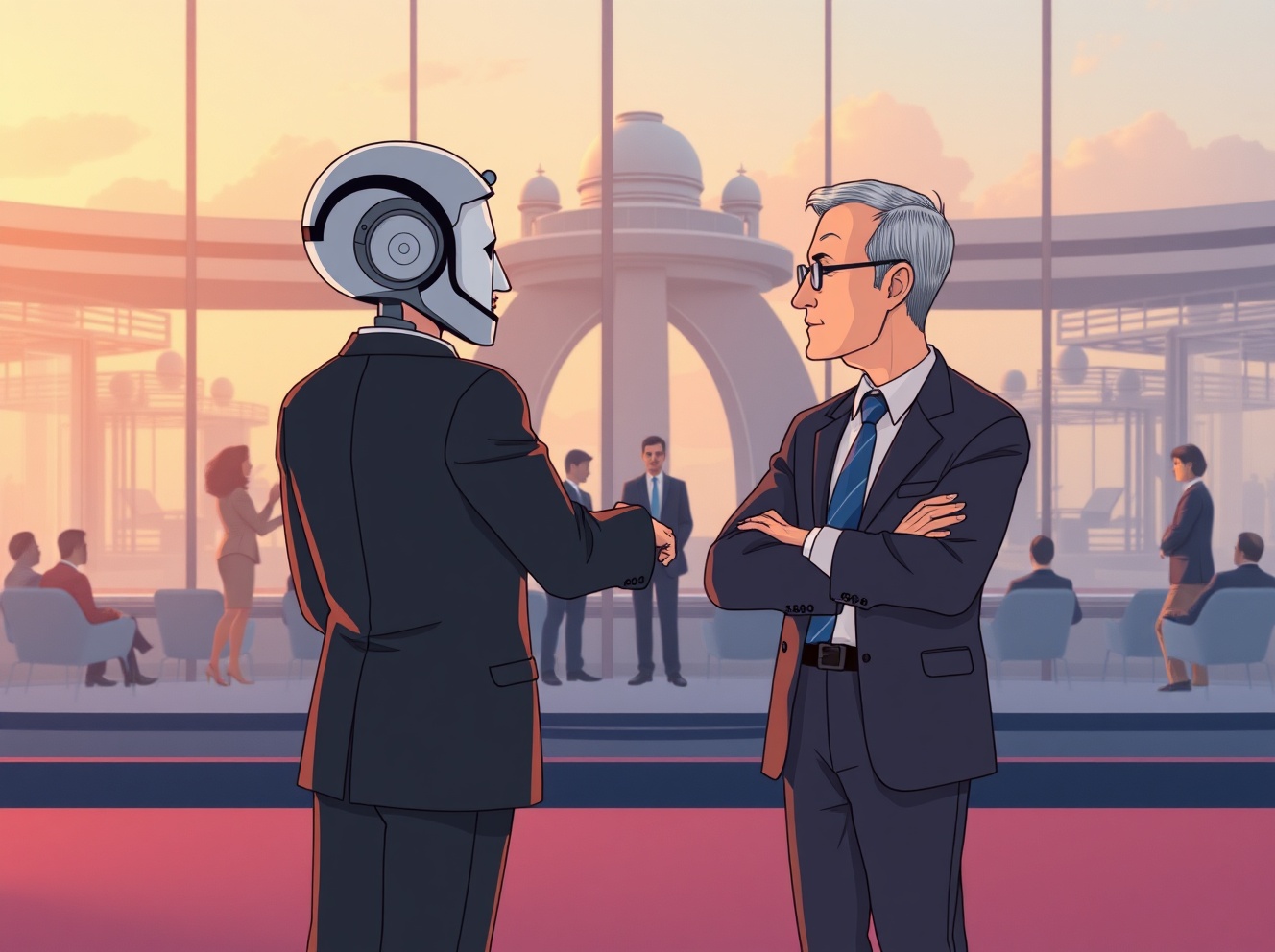
AI Summit Awkward Moment: The Revealing Rivalry Between Sam Altman and Dario Amodei at India’s Tech Gathering
NEW DELHI, February 19, 2026 – A seemingly routine gesture of unity at India’s prestigious AI Impact Summit unexpectedly highlighted the deepening fissure between the world’s leading artificial intelligence companies. When Prime Minister Narendra Modi invited stage participants to join hands in solidarity, OpenAI CEO Sam Altman and Anthropic CEO Dario Amodei maintained visible physical separation, creating what observers immediately recognized as a telling moment in the intensifying AI race. This incident occurred during a summit that otherwise celebrated India’s emergence as a global AI powerhouse, with both companies announcing significant investments in the country.
AI Summit Awkward Moment Captures Industry Tensions
The India AI Impact Summit brought together technology leaders from across the globe to discuss artificial intelligence’s future. Consequently, the gathering represented a crucial platform for international collaboration. However, the visible distance between Altman and Amodei during the solidarity gesture revealed underlying competitive tensions. Multiple journalists documented the moment when other executives readily joined hands while the two AI pioneers maintained professional separation.
Industry analysts immediately recognized the significance of this non-verbal communication. Furthermore, the timing proved particularly noteworthy given recent public exchanges between the companies. This incident occurred against the backdrop of substantial announcements from both organizations regarding their Indian expansion strategies. Therefore, the moment served as a microcosm of broader industry dynamics shaping artificial intelligence development.
Escalating Rivalry Between OpenAI and Anthropic
The relationship between OpenAI and Anthropic has evolved from professional competition to increasingly public confrontation. Recently, this rivalry intensified following OpenAI’s announcement about potential advertising integration in ChatGPT. Subsequently, Anthropic launched a pointed advertising campaign during the Super Bowl, explicitly contrasting its approach by declaring Claude would never feature advertisements.
Sam Altman responded directly to these claims through public statements. He characterized Anthropic’s advertising as misleading and described their approach as authoritarian. Additionally, Altman emphasized OpenAI’s commitment to user experience, stating they would never implement advertisements in the manner depicted by their competitor. These exchanges established a context of public disagreement that manifested physically at the New Delhi summit.
Strategic Divergence in AI Development Philosophies
Beyond personal rivalry, the tension reflects fundamental philosophical differences in AI development approaches. OpenAI has pursued rapid deployment and commercialization strategies, while Anthropic emphasizes constitutional AI and controlled development. These contrasting methodologies create natural friction in competitive environments. Moreover, both companies recognize India’s strategic importance as both a market and talent source, amplifying competitive pressures during the summit.
| Date | Event | OpenAI Position | Anthropic Response |
|---|---|---|---|
| January 2026 | ChatGPT Advertising Announcement | Exploring sustainable revenue models | Super Bowl ad criticizing AI advertising |
| February 2026 | Public Statements | Called Anthropic “dishonest” and “authoritarian” | No direct public response to personal remarks |
| February 2026 | India AI Summit | Announced offices and TCS partnership | Announced office and Infosys partnership |
India’s Strategic Position in Global AI Competition
The India AI Impact Summit represented more than just another technology conference. Specifically, it signaled India’s emergence as a crucial battleground for AI supremacy. Both OpenAI and Anthropic announced substantial investments during the event, recognizing the country’s growing importance. OpenAI revealed plans for two new Indian offices and a partnership with Tata Consultancy Services (TCS). Simultaneously, Anthropic announced its own Indian office and collaboration with Infosys.
These parallel announcements highlighted the strategic value both companies place on the Indian market. India offers not only substantial user bases but also exceptional technical talent. Consequently, the country’s policies and partnerships will significantly influence global AI development trajectories. The summit also featured Reliance Industries’ announcement of a $110 billion AI investment plan, demonstrating India’s domestic ambitions in artificial intelligence.
Expert Analysis of Competitive Dynamics
Technology analysts observe that such public tensions between industry leaders typically indicate maturation within competitive markets. Historically, similar dynamics have emerged in other technology sectors during periods of rapid growth and market definition. The AI industry currently faces crucial questions about development ethics, commercialization approaches, and governance structures. Therefore, visible disagreements between leading companies help clarify these issues for policymakers and the public.
Industry experts note that competitive tension can drive innovation while also creating fragmentation risks. The physical manifestation of this rivalry at a diplomatic event raises questions about collaboration potential on safety standards and ethical frameworks. However, most analysts believe both companies will continue pursuing independent paths while competing for talent, partnerships, and market position.
Broader Implications for AI Governance and Ethics
The visible tension between Altman and Amodei extends beyond corporate rivalry. Importantly, it reflects deeper debates about artificial intelligence’s future direction. These debates encompass critical questions about:
- Commercialization pace: How quickly should advanced AI systems reach consumers?
- Revenue models: What approaches best balance innovation with sustainability?
- Safety protocols: Which methodologies most effectively mitigate potential risks?
- Geopolitical alignment: How should AI development navigate international relations?
- Talent acquisition: Where will the next generation of AI researchers emerge?
India’s position as host nation adds another layer of complexity to these discussions. The country has positioned itself as a neutral ground for technology dialogue while pursuing substantial domestic AI capabilities. This balancing act requires careful navigation of competing international interests while advancing national technological sovereignty.
Conclusion
The AI summit awkward moment between Sam Altman and Dario Amodei revealed more than personal discomfort. Specifically, it illuminated the intense competitive dynamics shaping artificial intelligence’s global development. As both companies expand their Indian presence, their rivalry will likely influence regional technology ecosystems and policy frameworks. This incident underscores how corporate competition intersects with diplomatic engagement in emerging technology sectors. Ultimately, such moments provide valuable insights into the complex relationships driving AI innovation forward while highlighting the challenges of maintaining collaboration amid intense competition.
FAQs
Q1: What exactly happened between Altman and Amodei at the India AI Summit?
During a solidarity gesture initiated by Prime Minister Narendra Modi, all executives on stage joined hands except OpenAI’s Sam Altman and Anthropic’s Dario Amodei, who maintained visible physical separation, highlighting their competitive relationship.
Q2: Why has the rivalry between OpenAI and Anthropic intensified recently?
The rivalry escalated after OpenAI explored advertising for ChatGPT, prompting Anthropic to run Super Bowl ads criticizing AI advertising, followed by Altman calling Anthropic “dishonest” and “authoritarian” in response.
Q3: What investments did both companies announce at the India AI Summit?
OpenAI announced two new Indian offices and a partnership with TCS, while Anthropic announced an Indian office and collaboration with Infosys, demonstrating India’s strategic importance to both companies.
Q4: How does this rivalry affect AI development globally?
The competition drives innovation but may create fragmentation in safety standards and ethical frameworks, potentially influencing how different regions approach AI governance and implementation.
Q5: What does this incident reveal about India’s role in global AI development?
India has emerged as a crucial market and talent source that both leading AI companies recognize as strategically important, with the country also announcing substantial domestic AI investments during the summit.
This post AI Summit Awkward Moment: The Revealing Rivalry Between Sam Altman and Dario Amodei at India’s Tech Gathering first appeared on BitcoinWorld.
You May Also Like

The Federal Reserve cut interest rates by 25 basis points, and Powell said this was a risk management cut
SEC Approves Generic Listing Standards for Crypto ETFs
